
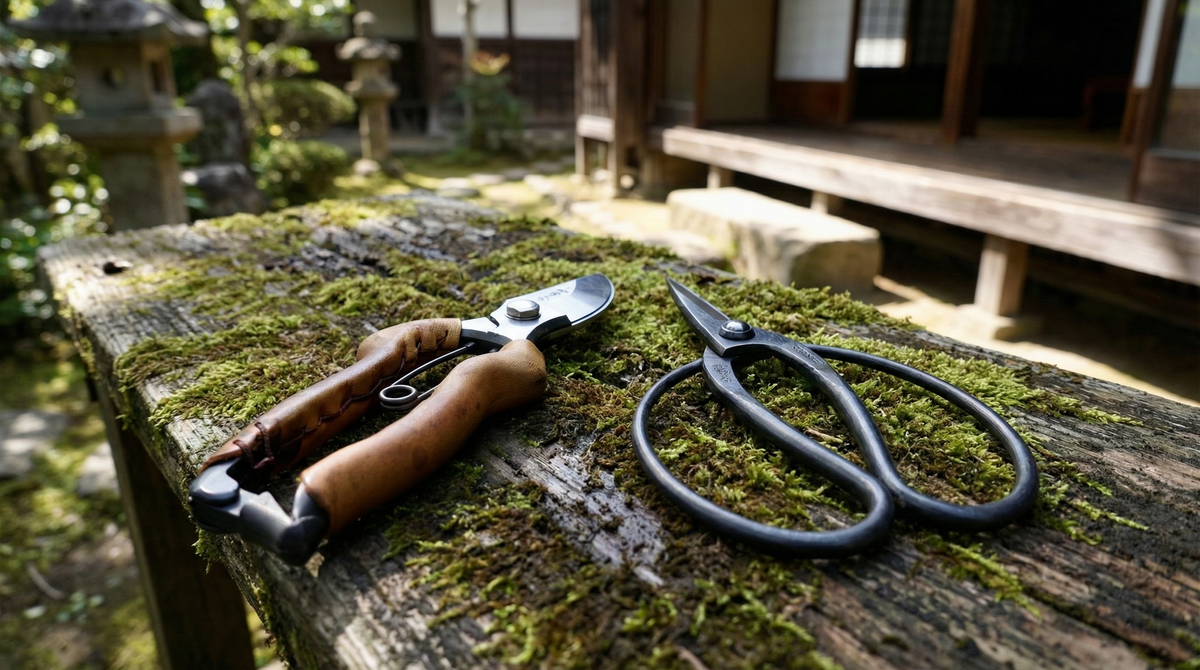
Beyond the Hardware-Store Pruner
1. The Names of Japanese Shears
In English, "pruning shears" is a broad term for many different tools. In Japan, however, tools have specific names based on their job. Before you choose a pair, you should understand these three types:
Sentei-basami (Pruning Shears / Secateurs) Built for cutting thicker branches, these usually have a spring to make repeat cuts easier on your hand. They are a common choice for heavier pruning, such as cutting back a fruit tree in winter.
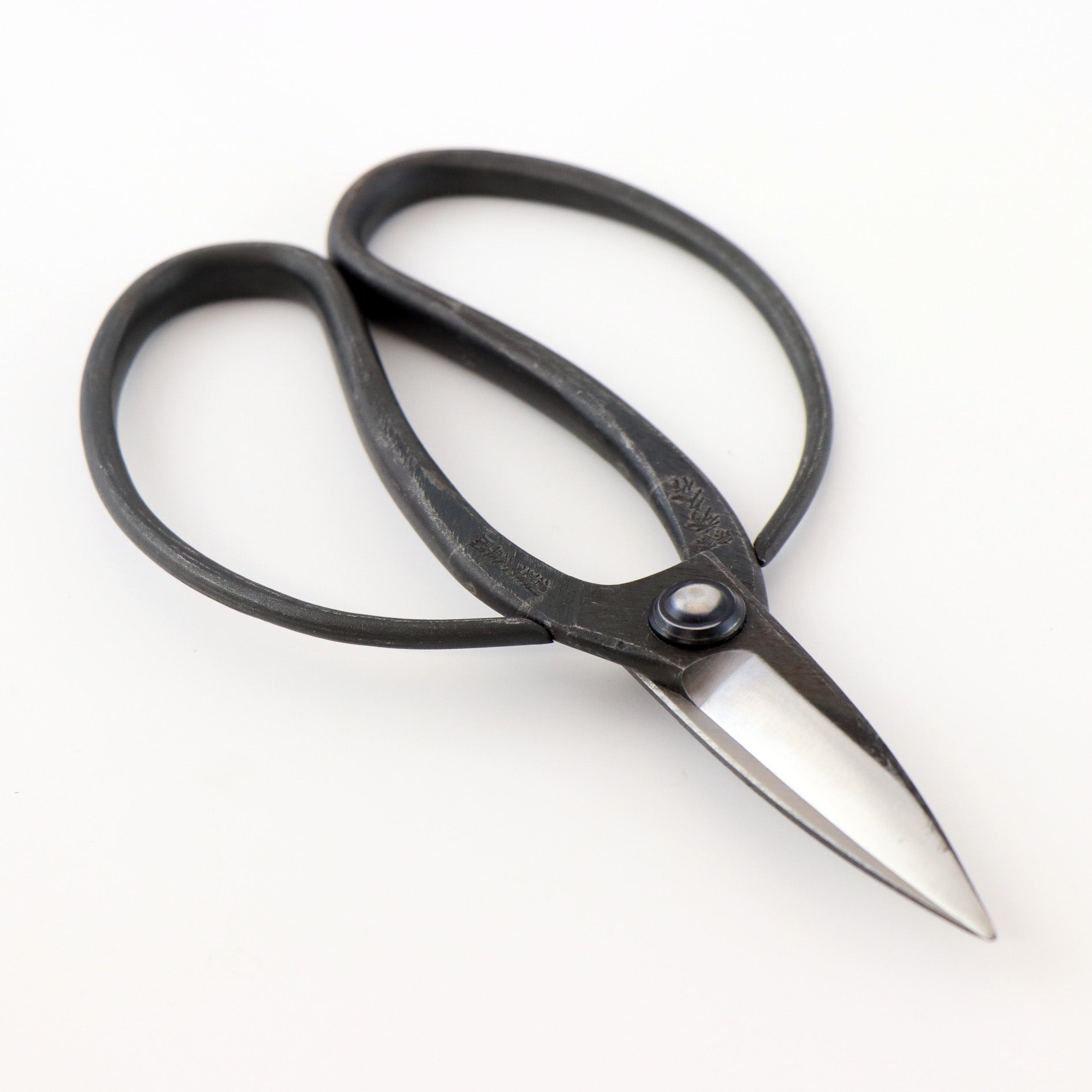
Ueki-basami (Gardening Shears) These traditional tools have large handle loops and no spring. Because you control the blades directly with your fingers, you get more precision. They are perfect for shaping work, like thinning the branches of an ornamental garden tree.
Mekiri-basami (Bud Snips) With thin, straight blades, these are not meant for woody branches. Use them for "soft" work in tight spots—like trimming new buds or green shoots to keep a bonsai or flower neat.
Japanese tools are rarely "all-purpose." A blade for a pine tree is often different from a blade for a rose. This is why many professionals carry two or three different pairs. They switch their tools to match the plant they are cutting.
2. The Main Types of Pruning Shears
2-1. Traditional Garden Shears(Ueki-Basami)

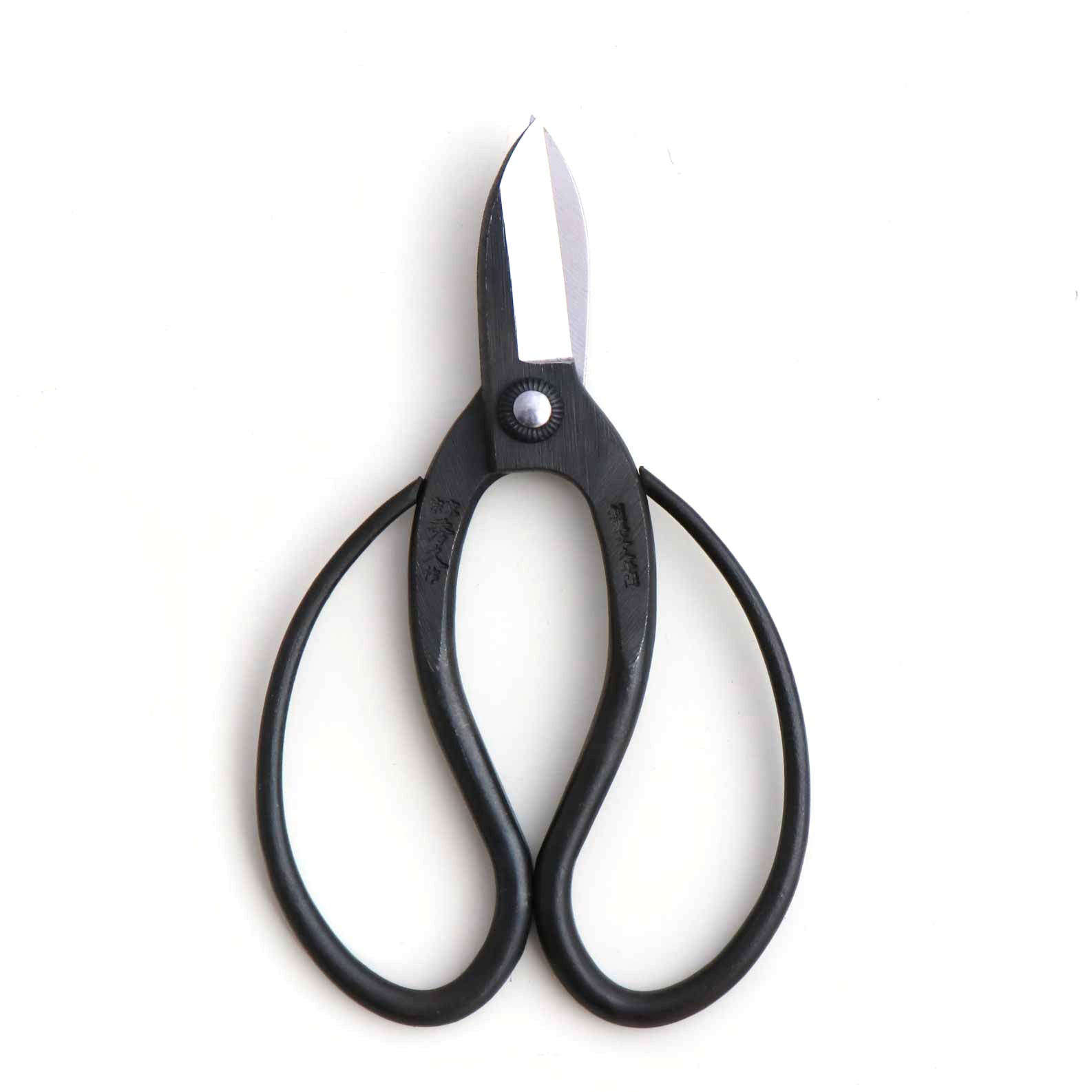
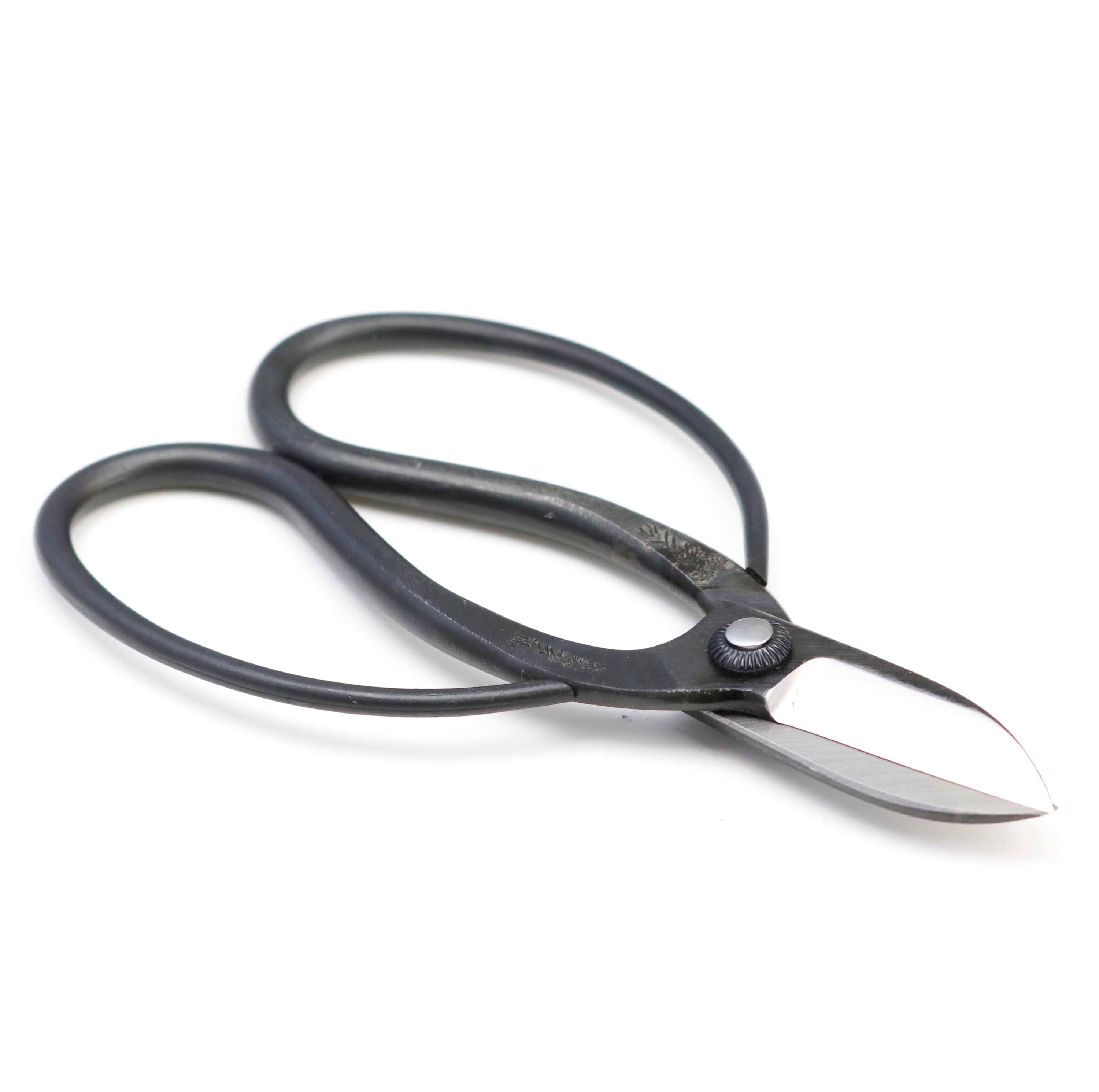
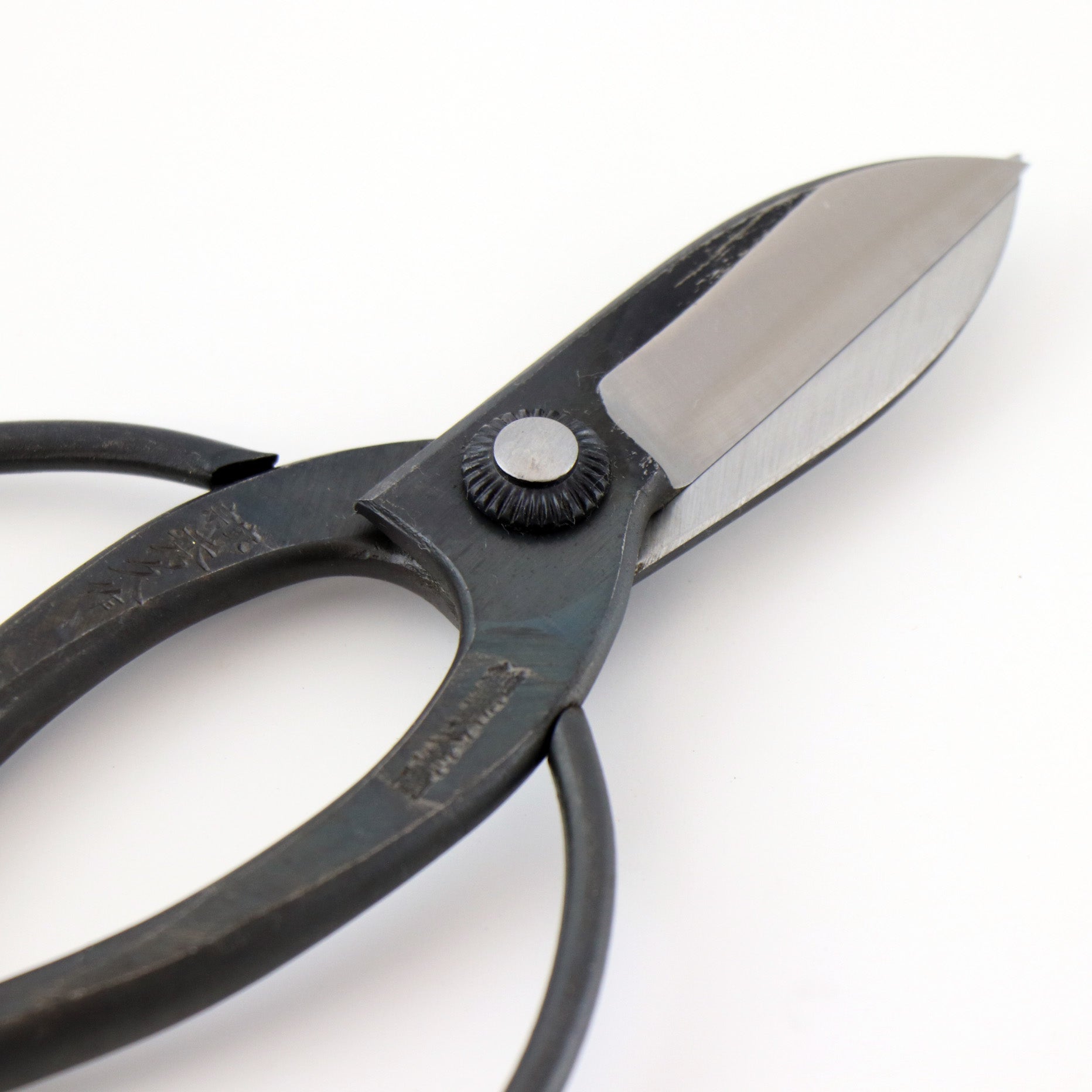
[Photo: T1 Japanese Traditional Bonsai/Garden Shears ”Okubo” Style]
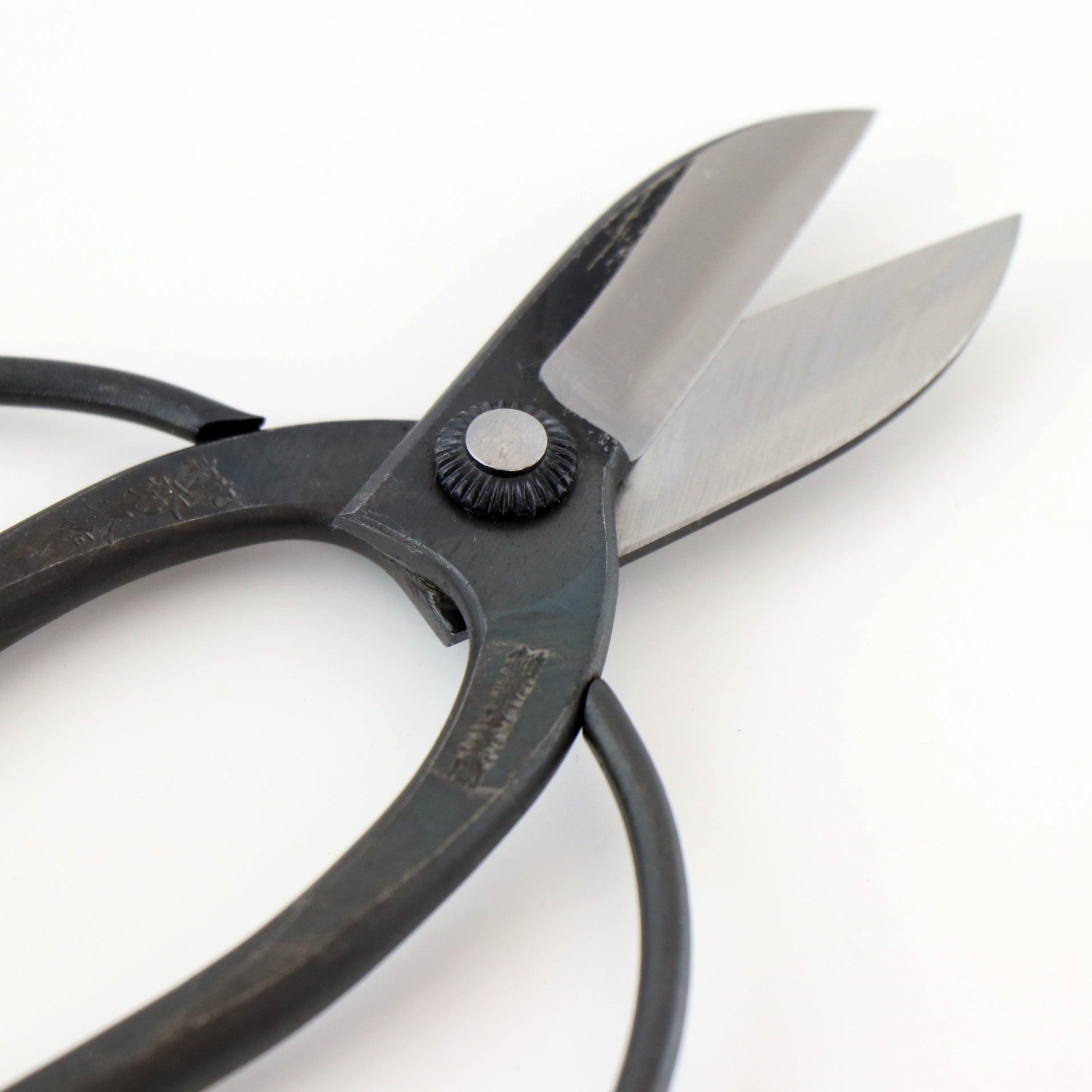
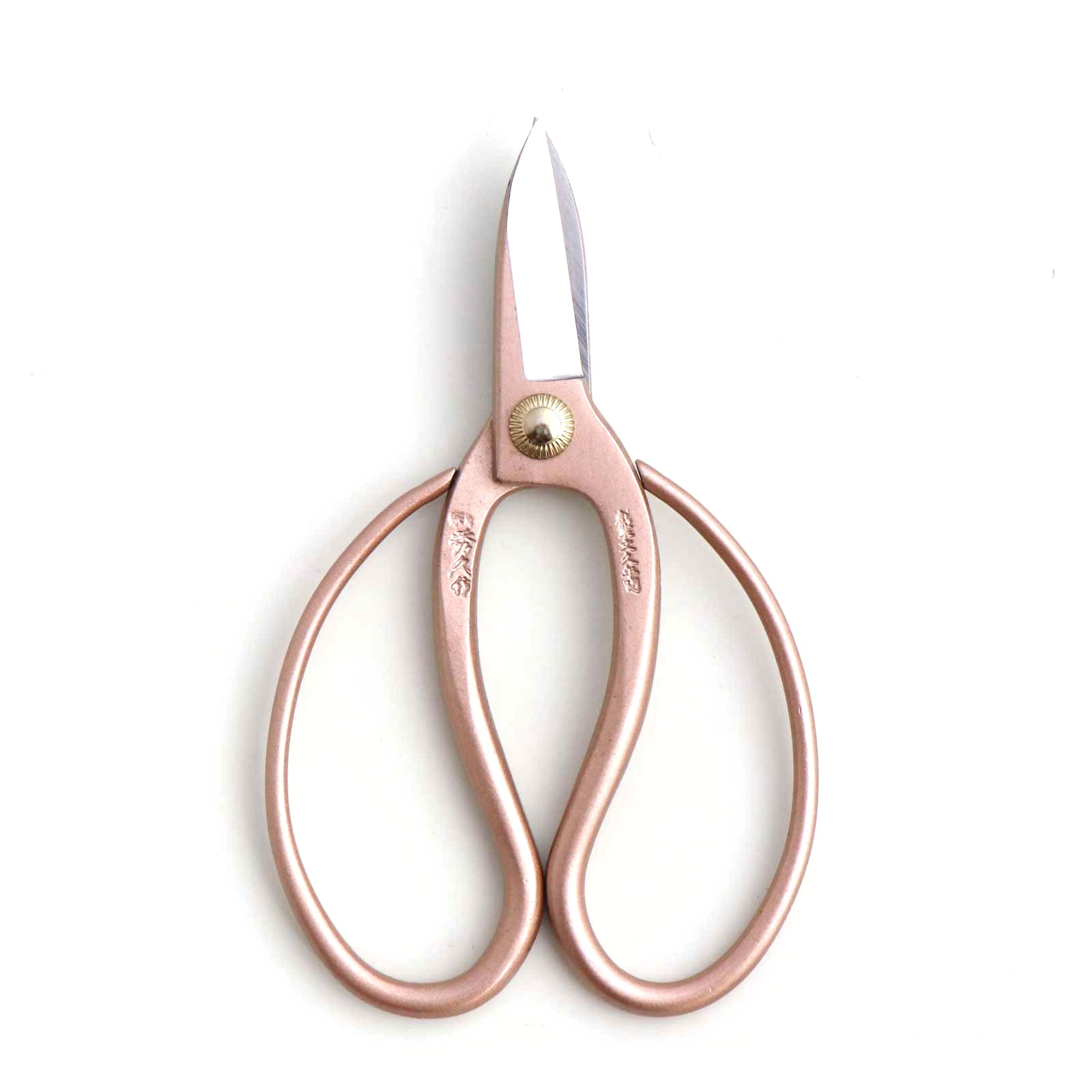
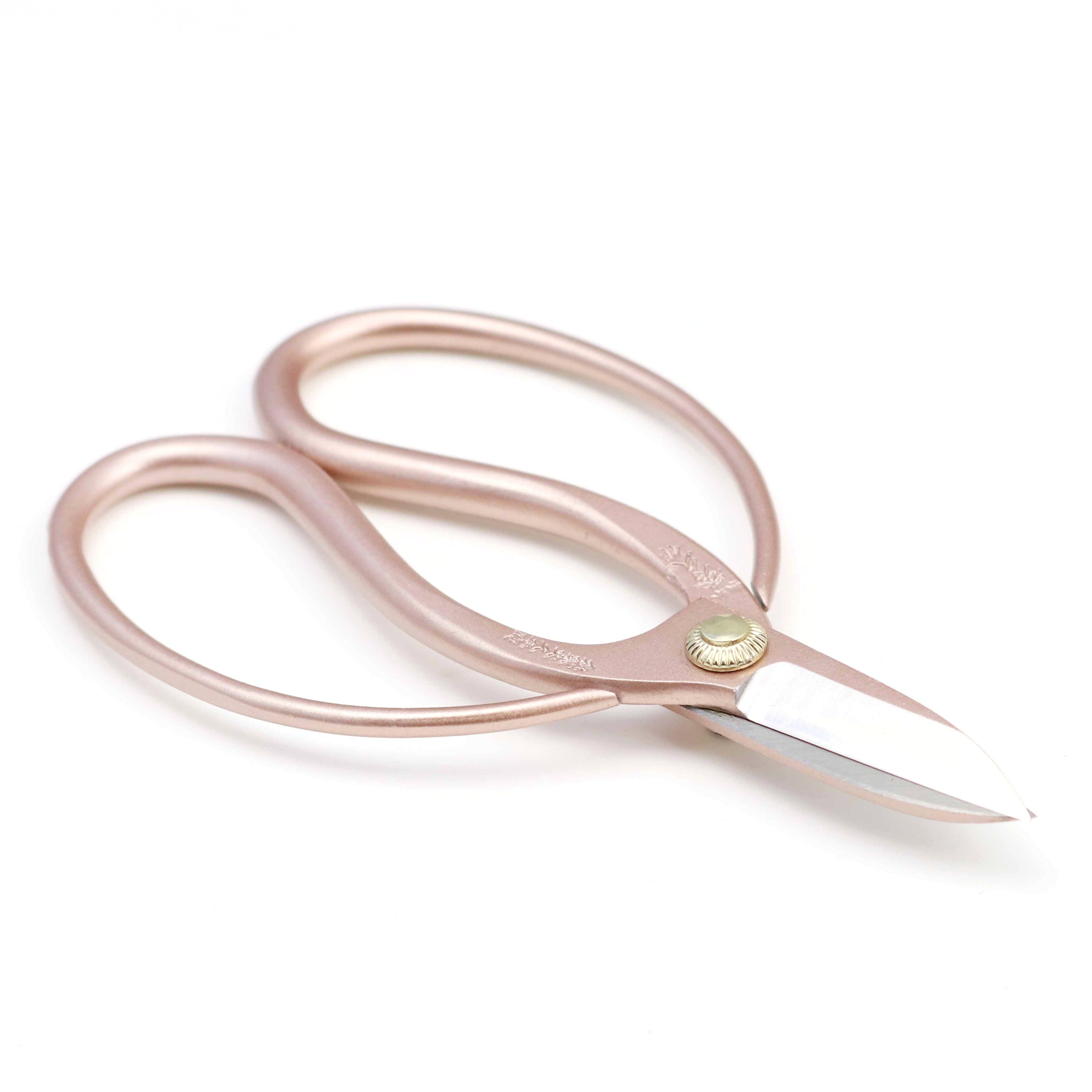
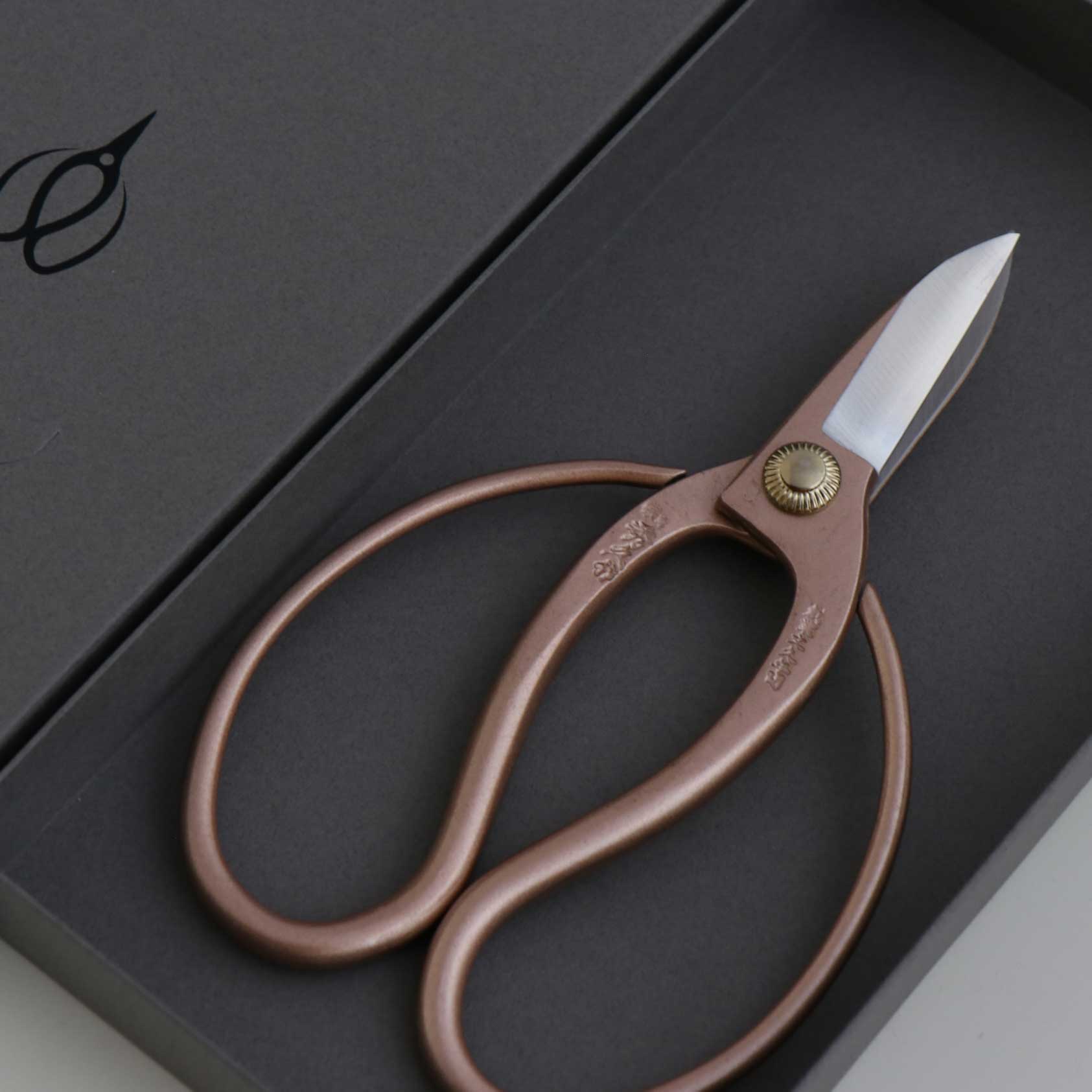
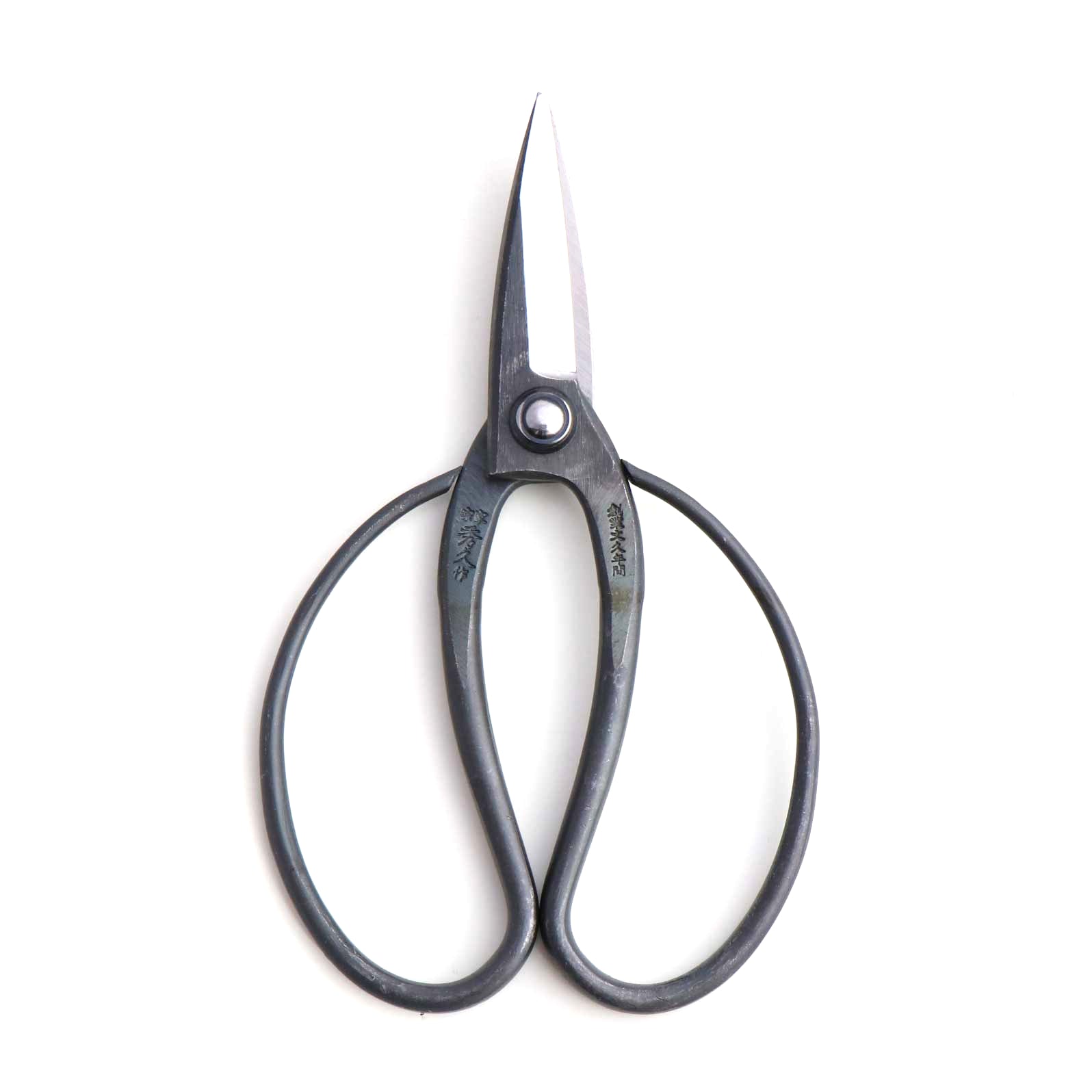
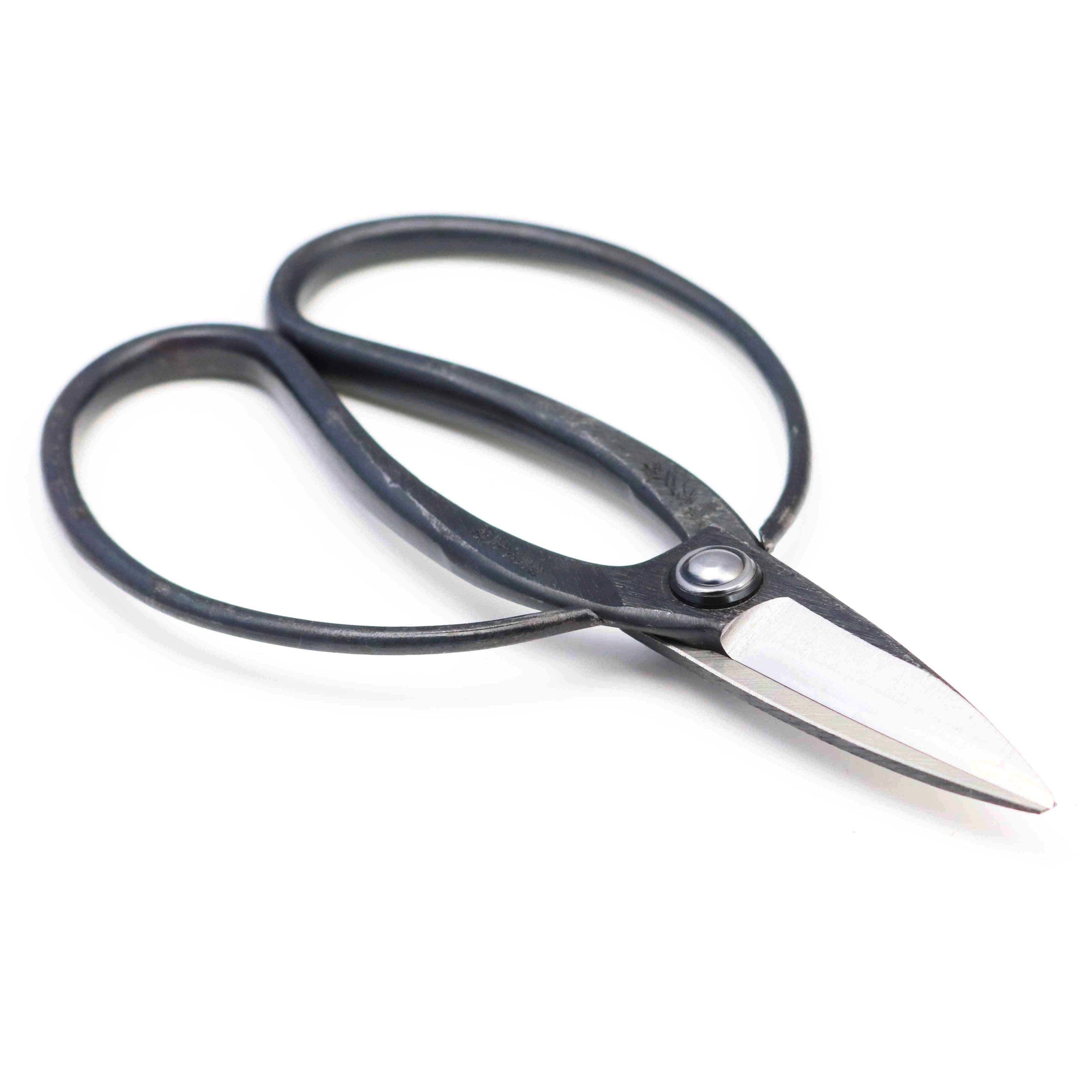
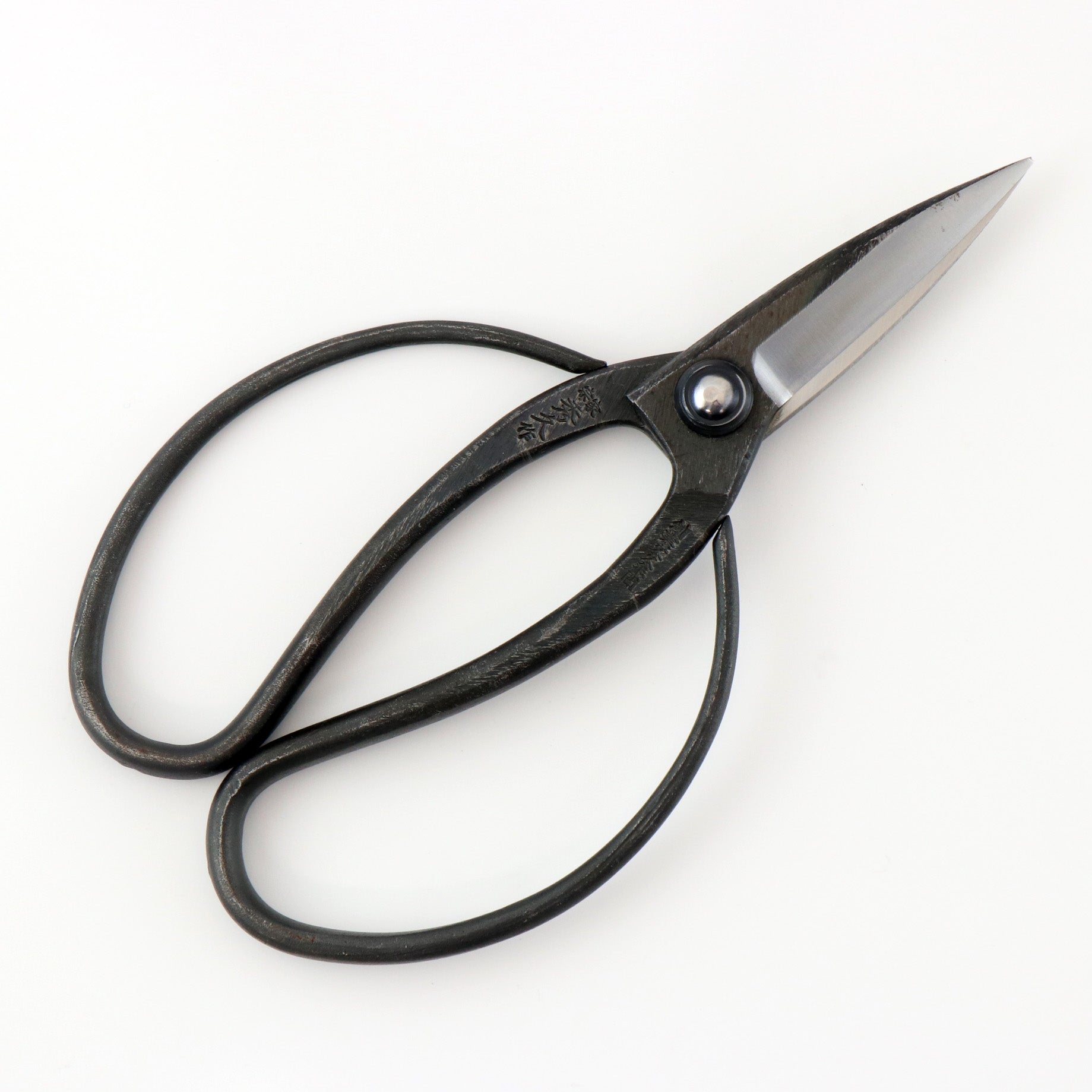
Ueki-basami are often considered the heart of the Japanese garden toolkit. For generations, gardeners have relied on them to maintain the clean lines and fine details of traditional landscapes. You may also see them called "Okubo-style"—a classic, versatile design used for everything from bonsai refinement to everyday garden work.
- The Shape: A simple, symmetrical design with large, butterfly-like handle loops and no spring.
- The Benefit: Straight, razor-sharp blades that are strong enough for pruning branches, yet delicate enough to trim thin leaves without bruising them.
-
The Experience: With no spring pushing back, the motion is entirely yours. You open and close the blades with your fingers, so the response feels direct and precise. This gives you a "feel" that many enthusiasts prefer—it is less like using a machine, and more like an extension of your own hand.
2-2. Bonsai Scissors (Bonsai-Basami)

[Photo:T4-3 Japanese Traditional Bonsai Scissors Long Handle Forged High Carbon Steel]
Bonsai work demands careful, precise cuts, and these shears are built for that kind of control. Many styles use long handles and short blades to help you reach into dense foliage. This design allows you to make a clean cut without brushing against nearby branches.
-
The Shape: Smaller and more refined than standard garden shears. A common style is the Ashinaga (long-handled) type. The long neck keeps your hand away from delicate leaves while you work.
-
The Benefit: The slim profile lets the blades slip between crowded branches. This helps you avoid unwanted cuts and reduces the risk of damaging nearby needles or leaves.
-
The Experience: In bonsai, even a single millimeter can change the look of a tree. Because of this, these shears focus on steady control at the very tip of the blade. Each snip feels light and surgical, giving you the confidence to shape your tree exactly as you imagine.
2-3. Ikebana and Floral Shears (Hana-basami)

[Photo: T9 Traditional Japanese Ikebana Floral Shears Looped Grip (Left)]
[Photo: T8 Traditional Japanese Ikebana Floral Shears ”Warabi-te” Grip (Right)]
Hana-basami are made for one goal: clean cuts that help flowers last longer. Many flower stems are thick and woody, so these shears use short, sturdy blades. This shape provides the stability you need to slice through a stem instead of squeezing it.
-
The Shape: These shears are easy to spot by their unique handles. Many feature the traditional Warabi-te (fern-shaped) loops. These wide, curved loops are not just for style—they sit comfortably in your palm and give you a steady grip, even when the stem is tough.
-
The Benefit: The blades are exceptionally sharp to ensure a smooth, clean edge. A clean slice keeps the plant’s vessels open, while a crushed cut can block the flow of water.
-
The Experience: In Ikebana, the cut is the most important part of the work. A smooth stem can "drink" water more easily, which helps the flowers stay fresh. Because of this, Hana-basami are built to feel solid and balanced, allowing you to cut with both confidence and care.
2-4. Pruning Shears

[Photo: T13 Forged Pruning Shears/Secateurs High Carbon Steel (Left)]
[Photo: T526 Forged Multi-Purpose PruningShears/Secateurs Stainless Steel (Right) ]
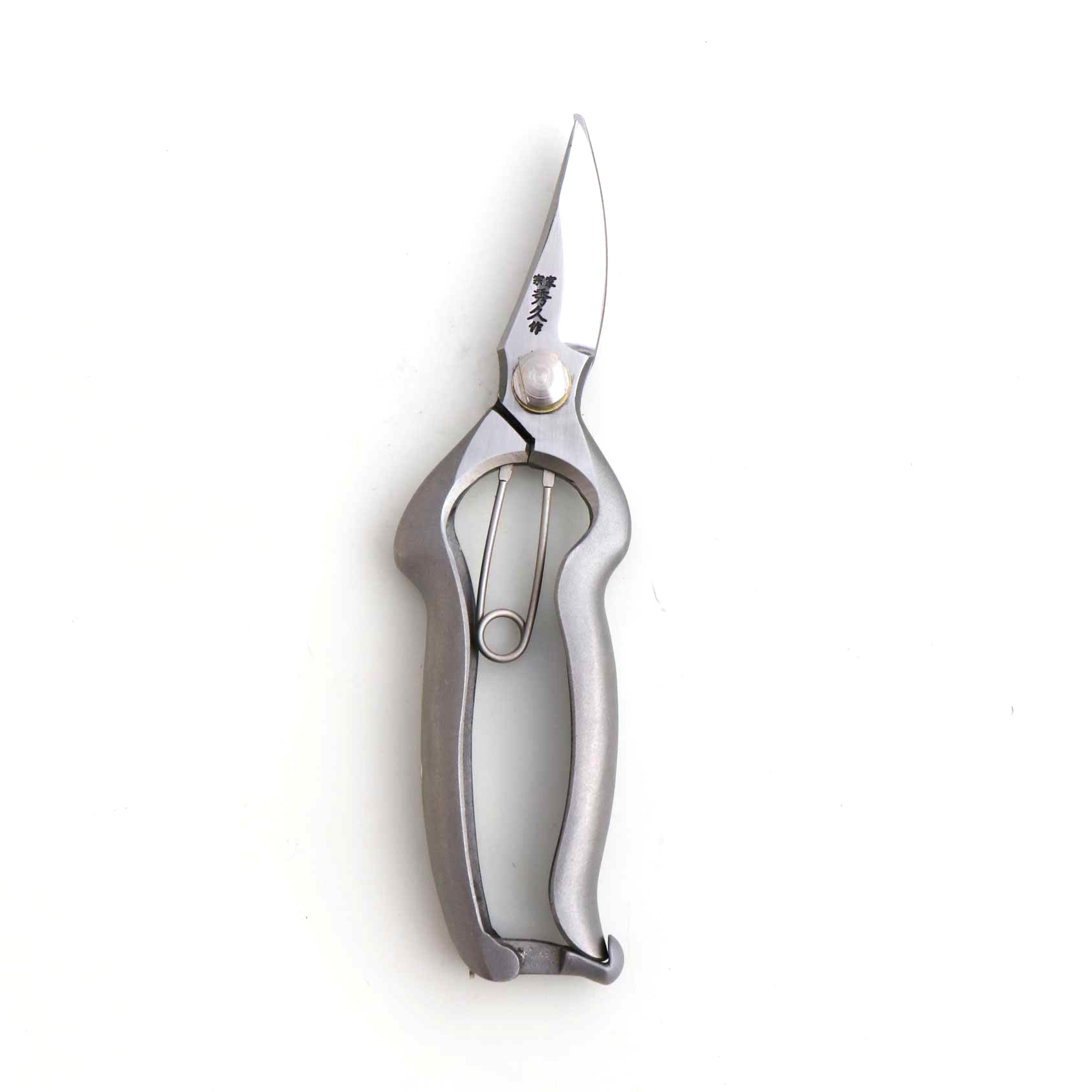
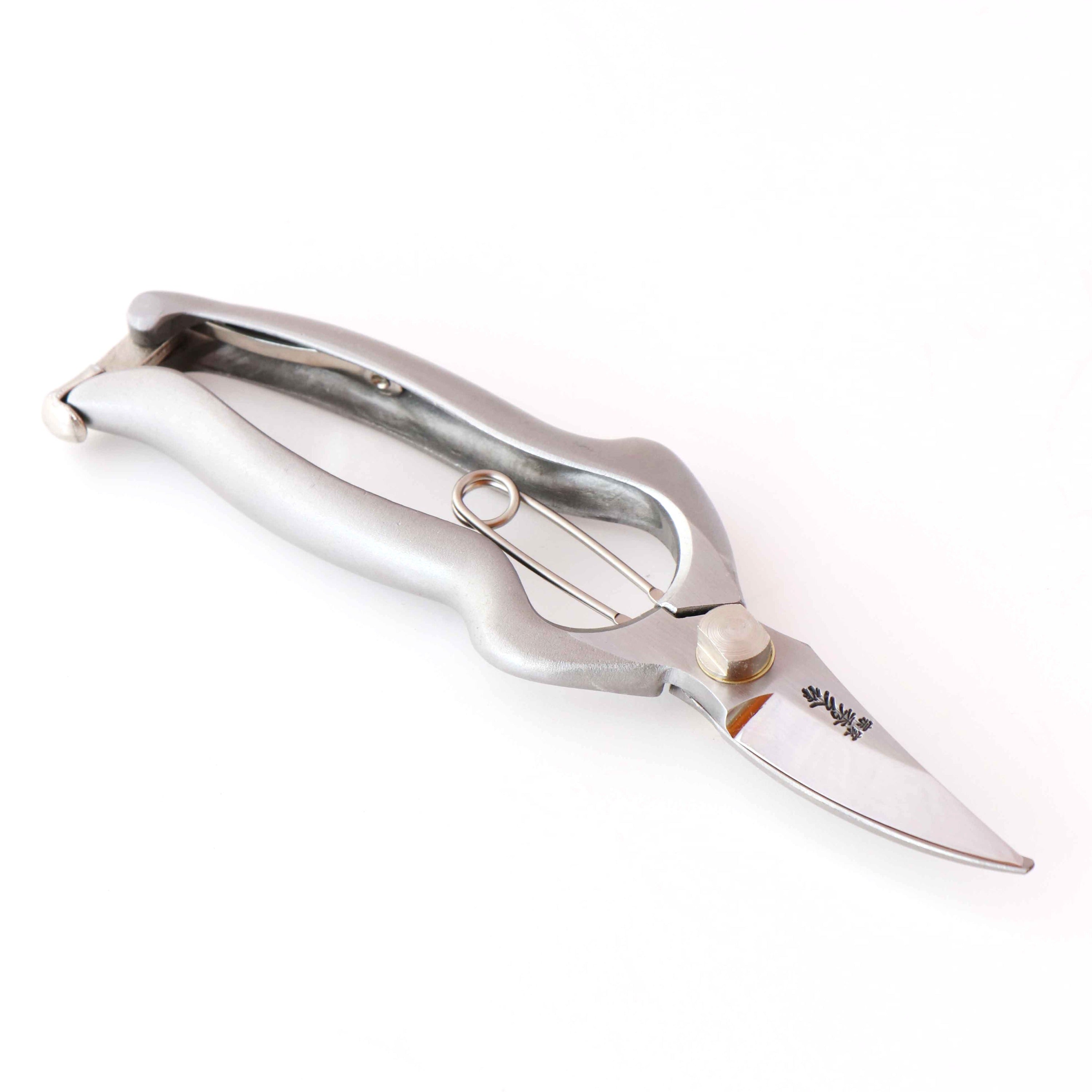
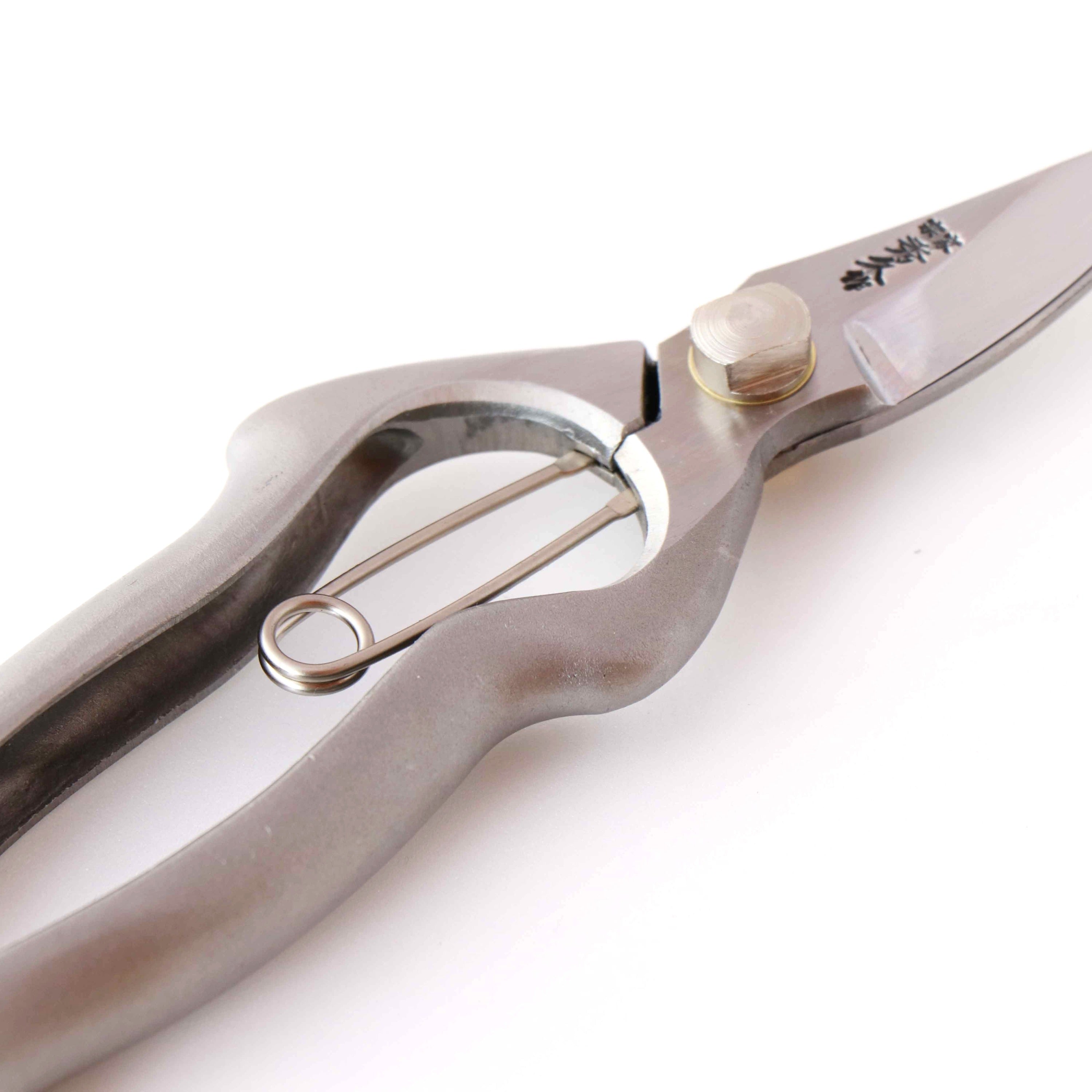
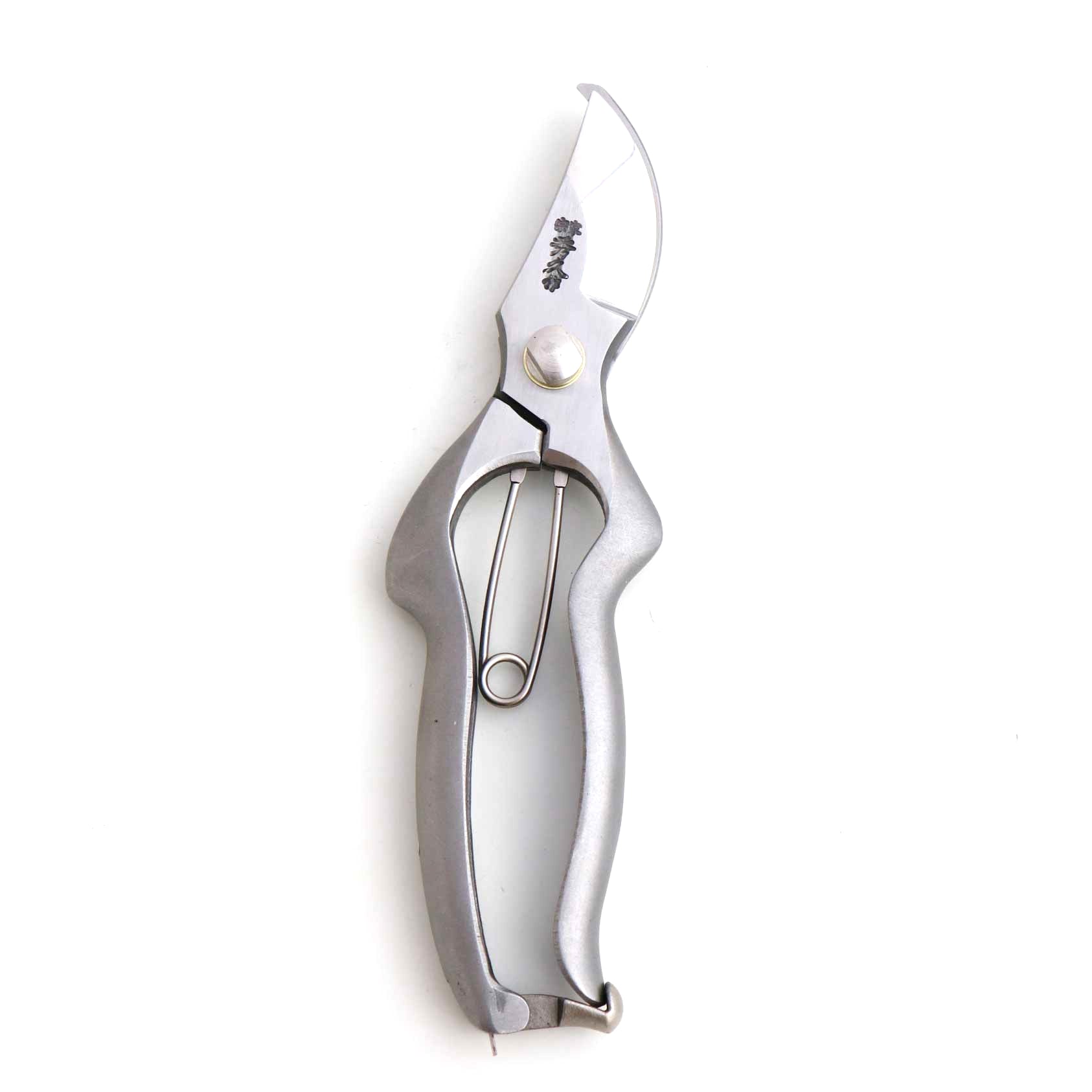
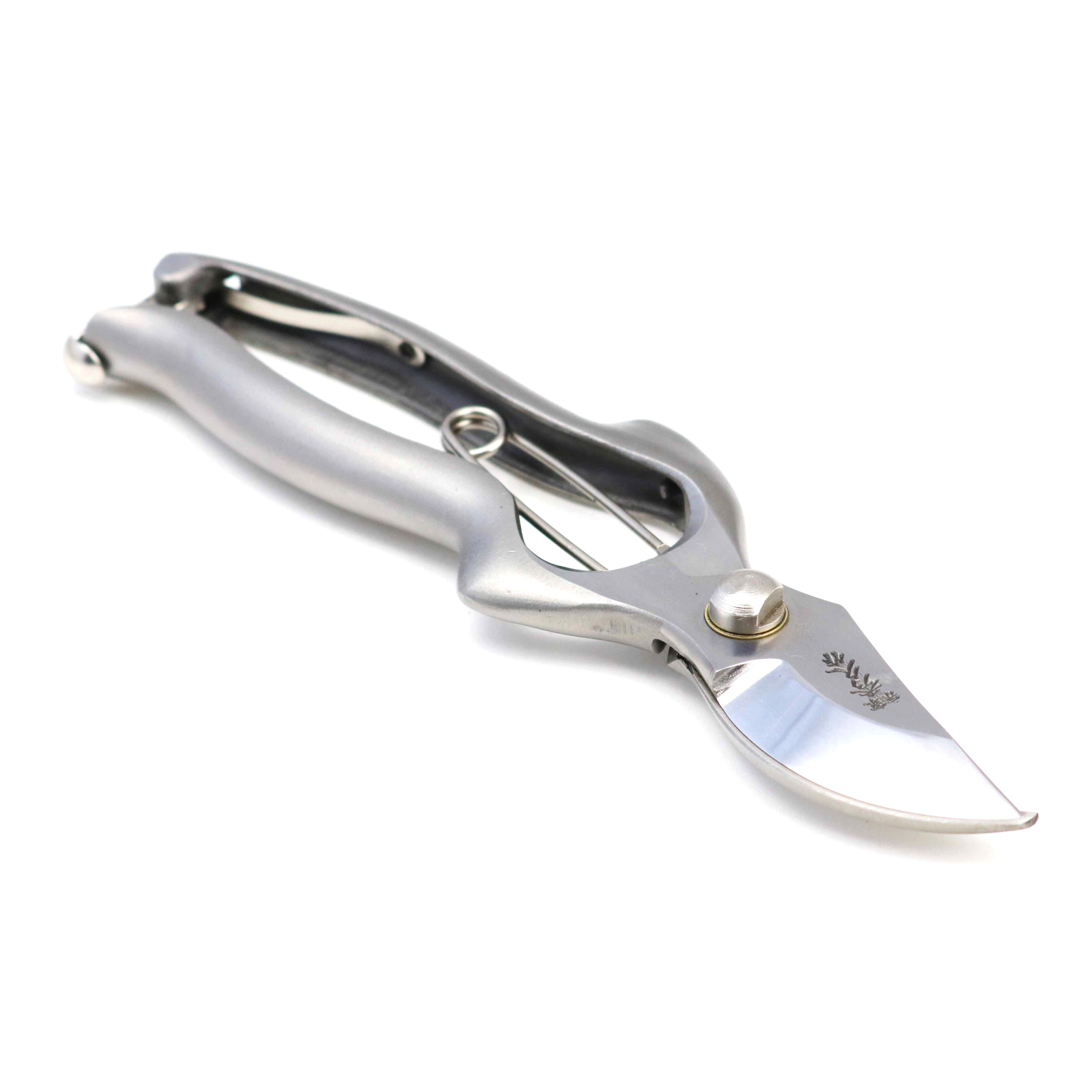
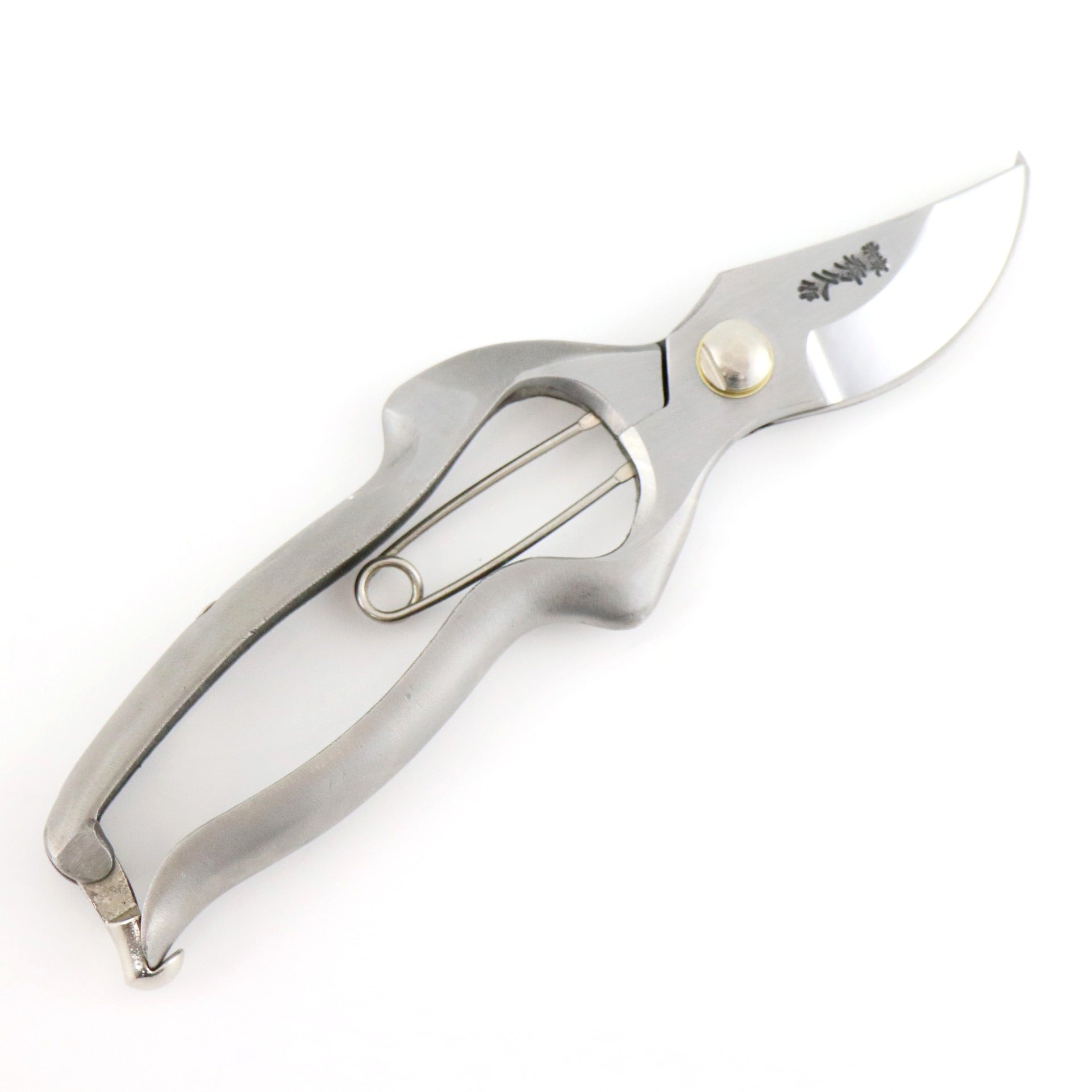
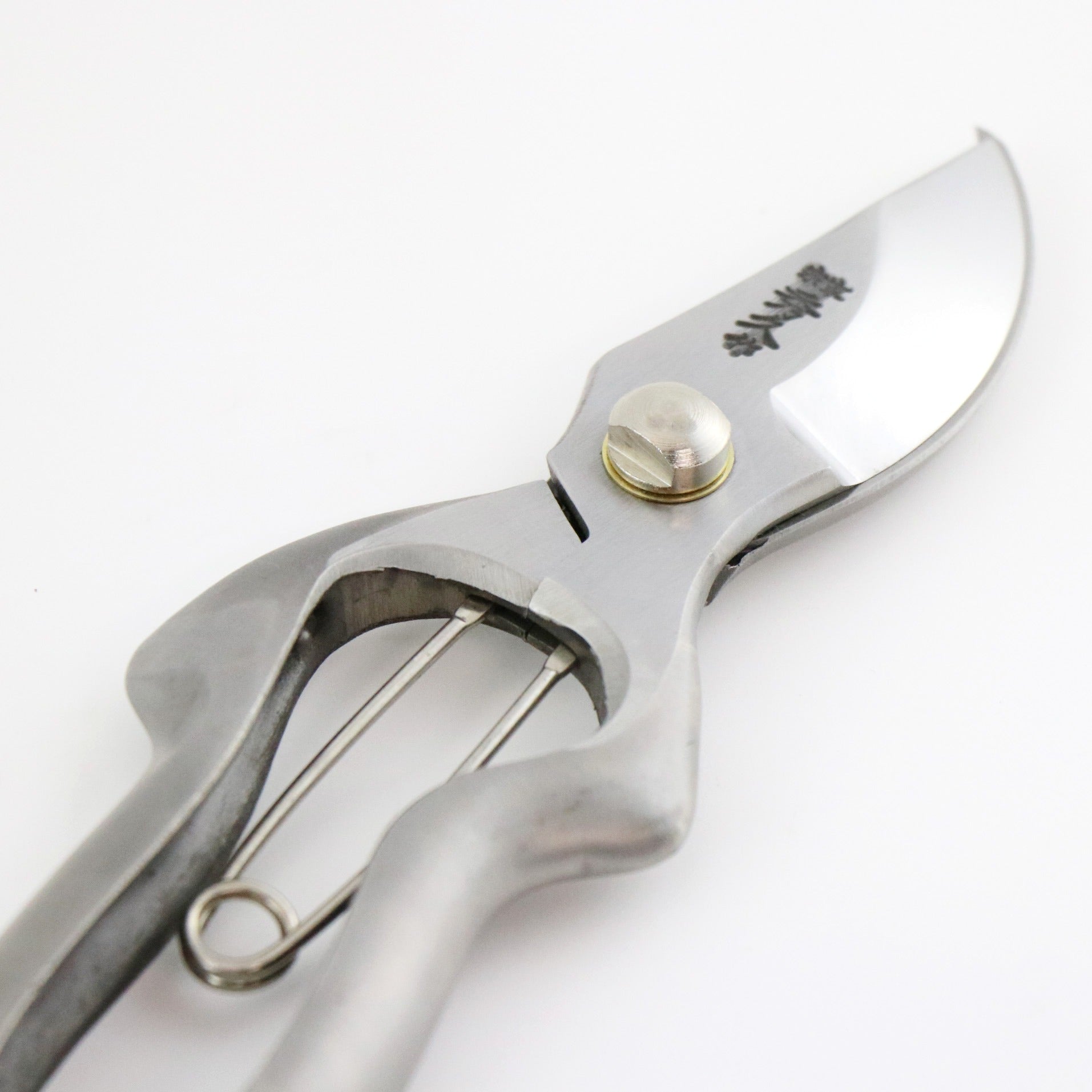
This is the most popular type of tool for home gardening today. Many Japanese models use a Hamaguri-ba (clamshell) edge. The blade is slightly curved and convex, so it bites into the wood and helps keep the branch from slipping. This small detail makes each cut feel smoother and less tiring.
-
The Shape: Most are spring-loaded and use what's called a "bypass" design. The sharpened blade slides past a counter-blade, just like a pair of scissors. It is a reliable structure when you want a clean cut that helps a plant heal quickly.
-
The Power: Leverage and spring tension do much of the hard work for you. Many models can cut branches up to about 5/8 in (16 mm), depending on the wood. Even if your grip is not very strong, these shears feel steady and powerful.
-
The Hybrid Type (Toyama Hamono Original): This hybrid design—an original by Toyama Hamono—is uncommon. It combines the long, slender blades of a garden shear with the cutting power of a pruner. It is especially useful for floral work, where you need to reach into tight spots without damaging nearby stems.
2-5. Snips (Mekiri Sentei-Basami)

[Photo: T17 Forged Snips High Carbon Steel (Left)]
[Photo: T4-4JapaneseTraditionalBonsaiScissors"Koeda-kiri"HighCarbonSteel (Right)]
Snips are made for detail work. They are the tool you reach for when pruning shears feel too big, but scissors feel too light. This style pairs slim, traditional blades—similar to koeda-kiri-basami—with a small spring that makes repeat cuts much easier.
-
The Shape: These feature thin, straight blades that taper to a fine point. The narrow tip can slip into dense foliage and tight branch spaces where larger tools simply cannot fit.
-
The Benefit: In crowded growth, control is everything. These snips let you target one specific bud or twig without brushing or damaging the delicate leaves around it.
-
The Experience: In Japan, many gardeners use these as a finishing tool. Professionals rely on them for the final details of a tree’s shape—for example, pinching pine buds or trimming small, new shoots. They feel light in your hand, providing a steady response at the very tip when your work needs to be exact.
2-6. Hand Hedge Shears (Hakari-Basami)

[Photo: T16 Forged One-Handed Hedge Shears High Carbon Steel (Left)]
[Photo: T7 Traditional Japanese Okubo-Style One-handed Hedge Shears (Right)]
Hedge shears do more than cut branches. They are made to shape surfaces. Whether you use a modern spring-loaded model or a traditional long-handled style, these tools help you turn a bush into a clean, sharp outline.
-
The Shape: Long blades designed for two-handed use. The long handles give you the reach and balance you need to guide the blades in broad, steady strokes.
-
The Purpose: This is the go-to tool for trimming hedge faces and refining rounded shapes, like tamajitate (Japanese topiary). It is used for squaring the sides of a hedge or tightening the silhouette of a ball-shaped shrub.
-
The Experience: Think of them as a hand plane for plants. Instead of cutting one point at a time, you work along the outer layer. The sharp blades let you skim off small growth evenly, so the surface looks intentional—perfectly flat where it should be flat, and smoothly curved where it should be rounded.
Quick Comparison Table
|
Type |
Best For |
Main Feature |
Spring? |
|
Gardening Shears (Ueki-Basami) |
Shaping trees/hedges; general garden trimming |
Large handle loops; no spring; finger-controlled opening/closing |
No |
|
Bonsai Scissors |
Fine bonsai work in tight areas |
Long handles + short blades (often Ashinaga style) for reach and control |
No |
| Floral Shears |
Ikebana / cutting thick flower stems |
Short, sturdy blades for clean cuts; stable grip (often Warabi-te handles) |
No |
|
Pruning Shears |
Pruning thicker branches |
Spring-loaded bypass design; leverage for clean, efficient cuts |
Yes |
|
Snips |
Buds, shoots, small twigs (detail work) |
Slim, pointed blades for targeting one spot; easy repeat cuts |
Yes/No |
|
Hand Hedge Shears (Hakiri-basami) |
Hedges and surface shaping (e.g., tamajitate) |
Long blades for broad, even strokes; two-handed control |
Yes/No |
3. The "No Spring" Philosophy: Why Tradition Matters
When you first pick up traditional Japanese garden shears (ueki-basami), you might ask, “Where’s the spring?” It’s easy to assume they will be harder to use. But removing the spring is a deliberate choice—and it changes the way the tool speaks to your hand.
-
Direct Feedback: With no spring pushing back, you feel the cut more directly. You can sense the exact moment the blade bites into the branch, and you can adjust your pressure instantly. That subtle resistance—feeling the difference between soft green growth and firmer wood—becomes clearer with every snip.
-
Natural Rhythm: In this style, your fingers control both the opening and the closing of the shears. Once you find your rhythm, the tool stops feeling mechanical and starts to feel like an extension of your hand. For many professionals, this kind of direct control is actually less tiring during long hours of careful shaping.
-
Built to Last: Many of these shears are forged from hagane (high-carbon steel) and meant to be sharpened again and again. Because there are no mechanical springs to break or wear out, the tool is incredibly durable. With proper care, these shears are built not only to last your lifetime, but to be passed down to the next.
4. How Japanese Craftsmanship Refines Modern Design

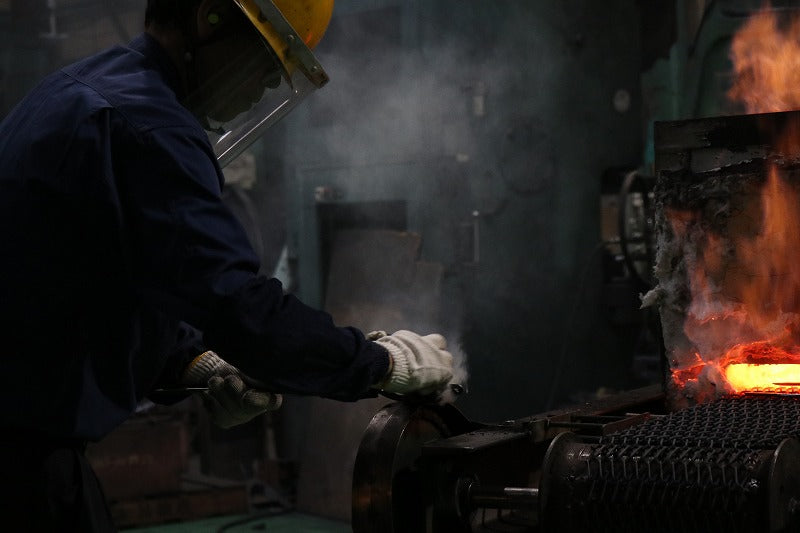
Even when Japanese makers produce Western-style spring shears, they bring a long tradition of forging and careful adjustment to the process. A well-made Japanese bypass shear often feels more controlled in the hand—especially when you move from soft green stems to denser, dry wood.
-
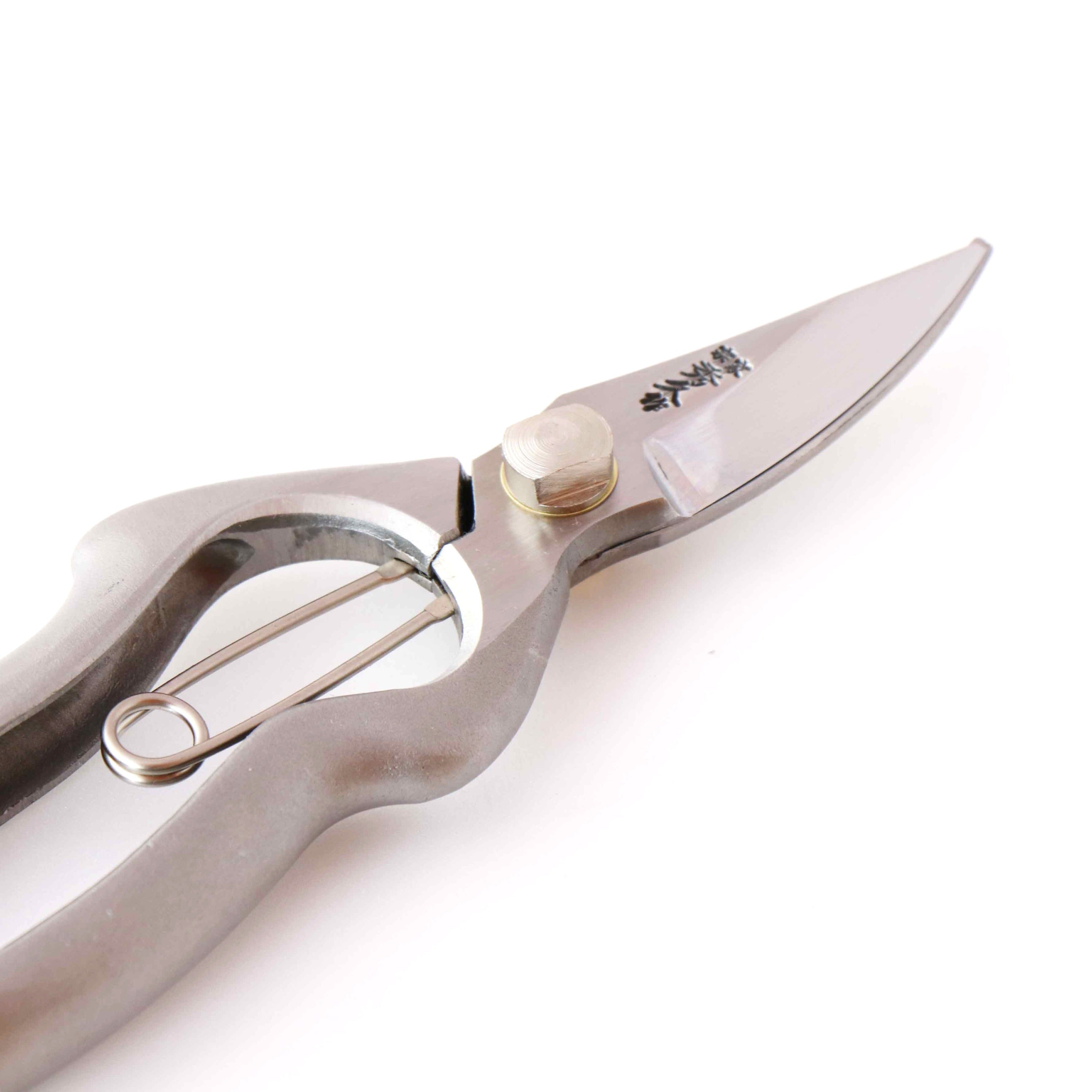
The Clamshell Edge (Hamaguri-ba): Instead of a flat bevel, the blade is ground into a gentle, clamshell-like curve. This Hamaguri shape reduces friction and supports the edge, helping the blade slide through wood with a cleaner cut. You may notice less “grab” partway through the cut and less effort, even when the branch is on the tougher side.
-
Precision Alignment (Minimal Play): The pivot (the screw where the two blades meet) is set with extreme care. On high-quality shears, there is little to no wobble, so the blades track smoothly past each other. That smooth tracking helps prevent snagging on fibrous stems and reduces tearing when you prune live growth.
-
The Finish: Mass-produced tools are often shipped with only machine-set tension. By contrast, many Japanese shears receive a final hand adjustment during finishing to ensure the tension and alignment feel exactly right. When set well, the blades open smoothly, close with a clean bite, and stay consistent over years of use.

5. Finding the Right Fit

Step 1: Identify Your Main Task
What types of plants and materials will you be using the shears for?
-
Maintaining Trees (Pines, Maples): Ueki-basami are the classic choice for controlled shaping and detail work. They allow for the precision needed to maintain traditional silhouettes.
-
Roses, Fruit Trees, or Woody Branches: Pruning Shears (Sentei-basami) are designed for heavier work. The spring and leverage do the heavy lifting, reducing the strain on your hand.
-
Bouquets or Houseplants: Floral Shears (Hana-basami) or Snips (Mekiri-basami) work best here. They ensure clean cuts on soft stems, which helps your plants stay hydrated and healthy.
Step 2: Check the Branch Thickness
If the branches you're working with are:
-
Over 15 mm: Use Sentei-basami. They are built to handle thicker wood and higher resistance without damaging the blades.
-
15 mm or under: Ueki-basami or Snips give you more control. They are perfect for finishing work where a delicate touch is required.
TIP: Remember the "Two-Tool Rule." In professional gardening, one tool is rarely enough. Many experts use a two-tool system: one stronger pair for structural cuts, and one lighter pair for fine details. This approach protects your plants from crushing and prevents unnecessary wear on your delicate shears.
Connect with Your Garden
Japanese shears are more than tools—they can become a bridge between your hands and the living work in front of you. Whether you choose a traditional no-spring shear or a modern bypass model, you are using a design shaped by long practice and careful craft. When a tool cuts cleanly and feels steady in your hand, gardening can shift from a chore to a quiet, satisfying rhythm. Choose the pair that matches the plants you care for and the way you like to work.



Share:
Why Japanese Bonsai Scissors Matter for Precise Cuts