Why the Right Shears Make All the Difference
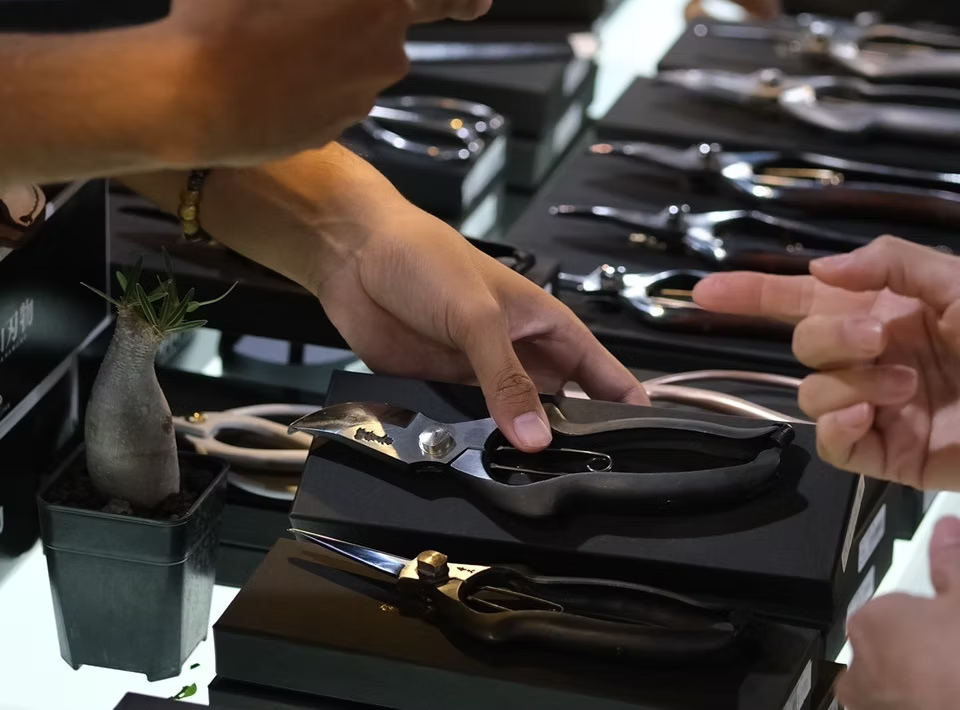
Choosing the right shears starts with one simple question: what will you be cutting? Thick branches, delicate stems, fresh flowers, or a bit of everything in the garden? This guide walks you through the key factors — purpose, type, steel, grip, and size — so you can find the pair that fits your hand and your work.
Choose by Purpose
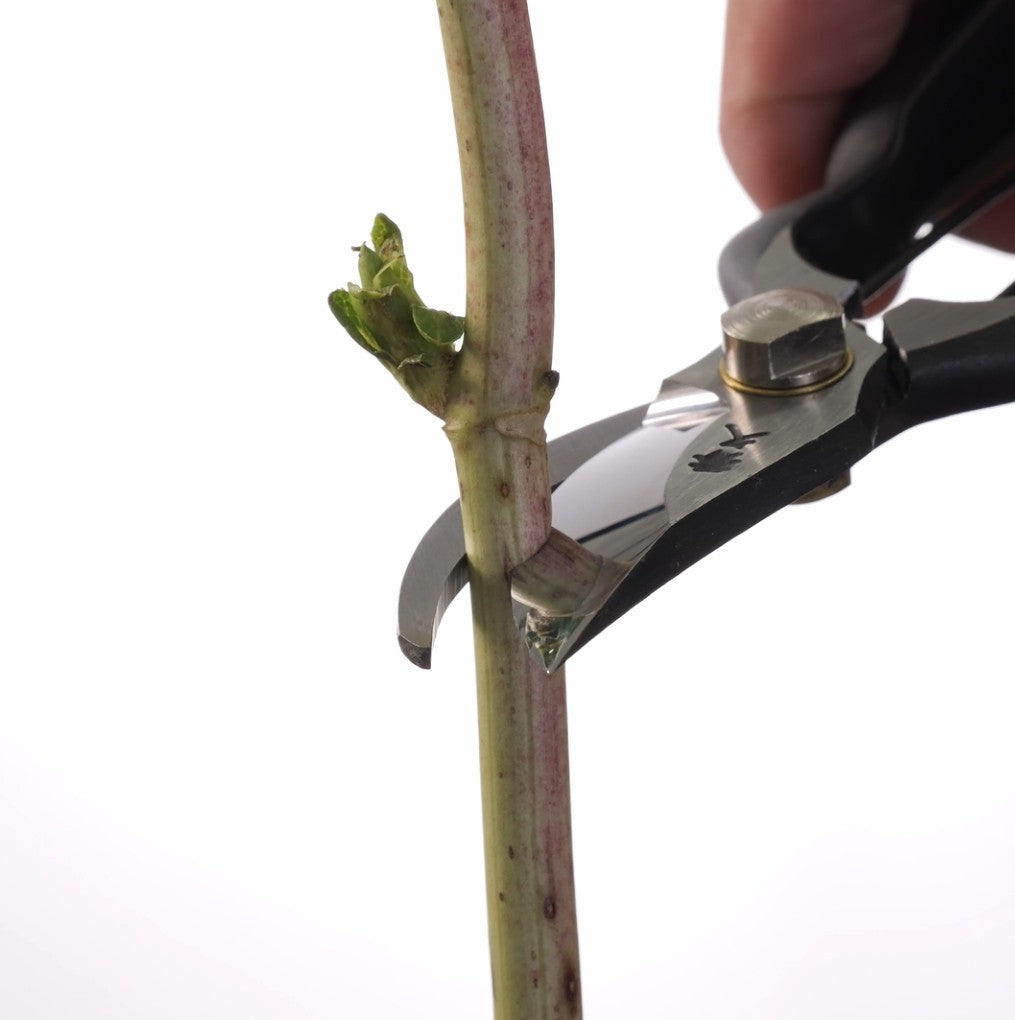
Pruning Thicker Branches
Recommended tools: Pruning Shears (Secateurs)
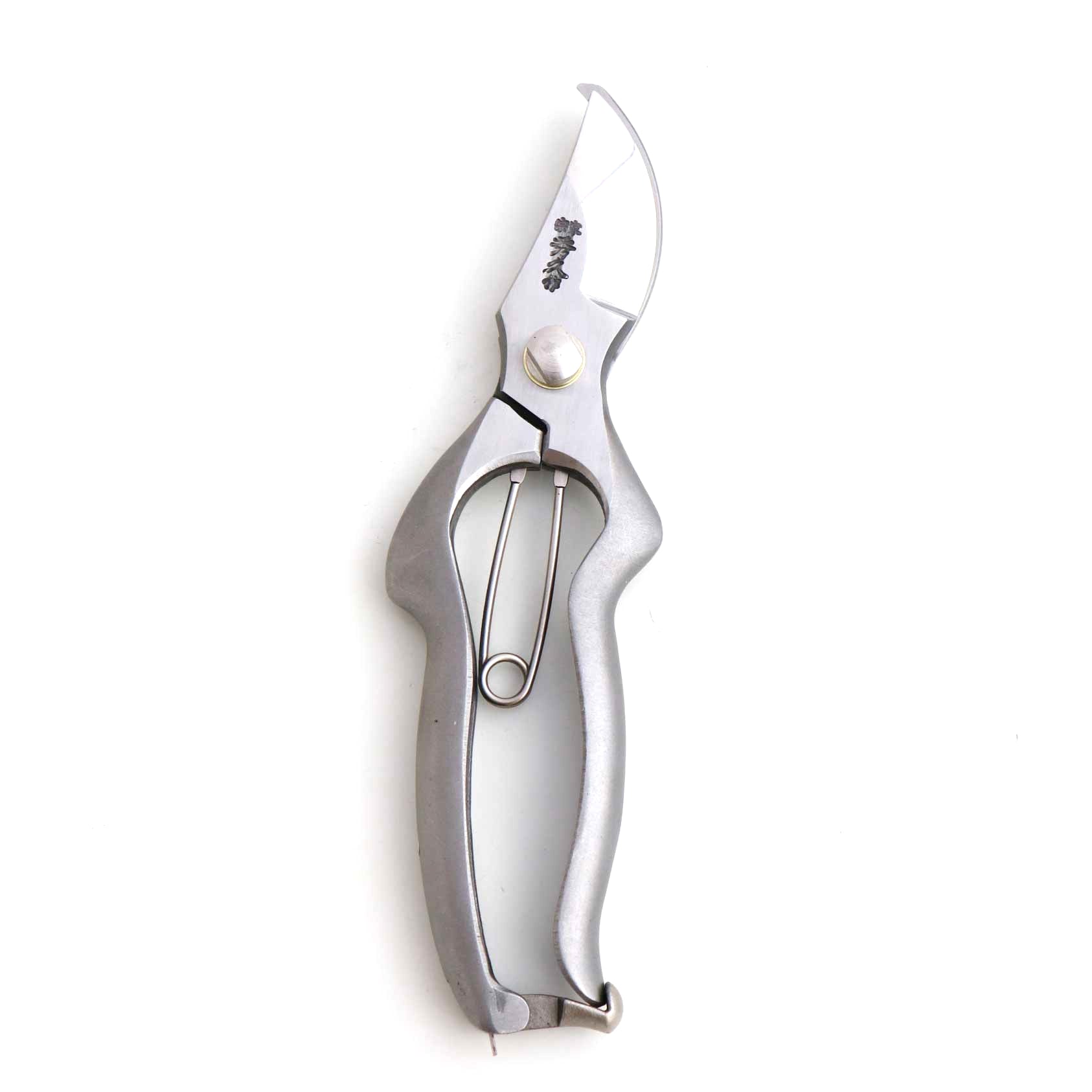
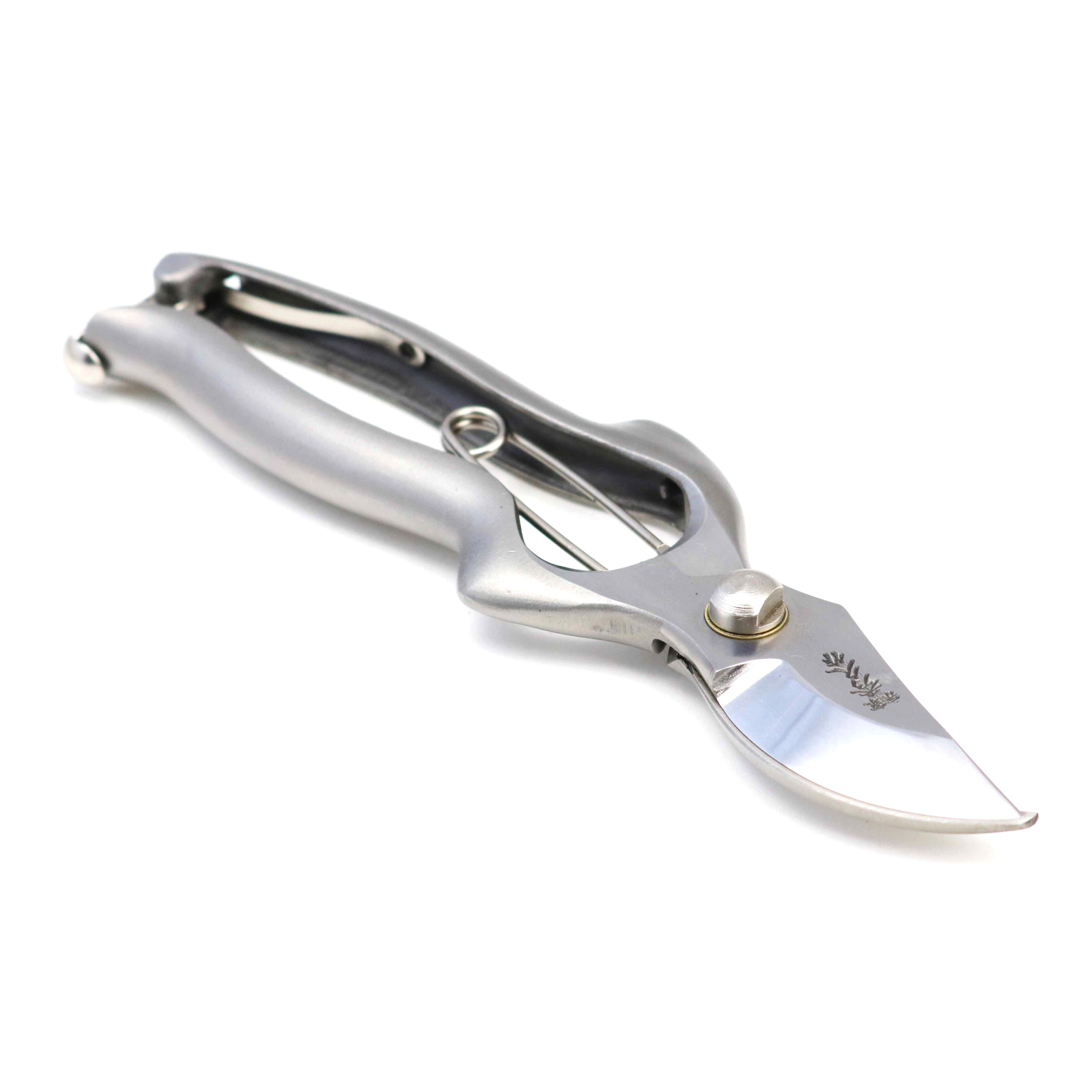
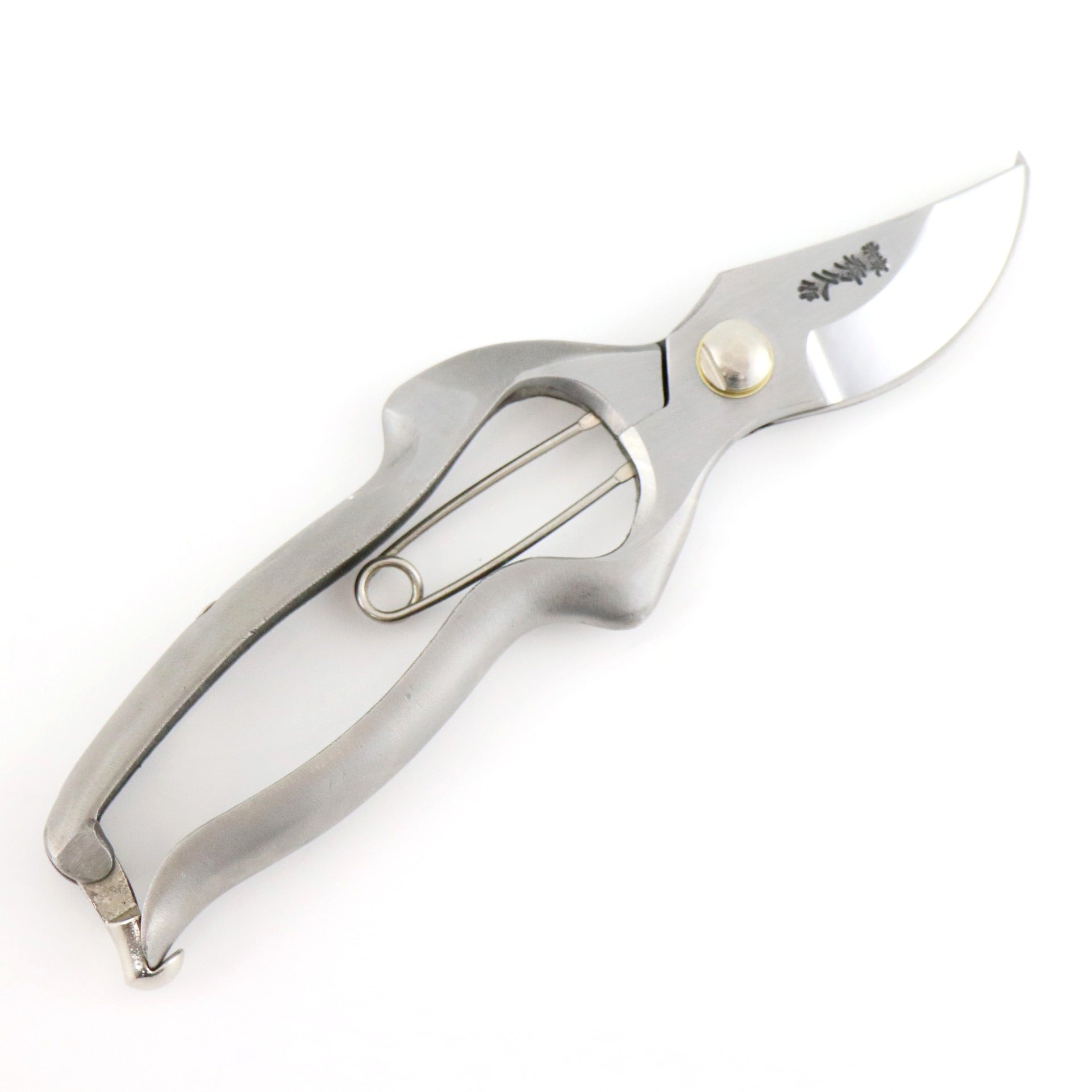
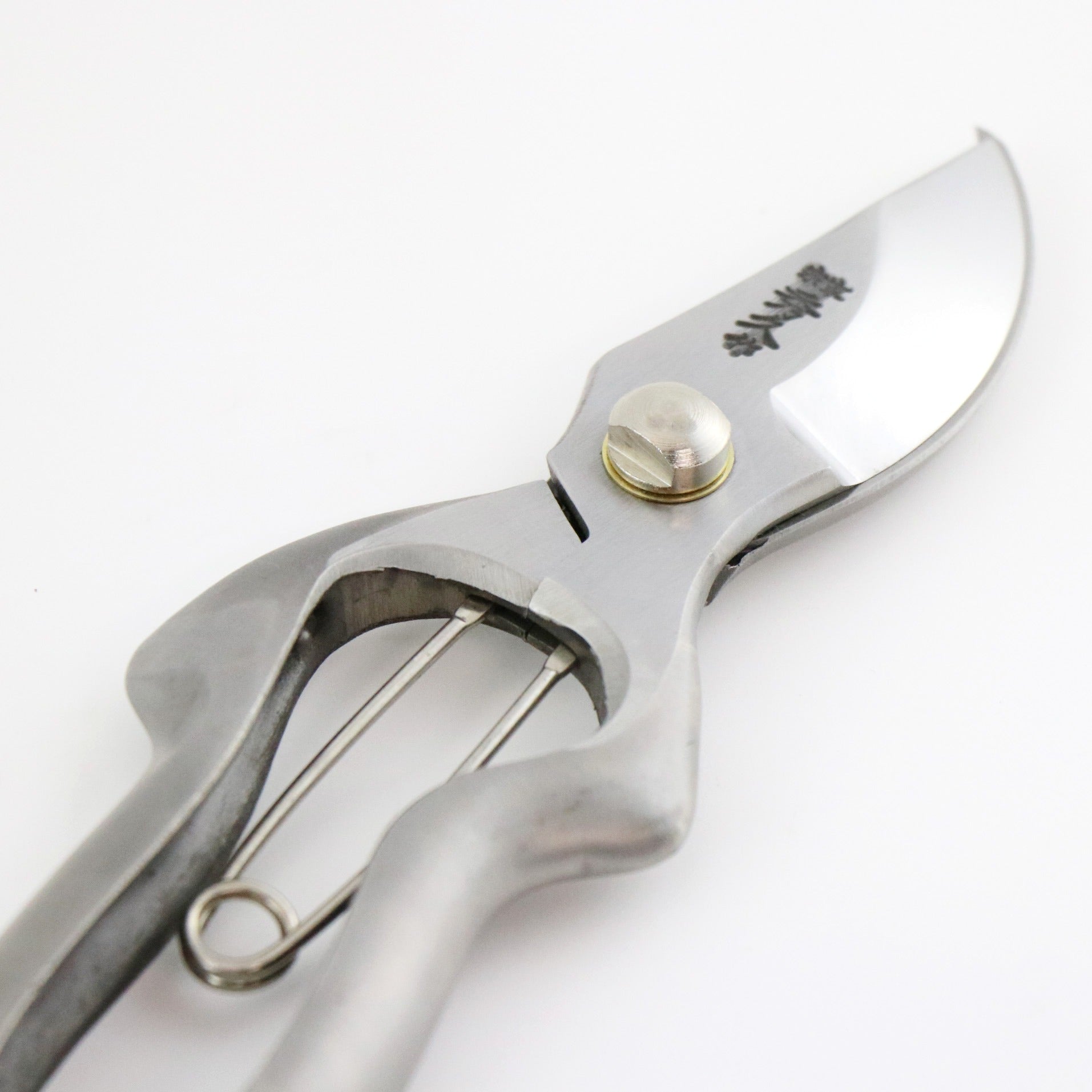
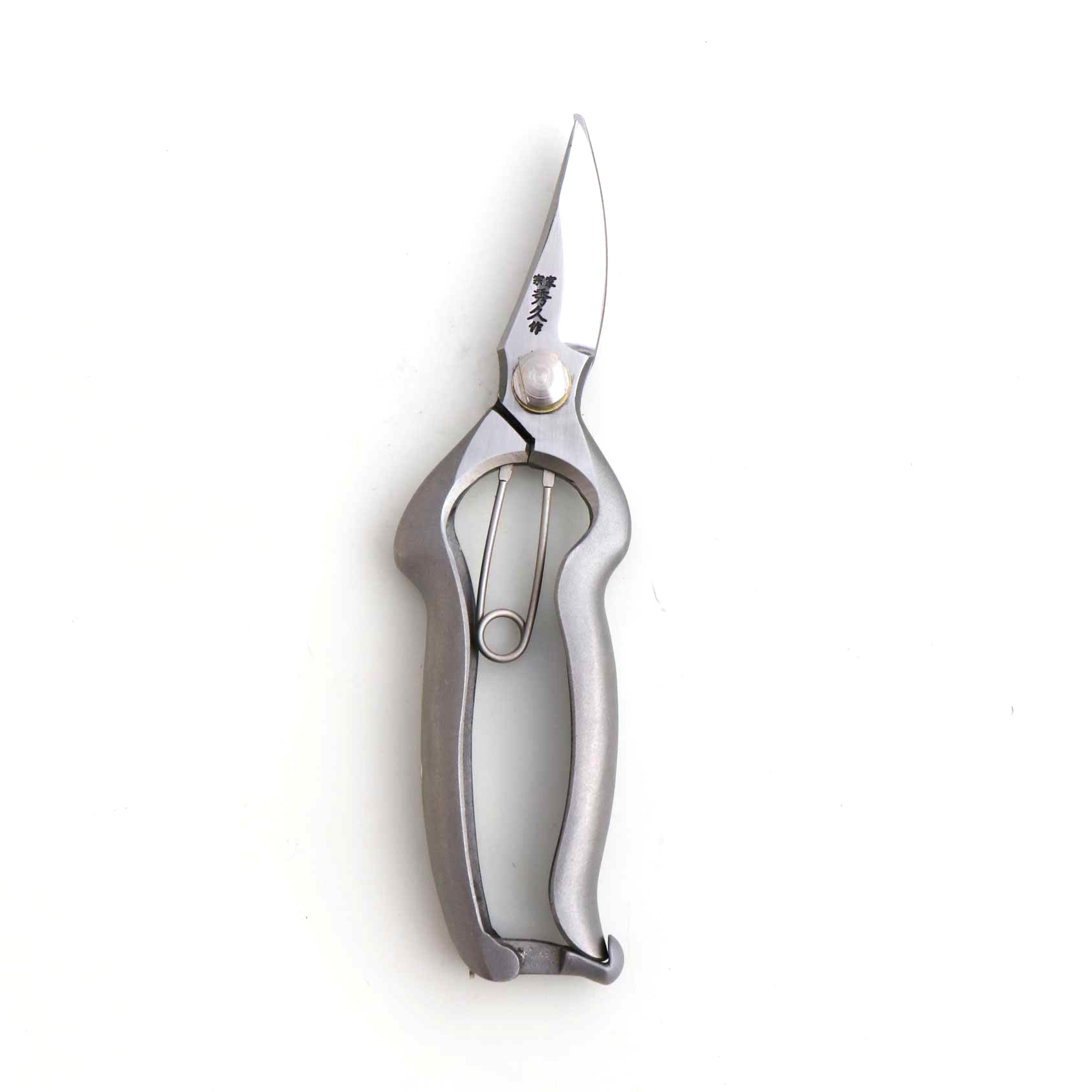
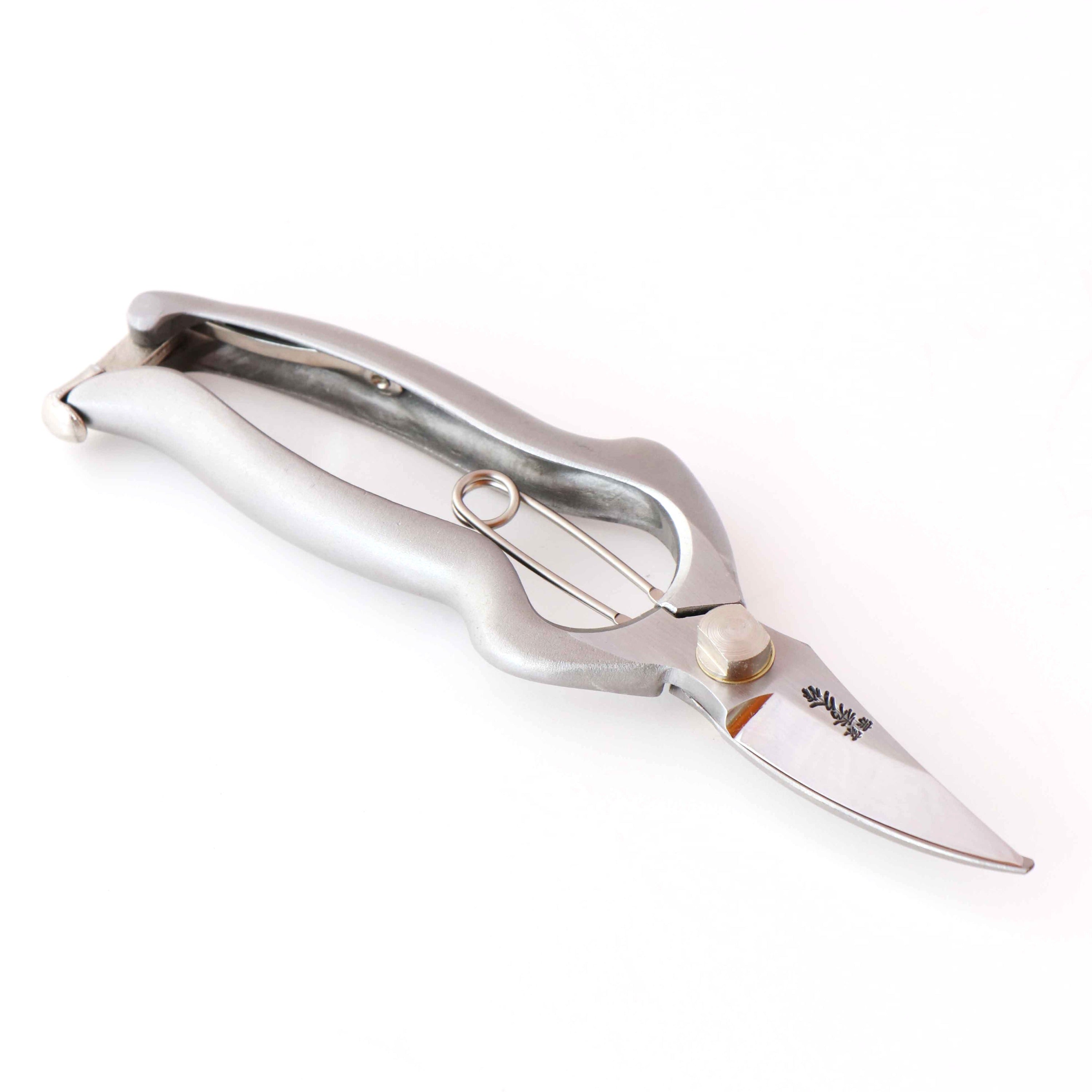
If your main task is cutting through thick branches or tough, woody stems, pruning shears are the go-to choice. A sharp cutting blade works against a sturdy anvil blade, giving you the leverage and control to make clean cuts. Ideal for garden trees, fruit trees, and other hardwood pruning.
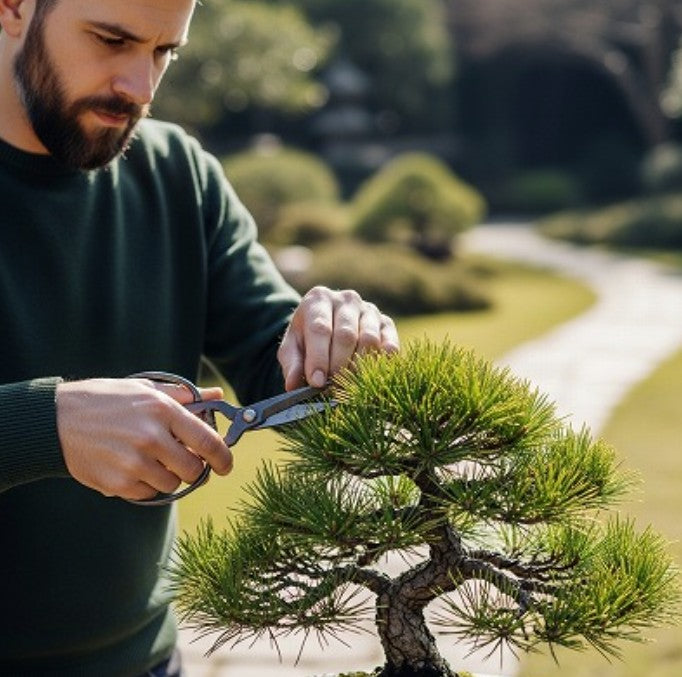
Houseplants and Bonsai
Recommended tools: Snips and Bonsai Scissors
For detailed work — thinning, deadheading, trimming leaves, or the daily care of houseplants and bonsai — snips and bonsai scissors are often the best fit. Their slender blades let you reach into tight spaces and place each cut exactly where you want it.

Ikebana and Floral Arrangement
Recommended tools: Ikebana Shears and Multi-Purpose Pruning Shears (secateurs)
When working with flowers, a clean cut edge matters. Both ikebana shears and multi-purpose pruning shears are well suited for ikebana (Japanese flower arranging) and Western-style floral design. They are built to slice through stems — even thicker flower stems — smoothly and steadily, leaving a crisp, clean cut.
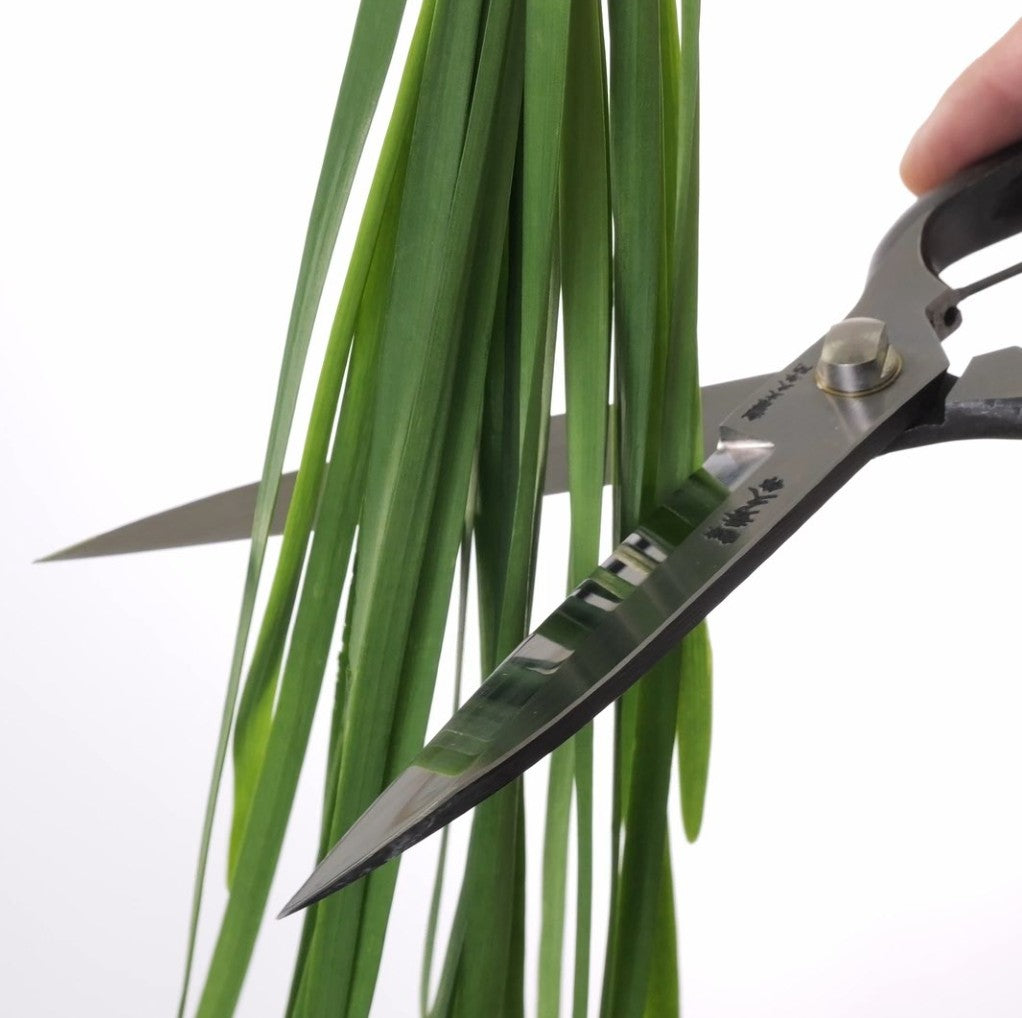
Landscape Finishing
Recommended tools: One-Handed Hedge Shears
For landscape work — especially the surface finishing after the main trimming is done — one-handed hedge shears are a practical choice. Their longer blades make it easy to even out foliage and give shrubs and topiaries a smooth, tidy finish.
A Closer Look at Each Type
Compare the main types of gardening shears side by side. Use the table below to find which one best fits your needs.
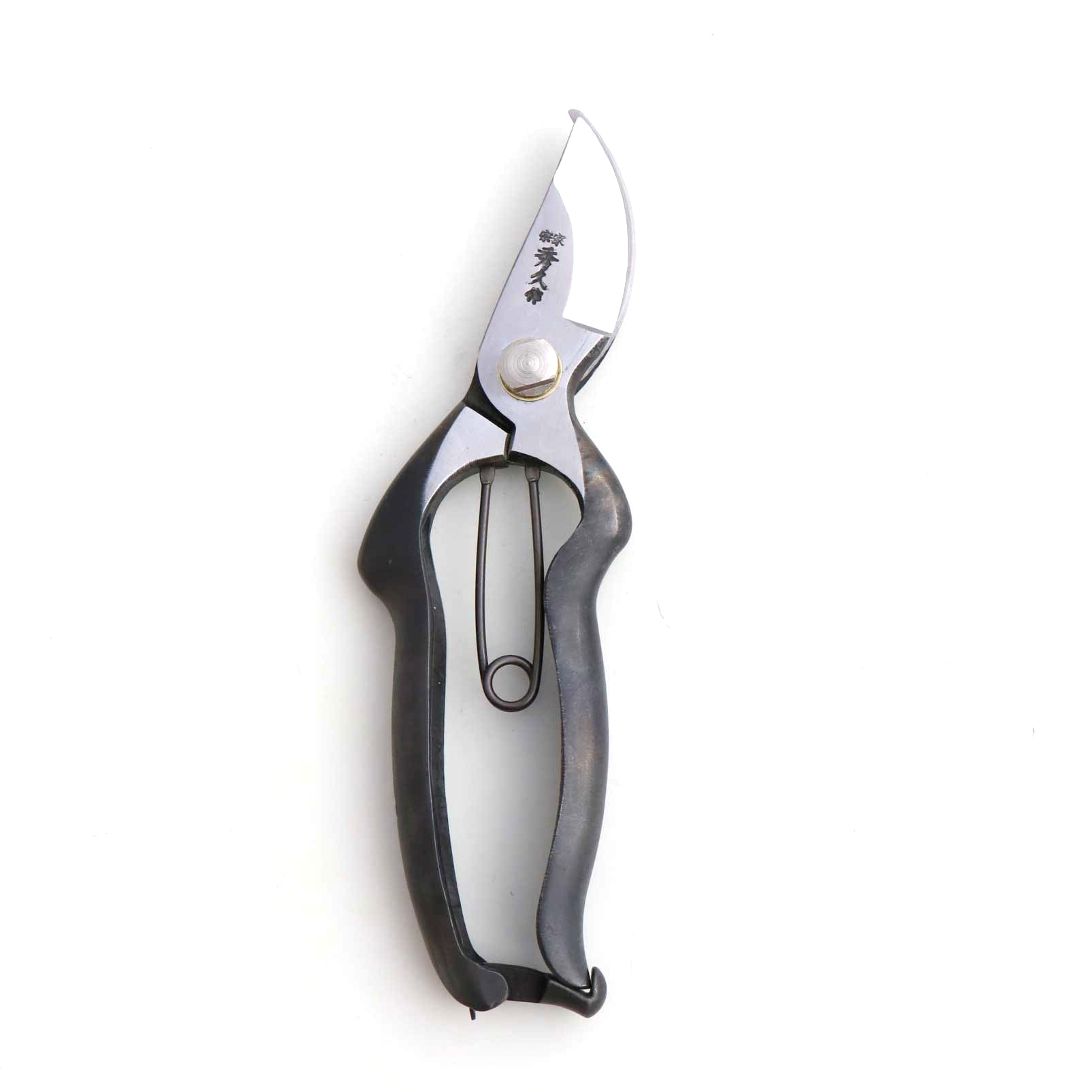
Pruning Shears (secateurs)
A sharp cutting blade paired with a sturdy anvil blade, using leverage to cut through thick branches with control.
Cutting capacity
- Tip: under 5 mm
- Base: under 15 mm
Best for
- Pruning thick branches and cutting flower stems
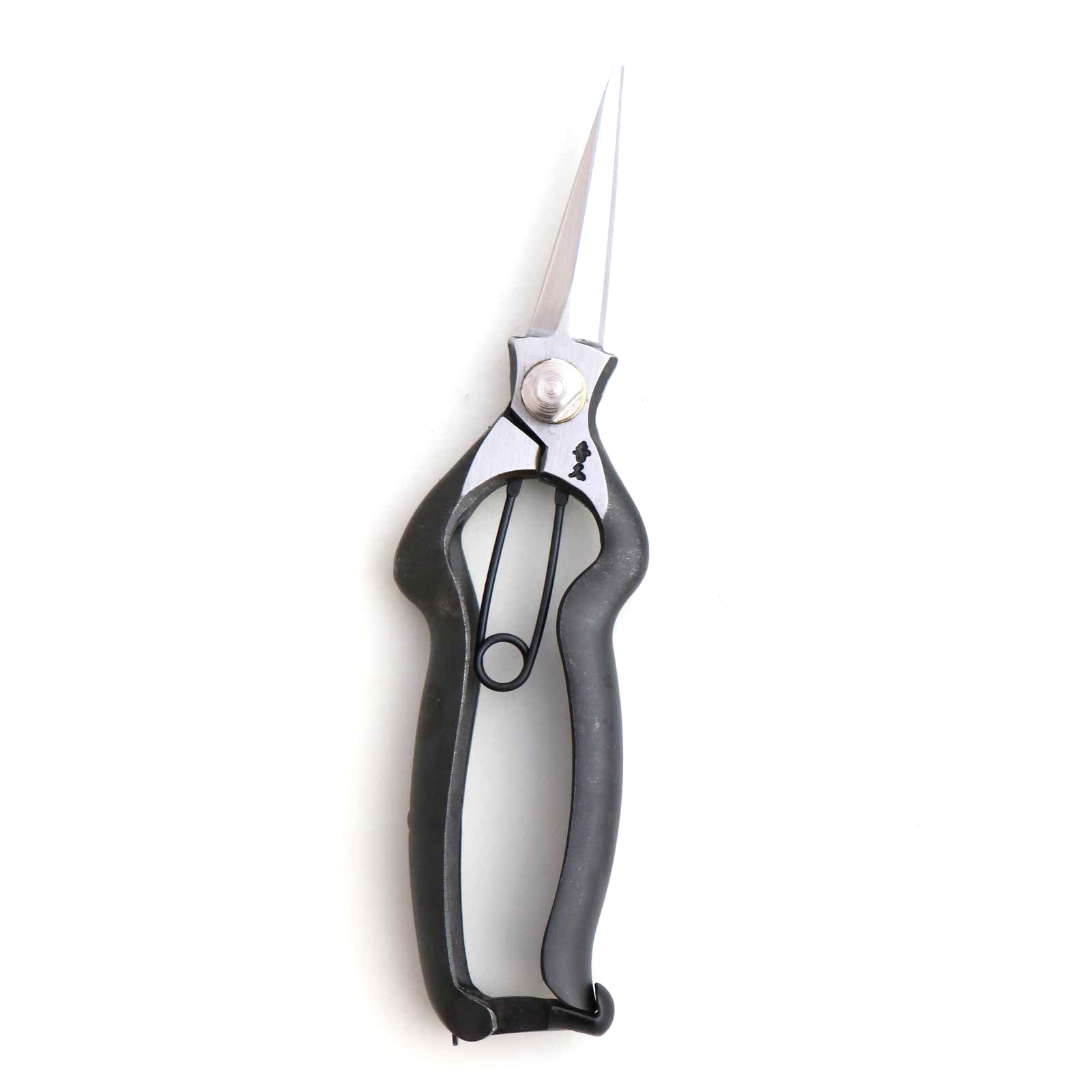
Garden Snips
Lightweight snips with long, straight blades — ideal for fine pruning, deadheading, and indoor plant care.
Cutting capacity
- Tip: under 5 mm
- Base: under 10 mm
Best for
- Pruning and shaping garden trees and shrubs

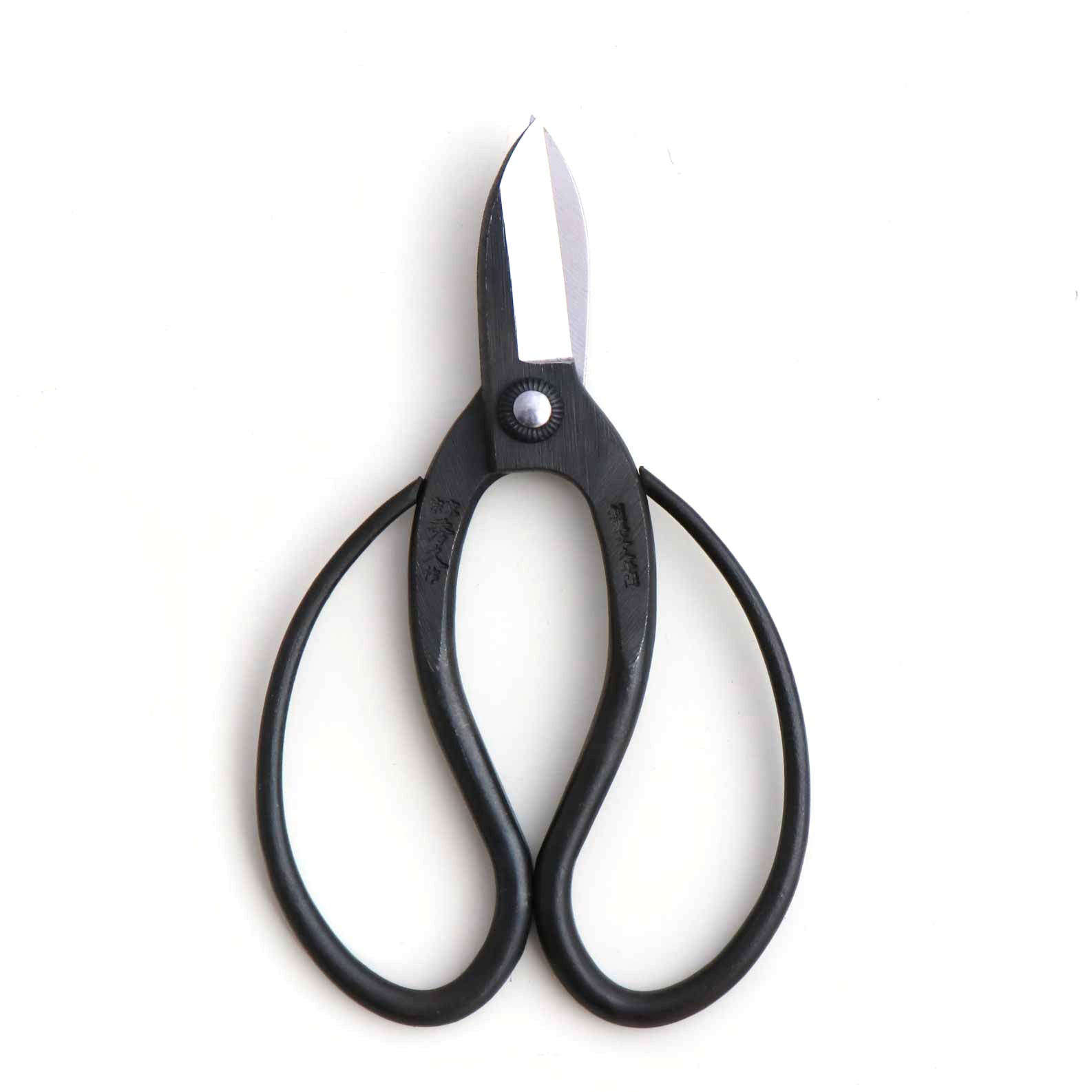
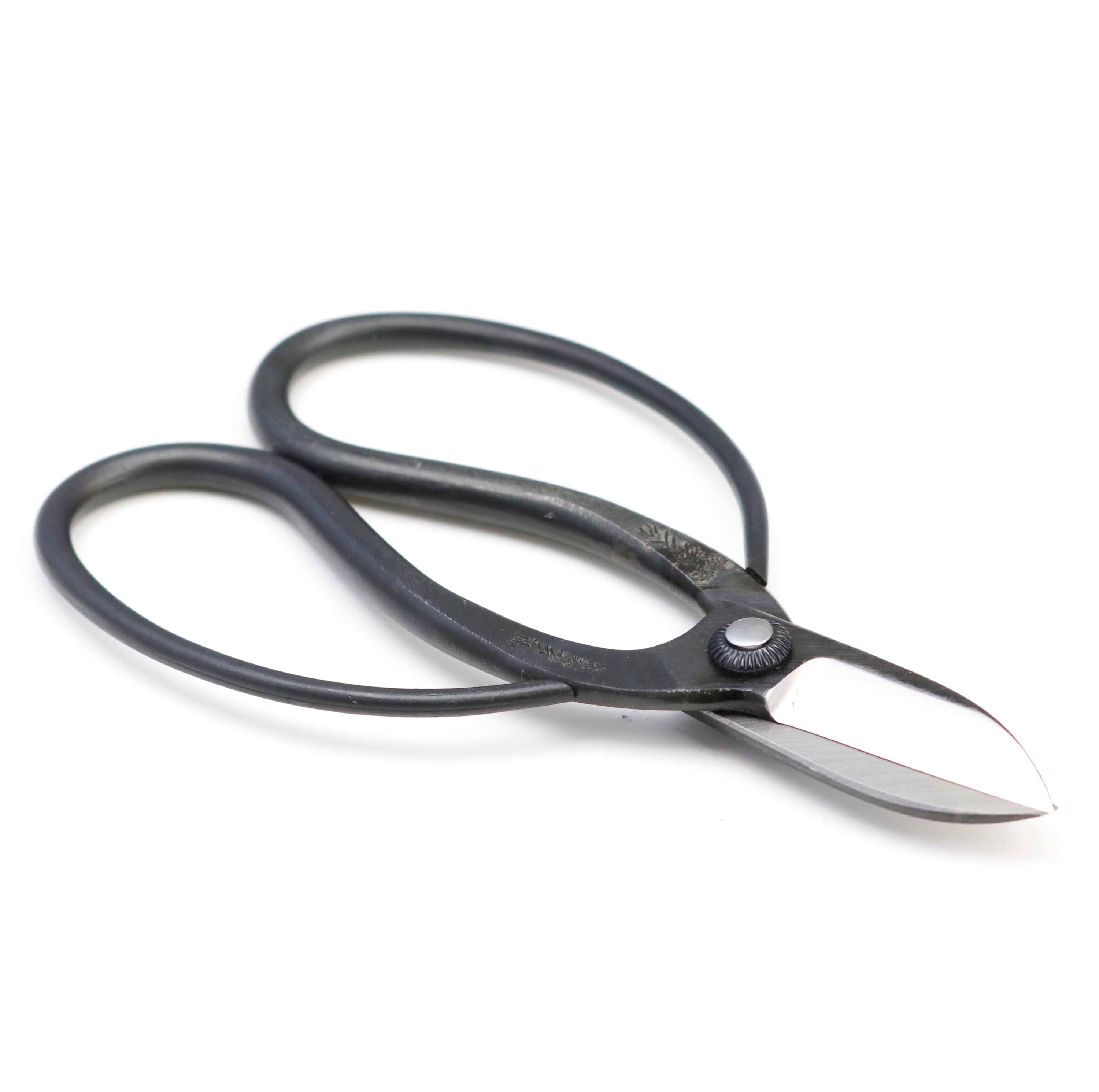
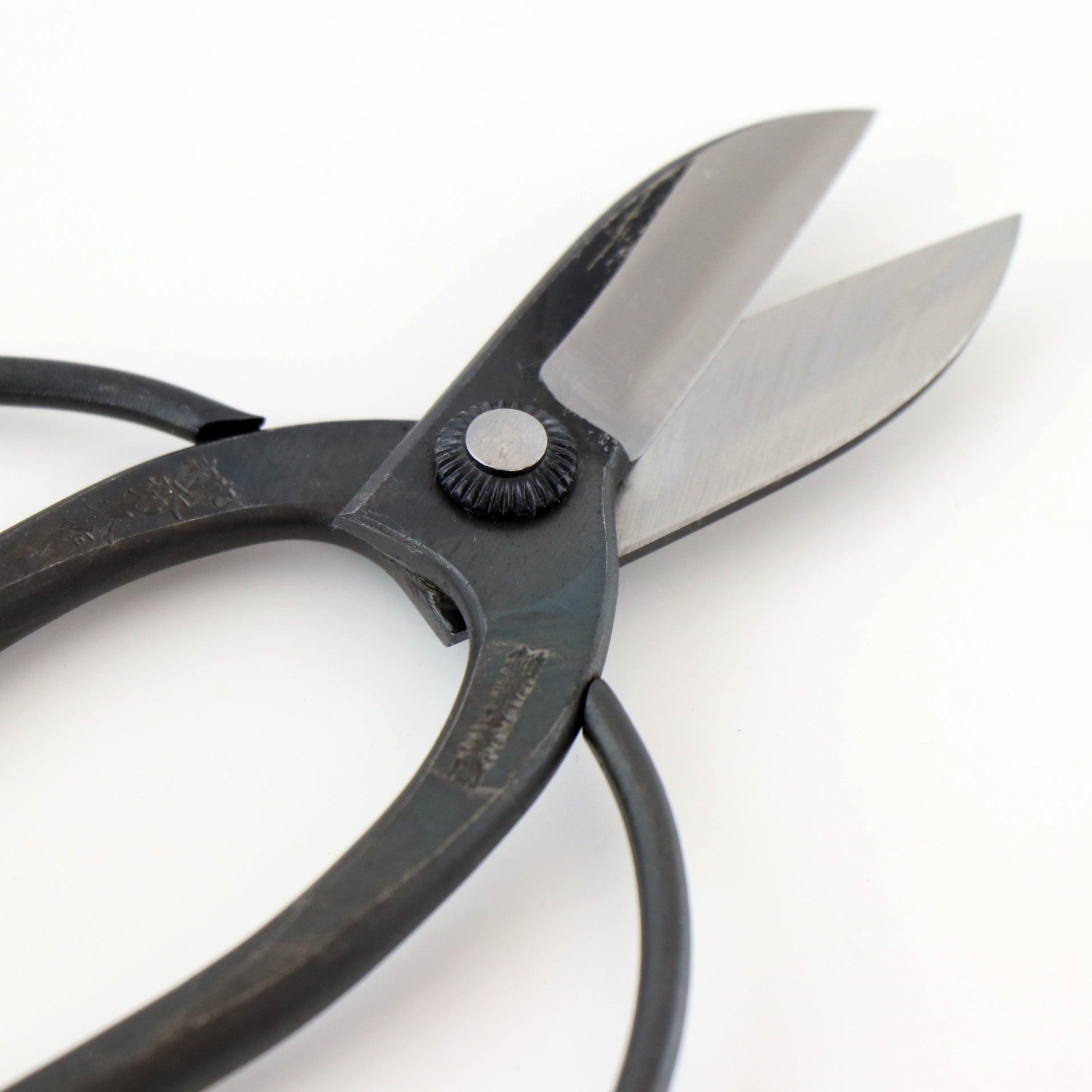
Bonsai Scissors
A traditional Japanese scissor design — lightweight, nimble, and easy to handle. The slender, pointed tips reach deep into foliage, making it simple to tend inner branches and buds.
Cutting capacity
- Tip: under 5 mm
- Base: under 10 mm
Best for
- Fine plant care
- Home gardening
- Floral arrangement
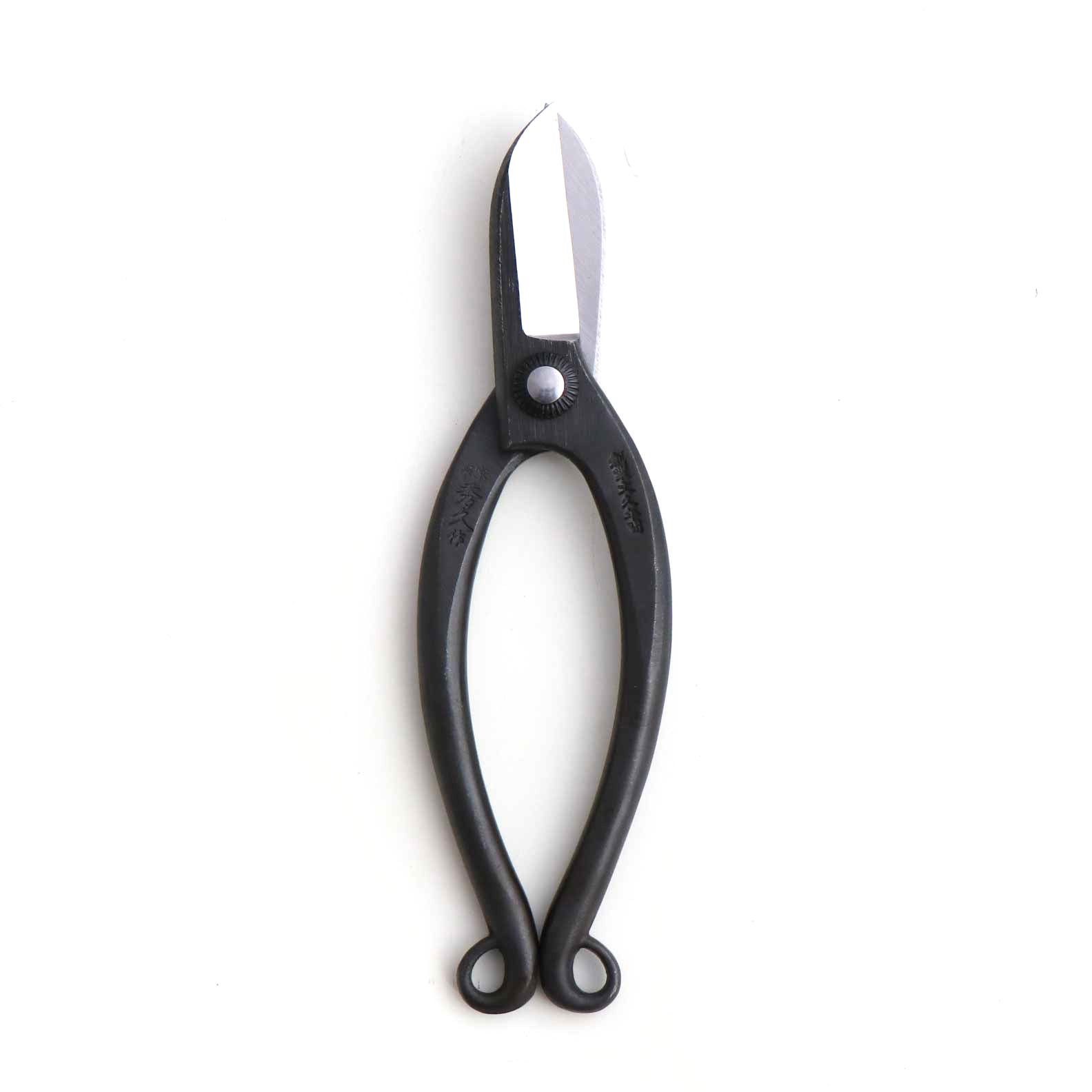
Ikebana Floral Shears
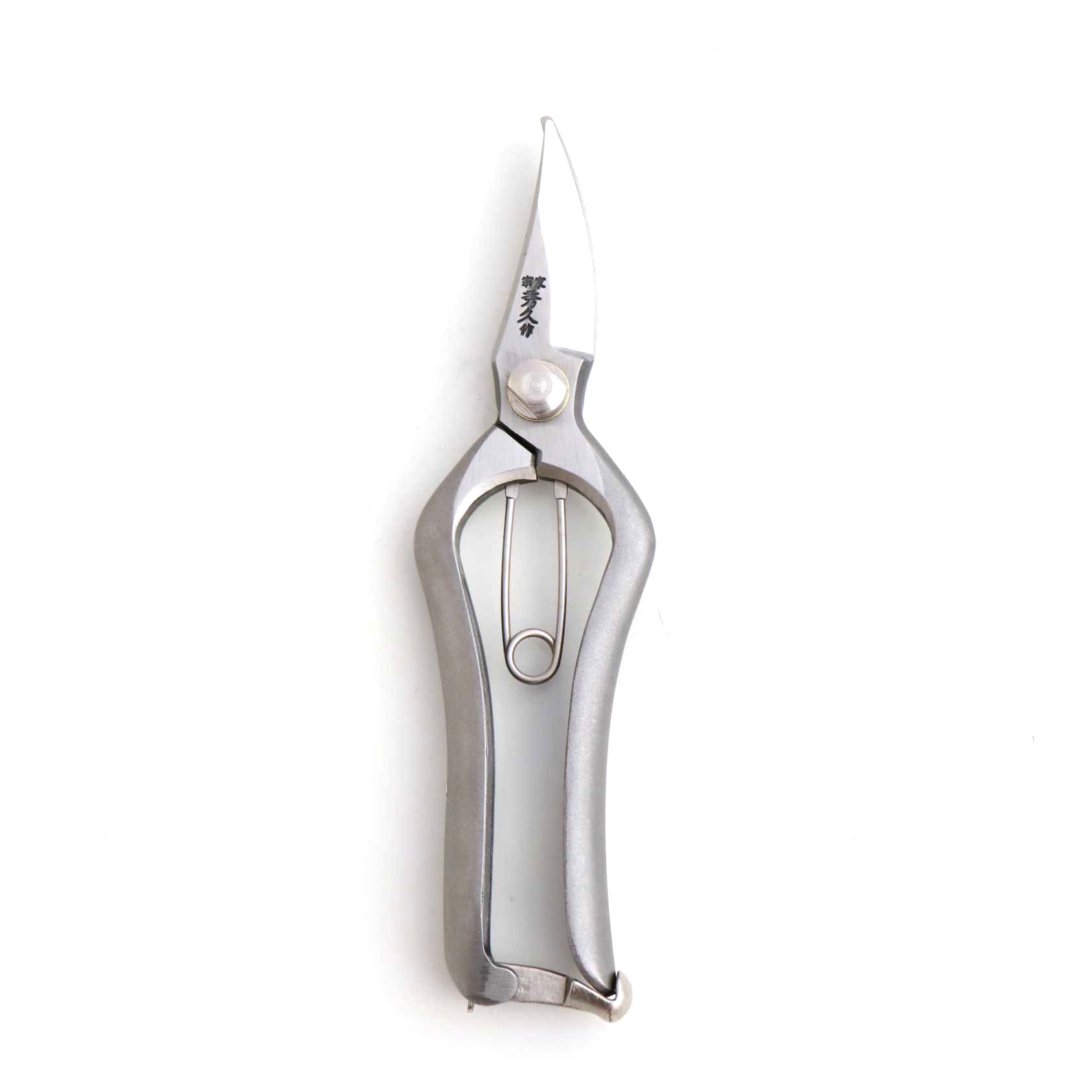
This category includes traditional ikebana shears with a "warabi-te" or looped handle, as well as multi-purpose pruning shears — all suited to clean stem cutting and precise branch control in floral work.
Cutting capacity
- Tip: under 5 mm
- Base: under 10 mm
Best for
- Ikebana flower arrangement
- Western-style flower arrangement
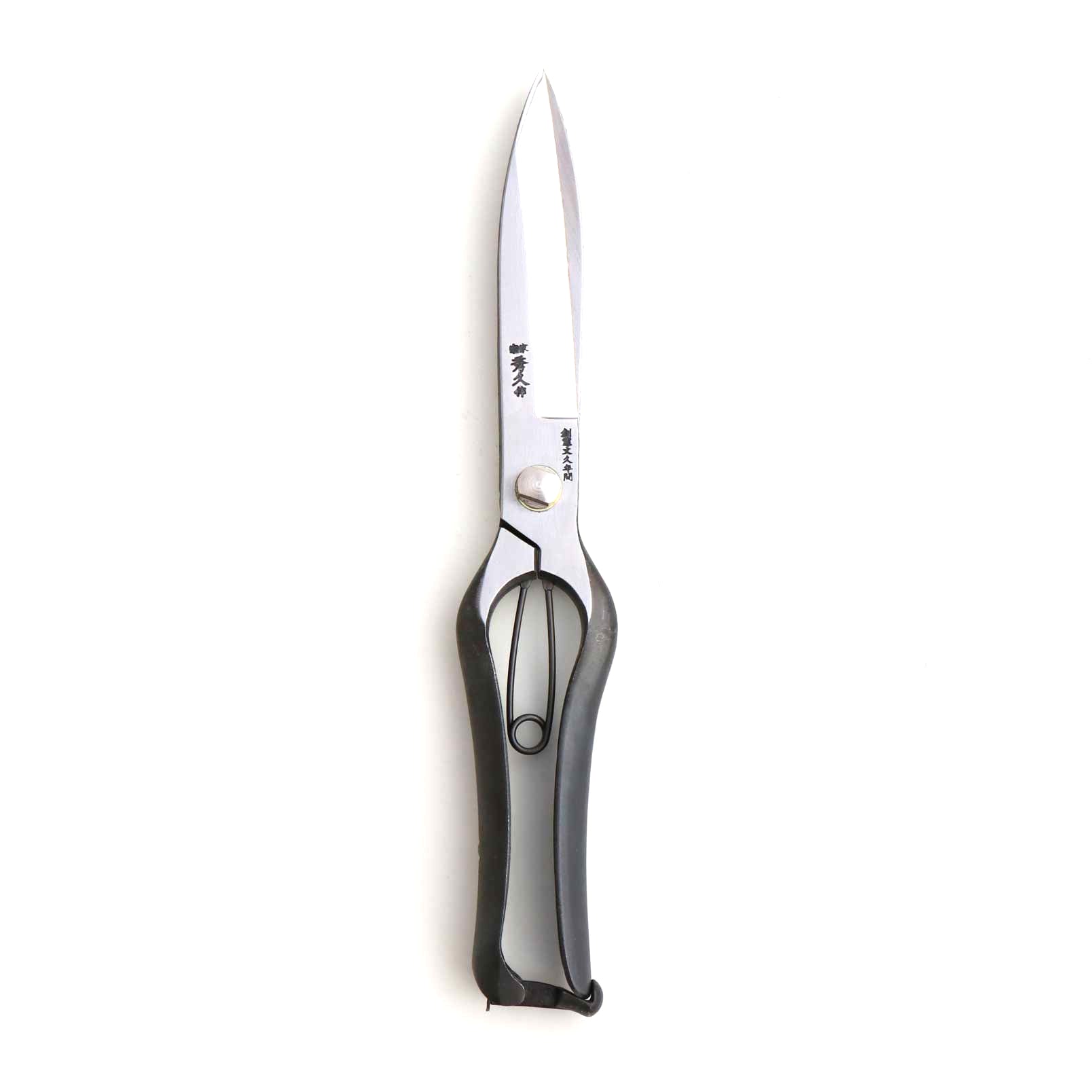
One-handed Hedge Shears
Designed with long, narrow blades for precise one-handed control, these shears are ideal for trimming hedges, shrubs, and other soft green growth. The category includes both spring-open one-handed hedge shears and traditional Japanese Okubo-style hedge shears, known for their clean, accurate finishing work.
Cutting capacity
- Tip: under 3 mm
- Base: under 5 mm
Best for
- Trimming hedges and shrubs
- Shaping boxwood, azaleas, and topiary
- Light finishing cuts on soft green growth
Choose by Material
Even when the shape is the same, the material changes how the shears feel in use and how they age with you over time. At Toyama Hamono, the main choice is between high-carbon steel and stainless steel. Neither is inherently better. The right choice depends on what matters most to you.
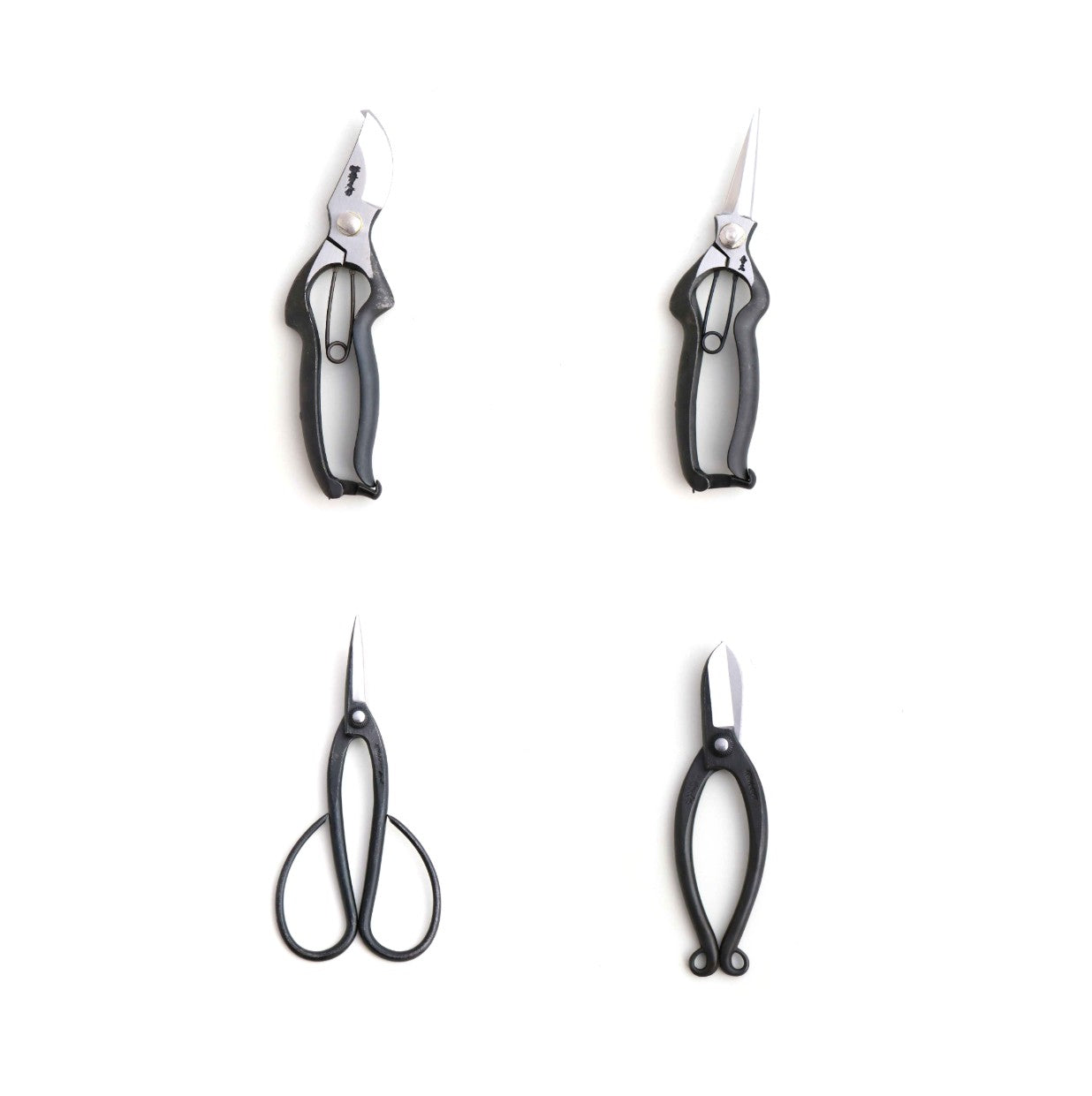
High-Carbon Steel
Many users choose high-carbon steel for the feel of the blade and the way it takes an edge. It suits those who do not mind regular care, including sharpening when needed.
Because it is more sensitive to moisture, it needs a little more attention after use. Wipe off water and plant residue, then store the shears properly to help keep them in good condition.
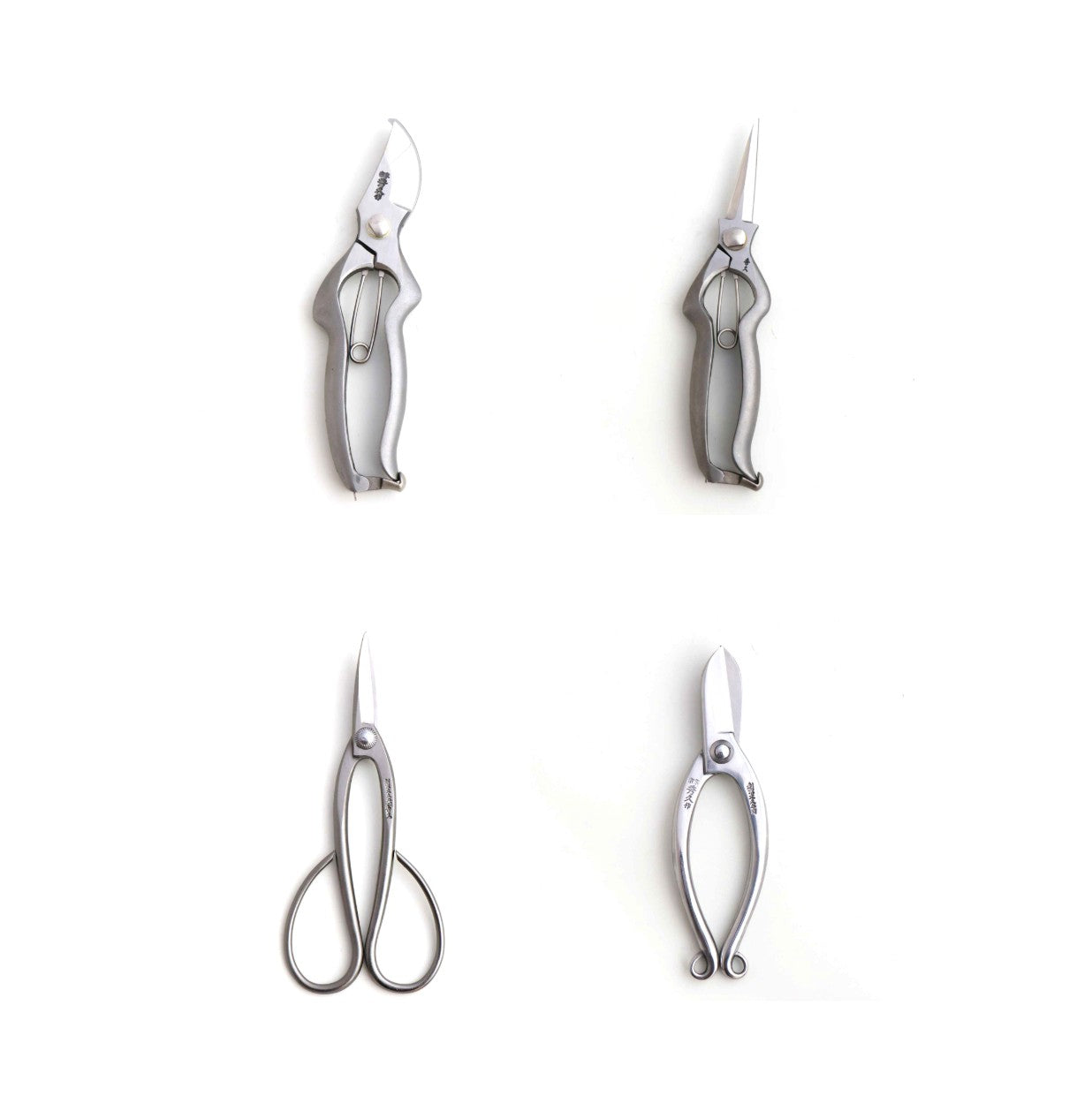
Stainless Steel
Stainless steel is often the easier option for everyday care. It is less demanding in humid conditions and works well for users who want to keep maintenance simple.
It still needs basic care, however. Clean and dry the shears after use, and store them in a dry place.
Choose by Grip Shape
A good blade matters, but so does the shape of the grip. It affects how naturally the shears sit in the hand, how secure they feel, and how easily you can apply force.

Symmetrical Grips
This is the most traditional and neutral grip shape. It feels balanced in the hand and is easy to use without much adjustment.
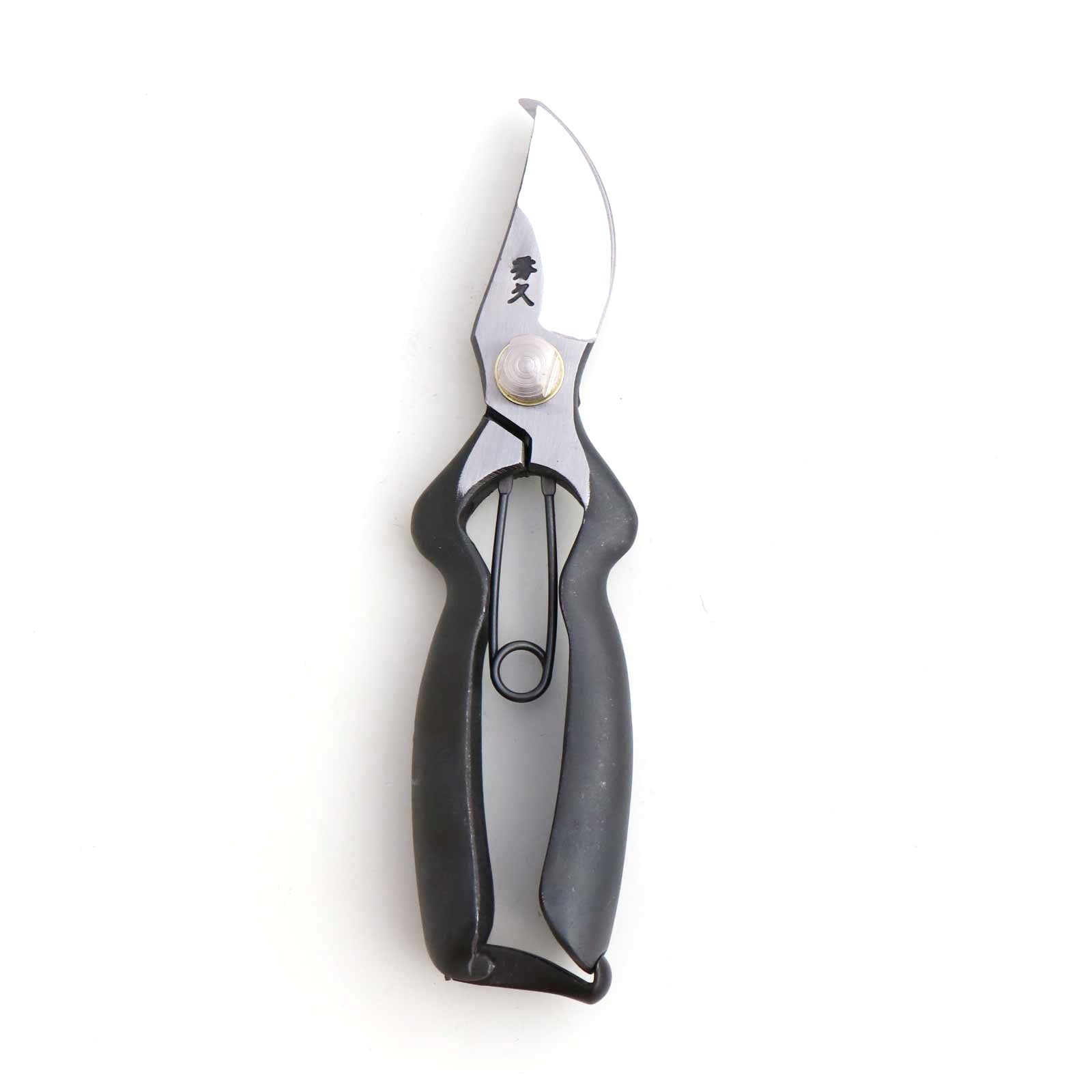
Ergonomic Symmetrical Grips
These keep a mostly symmetrical shape, but with a more contoured feel in the hand. They make the grip position a little clearer while still remaining flexible in use.

Ergonomic Asymmetrical Grips
These are shaped to support the wrist and help you apply force with more control. They can feel especially secure in use, though the grip direction is more clearly defined.
Choose by Grip Materials
Grip material also changes the character of the tool. When choosing between them, think not only about appearance, but about how the tool feels during repeated use.
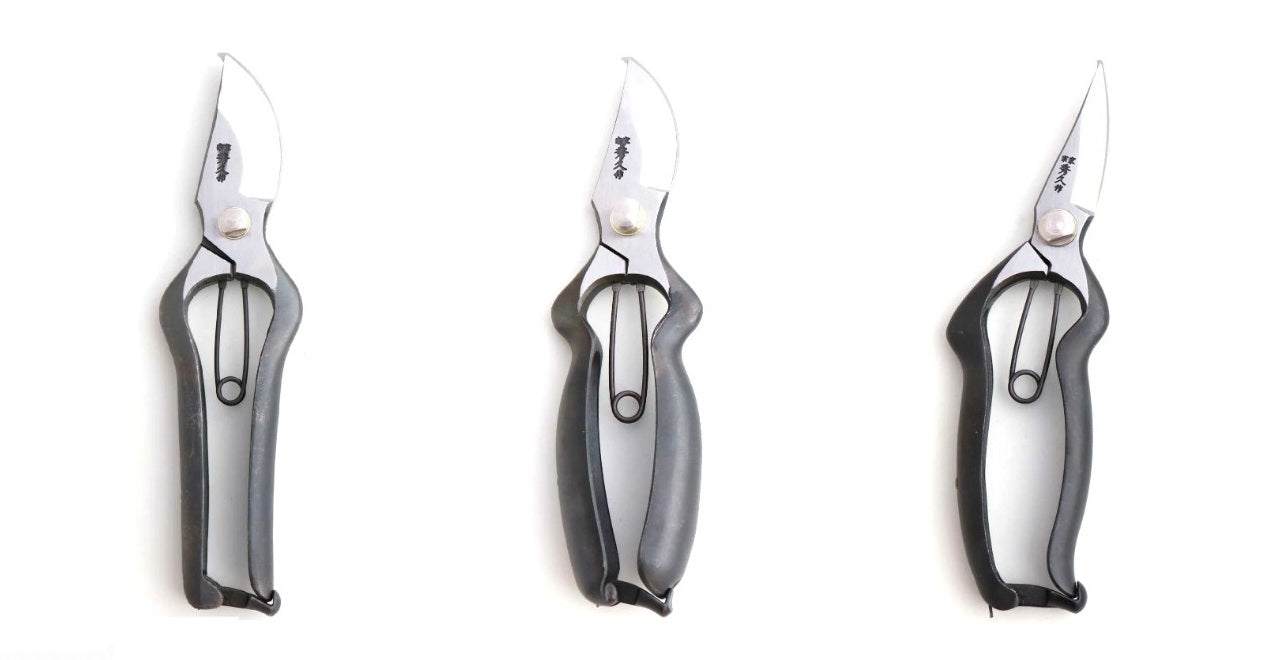
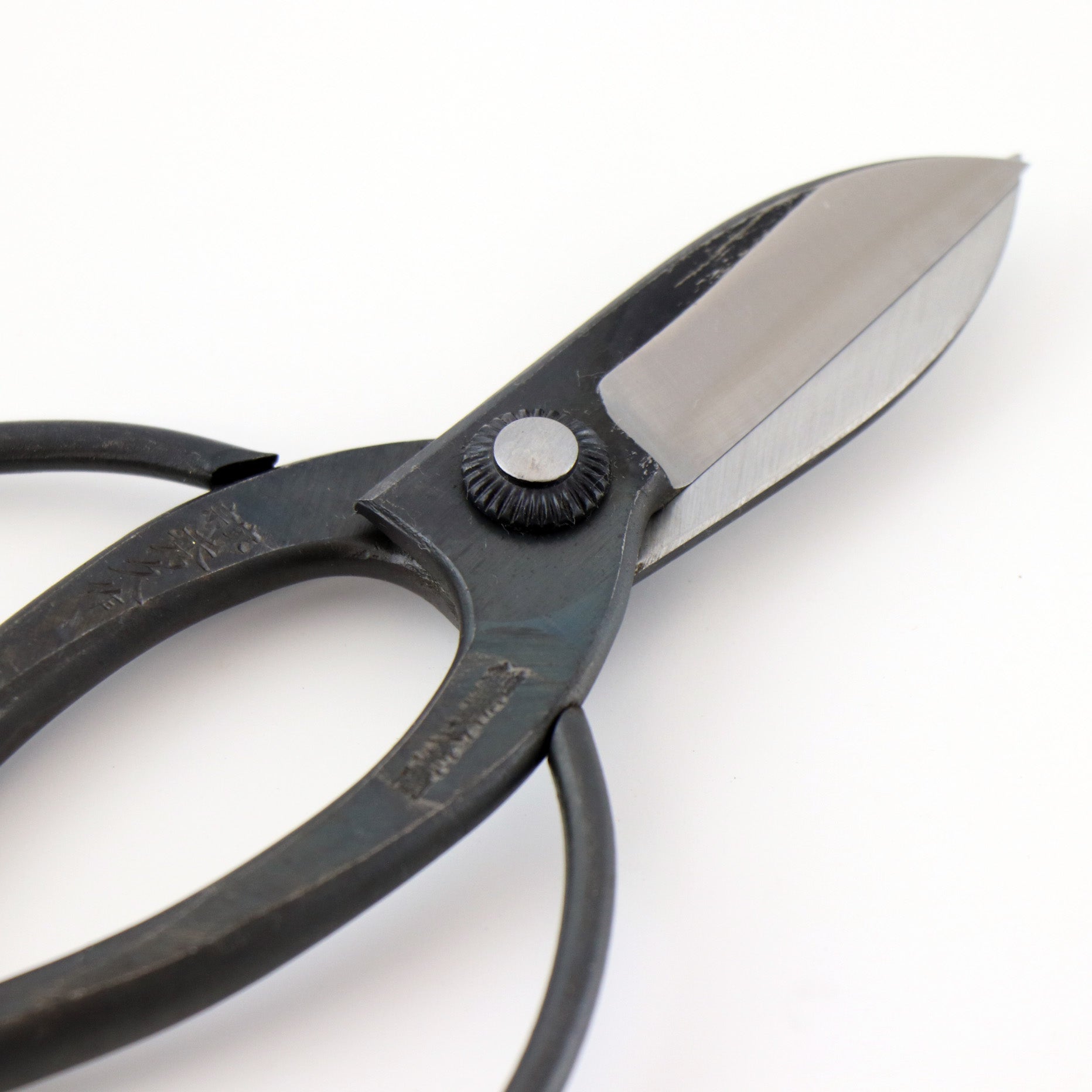
Metal Grip
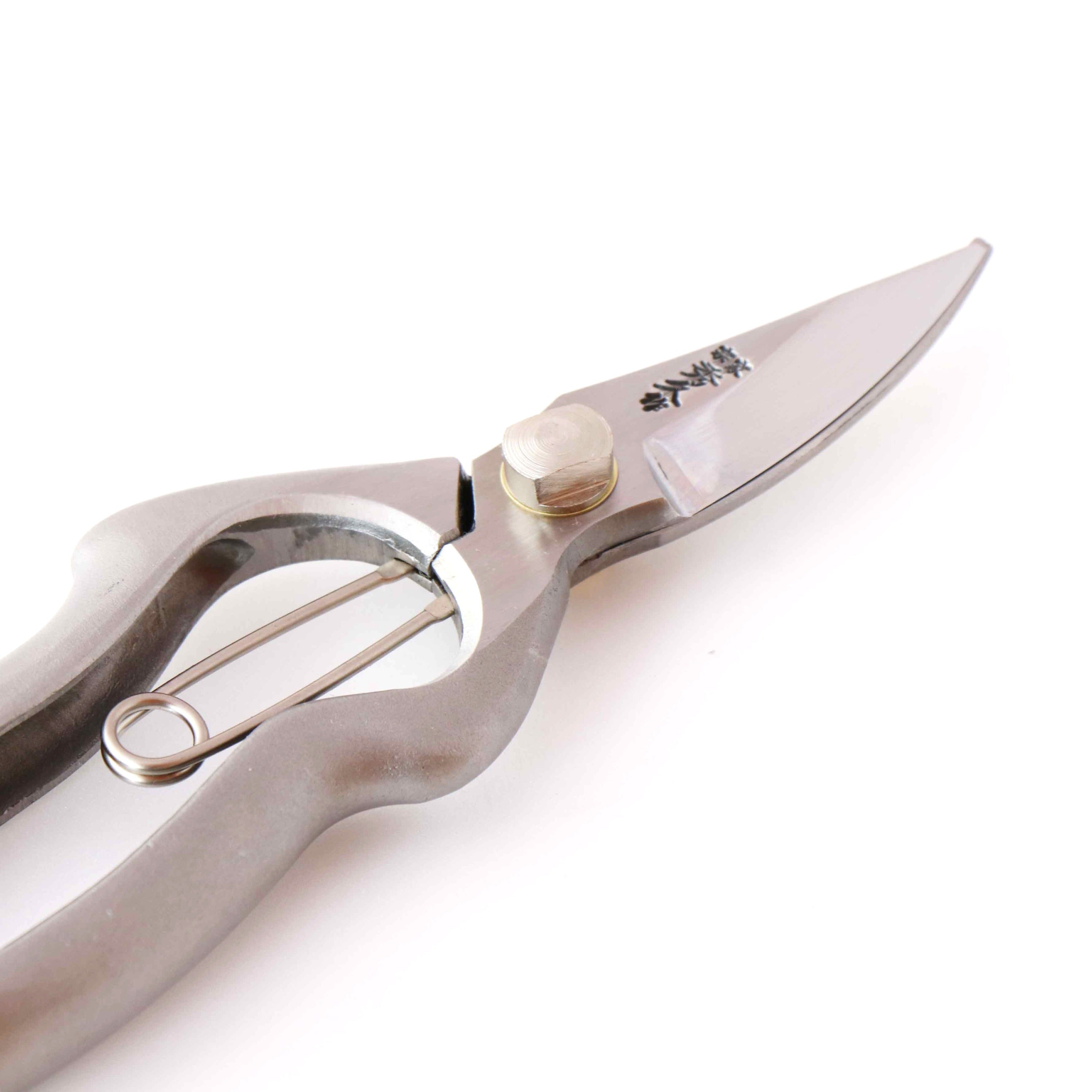
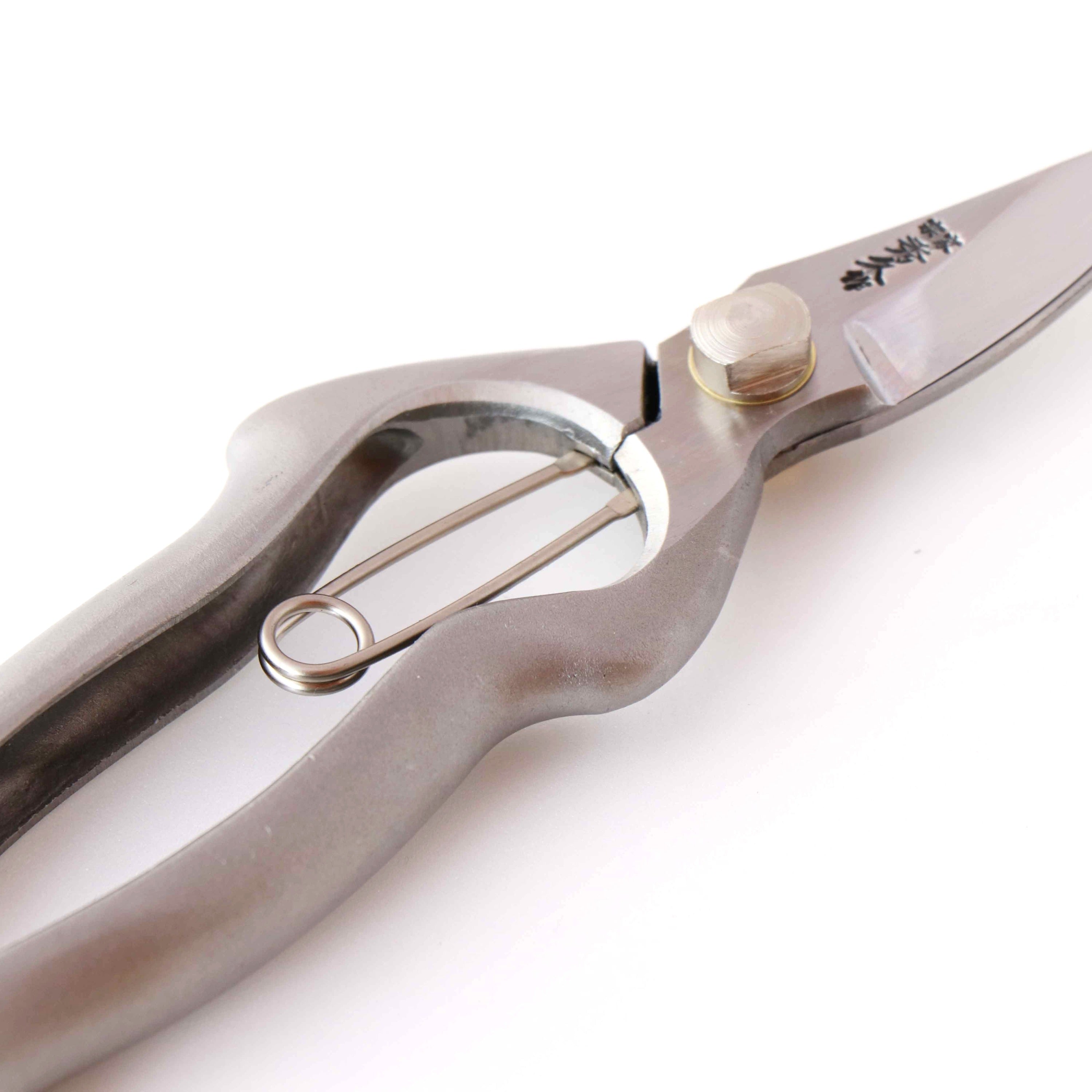
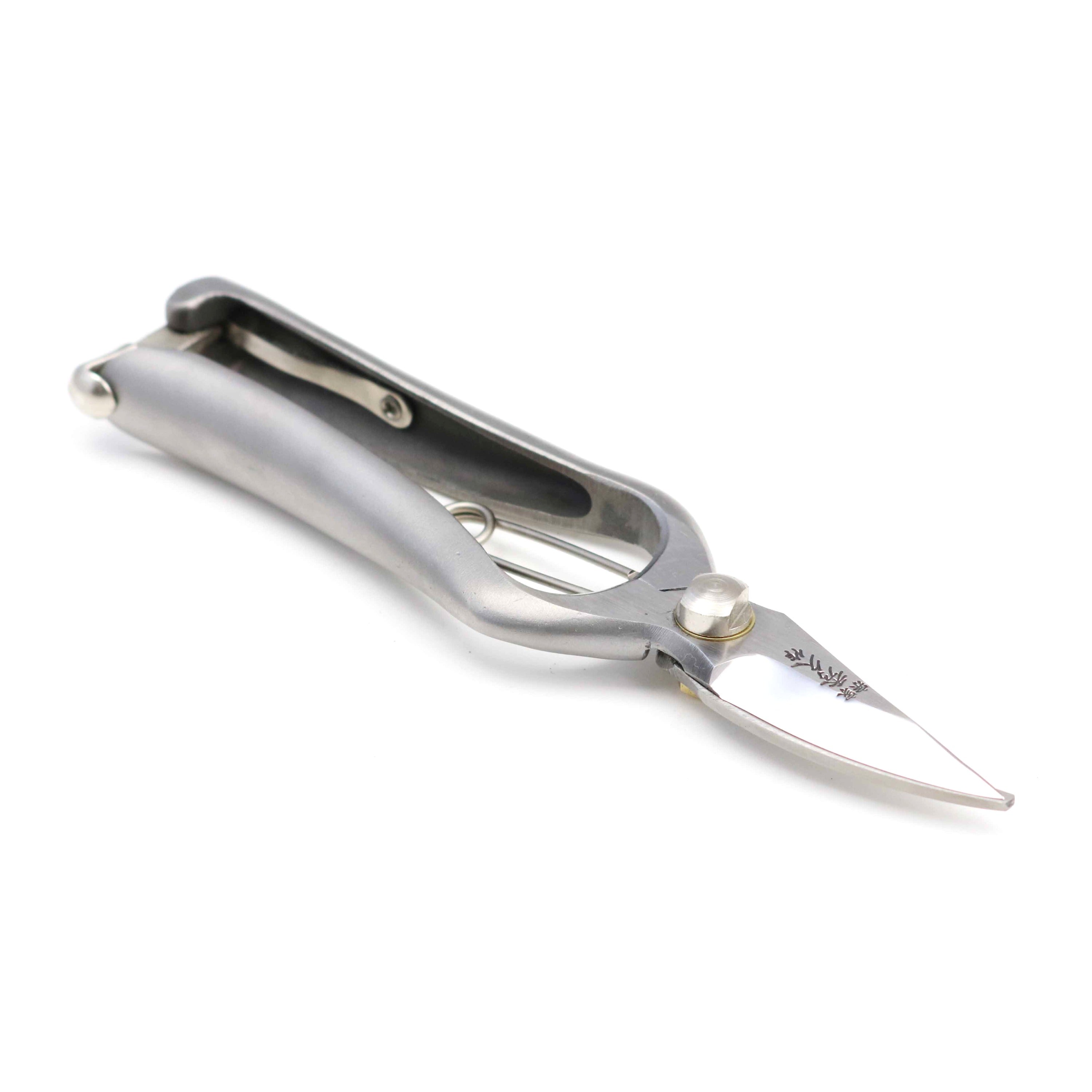
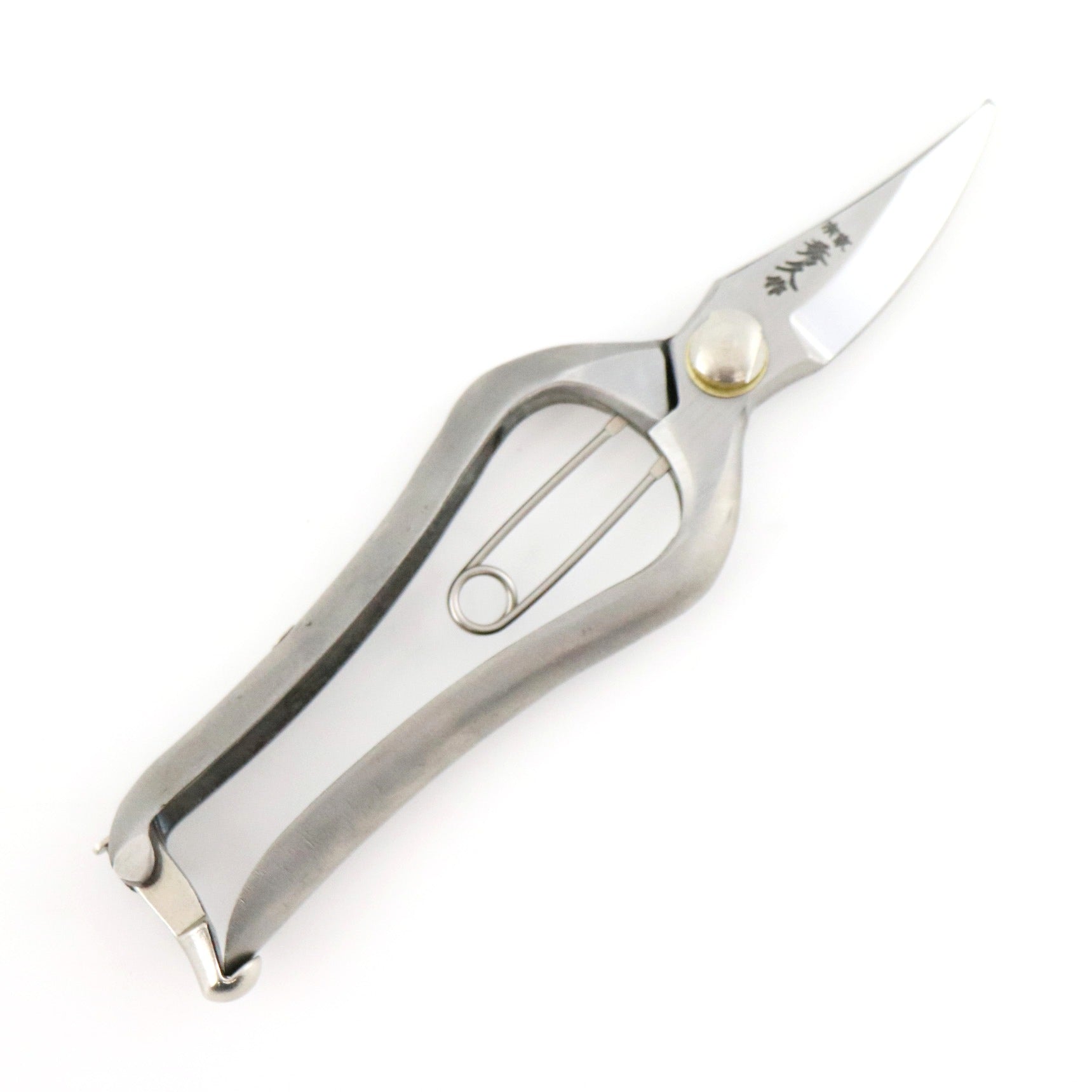
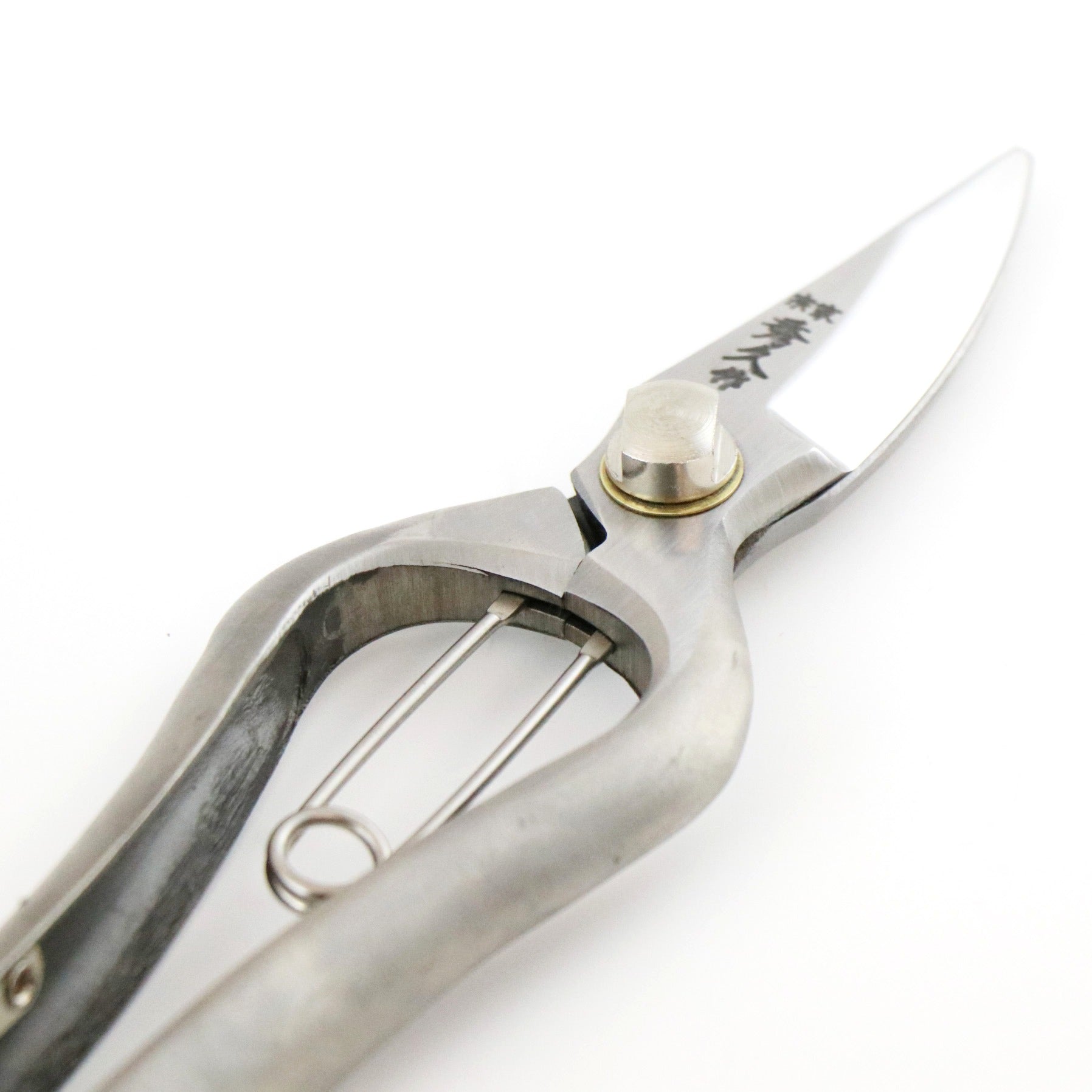
Direct, simple, and traditional. The blade and handle are forged as one piece, eliminating looseness between blade and grip. Force transfers cleanly and directly. The ergonomic shape sits naturally in the hand for stable, straightforward use.
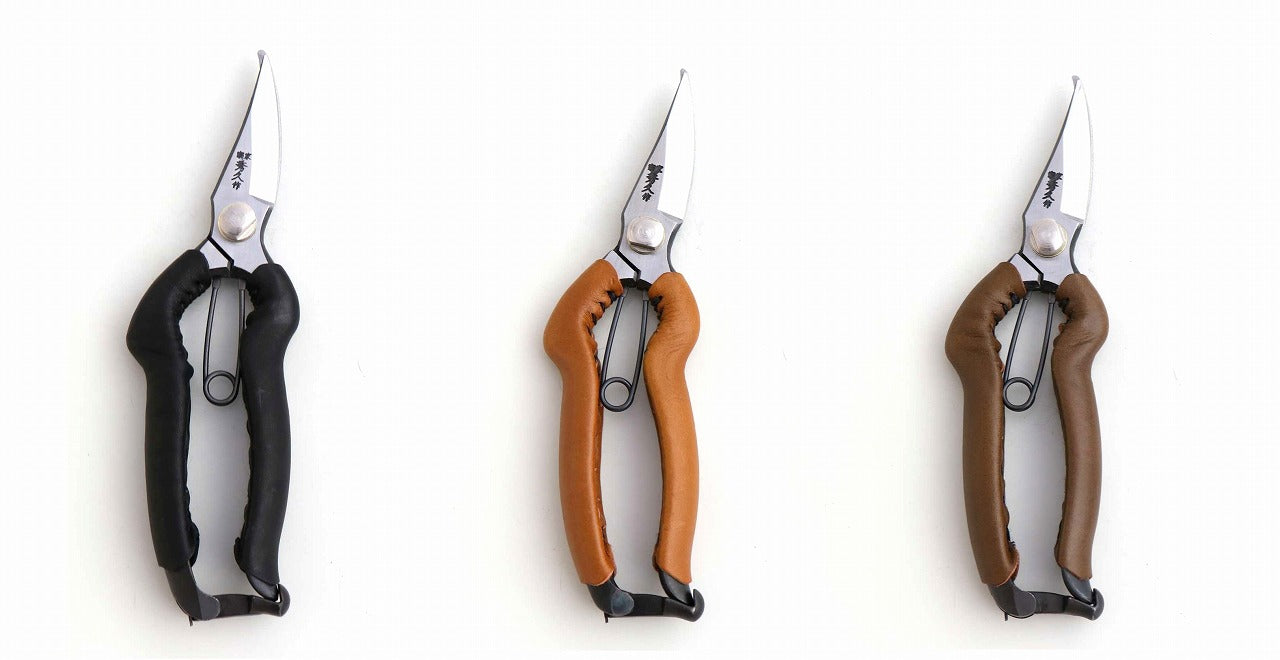
Leather-Wrapped Grip
Leather adds a softer touch and a more secure hold. It can feel easier to control, especially for users who value grip stability and a warmer feel in the hand.
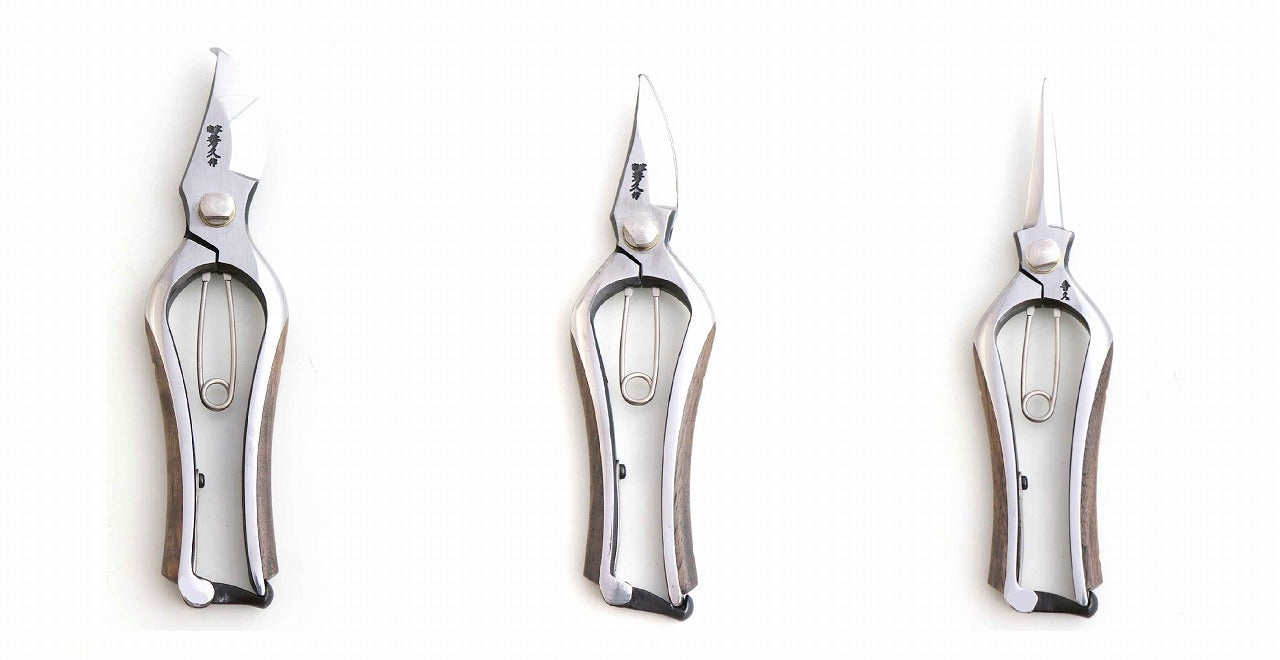
Wood Grip
Wood offers a warm, natural feel and a quieter presence in the hand. It is often chosen by those who value a softer touch and a material that feels comfortable over longer use.
Choose by Size
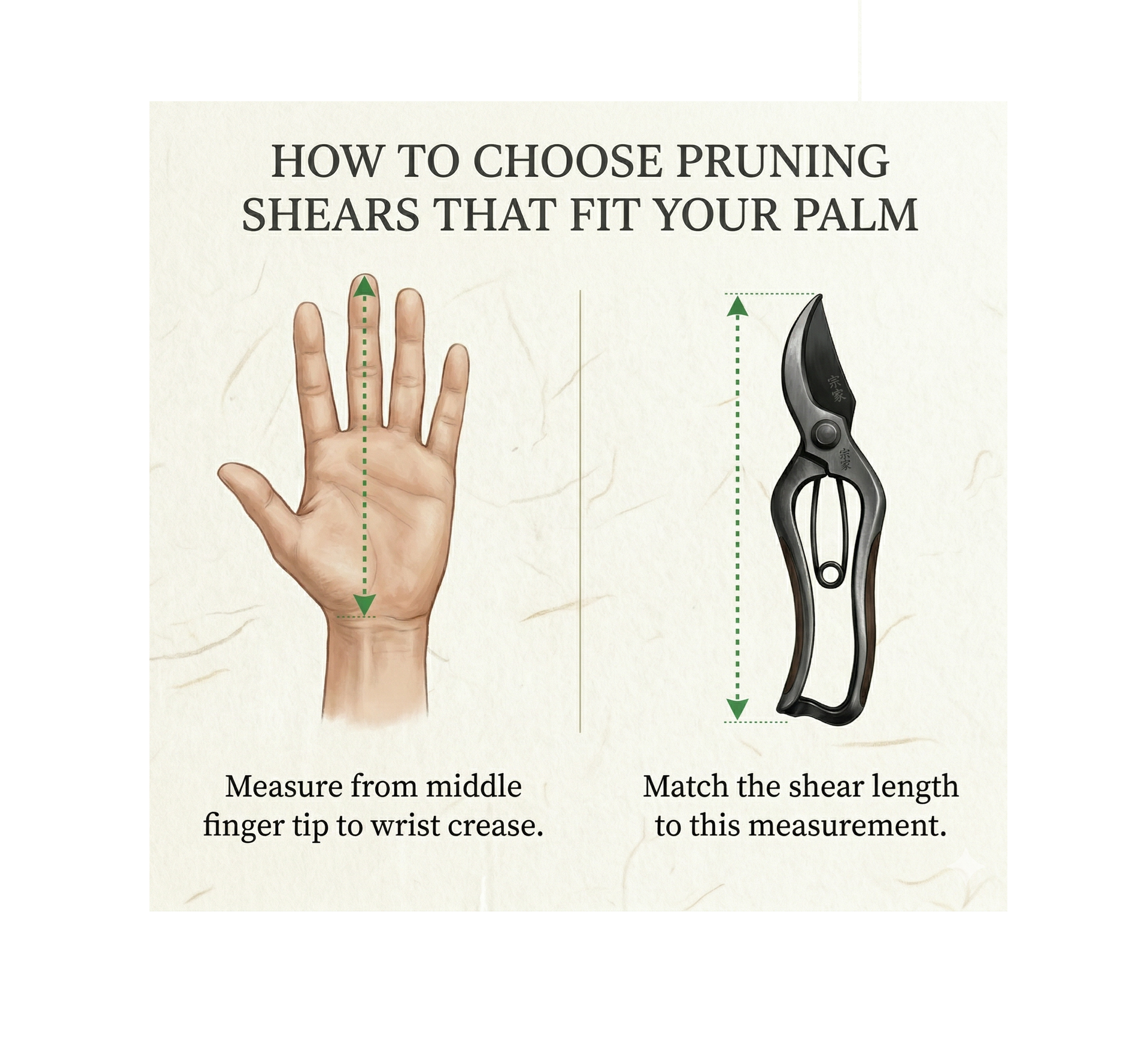
Size affects reach, balance, and handling. The illustration is only a guide, not a strict rule. In many cases, a smaller pair will still feel comfortable, and some users prefer a more compact size.
What matters more is avoiding a pair that feels too large. Longer shears usually require a wider handle opening, which can be harder to manage with smaller hands.
Around 180 mm
For many users, this is a natural place to start. It feels balanced in the hand and is generally easy to handle if you are unsure which size to choose.
Around 200 mm
A slightly longer option for those who want more reach. It can be useful when working on larger shrubs or when you want the blade to reach a little farther in.
Around 140–165 mm
Often a good fit for smaller hands or for users who prefer finer, more detailed work. These sizes can feel quicker and easier to manage in close, precise tasks.
FAQs
Which shears should I choose as my first pair?
Start with the task you do most often. For thicker branches, choose pruning shears. For fine trimming and daily maintenance, garden snips are often the easiest starting point. For bonsai work, choose bonsai scissors. For floral work, choose ikebana shears.
Which is easier for beginners: high-carbon steel or stainless steel?
Stainless steel is usually the easier starting point if you want lower day-to-day maintenance. High-carbon steel is a good choice if you care more about sharpening and the cutting feel of the edge.
Can I use snips for thicker branches?
Snips are better suited to fine work, soft stems, and detailed trimming. For thicker branches, pruning shears are the more appropriate choice.
What is the difference between ergonomic and traditional grips?
Traditional grips tend to feel simpler and more neutral. Ergonomic grips are shaped to guide the hand more clearly and can make it easier to apply force with control.
Why choose a leather-wrapped grip?
Leather-wrapped grips offer a softer, more secure feel in the hand. They are often preferred by users who want more grip stability and a warmer touch.
Should I choose 180 mm or 200 mm?
If you are unsure, around 180 mm is a good starting point for many users. If you have larger hands or would like a little more reach, 200 mm may suit you better.
Best Sellers