

One Handed Hedge Shears
One-handed hedge shears are the finishing tool of the garden. After the main trimming is done, they are what you reach for to even out foliage, refine the shape of hedges and topiaries, and give your garden that clean, polished look. Their long, narrow blades let you work across the surface of a shrub with smooth, sweeping cuts — all with one hand.
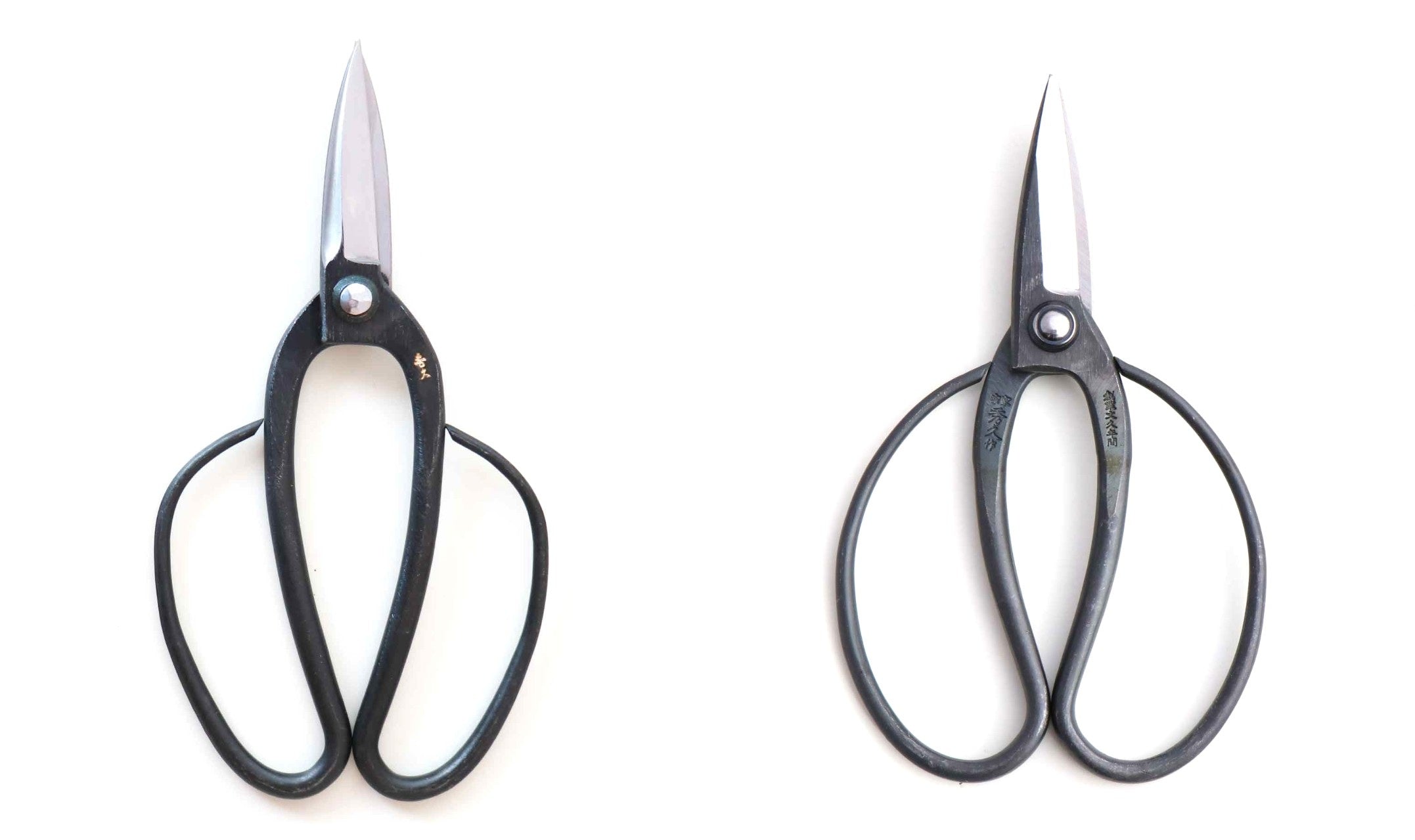
Toyama Hamono offers two styles: spring-loaded Western-style hedge shears, and traditional Japanese Okubo-style shears. The Western style uses a spring to open the blades automatically, making repetitive trimming quick and effortless. The Okubo style has no spring — you control the blades directly with your fingers, giving you a quieter, more deliberate feel that many professional gardeners prefer for fine finishing work.
Both styles are hand-forged in Sanjo, Japan, and a left-handed model is also available. This guide will help you choose the right one for your garden and your way of working.
Two Types of Hedge Shears
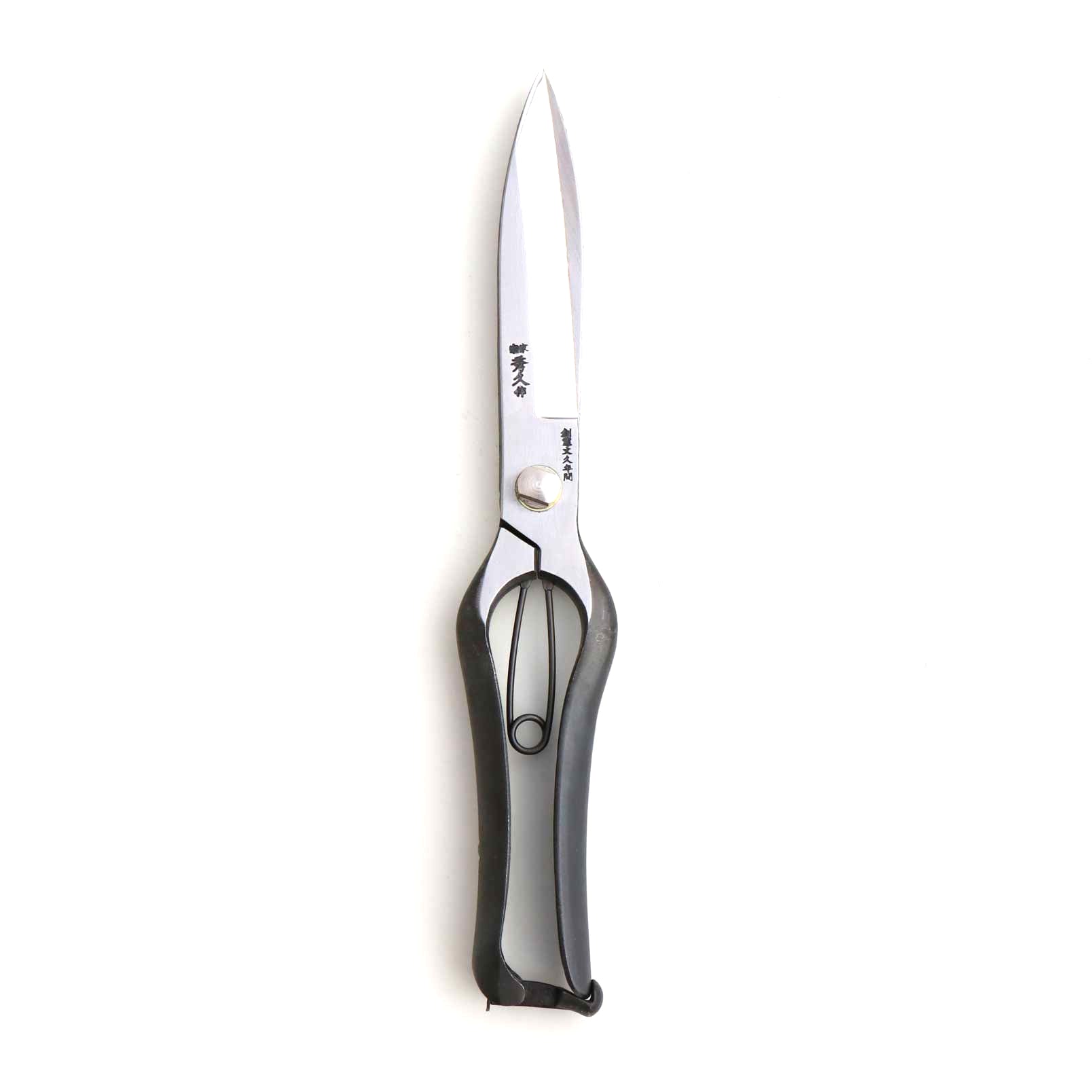
T16 Spring-Loaded One-Handed Hedge Shears
The T16 is Toyama Hamono's spring-loaded one-handed hedge shears, forged from high-carbon steel. The long, narrow blades are designed for surface finishing — skimming across hedges, shrubs, and topiaries to create a smooth, even surface. The spring opens the blades automatically after each cut, allowing you to work in a steady, rhythmic motion without hand fatigue.
The thin, tapered blades reach easily into tight spots and let you trim with precision, whether you are squaring the face of a hedge or refining the curve of a topiary ball. The forged high-carbon steel holds a sharp edge, delivering clean cuts that leave the foliage looking crisp and intentional.
Think of the T16 as a hand plane for plants — rather than cutting one branch at a time, you work along the surface, taking off small growth evenly to achieve a polished finish.
A left-handed model, the T16L, is also available for left-handed gardeners who need the same precision and comfort with a reversed blade orientation.
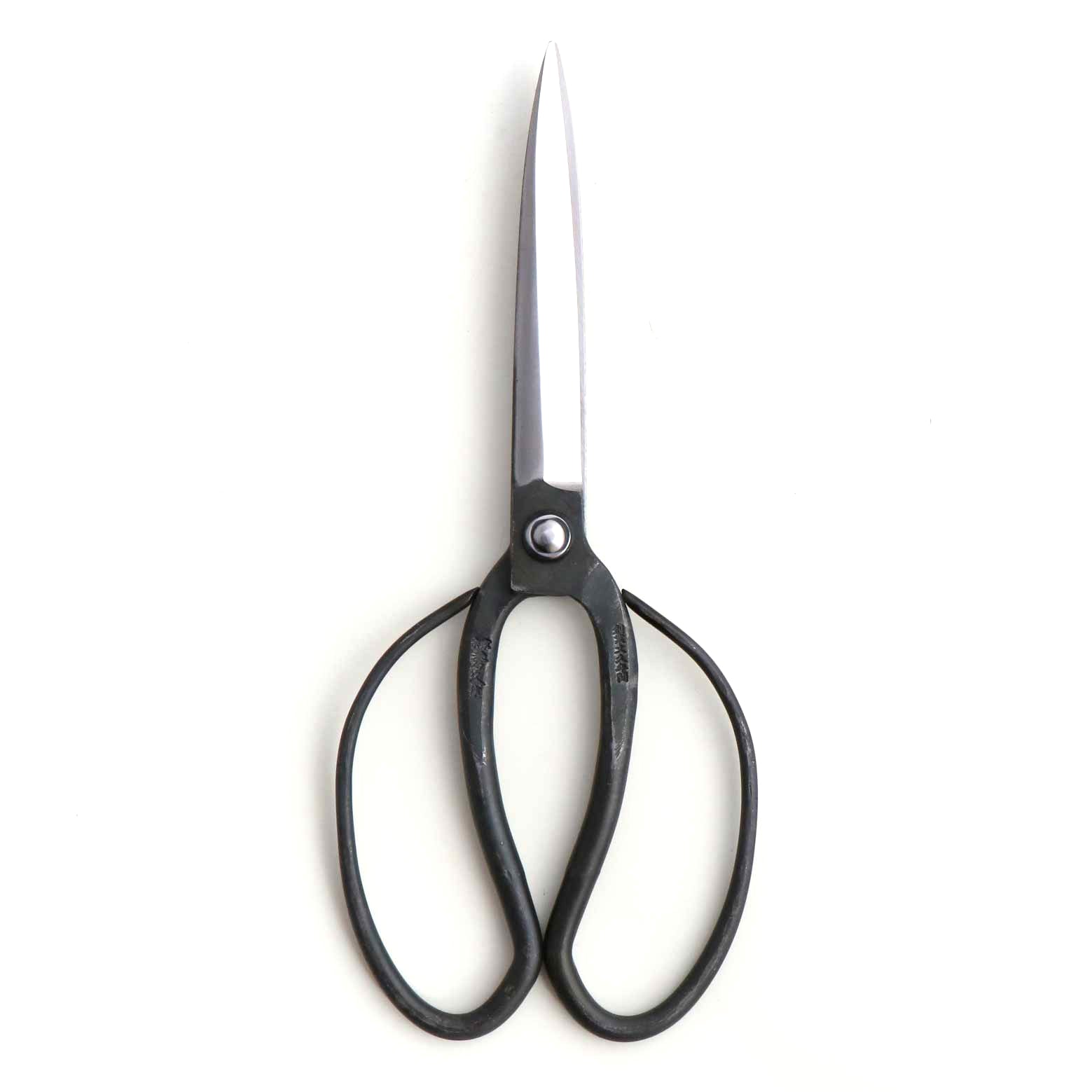
Okubo-Style One-Handed Hedge Shears — T5 / T6 / T7
The Okubo style is the traditional Japanese approach to hedge trimming. With no spring, large butterfly-shaped handle loops, and straight, razor-sharp blades, these shears give you complete, direct control over every cut. The motion is entirely in your hands — you feel the blades meet the foliage, and you decide exactly how much to take off. For many professional Japanese gardeners, this direct feedback is what makes the Okubo style irreplaceable.
Toyama Hamono offers three Okubo-style one-handed hedge shears, each with a different blade length to suit different tasks:
T7 — 150 mm blade (shown above)
The longest blade in the range, offering the most reach and coverage per stroke. Ideal for trimming larger hedge faces and achieving smooth, even surfaces across broader areas.
T6 — 120 mm blade
A mid-length option that balances reach and control. Versatile enough for a wide range of finishing work — from small hedges to medium-sized topiaries.
T5 — 105 mm blade
The most compact of the three. Its shorter blade makes it agile and easy to handle, well suited for trimming smaller shrubs, detailed shaping, and working in tighter spaces where a longer blade would be hard to maneuver.
All three models are forged from high-carbon steel using traditional Japanese blacksmithing techniques. The blade and handle are forged as one piece, ensuring solid, direct force transfer with no looseness. As with all springless Japanese shears, there is a short learning curve — but once you develop the feel, the Okubo style becomes a natural, rewarding way to work.
Choose the blade length that matches the scale of your work: shorter for precision, longer for coverage.
FAQs
What is the difference between spring-loaded hedge shears (T16) and Okubo-style hedge shears (T5/T6/T7)?
The T16 uses a spring to open the blades automatically after each cut, making repetitive trimming quick and effortless. The Okubo-style shears have no spring — you control the blades entirely with your fingers, giving you direct feedback and precise control over each cut. If you want speed and comfort for longer sessions, choose the T16. If you prefer a more hands-on, deliberate feel, the Okubo style may suit you better.
Which Okubo-style model should I choose — T5, T6, or T7?
It depends on the scale of your work. The T5 (105 mm blade) is the most compact and agile — great for smaller shrubs and detailed shaping. The T6 (120 mm blade) offers a good balance of reach and control for general finishing work. The T7 (150 mm blade) covers the most area per stroke, making it ideal for larger hedges and broad surfaces.
I'm new to hedge trimming — which style is easier to start with?
The spring-loaded T16 is the most intuitive starting point. The spring handles the opening motion for you, so there is no learning curve. The Okubo style requires a little practice to get used to the springless action, but many gardeners find it more rewarding once they develop the feel.
Is a left-handed model available?
Yes. A left-handed version of the T16 is available as the T16L, with a reversed blade orientation for clean, precise cutting with the left hand. The Okubo-style shears (T5/T6/T7) have symmetrical handles, so they feel comfortable to hold in either hand. However, like all scissors, the blade overlap is set for right-handed use — when used in the left hand, the cutting line may be harder to see and the blades may not grip as cleanly. If you are left-handed and want the best cutting performance, please contact us to discuss your options.
Can I use one-handed hedge shears for general pruning?
One-handed hedge shears are designed for surface finishing — trimming and shaping the outer layer of hedges, shrubs, and topiaries. They are not intended for cutting thick branches. For heavier pruning, we recommend using pruning shears instead.
How thick can one-handed hedge shears cut?
One-handed hedge shears are finishing tools — designed for skimming foliage, not cutting thick branches. As a guide for live, green wood:
- T16 Series / T5: up to 3 mm at the tip, up to 8 mm at the base of the blade.
- T6 / T7: up to 1-2 mm at the tip, up to 5 mm at the base of the blade.
Dead or dried branches are harder and may chip the blade — never force the cut. For exact specifications, please check the product details for each model.
What material are these shears made from?
All models — the T16, T16L, T5, T6, and T7 — are forged from high-carbon steel. Regular care is important to prevent rust. Wipe the blades clean and dry after each use, and apply oil periodically. For full care instructions, visit our How to Care page.
The Forged Edge Blog
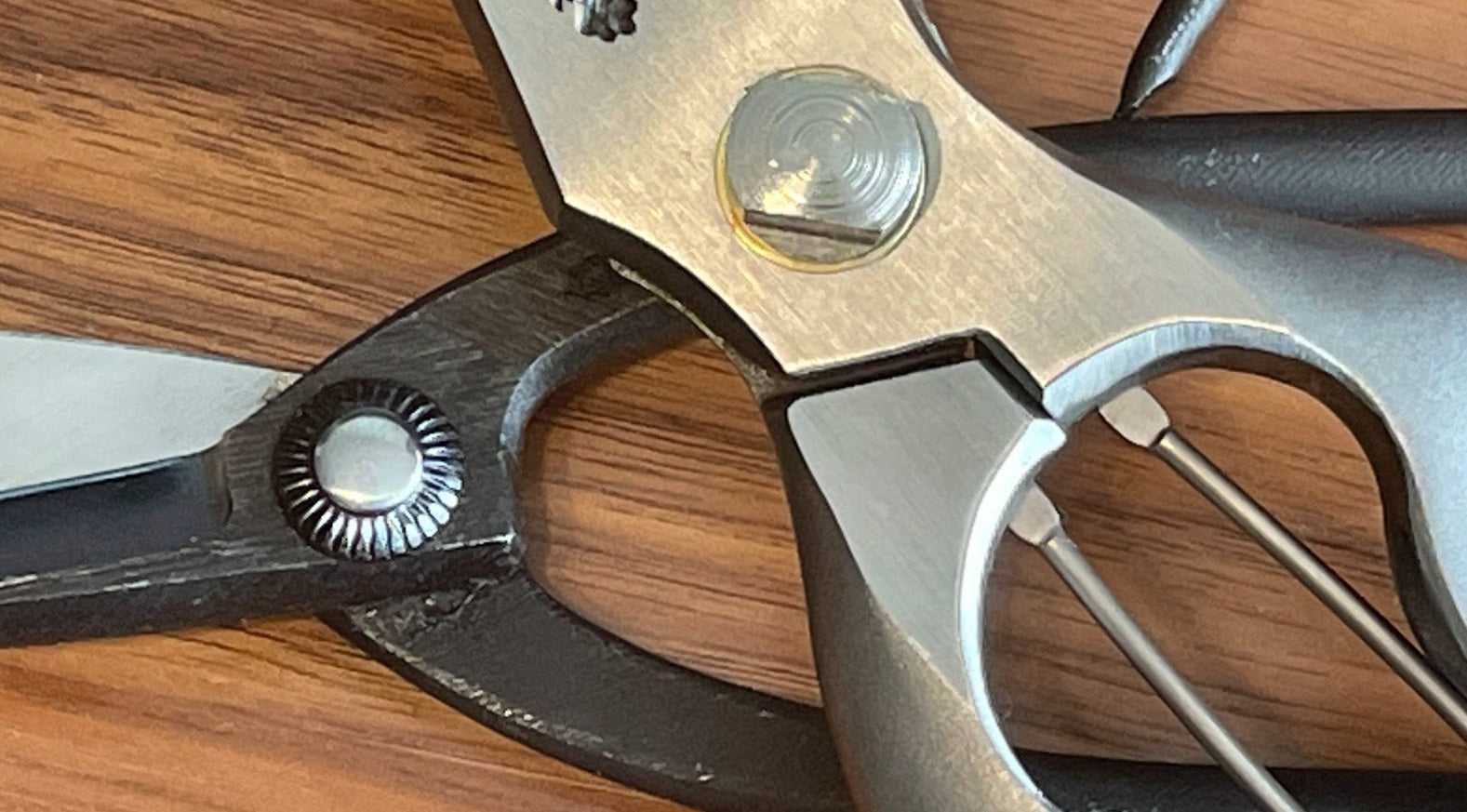
How to Adjust the Pivot on Japanese Garden Shears
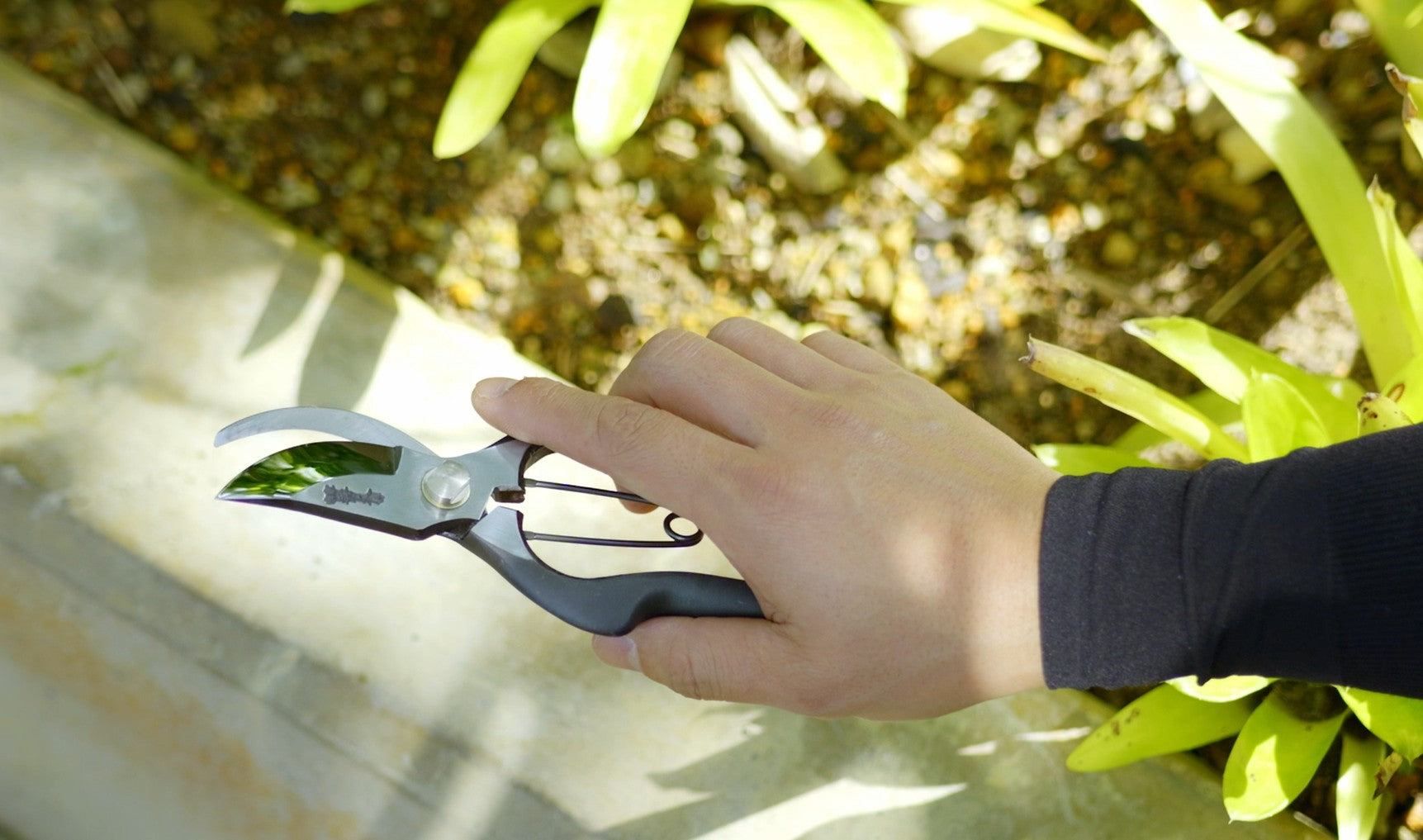
Why We Rethought the Pruning Shear Handle
Japanese Garden Shear Types: Okubo, Type A & Type B
