
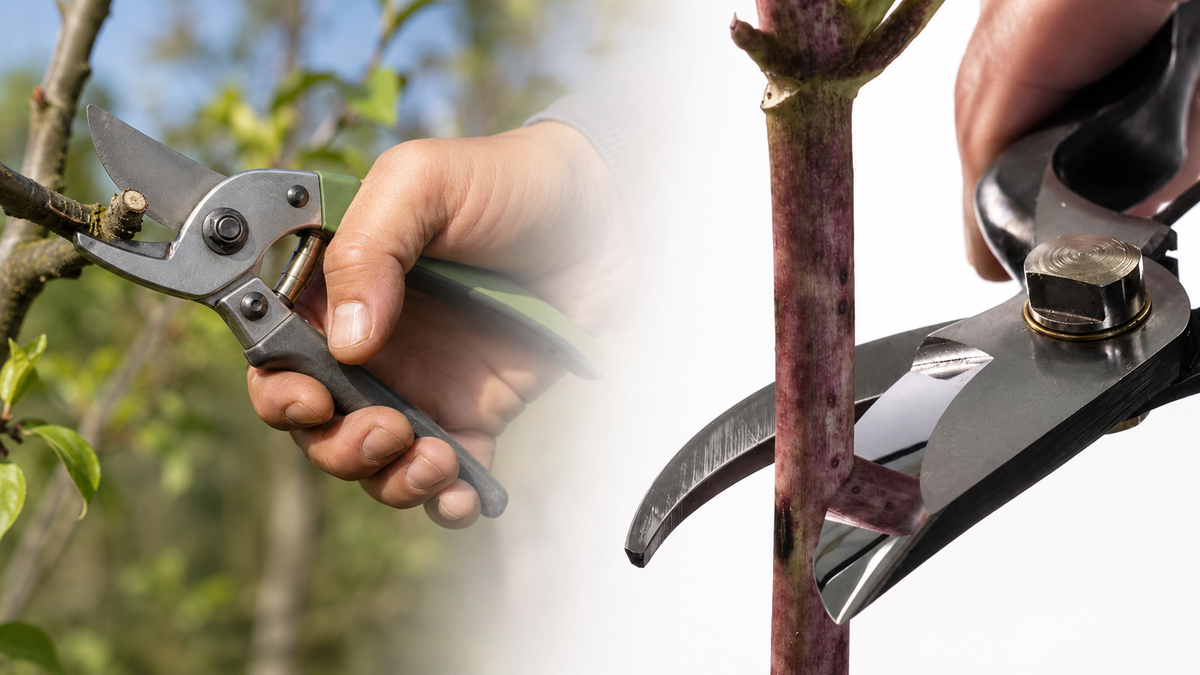
For most everyday pruning—where access, control, and accurate cut placement matter—a bypass pruner is usually the more versatile choice. Its cutting blade passes closely beside a counter blade, making it well suited to flowers, roses, fruit trees, young shoots, and cuts near a bud or branch junction.
For general garden pruning, an anvil pruner is often a more specialized choice. Its single blade closes against a supporting anvil beneath the branch, which can be useful when firm support directly under the material is the priority.
You will often see the difference reduced to a simple rule: bypass for live wood and anvil for dead wood. That can be a rough starting point, but it is not a law. Branches vary in hardness, moisture, and condition. The fit, sharpness, condition, and rated capacity of the individual tool matter as much as its category.
The more useful question is: what kind of cut do you need to make?
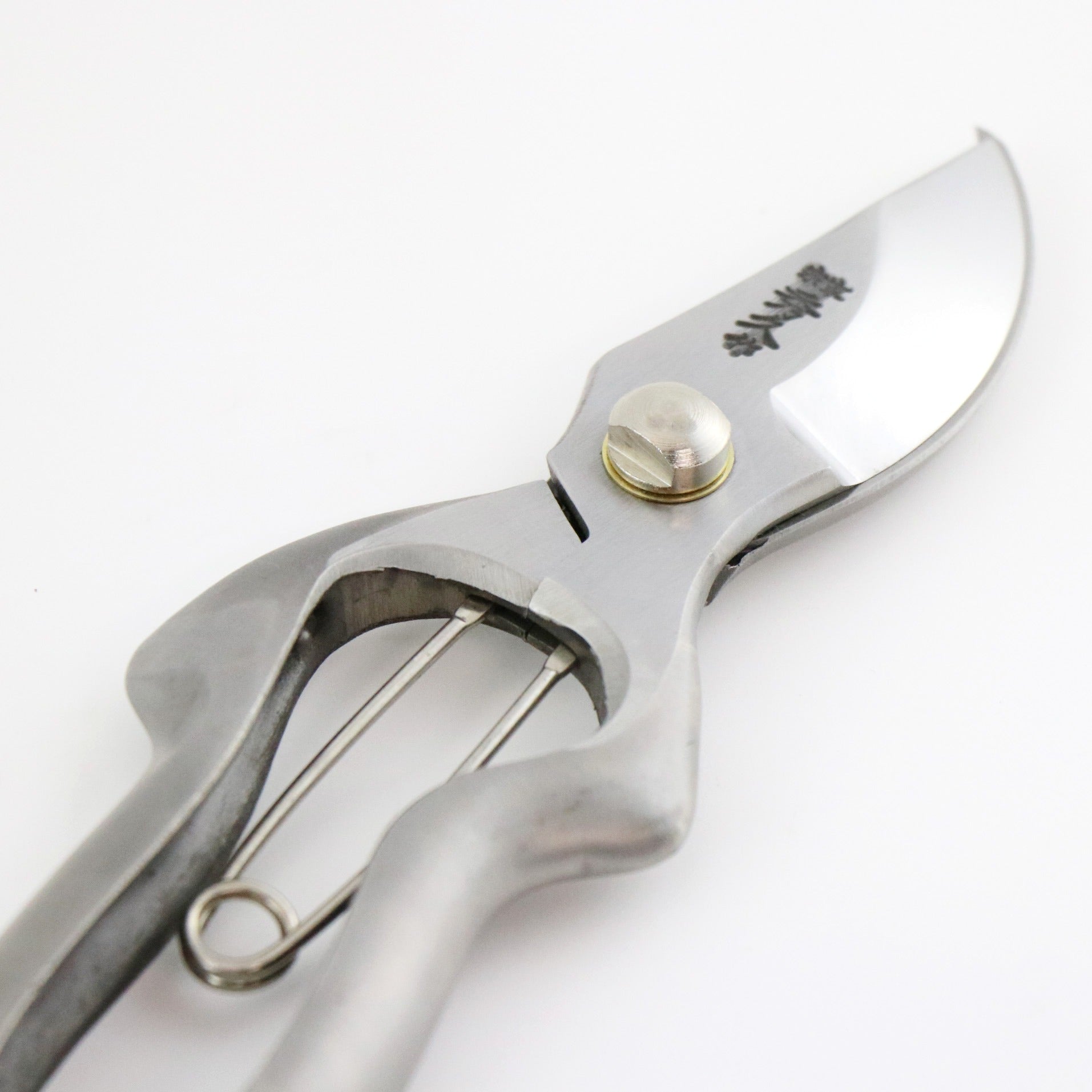
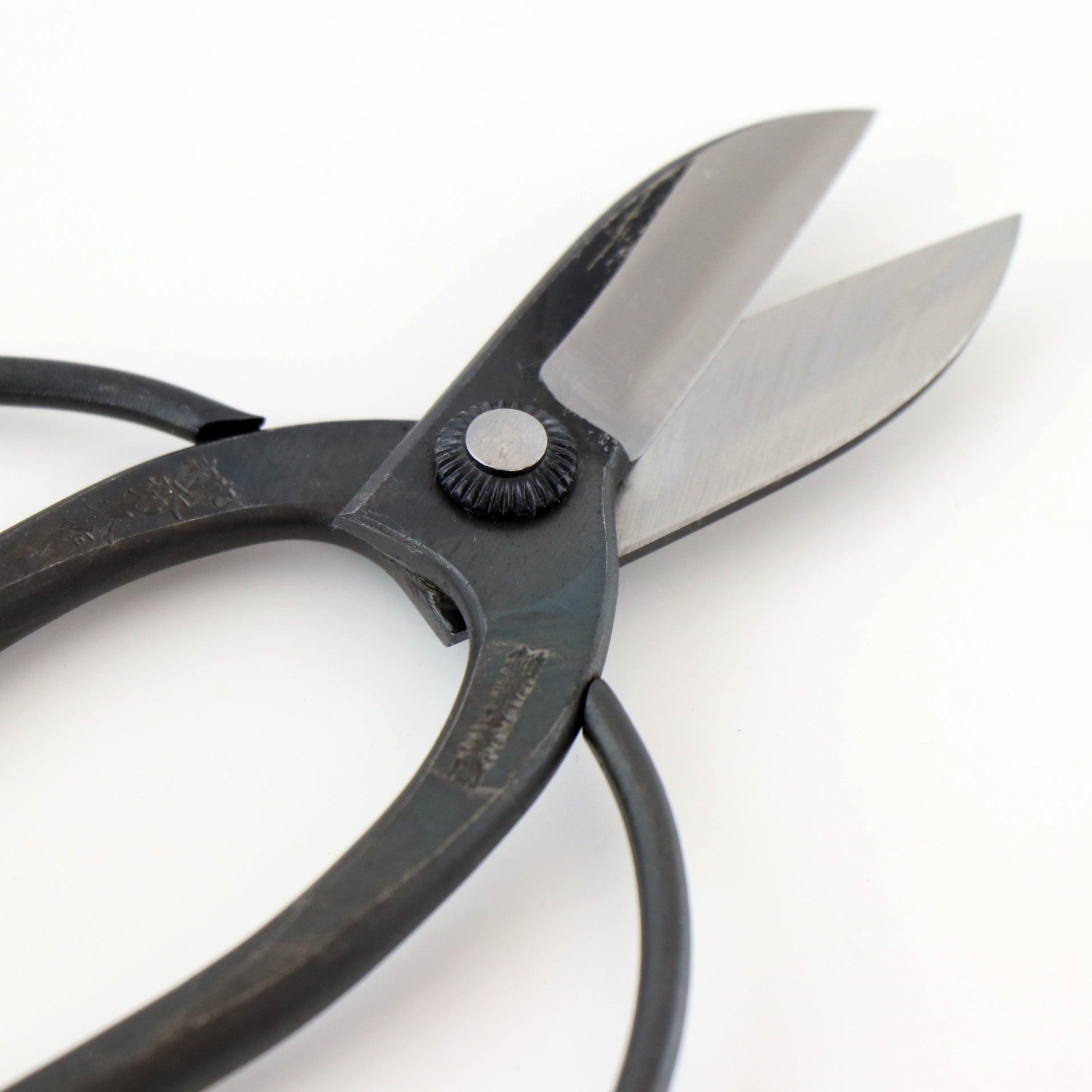
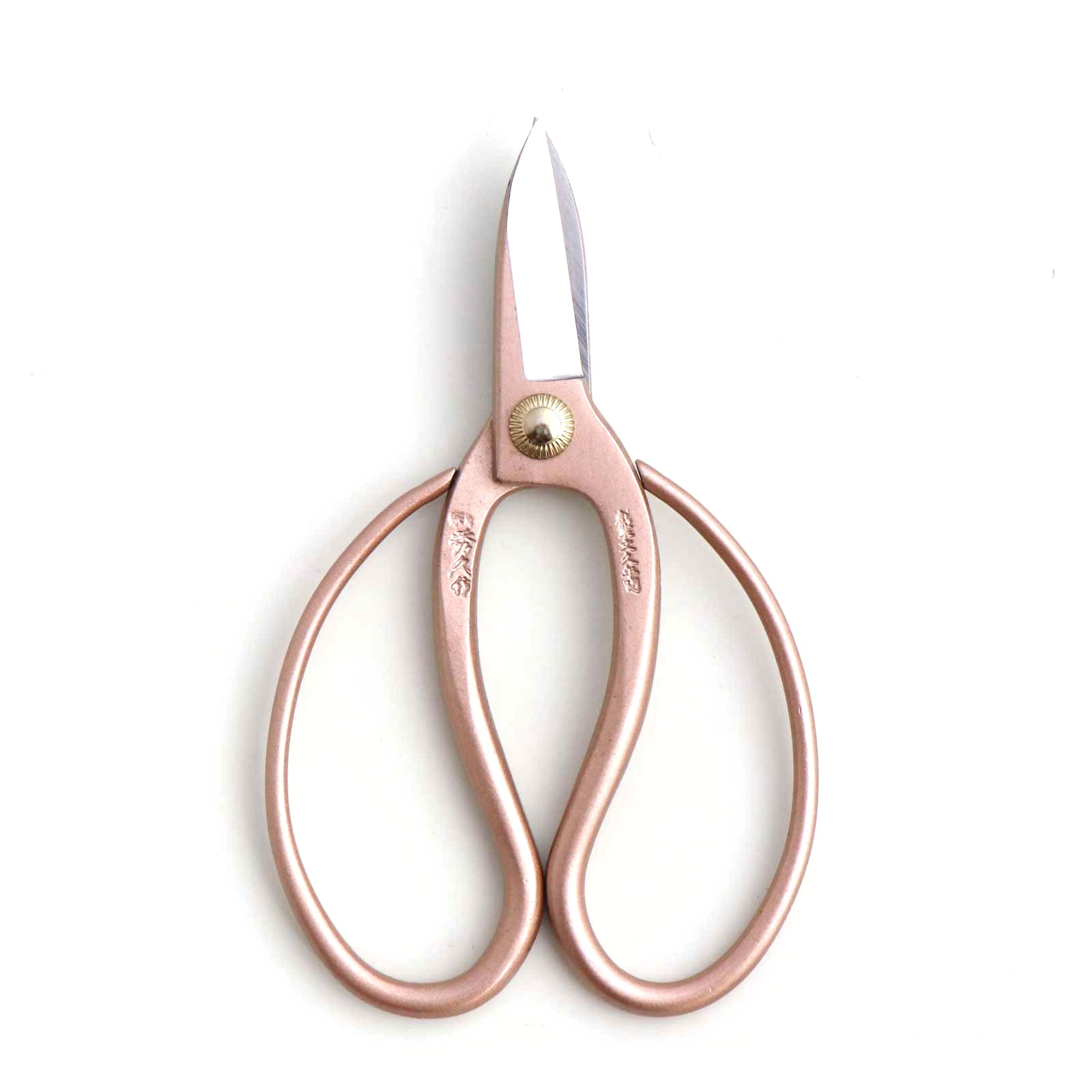
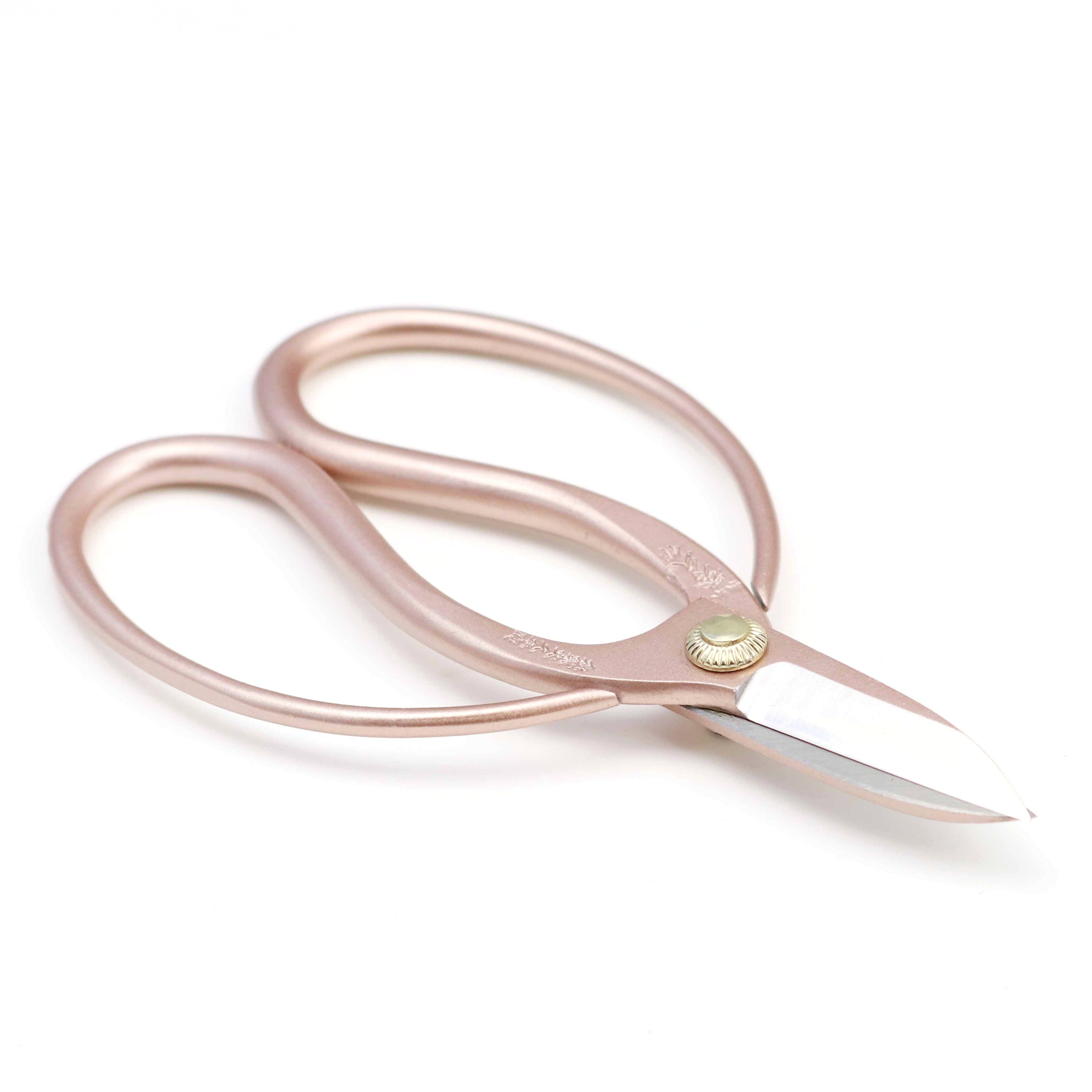
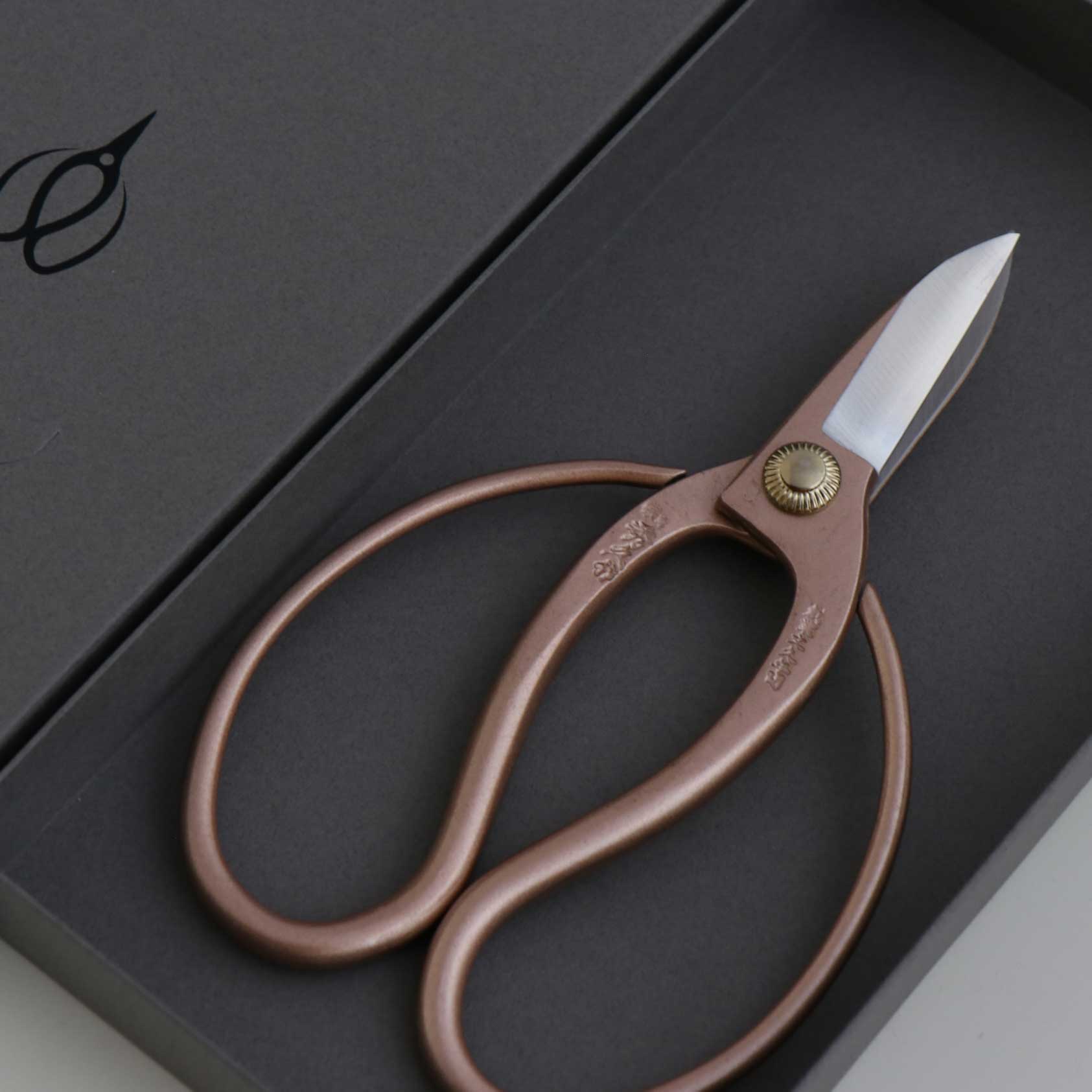
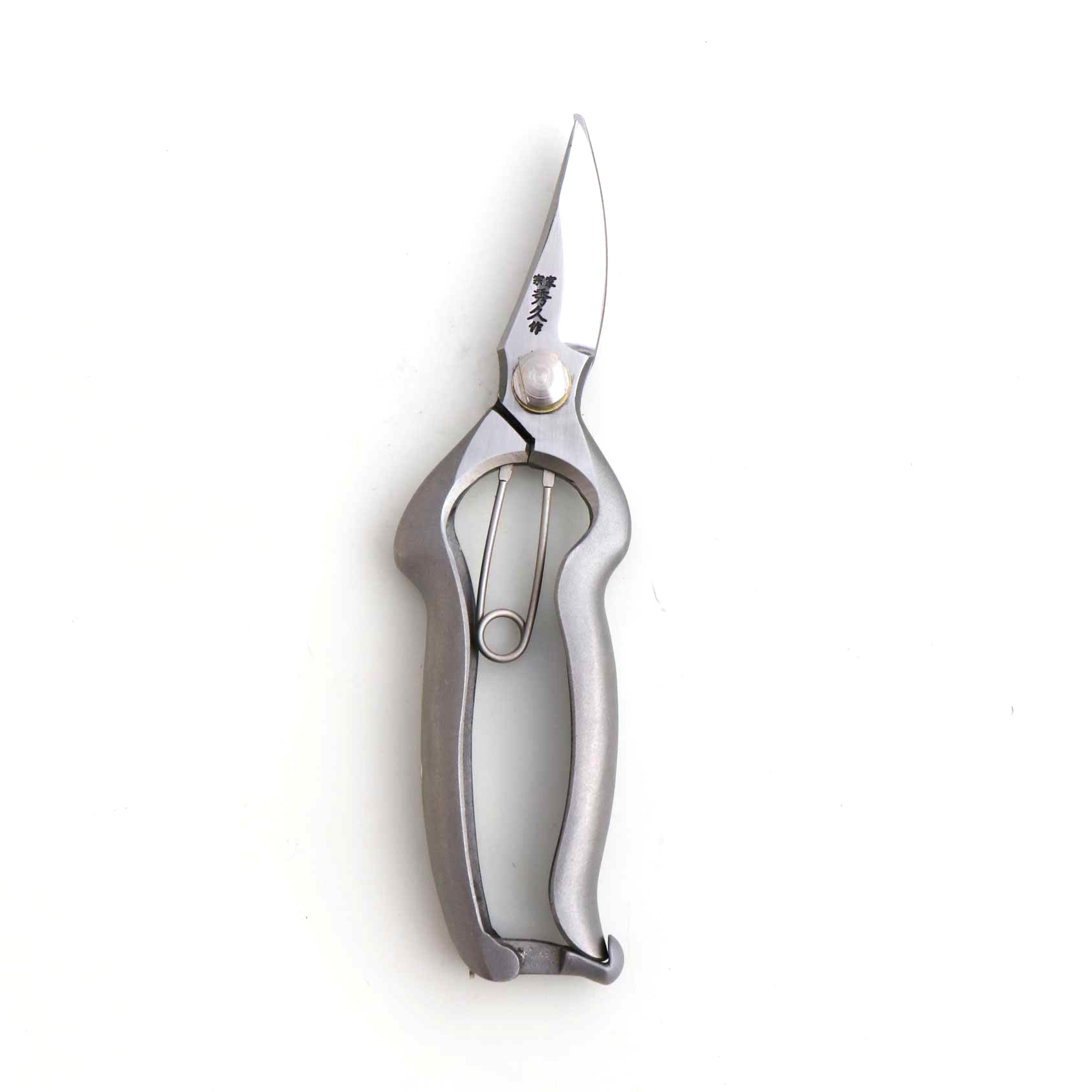
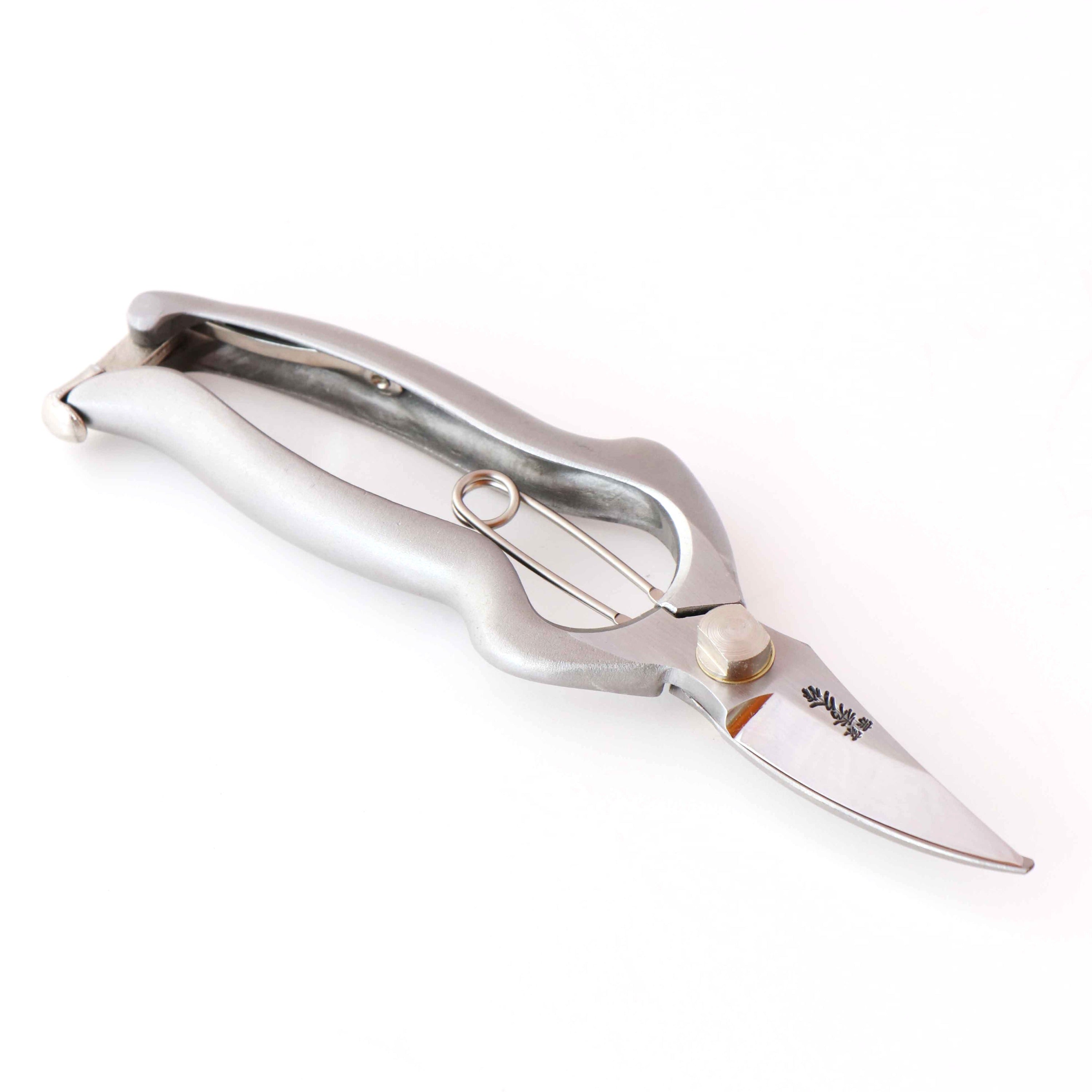
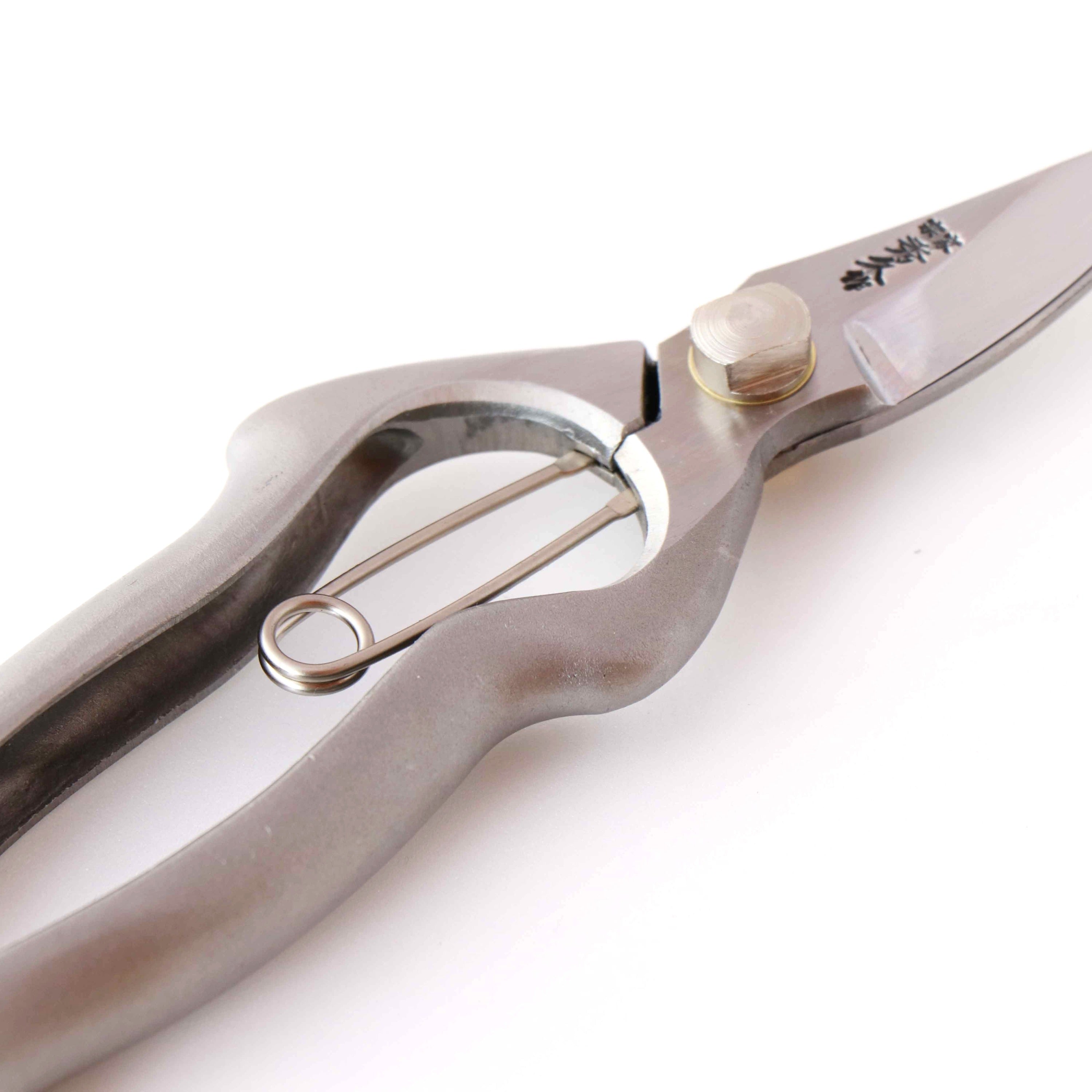
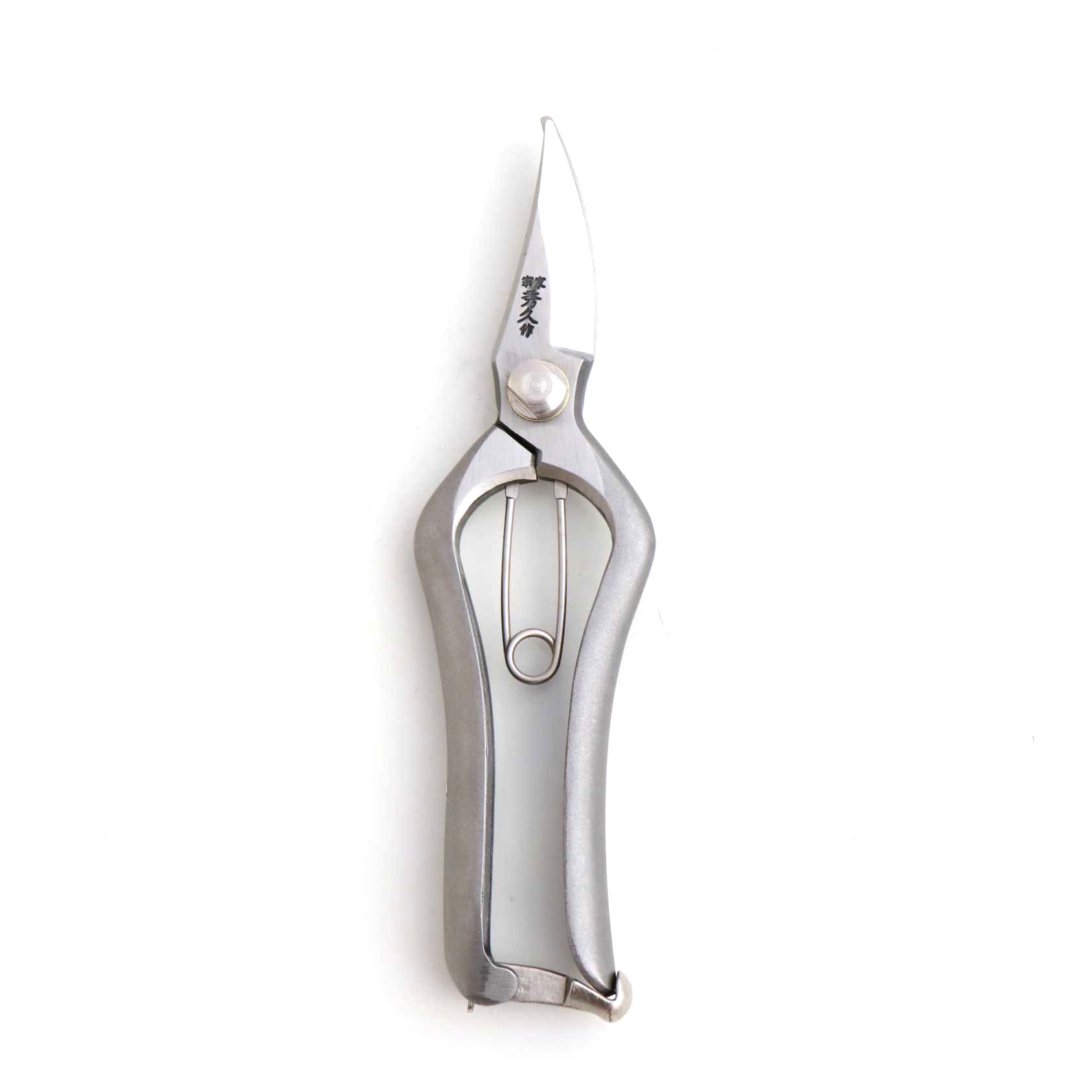
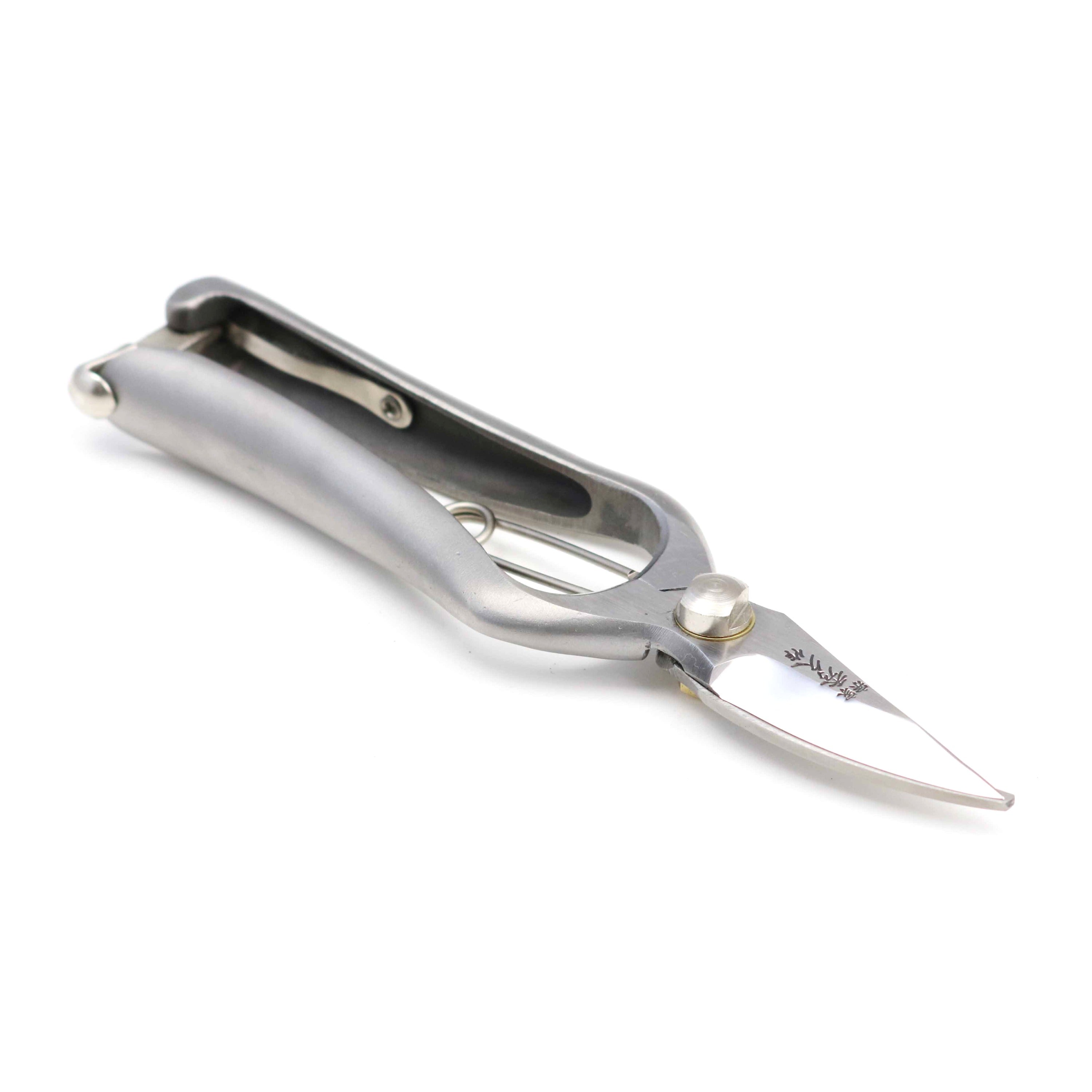
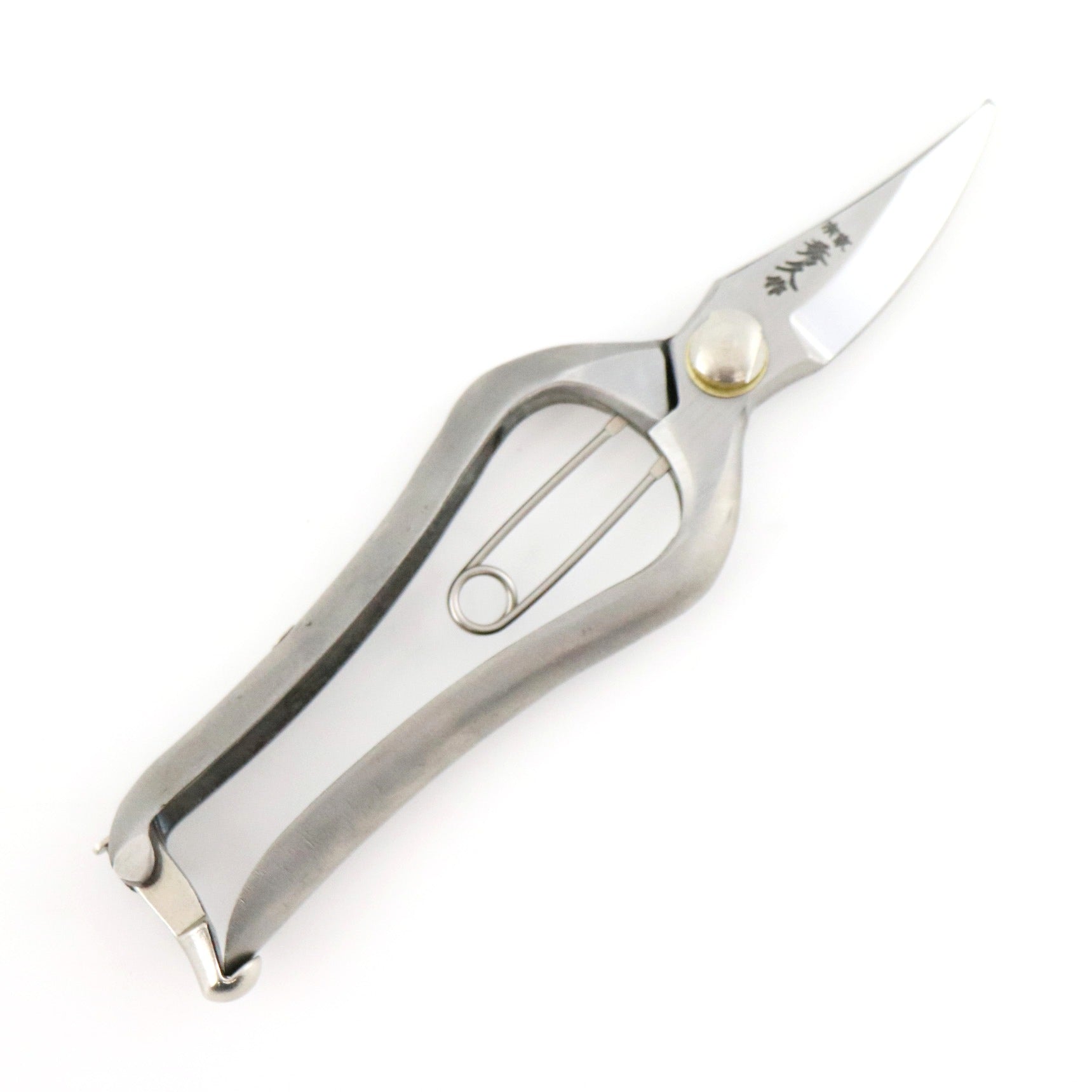
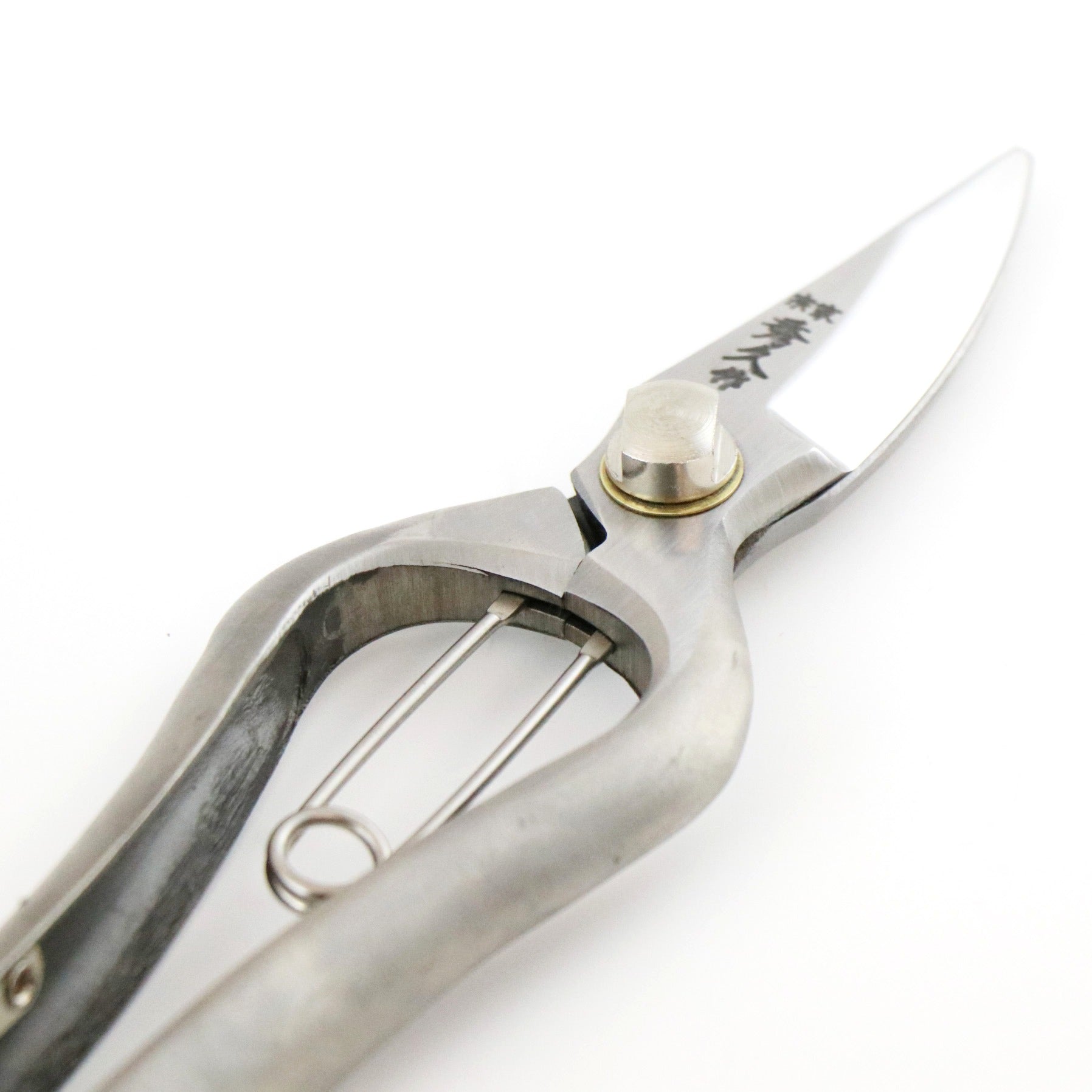
Toyama Hamono specializes in forged bypass pruning shears—also called secateurs—because the bypass mechanism directly reflects the blade-fitting skills our family has developed in Sanjo since 1861.
Bypass vs. Anvil Pruners at a Glance
| Feature | Bypass pruners | Anvil pruners |
|---|---|---|
| Basic mechanism | A cutting blade passes closely beside a counter blade | One cutting blade closes against a supporting anvil |
| Cutting action | Slicing and shearing as the blade passes the counter blade | Cutting into material supported directly from below |
| Best starting point for | Precise placement, access around stems, and everyday garden pruning | Situations where firm support beneath the material is the priority |
| Cutting-head shape | Usually narrow and curved | Often broader because of the supporting anvil |
| Quality depends on | Blade fit, overlap, edge condition, curvature, and pivot stability | Edge condition, blade guidance, anvil shape, and pivot stability |
| If the branch is too large | Use a lopper or pruning saw | Use a lopper or pruning saw |

Simplified examples of bypass and anvil cutting relationships. Anvil blade geometry varies by design.
Why Toyama Hamono Focuses on Bypass Pruning Shears

What a gardener wants from a pruner is simple: a clean cut, in the right place, without fighting the tool. That is the result our work is built around.
Toyama Hamono has made shears in Sanjo, Niigata, since 1861. Across five generations, our craft has rested on one idea: a keen edge is only the beginning. A pair of shears must also be fitted so that the cutting blade and counter blade move correctly together.
You feel that fitting through the handles—in how cleanly the blade enters, how securely the branch remains supported, and whether the action feels smooth or begins to catch.
In a bypass shear, forging, inner-face finishing, assembly, and final adjustment directly shape how the blades move at the moment of the cut.
This does not mean that anvil pruners are inherently inferior. We choose bypass because it is the mechanism through which our particular shear-making knowledge provides its clearest practical benefit.
How Does a Bypass Pruner Cut?

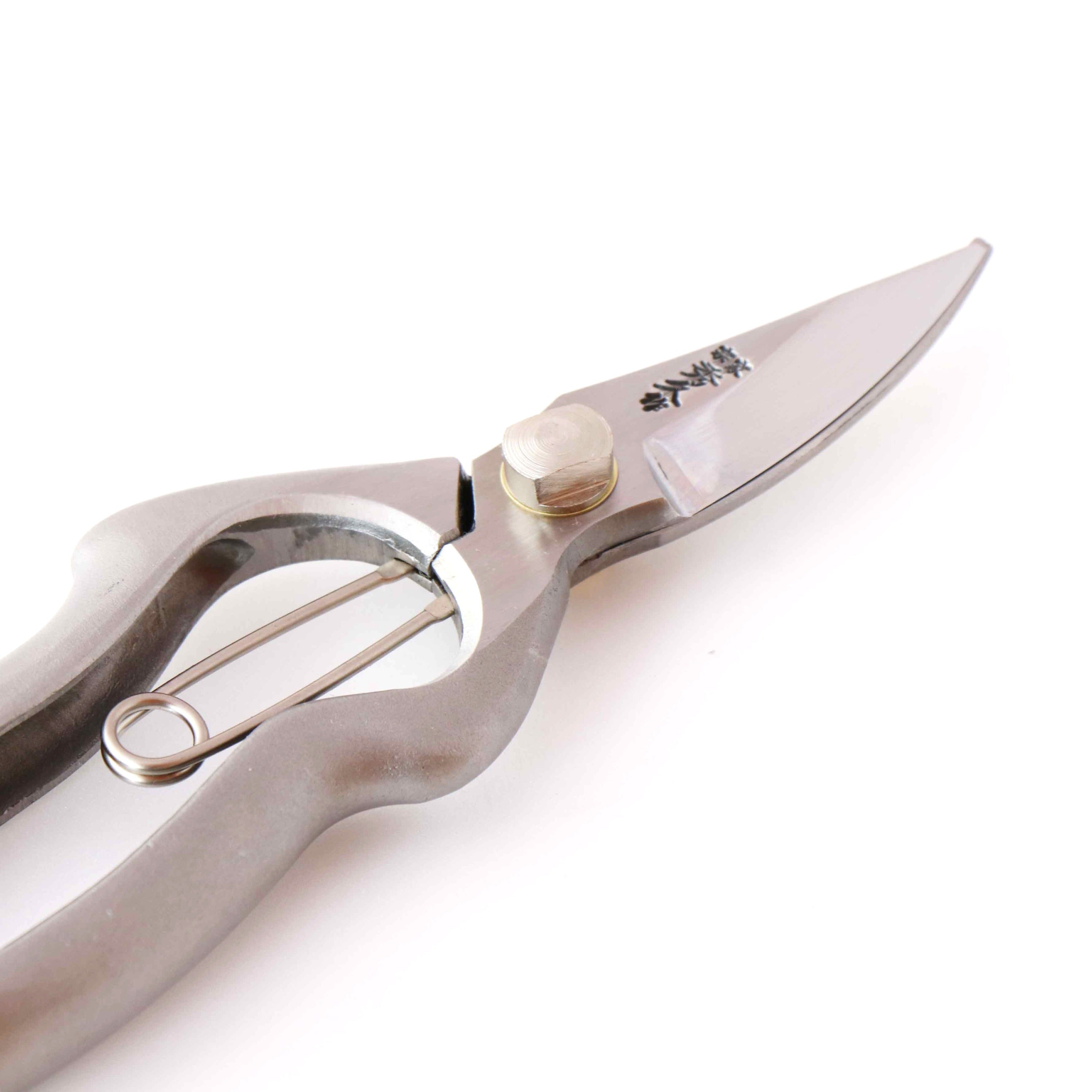
A bypass pruner has one sharpened cutting blade and a supporting counter blade. As the handles close, the cutting blade travels closely beside the counter blade.
The two parts perform different roles. The cutting blade enters and separates the plant fibers. The counter blade holds the branch in position and provides opposing support as the cutting blade passes beside it.
Because the two elements pass each other rather than meeting face-to-face, the cutting action combines slicing and shearing. When the edge is sharp and the tool is correctly fitted, the branch can be cut with relatively little compression.
This clean, supported cutting action helps limit crushing, tearing, and uneven damage around the cut. It does not eliminate the wound created by pruning, but it can leave a smoother, more clearly defined cut surface when the blade is sharp and correctly fitted.
For harvested flowers and stems placed in water, a clean cut also helps avoid crushing the water-conducting tissues. Fresh, clean cuts are commonly recommended to support water uptake after harvest.
The shape of the cutting head also matters. Bypass pruners usually have a narrow, curved head that can reach close to a bud, stem junction, or selected branch. This access is valuable when accurate cut placement matters.
The mechanism alone does not guarantee good performance. A loose pivot lets the cutting blade and counter blade separate under load. Excessive lateral clearance lets fibers fold or jam between them. An overtightened pivot creates drag.
You feel each of these problems through the handles. A correctly fitted tool moves with a smooth, consistent action rather than catching, twisting, or suddenly resisting partway through the cut.
How Does an Anvil Pruner Cut?

It is often compared to a knife meeting a cutting board. The anvil supports the material directly beneath the cutting line while the blade enters from above.
That support can be useful when a branch is firm, dry, or difficult to hold steady because the material cannot move away from the blade as easily. This is why anvil pruners are often associated with dry or dead wood. However, the mechanism is not restricted to dead material, and not every dead branch is suitable for a hand pruner.
As with bypass pruners, the category is not the whole story. A sharp edge, a stable pivot, accurate blade guidance, and an anvil shaped to retain the branch all influence the result.
A dull edge can increase compression. Curved blade-and-anvil geometry can also help retain the material and may produce a cleaner cut than a broad, flat anvil design.
Anvil blade geometry varies as well. Some blades are sharpened from one side and others from both, but the defining feature is the relationship between one cutting blade and the supporting anvil.
Choose by the Work, Not Only by the Wood

Whether a branch is alive or dead can inform the choice, but it rarely settles it. What you are cutting, where you need to cut it, and how precisely you need to work usually tell you more.
A bypass pruner is usually the better choice when you want to:
-
place a cut accurately near a bud or branch junction
-
reach between closely spaced stems
-
make controlled cuts on flowers, young shoots, shrubs, roses, or fruit trees
-
use one versatile hand pruner for a broad range of routine garden work
For many gardeners, these tasks make up much of their everyday pruning, which is why many begin with a bypass pruner.
An anvil pruner is worth considering when firm support directly beneath the material is the priority—typically with dry, hard, or awkwardly held branches, and where reaching tightly into a junction matters less.
The practical question is therefore not simply whether the branch is alive or dead. It is whether this particular tool can make the required cut, in the required position, without excessive force.
A Note on Toyama Hamono Pruning Shears
Toyama Hamono pruning shears are designed primarily for live branches and stems within the rated capacity of each model.
Dead or dried wood may reduce their effective cutting capacity. Very dry wood, bamboo, and hard, frozen branches may damage the blade.
Always check the instructions for the specific model, and do not force a cut that feels beyond the tool.
What Makes a High-Quality Bypass Pruning Shears?

A sharp edge matters, but sharpness alone does not make a good pruning shear.
Accurate blade fitting
The cutting blade and counter blade need enough overlap to complete the cut. Their lateral relationship must also remain close enough to reduce the chance of fibers escaping between them.
Too much clearance can leave folded fibers or an incomplete cut. Excessive contact adds drag and unnecessary wear.
A stable pivot
Under load, the pivot must hold the cutting blade and counter blade in their intended relationship.
A tool that feels smooth when opened and closed without a branch may behave differently during an actual cut. Performance under working pressure is what matters.
Suitable blade geometry
The edge must enter plant material efficiently while remaining strong enough for its intended work.
An edge that is unnecessarily thick may require more force, while one that is too fragile for the intended material may chip or deform.
Blade curvature also affects whether the branch remains seated in the cutting head or slides toward the tips.
Comfort and control
Grip shape, handle span, spring tension, weight, and balance all affect comfort. These characteristics should be considered separately from the bypass-or-anvil distinction.
A pruner is easier to control when it fits the hand and reaches its target without requiring a twisted wrist or overstretched grip.
Maintenance
A well-made tool can be cleaned, sharpened, and adjusted over its working life. Long service depends on preserving the edge geometry and blade relationship intended by the maker.
How Toyama Hamono Fits a Bypass Pruning Shear

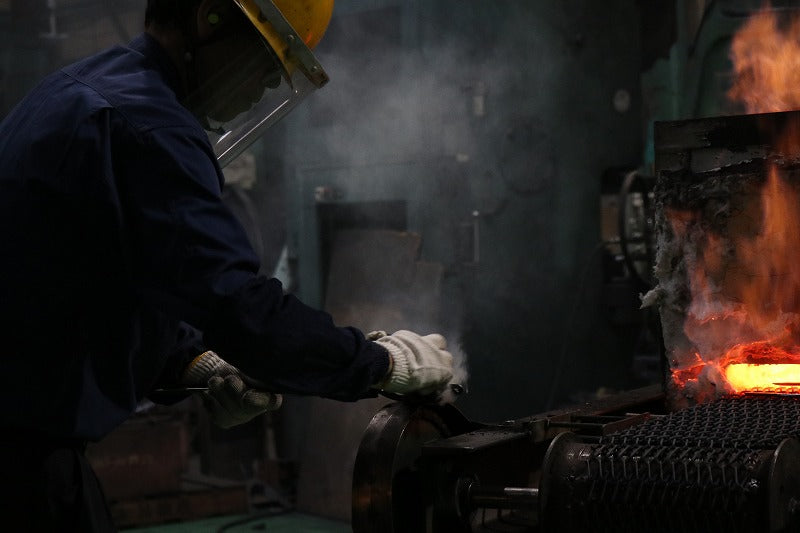
The process begins with tanzo, traditional forging. Forging establishes the foundation of the blade form, but it is only the first step toward a finished shear.
Through uratogi, the craftsperson finishes the inner face of the blade by hand. That face carries a faint concave hollow called urasuki. This geometry limits unnecessary surface contact and helps keep blade contact concentrated near the cutting edge.
Then comes aibadori, the final fitting.
The craftsperson closes the shear, listens to the blades, feels the resistance through the pivot, and adjusts the contact again and again until the blades move with a smooth, unified action.
These are not decorative traditions. They establish the working relationship between the cutting blade and counter blade.
For the gardener, the intended benefits are practical:
-
the blade enters without the action feeling forced
-
the counter blade supports the branch through the cut
-
the movement remains smooth and consistent
-
careful fitting helps reduce the chance of fibers catching between the blades
-
proper maintenance can help preserve the intended blade geometry
This link between adjustment at the workbench and performance in the hand is why Toyama Hamono continues to specialize in bypass pruning shears.
When Should You Use a Different Tool?
No hand pruner is built to cut every branch.
Rated cutting capacities are practical upper guidelines under suitable conditions—not targets to test on every cut. Actual performance varies with the model, the hardness and moisture of the wood, the condition of the material, and where the branch sits in the cutting head.
Stop and change tools when:
-
the branch does not sit securely in the stronger part of the cutting head
-
the handles require excessive force
-
the blade begins to twist or move sideways
-
you feel tempted to rock or twist the pruner through the material
-
the branch exceeds the model’s stated capacity
Use a lopper when you need greater leverage, and a pruning saw when the branch is too large, too hard, or too awkwardly positioned for a hand pruner.
Changing tools is not a failure of technique. A controlled saw cut is better than forcing a pruning shear beyond its design.
Frequently Asked Questions
Can bypass pruners cut dry or dead branches?
A bypass pruner may be able to cut a small dry or dead branch, depending on the condition of the material, the model, and its rated capacity. Dry or dead wood can be harder than living material and may reduce the tool’s effective capacity. Follow the instructions for the specific pruner rather than relying on the category name alone.
Toyama Hamono pruning shears are designed primarily for live branches and stems.
Are anvil pruners only for dead wood?
No. Anvil pruners are often recommended for dry or dead branches because the anvil supports the material directly from below. However, the mechanism is not restricted to dead material, and not every dead branch is suitable for a hand pruner.
Which type is better for precise garden pruning?
For roses, fruit trees, young shoots, and other work where access and accurate placement matter, a bypass pruner is generally the better choice. Its narrow, curved head and slicing action make it easier to position near a bud or branch junction.
Choosing Your Pruner
Choose according to the cut you need to make rather than relying on a rigid live-wood-versus-dead-wood rule.
For precise placement, access around stems, and controlled everyday pruning, a bypass pruner is usually a practical, versatile choice.
For general garden pruning, an anvil pruner is the more specialized option. It can be useful where firm support directly beneath the material matters more than access into a tight junction.
Both mechanisms can be made well. The result also depends on the condition and hardness of the branch, the rated capacity of the tool, the state of the edge and pivot, and how well the pruner fits the user’s hand.
Toyama Hamono chooses the bypass mechanism because it connects directly with the craft we have refined in Sanjo since 1861: forging the blade, finishing its inner face, and fitting the cutting blade and counter blade to move correctly as a pair.
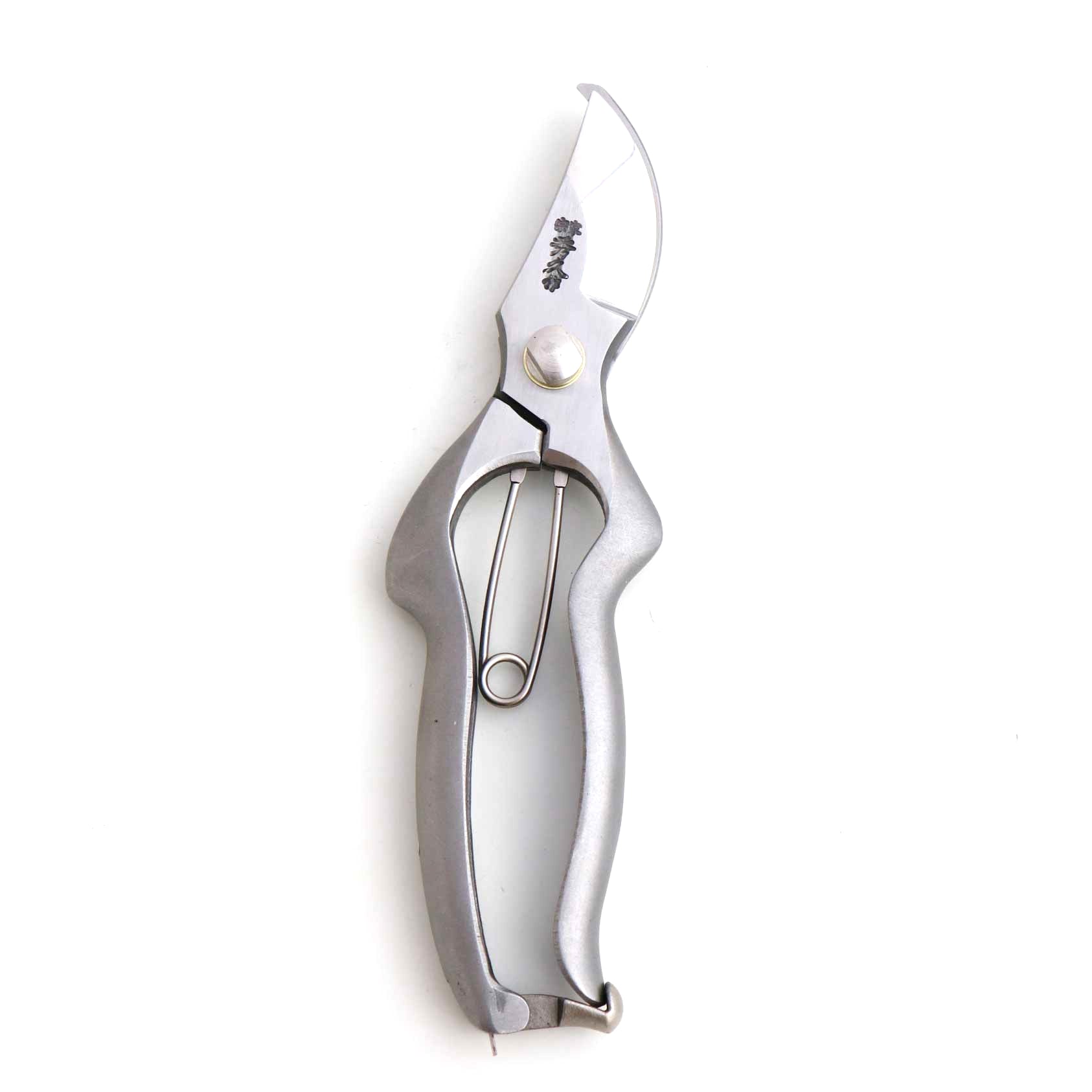
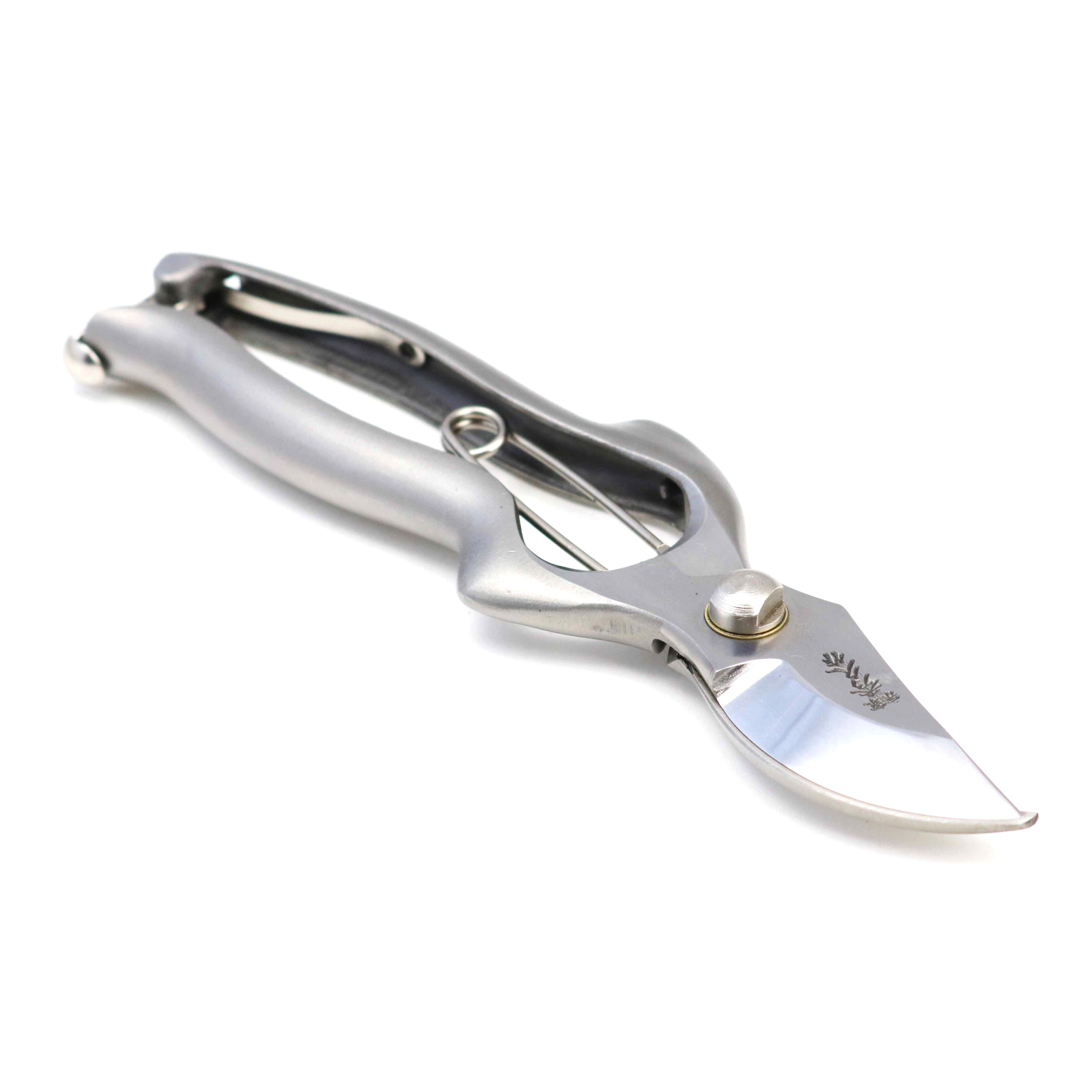
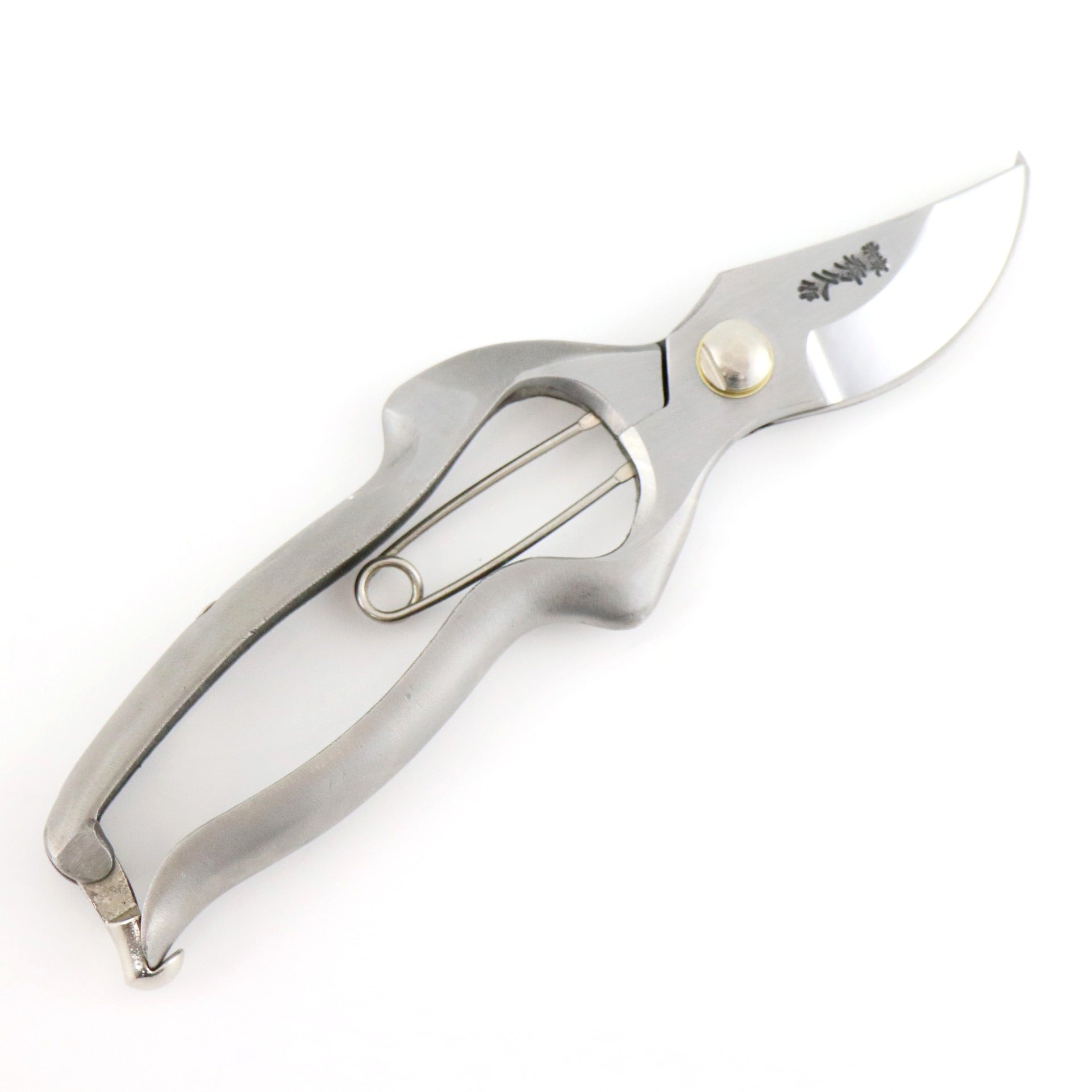
Explore our forged bypass pruning shears, compare models in our pruning-shear selection guide, and learn how to preserve the blade geometry in our guide to maintaining and sharpening Japanese pruning shears.



Share:
What Are One-Handed Hedge Shears?
Best Pruning Shears for Small Hands: A Practical Size and Fit Guide