
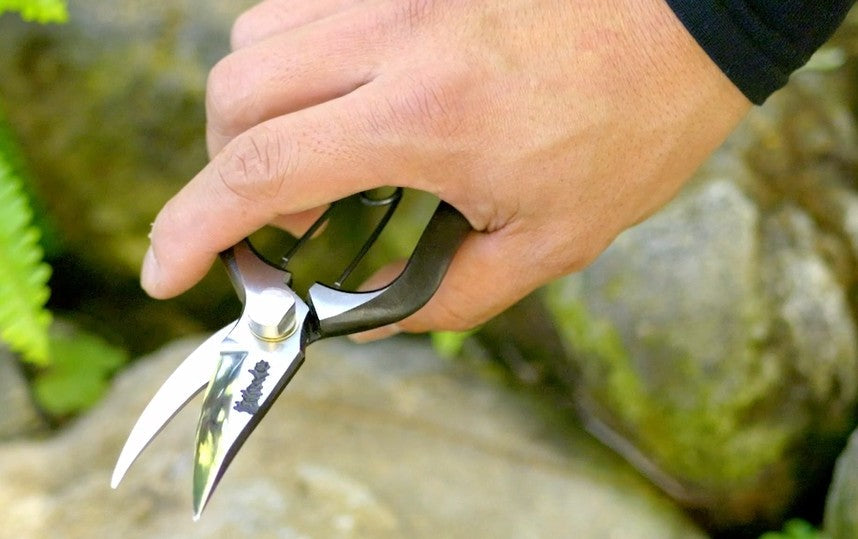
Small hands do not always need the shortest pruning shears. A compact pair can still feel too wide, too heavy, or poorly balanced, while a slightly longer model with the right grip may feel more secure.
For many gardeners with smaller hands, pruning shears around 140–165 mm are the most practical place to begin. However, overall length alone does not determine fit. Handle opening, grip shape, weight, balance, and the type of live plant material you need to cut all matter.
This guide explains how to narrow your options, compare four Toyama Hamono pruning shears, and assess the fit when you are able to handle the tool. Pruning shears are also called secateurs, particularly in the UK.
Start by Measuring Your Hand

Place your hand flat on a table in a relaxed position. Measure in a straight line from the tip of your middle finger to the main crease where your palm meets your wrist.
Use this measurement only as a rough reference when comparing sizes. It is not an exact formula for matching hand length to tool length.
Two pruning shears with the same overall length can feel very different because their handle shapes, opening positions, weights, and balances are not identical. Hand measurement can help narrow the models you compare, but it cannot determine the correct fit by itself.
For smaller hands, compact models around 140–165 mm are generally the most useful group to examine first. A 180 mm model may also be comfortable when the grip suits the user. Models around 200 mm provide more reach but are usually larger overall.
What You Can Check Before and After Buying
When shopping online, you can compare:
-
Overall length
-
Weight
-
Grip shape
-
Steel type
-
Intended use
-
Rated cutting capacity for live wood
Other aspects can only be assessed properly when the tool is in your hand:
-
Whether the natural handle opening feels comfortable
-
Whether the tool stays securely in your palm
-
Whether the lower handle supports your fingers
-
Whether you can close the blades without changing your grip
-
Whether the tool still feels comfortable while wearing gloves
The published specifications can help you select a reasonable starting model. The final fit depends on how the individual tool sits in your hand.
A Simple At-Home Fit Check
When you are able to handle the pruning shears, hold them as you would during normal pruning and look for the following signs.
Reach
You should be able to reach the lower handle without fully stretching your fingers before each cut.
If you need to spread your hand widely just to take hold of the tool, the natural handle opening may be wider than is comfortable for repeated use.
Support
The lower handle should support your fingers without making the tool feel unstable.
Ideally, all four fingers rest comfortably on the handle. However, hand shape and grip position vary, so the more important question is whether the tool remains secure when you close the blades.
Position in the palm
The tool should remain seated in your palm as you squeeze.
If it repeatedly moves toward your fingertips, the handle may not be supporting your hand securely.
Wrist position
You should be able to close the blades without sharply bending your wrist sideways.
A neutral wrist position can help you maintain control during the cut.
Gloves
Check the fit while wearing the gardening gloves you normally use.
A thick glove changes how the grip contours and handle opening feel. A pair that feels comfortable in a bare hand may feel tighter, wider, or less secure when gloves are added.
If several of these signs suggest that the tool is difficult to control, a shorter or differently shaped model may be worth considering.
What Matters Besides Overall Length

Handle opening
Overall length is measured from the blade tip to the end of the handle. It affects reach, blade length, balance, and storage.
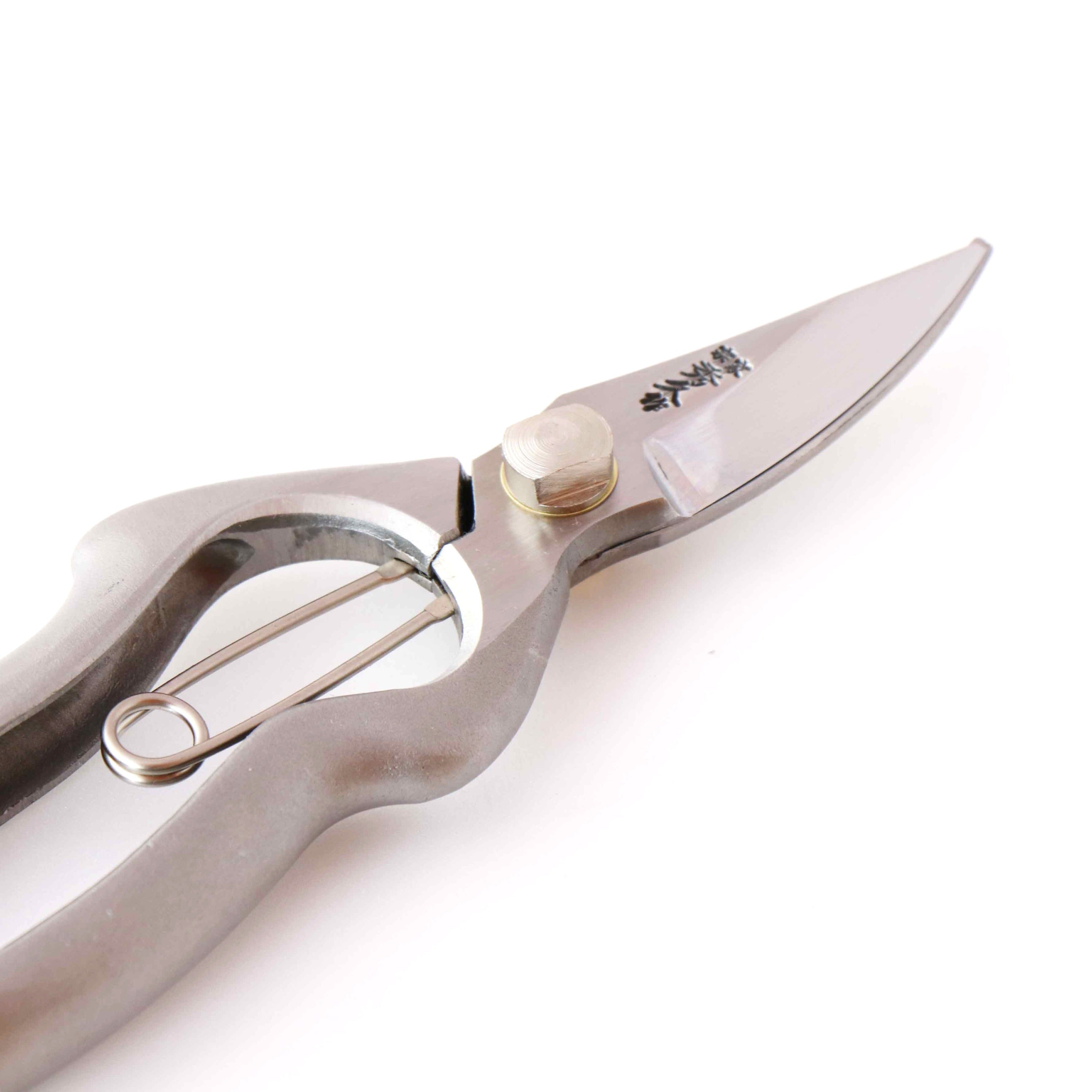
Handle opening is the distance between the handles when the shears are ready to cut. On spring-loaded pruning shears, the spring returns the handles toward their natural open position after each cut.
If that position is wider than your comfortable reach, repeated pruning may feel less secure even when the total tool length appears suitable.
Toyama Hamono does not publish a handle-opening measurement for every model. For that reason, overall length should be used as a starting reference rather than proof that a particular model will fit every hand of a given size.
Grip shape
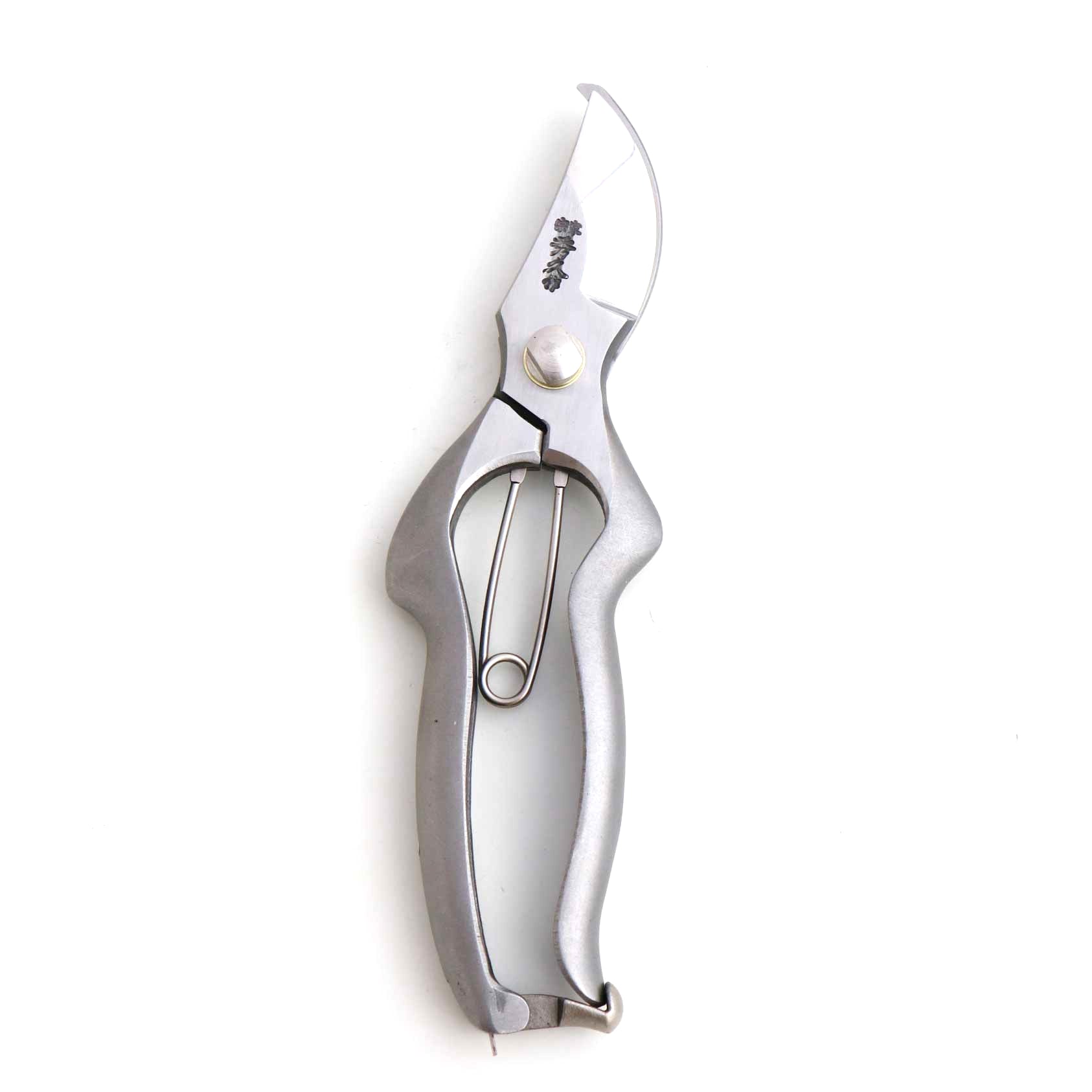
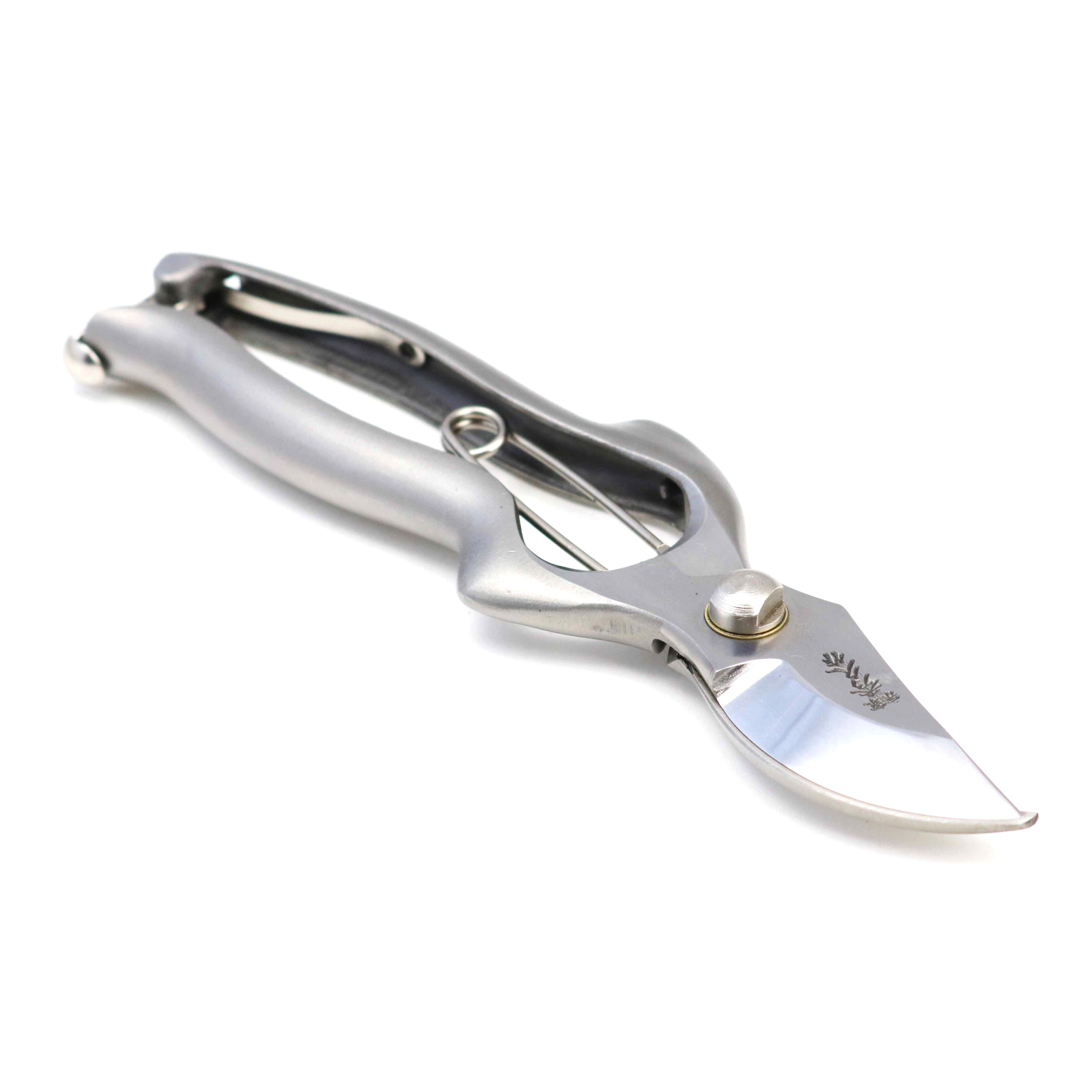
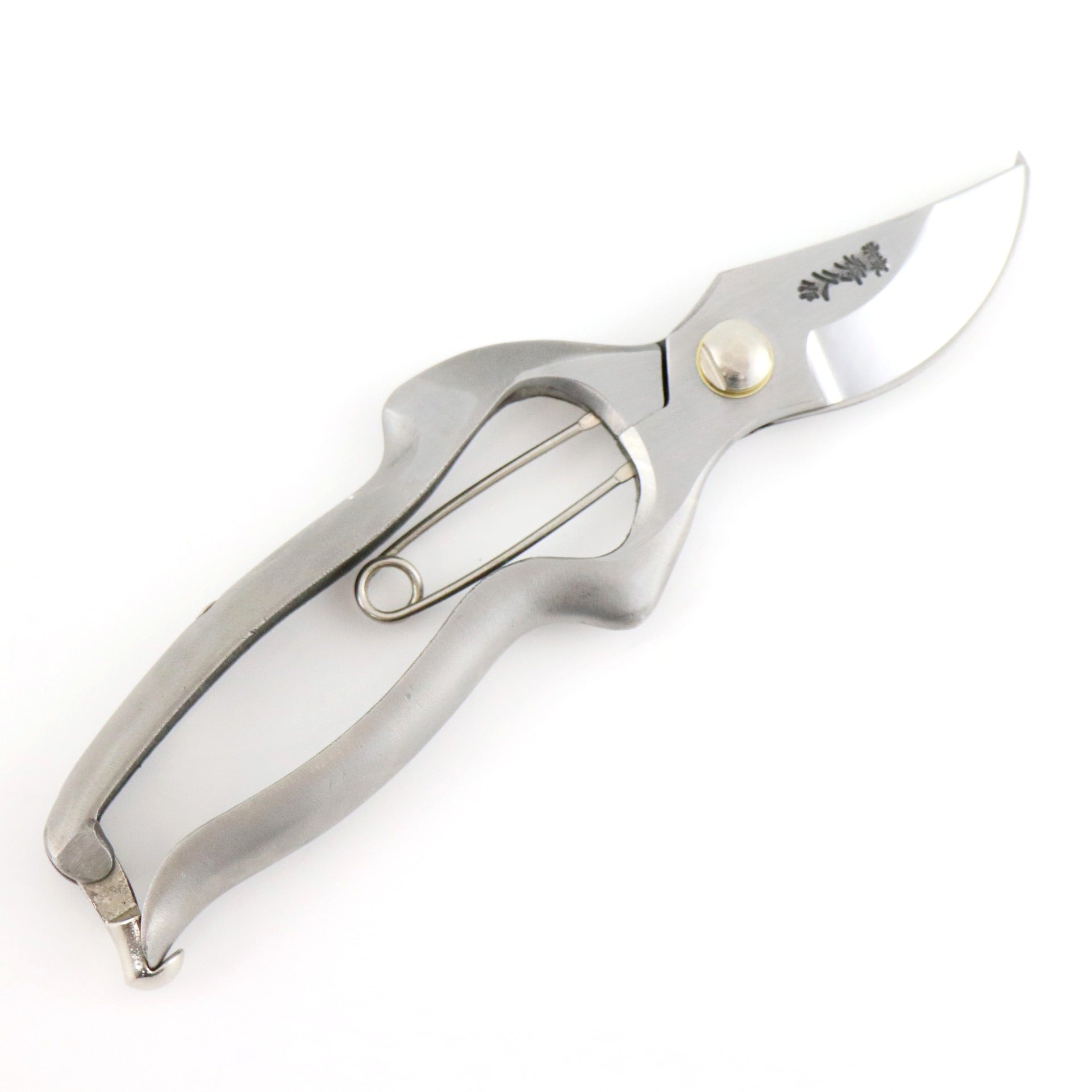
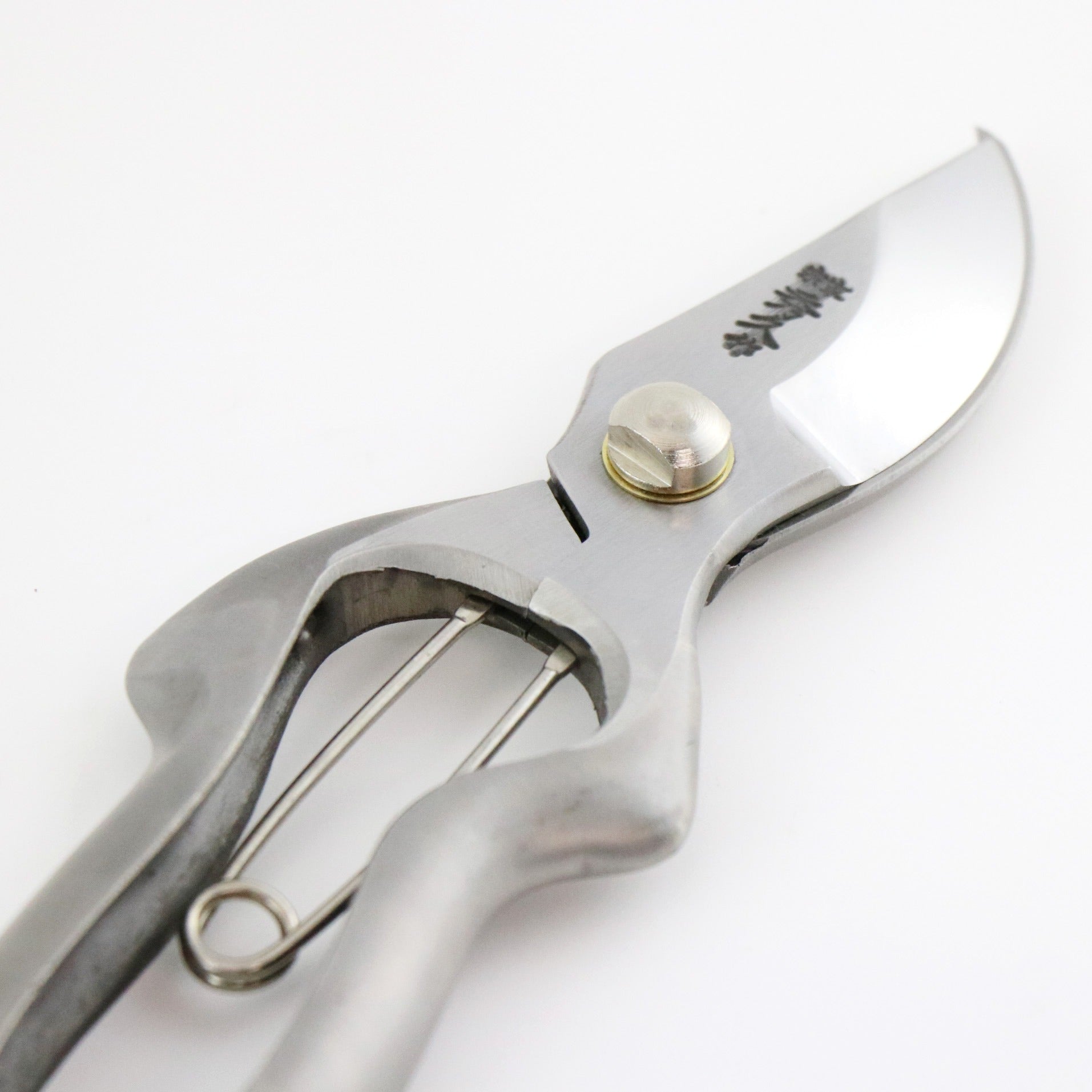
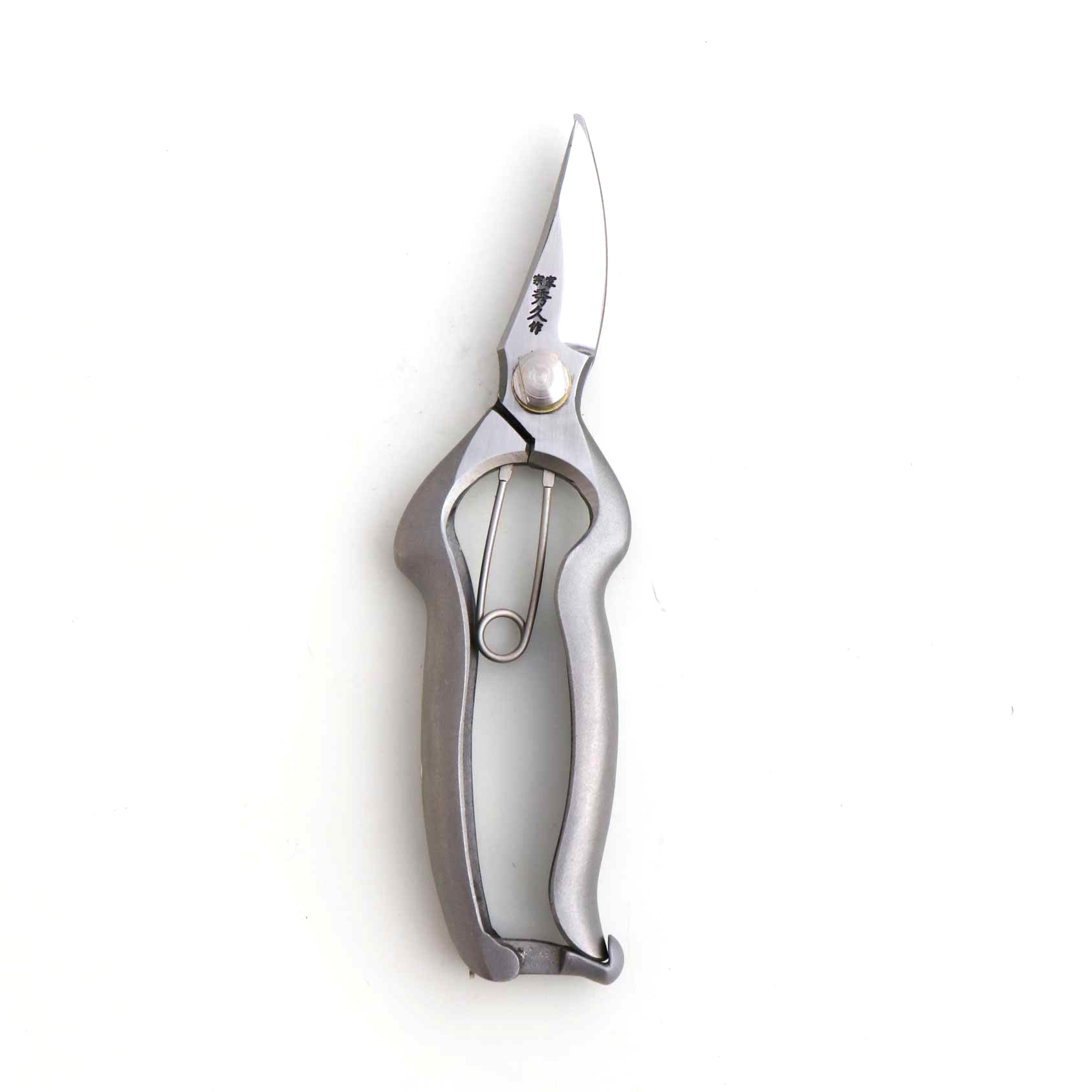
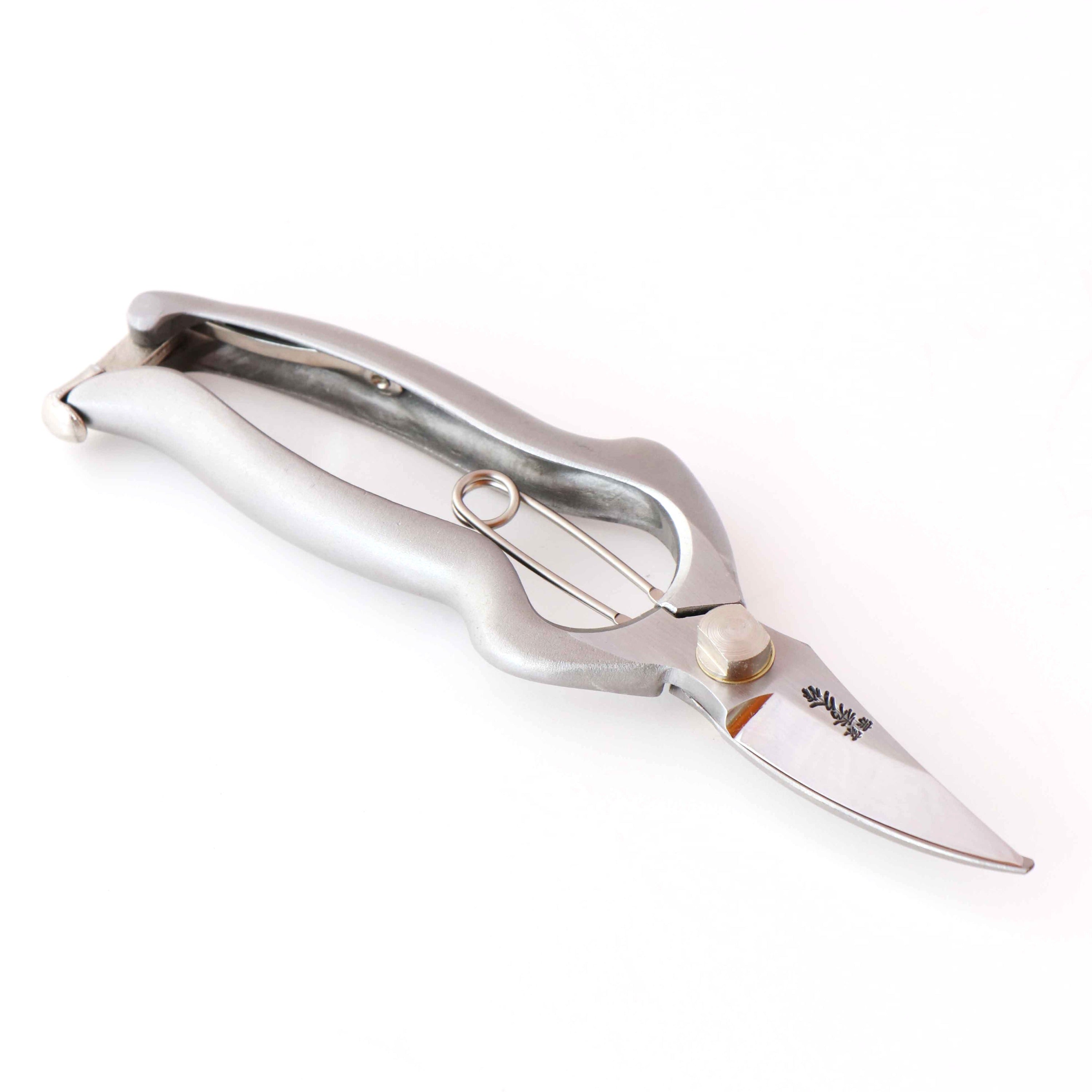
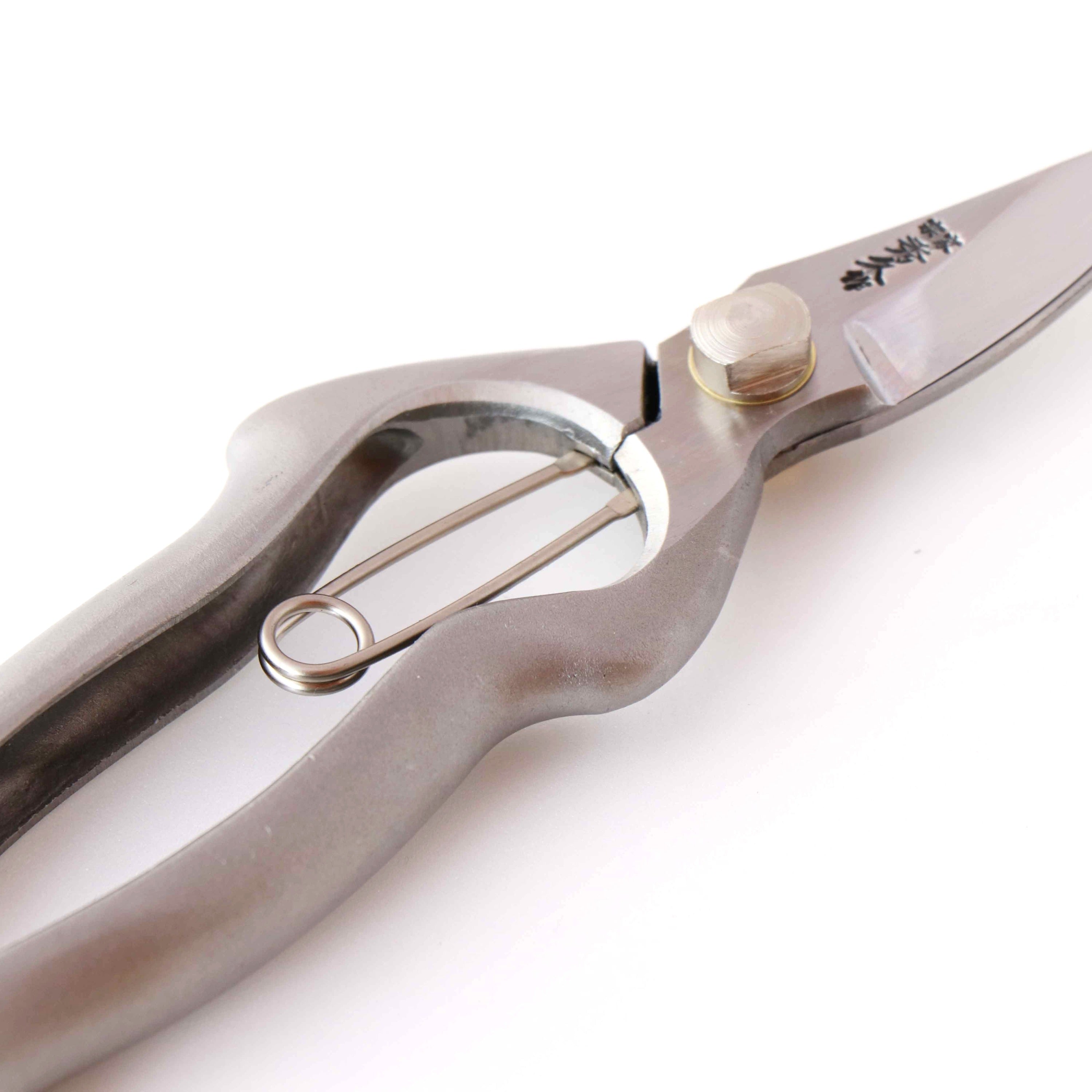
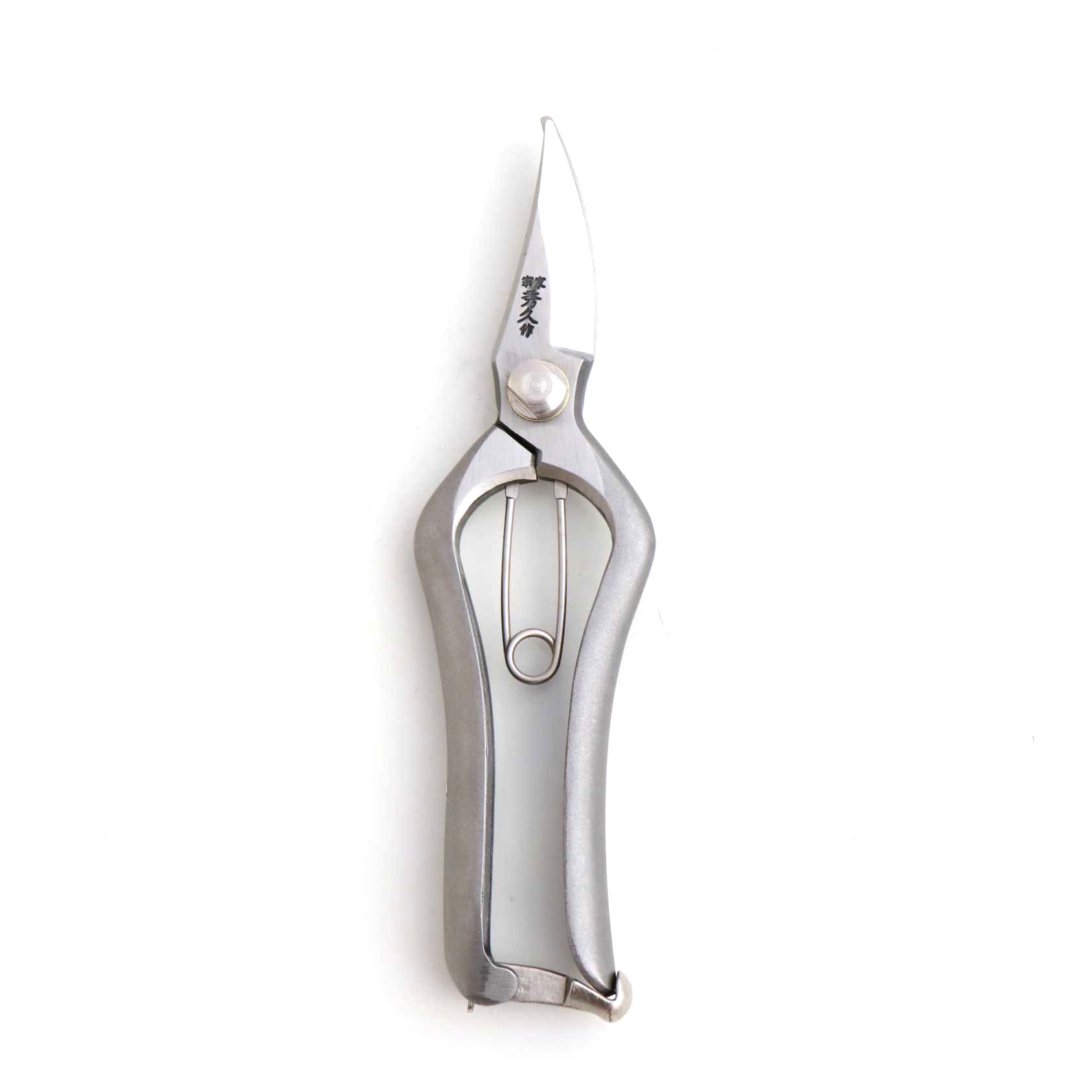
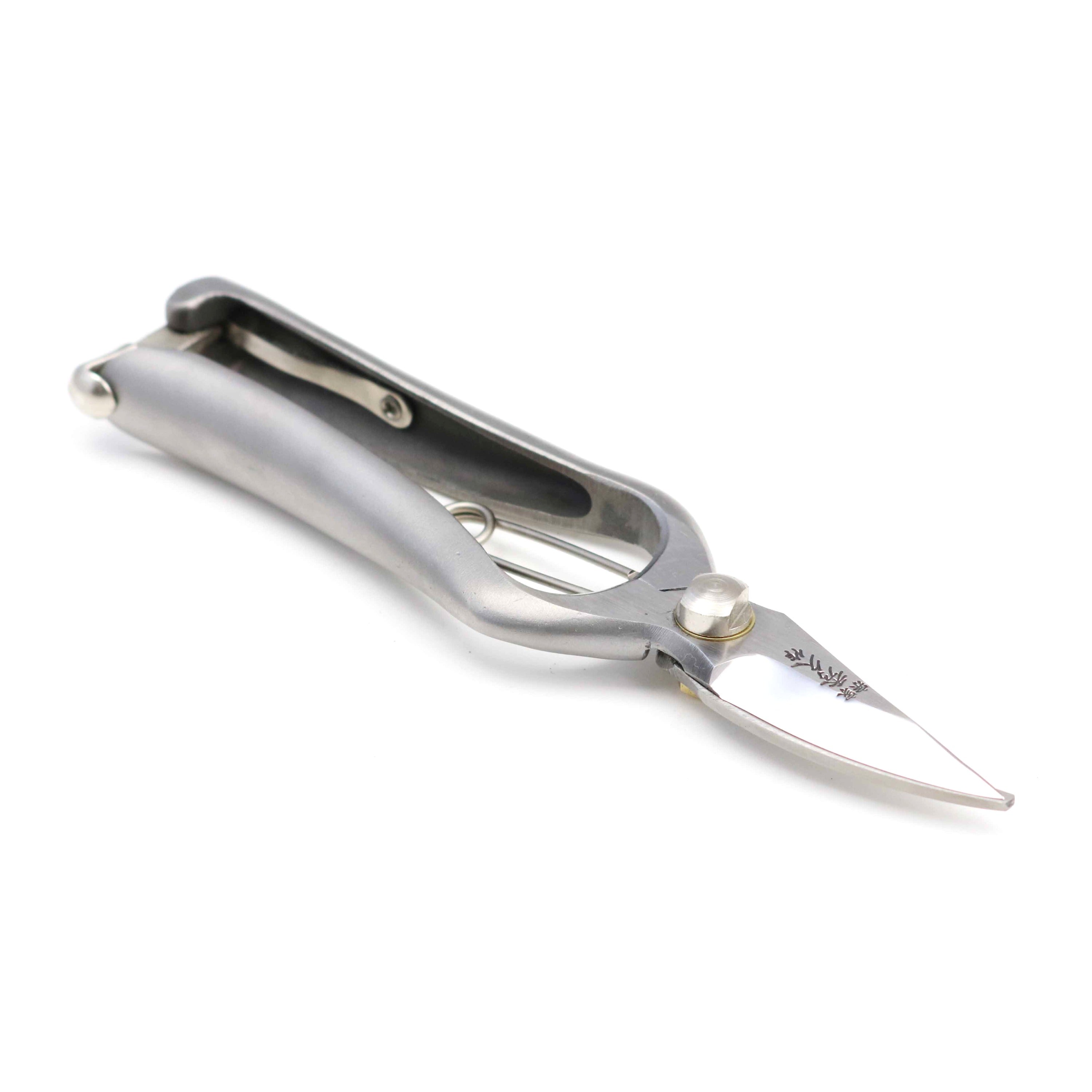
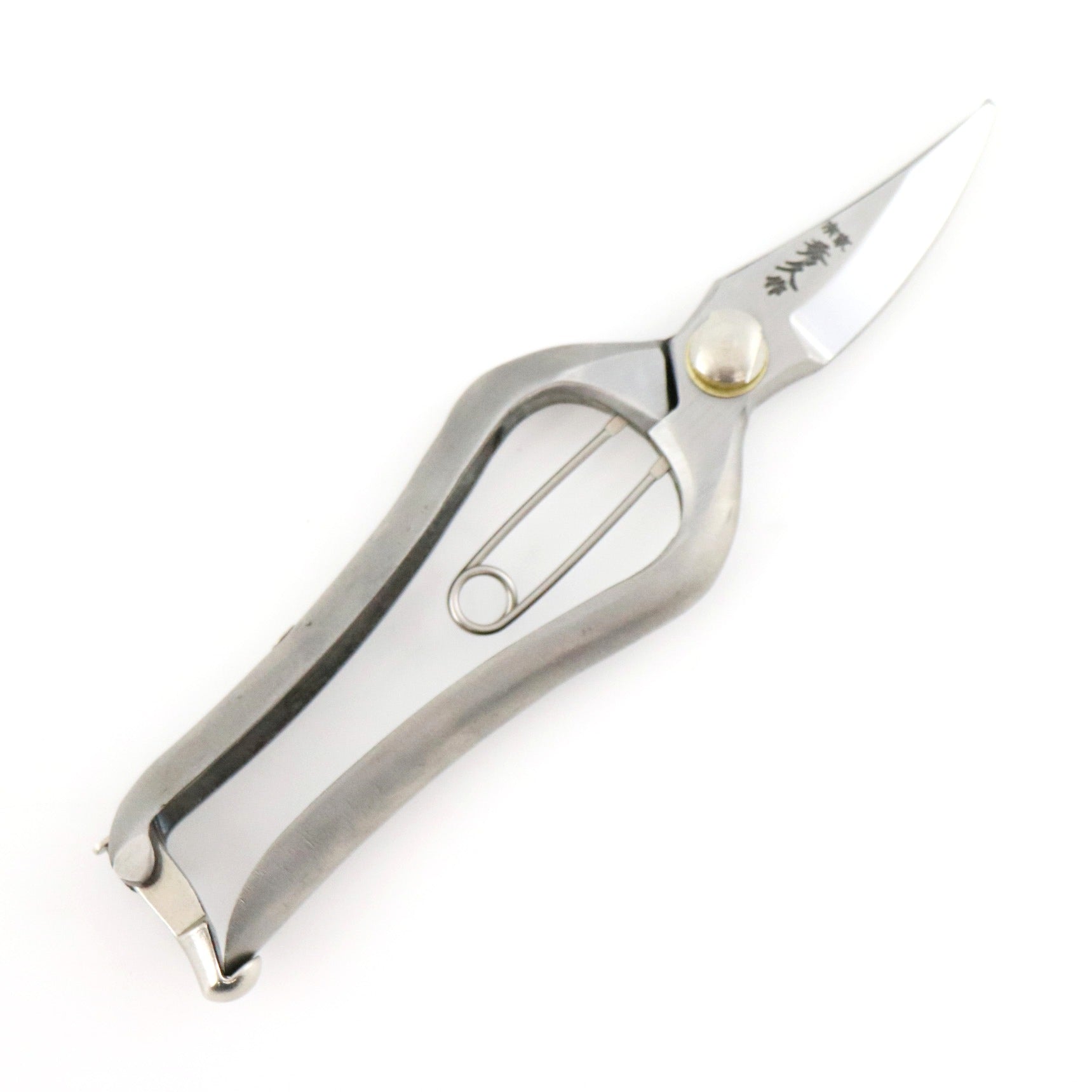
Toyama Hamono offers three principal grip shapes for pruning shears.
Standard symmetrical grips have a neutral, traditional form. They allow the user to adjust hand position and cutting angle freely.
Symmetrical ergonomic grips retain a balanced shape while adding gentle contours for more support.
Asymmetrical ergonomic grips are shaped differently on the thumb and finger sides. According to the product descriptions, this shape helps the hand settle into a more defined position and makes it easier to apply force with control.
No grip shape is automatically best for every smaller hand. The most suitable option is the one you can open and close without excessive stretching, slipping, or repositioning.
Weight
Weight affects how the tool feels during repeated use and should be considered alongside size.
The compact T33 weighs 90 g. The other three models in this comparison weigh between 180 g and 190 g.
A lighter tool may feel easier to position, but weight alone does not determine cutting capacity, stability, or comfort.
Comparing Four Pruning Shears for Live Branches
The following models are practical options to compare when choosing pruning shears for smaller hands. The recommendations are based on published dimensions, weight, grip design, intended use, and rated cutting capacity for live wood.
|
Model |
Length |
Weight |
Grip |
Steel |
Approx. cutting capacity near blade base |
Best considered when… |
|
T33 |
140 mm |
90 g |
Compact, leather-wrapped |
High-carbon steel |
10 mm |
Minimum size and low weight are the priorities |
|
T30 Size S |
165 mm |
180 g |
Asymmetrical ergonomic |
High-carbon steel |
15 mm |
You want compact handling with a higher rated branch capacity |
|
T530 Size S |
165 mm |
190 g |
Asymmetrical ergonomic |
Stainless steel |
10 mm |
Corrosion resistance and simpler routine care matter most |
|
T25 Size M |
180 mm |
185 g |
Asymmetrical ergonomic |
High-carbon steel |
15 mm |
You prefer a standard size and can comfortably manage a larger tool |
Prices vary by region and may change over time. Use the product links below to check current pricing and availability.
How We Chose These Models
These recommendations are based on published product specifications. They are not based on measured handle-span testing or formal user-fit trials.
When buying online, use the specifications to narrow your choice. Once the shears arrive, assess how the handles, weight, and balance feel in your hand before beginning an extended pruning session.
Not Sure Where to Start?
For general pruning of live branches, the T30 Size S is the first model to compare.
At 165 mm and 180 g, it combines a compact overall length with an asymmetrical ergonomic grip and an approximate cutting capacity of 15 mm near the blade base.
This makes it a balanced starting point for gardeners who want compact handling while retaining a relatively high rated capacity for live branches.

Choose the T33 for minimum size and weight
The T33 is the smallest and lightest model in this comparison.
At 140 mm and 90 g, it is worth considering when compact handling is the main priority. Its approximate cutting capacity is 10 mm near the blade base, making it suitable for thinner green stems and lighter branch pruning within its rated capacity.

Choose the T530 Size S for corrosion resistance
The T530 Size S shares the T30’s 165 mm overall length but is made from forged stainless steel.
It weighs 190 g and has an approximate cutting capacity of 10 mm near the blade base. Consider it when greater corrosion resistance and simpler routine care are more important than the higher rated cutting capacity of the T30.

Choose the T25 Size M for a standard 180 mm option
The T25 Size M is 180 mm long and weighs 185 g.
It has an asymmetrical ergonomic grip and an approximate cutting capacity of 15 mm near the blade base. It may suit gardeners who prefer more blade length and can comfortably manage a larger pair of pruning shears.

Same Length Does Not Mean the Same Cutting Capacity
The T30 and T530 are both 165 mm long, but their rated cutting capacities differ.
The T30 is rated to approximately 15 mm near the blade base, while the T530 is rated to approximately 10 mm.
This difference shows why overall length should not be used as a substitute for cutting capacity. Each model has its own blade geometry, pivot and handle proportions, material, and intended use.
Choose according to the complete specification rather than length alone.
How to Cut Efficiently With Smaller Hands
Good technique reduces unnecessary effort and protects both the tool and the plant.
For a live branch within the model’s rated capacity, place the branch near the base of the cutting blade, close to the pivot. This is where the shears provide the greatest leverage.
Keep your wrist reasonably straight and close the handles in one smooth, controlled motion.
Avoid:
-
Twisting the shears sideways during the cut
-
Using both hands to force the handles closed
-
Cutting wire, plastic, or other non-plant material
-
Assuming that dry or dead wood can be cut at the same diameter as live wood
-
Continuing to force the cut when the blades do not pass through cleanly
Toyama Hamono’s rated capacities refer to live, green wood. Dry or dead branches may be considerably harder and more brittle, even when they have the same diameter as a live branch.
When a branch is too thick, dead, dry, frozen, or unusually hard, stop and use a pruning saw or another tool designed for that material.
Frequently Asked Questions
What are the best secateurs for small hands?
Pruning shears around 140–165 mm are generally the most useful starting range.
However, grip shape, handle opening, weight, and balance also affect fit. Use the length to narrow your options, then assess how securely the tool sits in your hand.
Should I choose a larger size when wearing gardening gloves?
Not necessarily.
You do not automatically need a longer tool, but you should check the fit while wearing the gloves you normally use. Thick gloves can change how the handle opening and grip contours feel.
Do pruning shears of the same length have the same cutting capacity?
No.
The T30 and T530 are both 165 mm, but the T30 is rated to approximately 15 mm near the blade base, while the T530 is rated to approximately 10 mm.
Cutting capacity depends on the design and intended use of each model, not overall length alone.
Can pruning shears cut dead branches?
Dry or dead branches can be much harder and more brittle than live wood.
Even when the diameter appears small, forcing precision pruning shears through dead material may damage the blade or pivot. A pruning saw or another suitable tool is usually the better choice.
Choose the Tool for the Material First
The best pruning shears for small hands are not necessarily the shortest. Start with compact models around 140–165 mm, then compare the handle shape, weight, balance, and rated capacity for live wood.
For general live-branch pruning, the T30 Size S is the first model to compare. Choose the T33 when minimum size and weight are most important, the T530 Size S when corrosion resistance is the priority, or the T25 Size M when you prefer a standard 180 mm tool.
Most importantly, match the tool to the material. Toyama Hamono’s precision shears are designed to make clean cuts on suitable live branches and stems. For thick, dry, dead, or unusually hard branches, use a pruning saw or another appropriate tool rather than applying more force.
For flowers, buds, herbs, and other fine work, a garden snip may be more suitable than pruning shears. See [Snips vs. Pruning Shears: Which Tool Should You Use?]({{ snips_vs_pruning_shears_url }}) for a detailed comparison.



Share:
Bypass vs. Anvil Pruners: Which Should You Choose?
How to Use Japanese Pruning Shears and Garden Snips