

Pruning Shears
Pruning shears—known in Japan as sentei-basami—are spring-loaded bypass cutters designed for branches and stems up to about 15–16 mm in diameter. Unlike traditional Japanese garden shears (ueki-basami), they use a blade-and-counter-blade mechanism that lets the spring do much of the repetitive work, making them the go-to tool for daily pruning, rose care, and houseplant maintenance.
Toyama Hamono offers two distinct types of pruning shears: standard pruning shears with curved blades for clean branch cutting, and multi-purpose pruning shears with longer, narrower blades for more detailed work.
Two Types of Pruning Shears

Standard Pruning Shears
The classic everyday pruning shear. Designed for clean, confident cuts on branches up to about 15 mm, it is spring-loaded for comfortable repeat work. Available in S / M / L sizes, with a range of ergonomic grip options in both high-carbon steel and stainless steel.
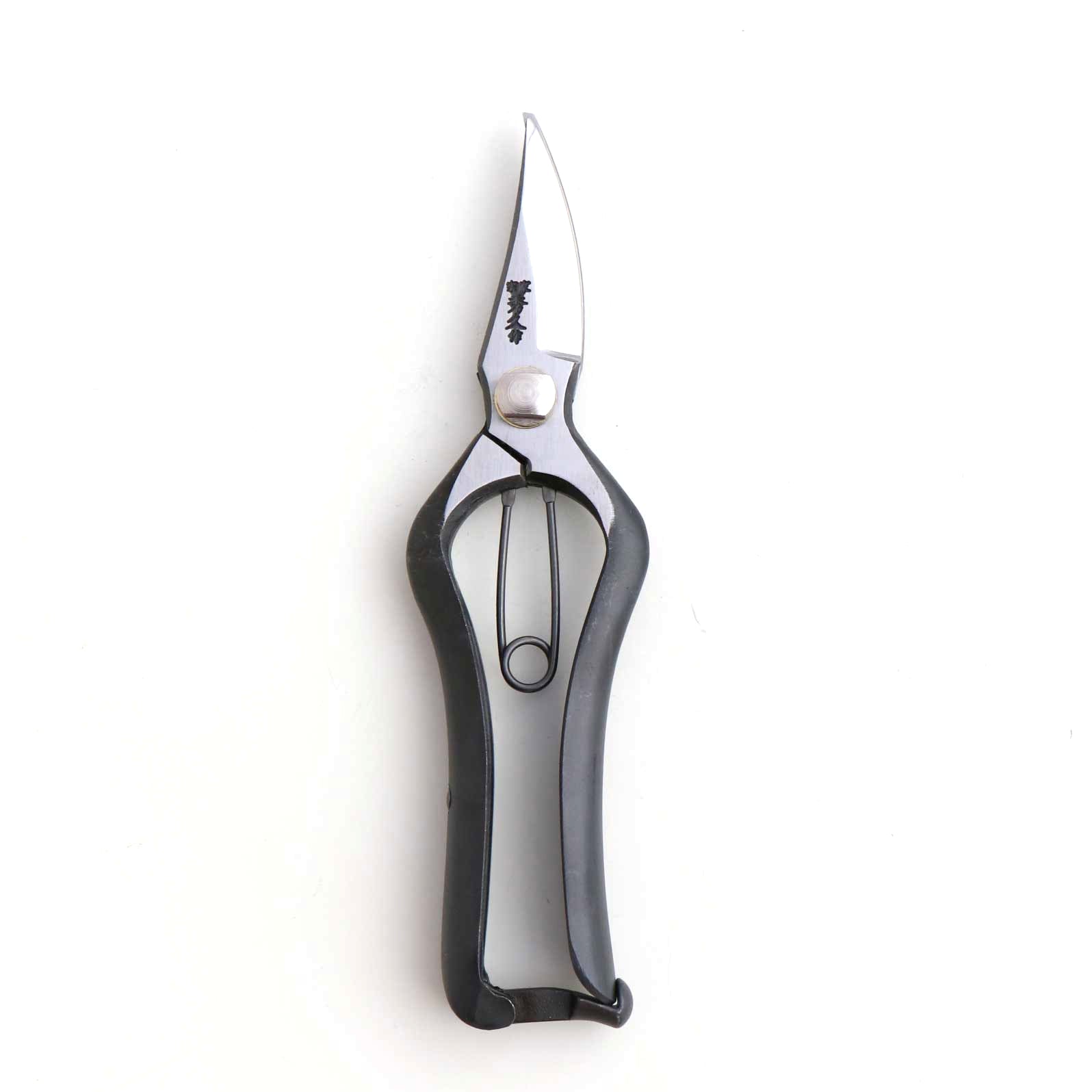
Muti-Purpose Pruning Shears
Longer, slimmer blades designed for more detailed work provide added reach and control for floral tasks and precision cutting, while the spring-loaded action helps reduce fatigue. Ideal when you want delicate control and solid cutting power in the same pair.
Steel Choice: High-Carbon vs Stainless
All Toyama Hamono shears are hand-forged in Sanjo, Niigata—a region with over 700 years of blade-making tradition. The choice of steel affects sharpness, longevity, and how you care for the tool.
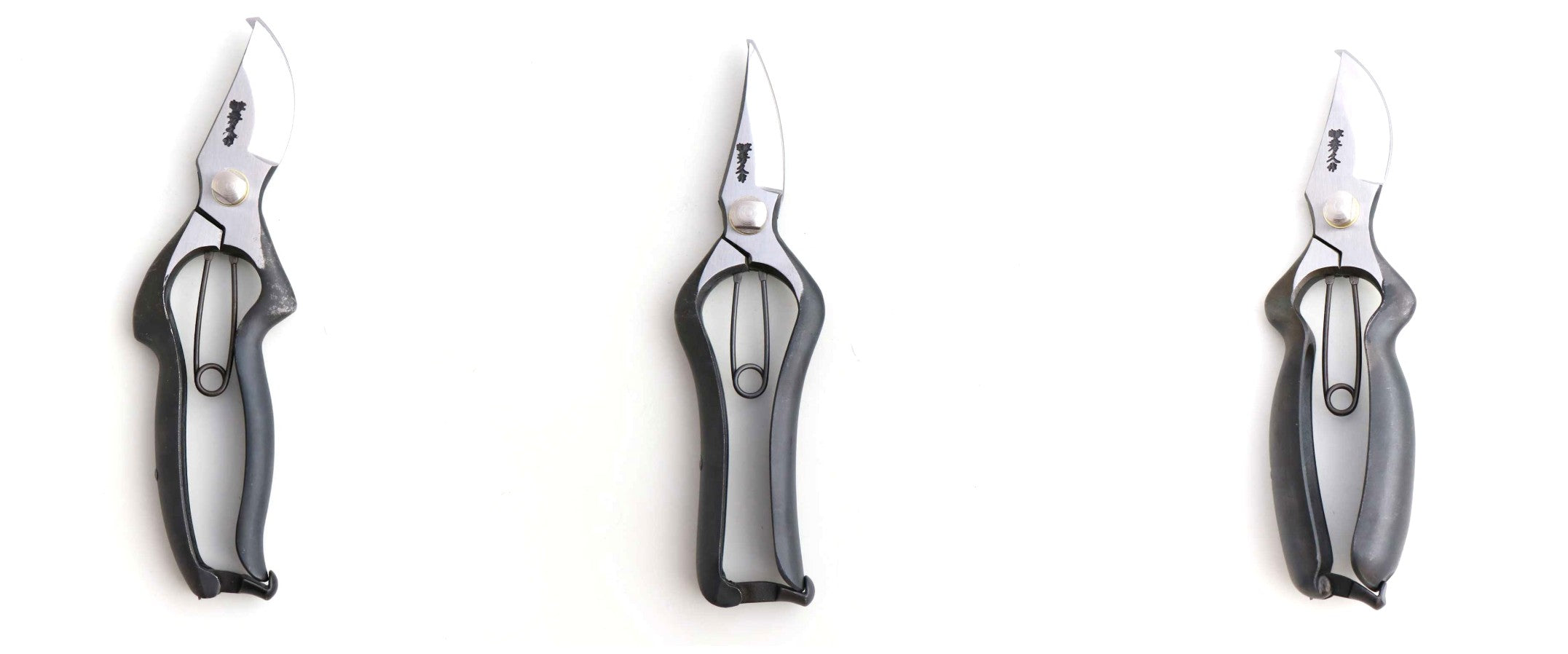
High-Carbon Steel
Harder steel that holds a keener edge. Once sharpened it stays sharp longer during heavy use. Requires a light coat of oil after use to prevent rust. Preferred by professional gardeners who sharpen regularly.
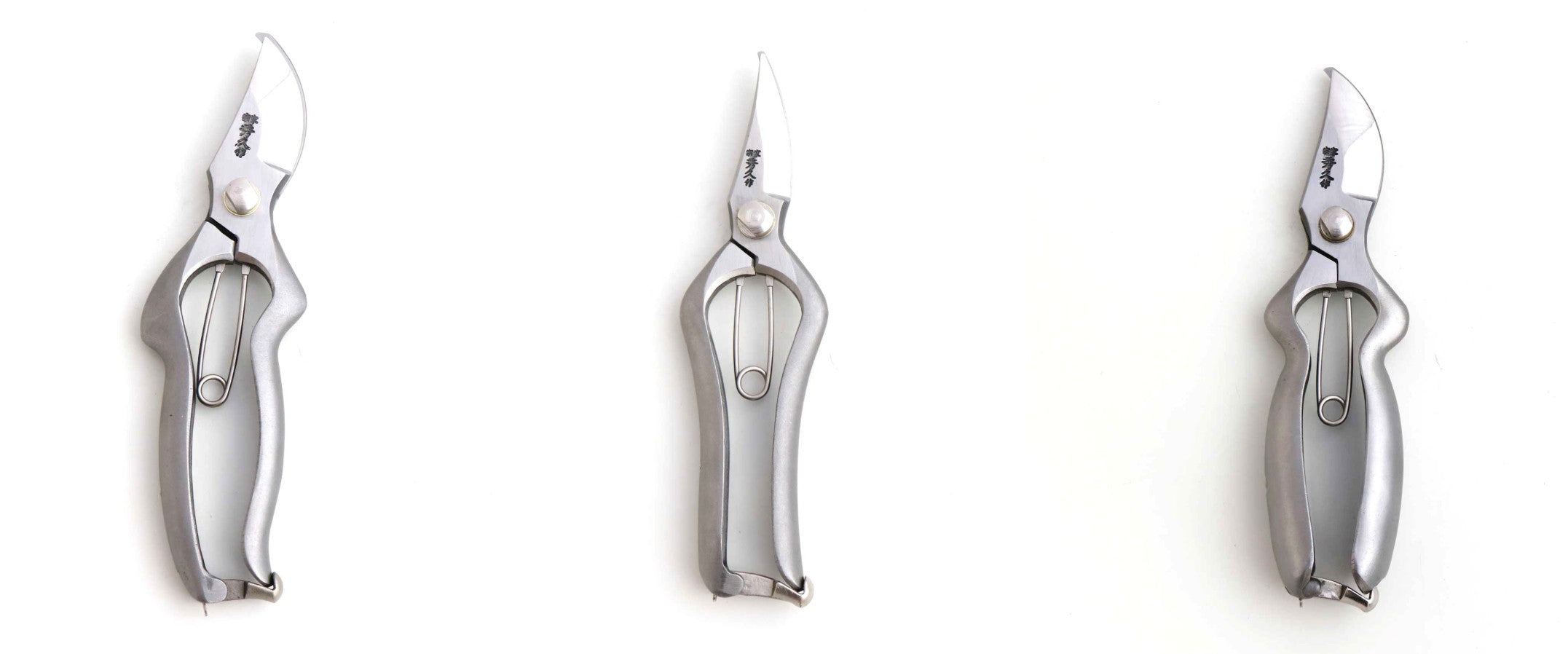
Stainless Steel
Rust-resistant by nature. The ideal choice for wet environments—cutting under running water for ikebana, working in rain, or any situation where thorough drying isn't practical. Slightly softer than carbon steel, so edges may need more frequent maintenance.
Grip Choice: Choose the Shape That Fits Your Hand
A good blade matters, but so does the shape of the grip. Toyama Hamono offers three grip shapes for its pruning shears, allowing you to choose the balance of comfort, control, and cutting force that best fits your hand and working style.
Standard Symmetrical
A neutral, classic grip shape with a straight, balanced feel in the hand. This shape is suited to users who prefer a traditional pruning-shear feel and greater freedom in how they hold the tool, rather than a strongly contoured grip that guides the hand into a single position.
Representative models include T34, T14, and T19. Wood-grip models such as T101, T102, T106, and T107 also feature symmetrical grip shapes.
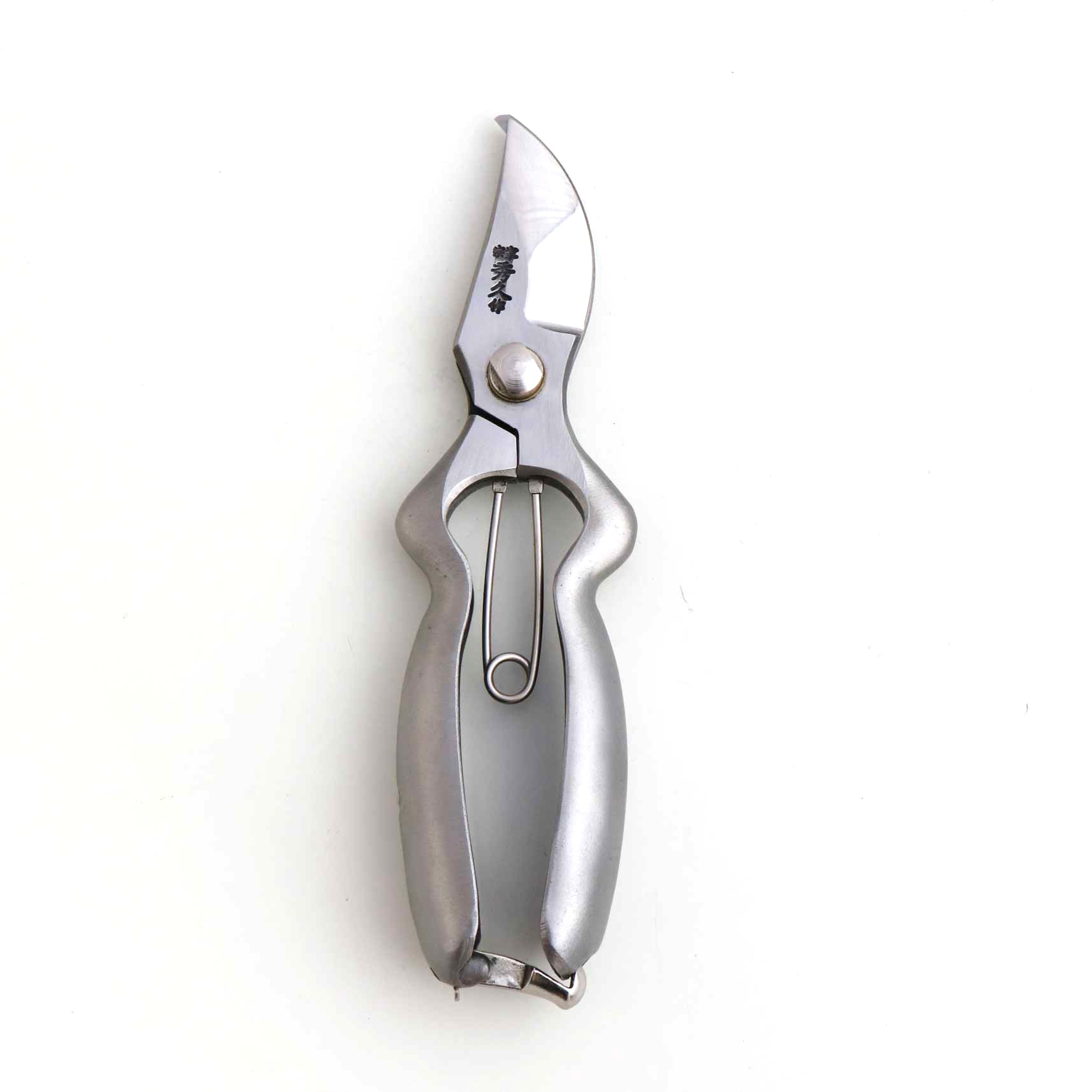
Symmetrical Ergonomic
A more contoured version of the classic symmetrical grip. It keeps the balanced, centered feel of a standard handle, but adds shaping that helps the hand settle into a more stable position during repeated cutting. Toyama Hamono’s grip guide points to T21 and T31 as examples, and the product lineup also shows T22 in this same group.
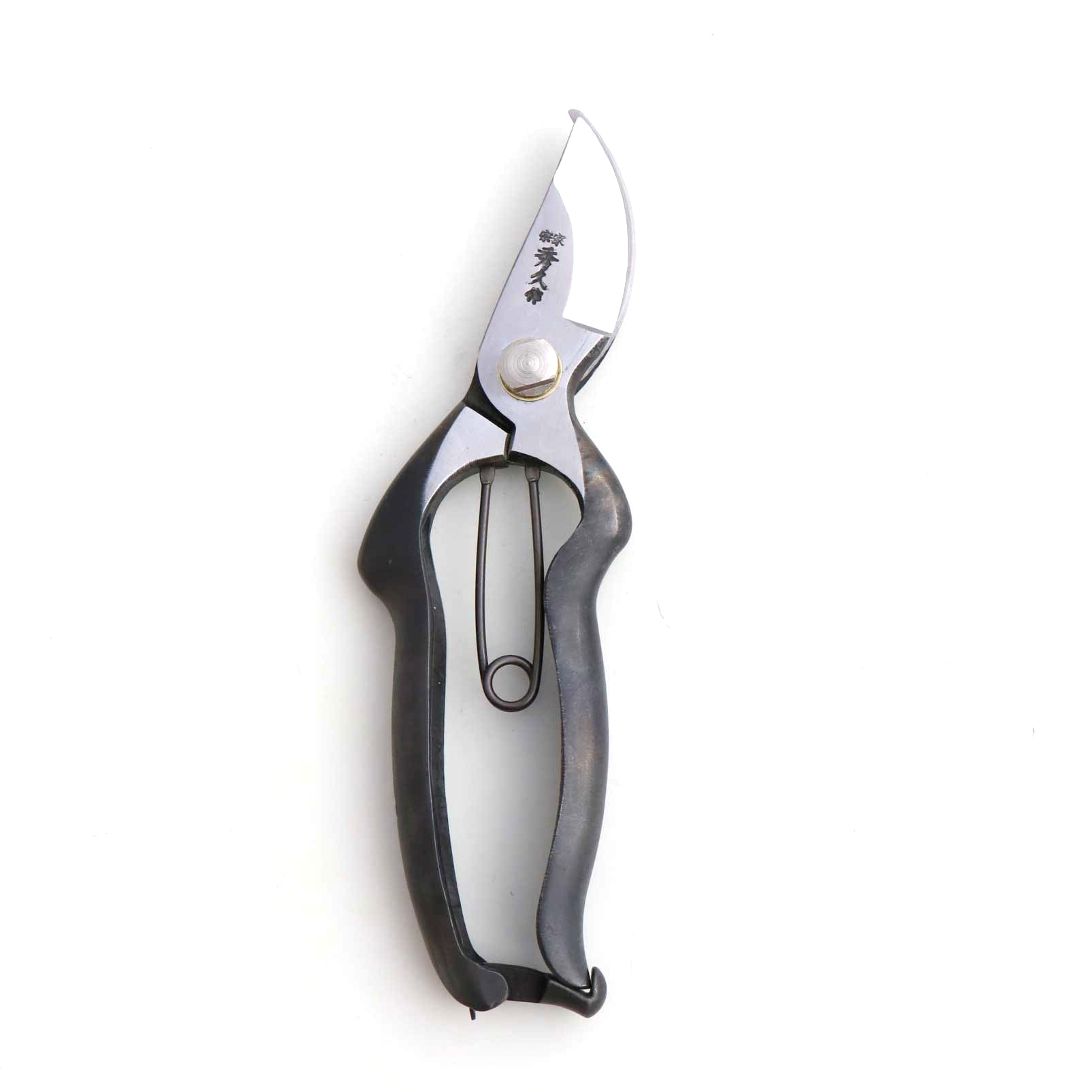
Asymmetrical Ergonomic
The most guided and power-oriented grip shape in the pruning-shear lineup. It is designed to help the hand apply force more naturally and to reduce fatigue over repeated cuts. Toyama Hamono’s grip guide uses T30, T13, and T25 as its core examples. The live product lineup also shows T26, T513, and T530 in this same
Leather Wraps and Wood Grips
Several models feature optional handle coverings that improve comfort and appearance. All coverings are applied over the forged steel grip—they do not replace it.
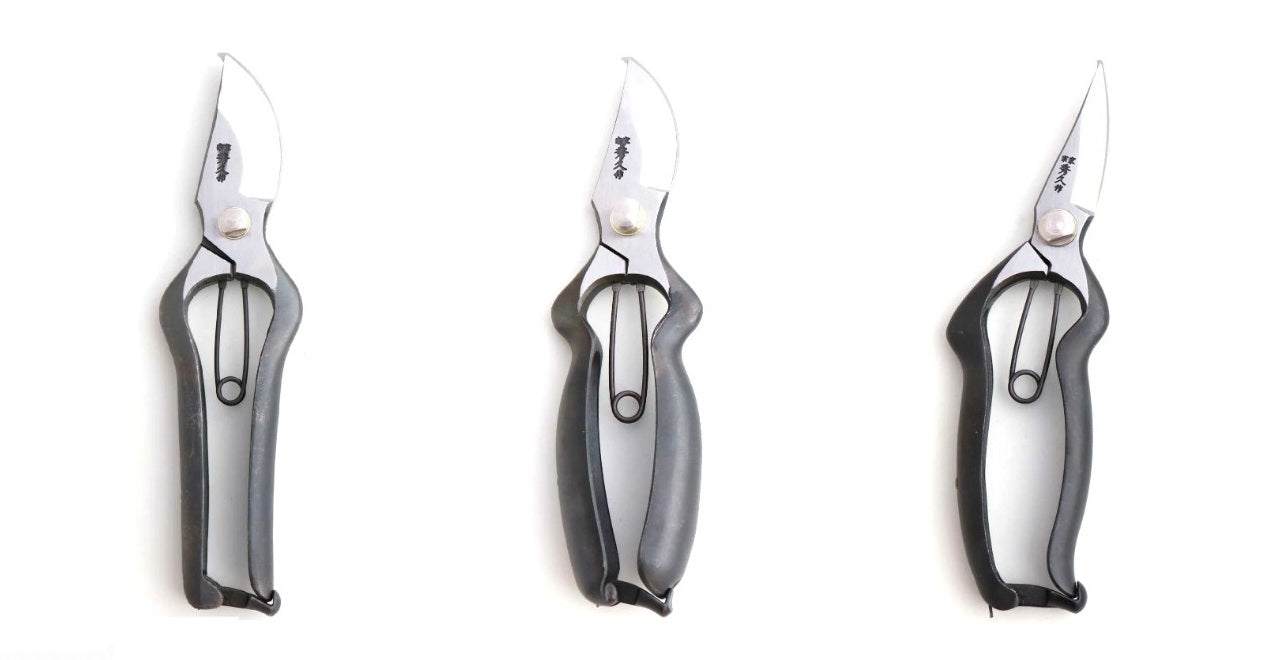
Metal
Straight / ClassicA clean, uncontoured handle closer to traditional Japanese garden shear proportions. Preferred by users who want a neutral grip that adapts to varied cutting angles.R33
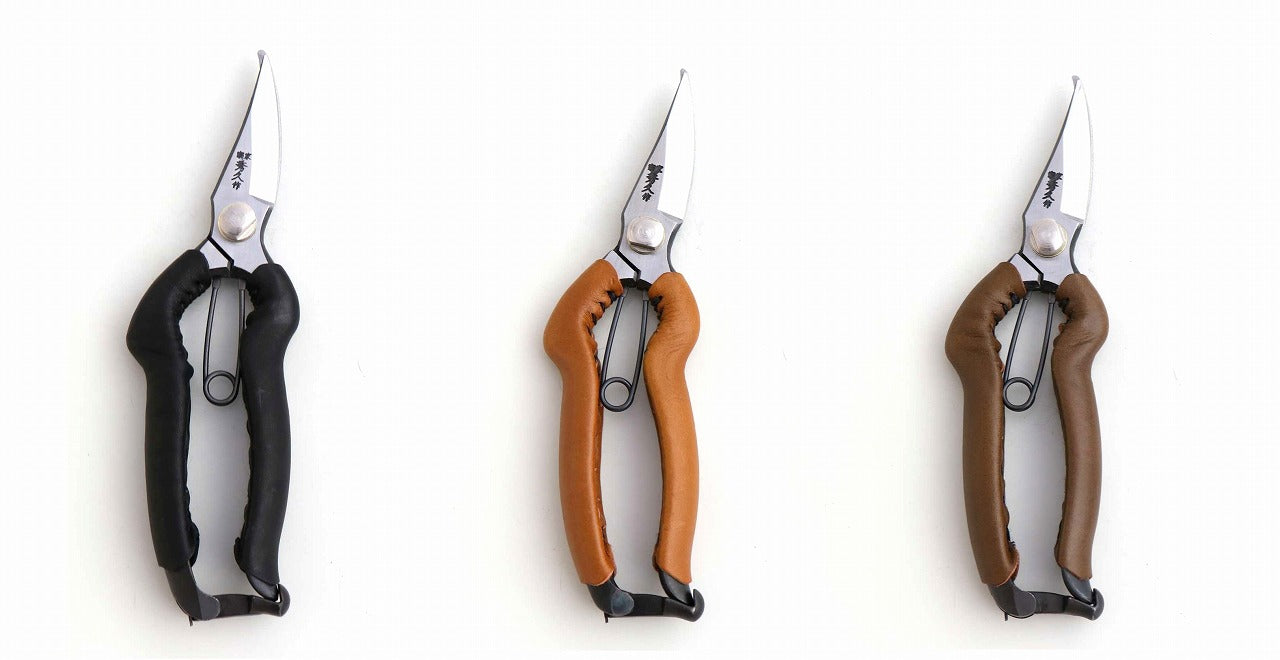
Leather
Identical upper and lower handles. Comfortable for right- or left-handed users. Often paired with the multi-purpose blade for floral and light garden work.
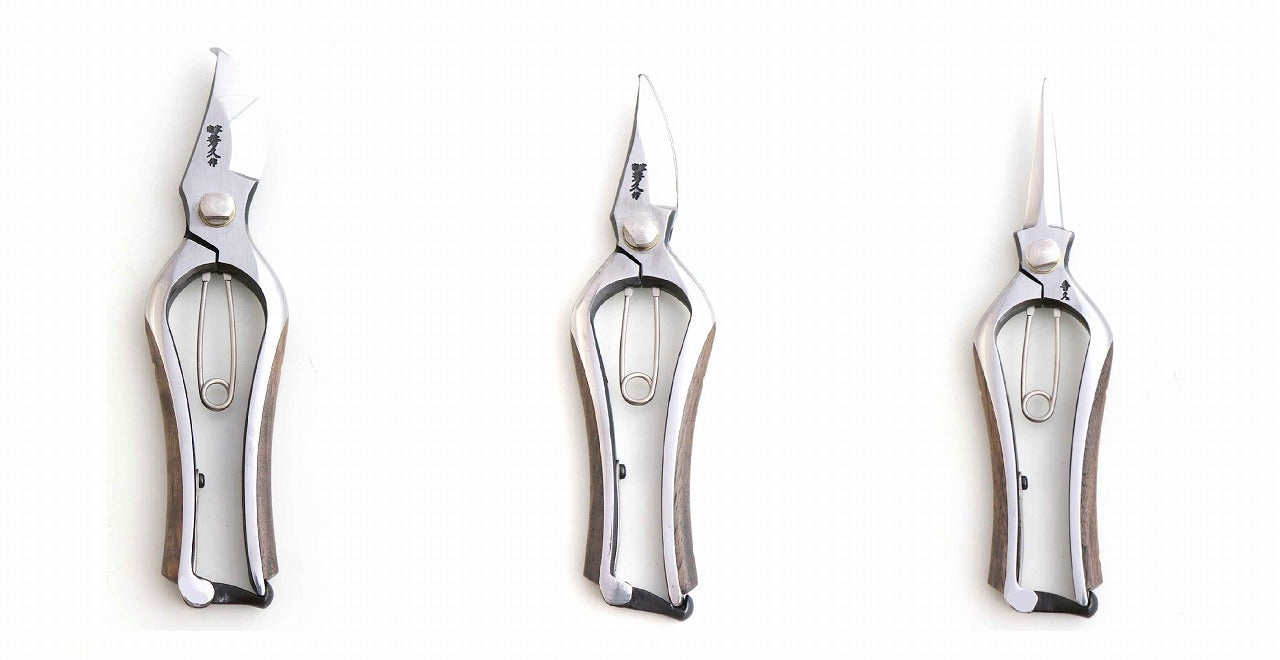
Wood
Rust-resistant by nature. The ideal choice for wet environments—cutting under running water for ikebana, working in rain, or any situation where thorough drying isn't practical. Slightly softer than carbon steel, so edges may need more frequent maintenance.
FAQs
I'm new to gardening — which type of pruning shears should I get?
It depends less on your experience level and more on what you plan to use them for. If you'll mainly be cutting thicker branches, a standard pruning shear with a curved blade is a solid choice.
If you prefer more detailed work — like trimming, shaping, or deadheading — multi-purpose pruning shears may be a better fit. For tasks like pruning roses, for example, they're an excellent choice.
What size pruning shears should I choose?
A good starting point is to measure from your middle fingertip to your wrist crease, then match the shear length to that measurement. As a general guide:
Around 180 mm – A versatile, well-balanced size that works for most users.
Around 200 mm – Better for those who want more reach or work with larger shrubs.
Around 140–165 mm – Ideal for smaller hands or finer, more detailed tasks.
That said, the measurement is a guide, not a strict rule. Many people are comfortable with a slightly smaller pair, so avoid choosing one that feels too large — longer shears have wider handles that can be harder to grip with smaller hands.
How long do pruning shears last?
All shears from Toyama Hamono are made from forged high-carbon steel or stainless steel. With proper daily care and regular maintenance, they can last for a very long time. However, without it, high-carbon steel is prone to rust, and even stainless steel will eventually deteriorate.
Regular care makes all the difference — see our How to Care section for details.
How thick a branch can pruning shears cut?
Toyama Hamono's pruning shears are designed to cut live wood branches up to 15 mm in diameter. Dead or dried branches may be harder and more brittle, so the effective capacity can be lower.
Forcing the shears through thicker branches is not recommended — it can damage both the shears and the plant. For anything larger, we suggest using a pruning saw instead.
Should I choose high-carbon steel or stainless steel?
High-carbon steel holds a finer edge and delivers a superior cutting feel — many professionals prefer it for that reason. However, it is more sensitive to moisture and requires regular care to prevent rust.
Stainless steel is more resistant to rust and easier to maintain day to day, making it a practical choice for everyday use. Both are hand-forged by Toyama Hamono using the same traditional techniques — the quality of craftsmanship is the same. For more details, see our High-Carbon vs. Stainless Steel guide.
Which grip style is right for me?
Toyama Hamono offers three grip shapes.
- Symmetrical grips are the most traditional and neutral — balanced and easy to use without adjustment.
- Ergonomic symmetrical grips add a more contoured feel while remaining flexible.
- Ergonomic asymmetrical grips are shaped to support the wrist and help you apply force with more control.
We also offer different grip materials — metal for a direct, solid feel, leather-wrapped for a softer hold and extra grip stability, and wood for a warm, natural feel. The best way to choose is to think about what feels most comfortable for the kind of work you do most.
What is the difference between standard pruning shears and multi-purpose pruning shears?
Standard pruning shears have a curved blade optimized for cutting through thicker branches with maximum leverage. Multi-purpose pruning shears are designed to handle both thicker branches and finer, more detailed work — like trimming, shaping, and deadheading.
If your main task is heavy pruning, standard pruning shears are the solid choice. If you want one tool that covers a wider range of tasks, including floral work, multi-purpose pruning shears are an excellent all-rounder.
Is a left-handed model available?
Yes. Toyama Hamono offers the T13L, a left-handed pruning shear with a reversed blade orientation designed for clean, comfortable cutting with the left hand. Because of how scissor blades overlap, using right-handed shears in the left hand can make the cutting line harder to see and reduce cutting precision — so a dedicated left-handed model makes a real difference.
How do I care for my pruning shears?
Wipe the blades clean and dry after each use, and apply oil regularly to keep the action smooth and prevent rust. With proper daily care and periodic maintenance, your pruning shears will stay sharp and reliable for years. For full instructions, visit our How to Care page.
The Forged Edge Blog
How to Adjust the Pivot on Japanese Garden Shears
Why We Rethought the Pruning Shear Handle
Japanese Garden Shear Types: Okubo, Type A & Type B
