
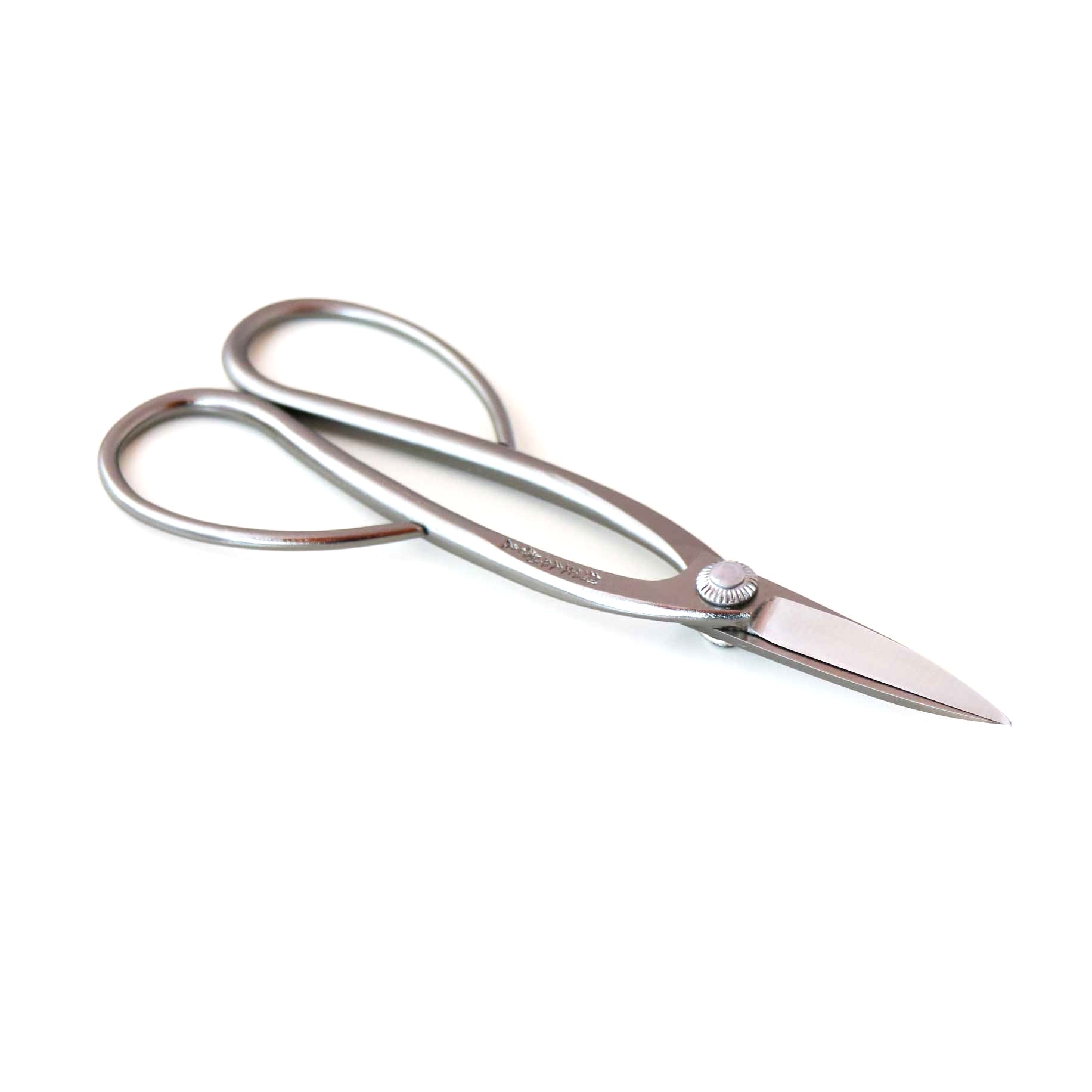
Bonsai Scissors
Bonsai scissors are built for precision. With short, sharp blades and long handles, they let you reach into dense foliage and make clean, controlled cuts without disturbing nearby branches. The springless design puts the motion entirely in your hands — giving you the direct feel and fine control that bonsai work demands. Every pair from Toyama Hamono is hand-forged in Sanjo, Japan, using techniques passed down from generations of master blacksmiths.
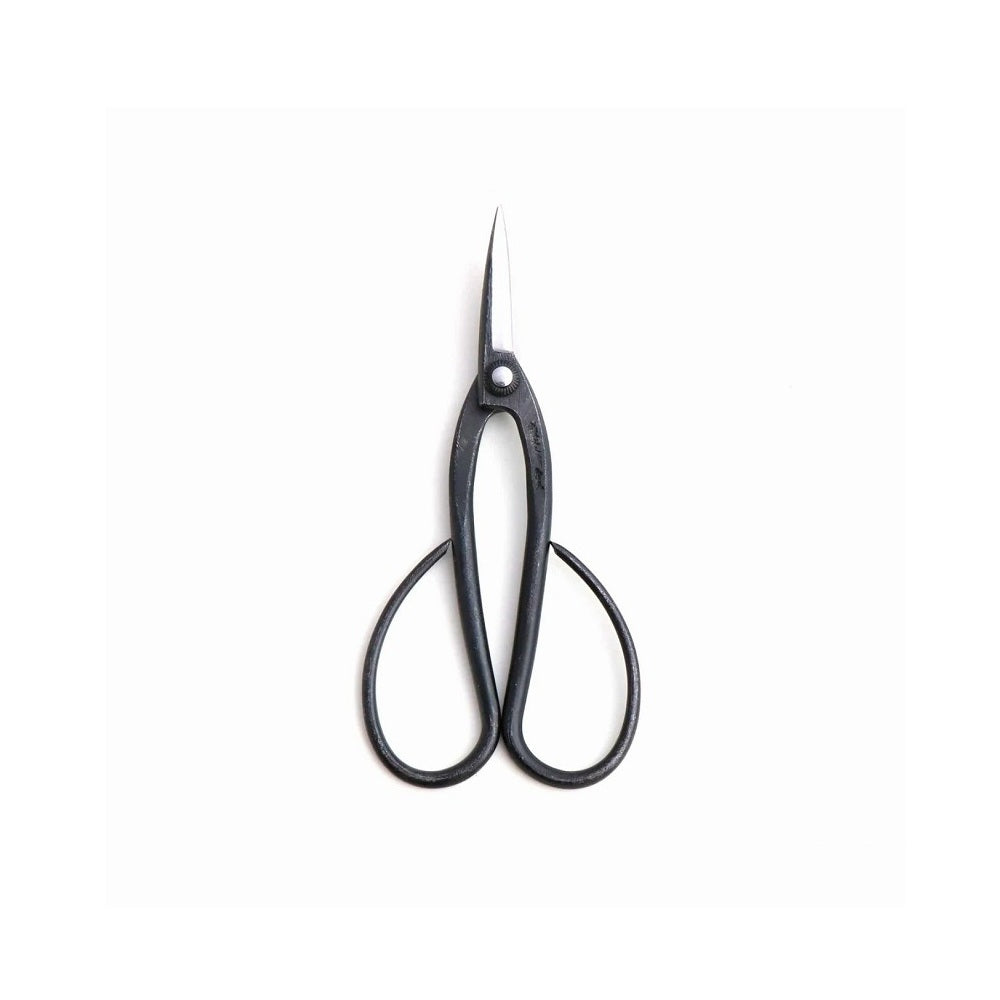
Bonsai Scissors
A classic example of our bonsai scissors is the T4-3 Long-Handle Bonsai Scissors, available in both high-carbon steel and stainless steel. They are ideal for tending bonsai and indoor houseplants. The long handles let you reach into branches and dense foliage for detailed work.
Compared to spring-loaded snips, they are lighter and can be maneuvered in any direction with a simple turn of the wrist. The forged blade delivers effortless sharpness, taking the strain out of every cut.
The T4-3 is our recommended starting point, but we offer a variety of bonsai scissors and tools to suit different needs. Explore the full collection below.
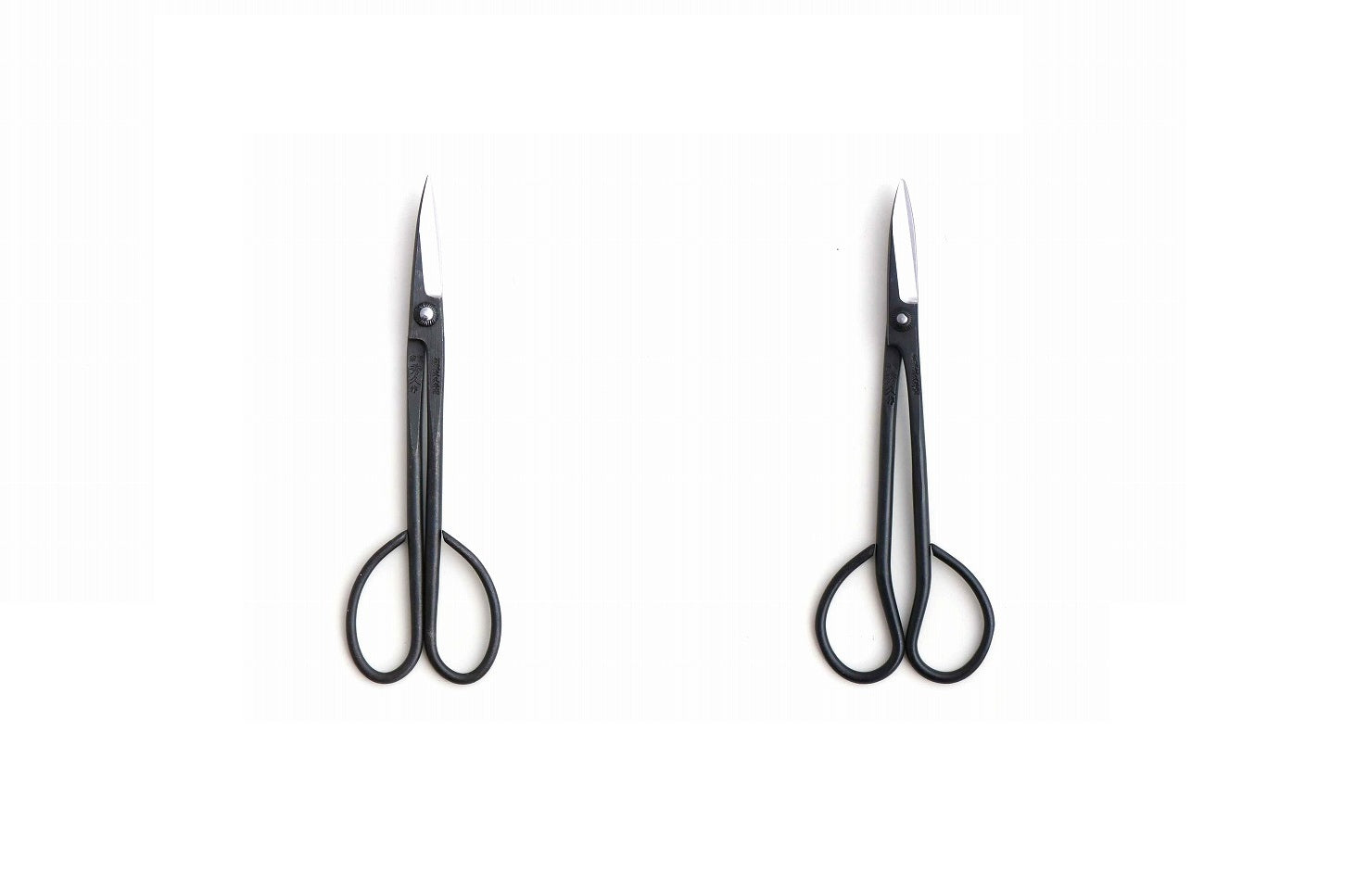
Japanese Style Snips, "Koeda-kiri" and "Satsuki"
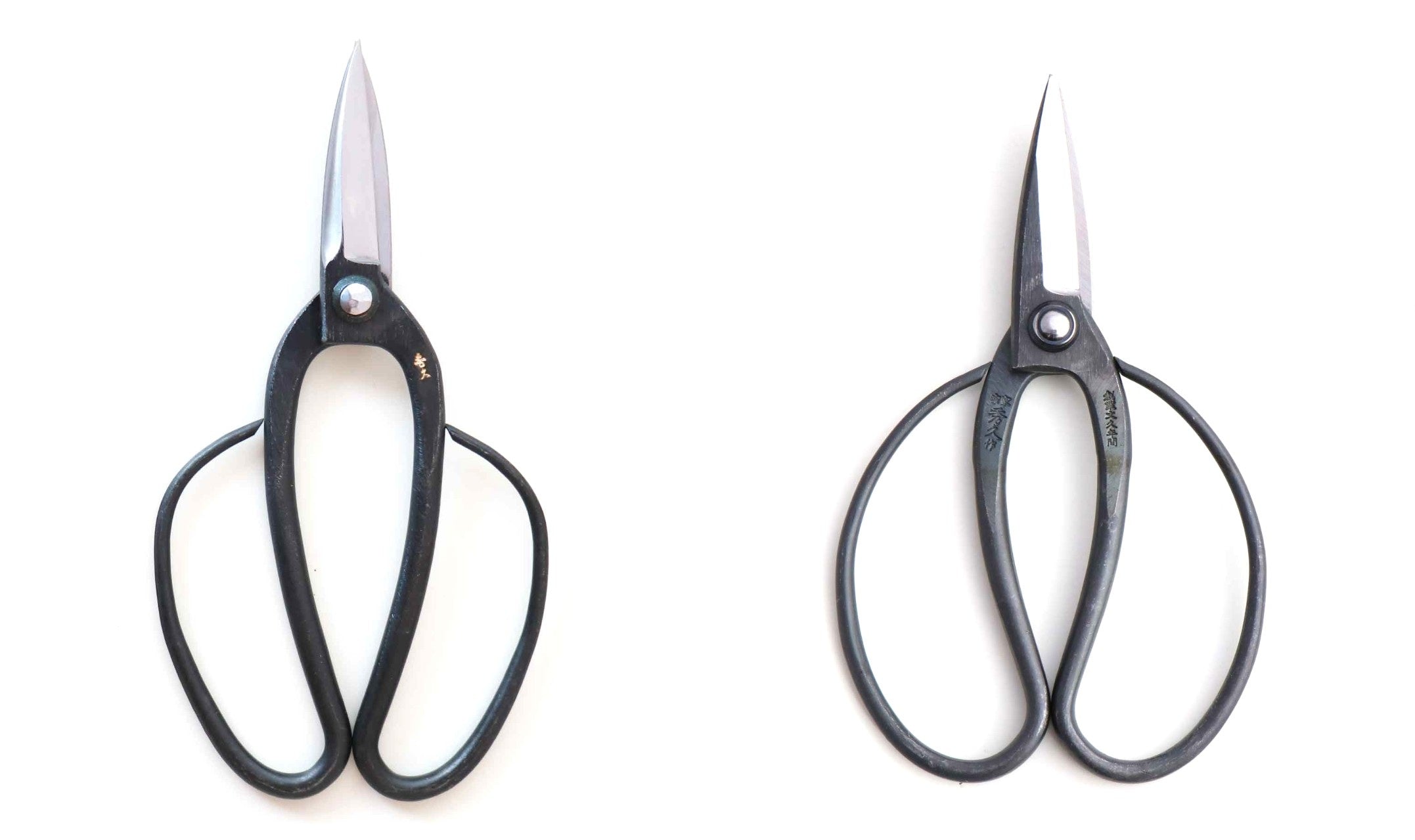
In traditional Japanese bonsai, Koedakiri scissors (left) and Satsuki scissors (right) are used for finer, more specialized work. Both are designed with slim, pointed blades that can slip into dense branches and foliage for precise trimming. Each originally evolved for a specific purpose — Koedakiri for cutting small twigs, and Satsuki for tending azalea (satsuki) plants — but over time, they arrived at similar forms and are now used in much the same way.
Choosing between them is largely a matter of personal preference. Toyama Hamono also offers a shorter version of the Satsuki scissors (shown right) for those who prefer a more compact tool.
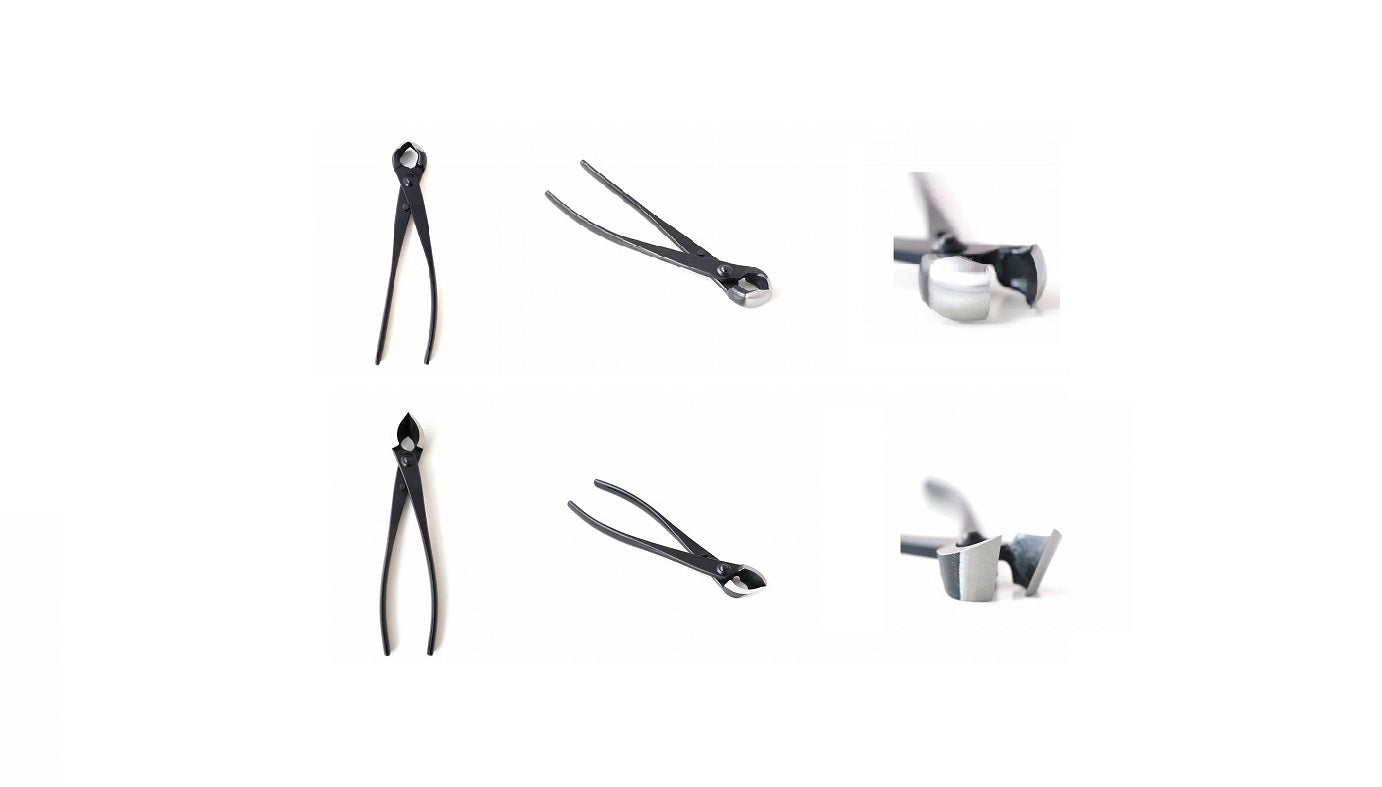
Knob-Cutters and Concave Branch Cutters
Kobu-kiri (knob cutters, top) cut flush with the trunk, leaving a flat surface that heals cleanly. Mataeda-kiri (concave branch cutters, bottom) are designed for tight spots — such as deep forks near the trunk — and leave a slightly concave cut that helps the wound heal inward for a neater finish over time.
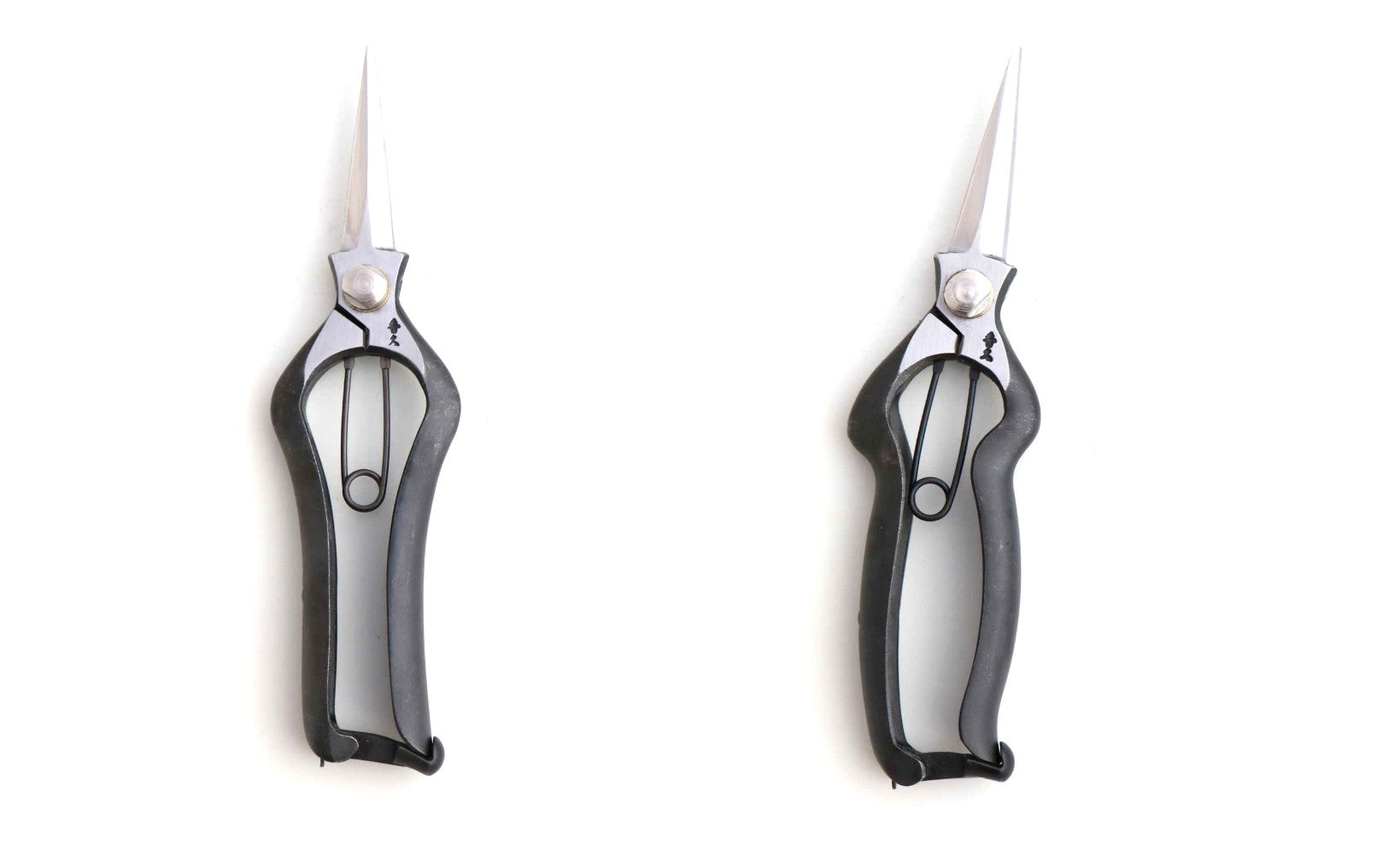
Spring-Loaded Snips Work Great for Bonsai, Too
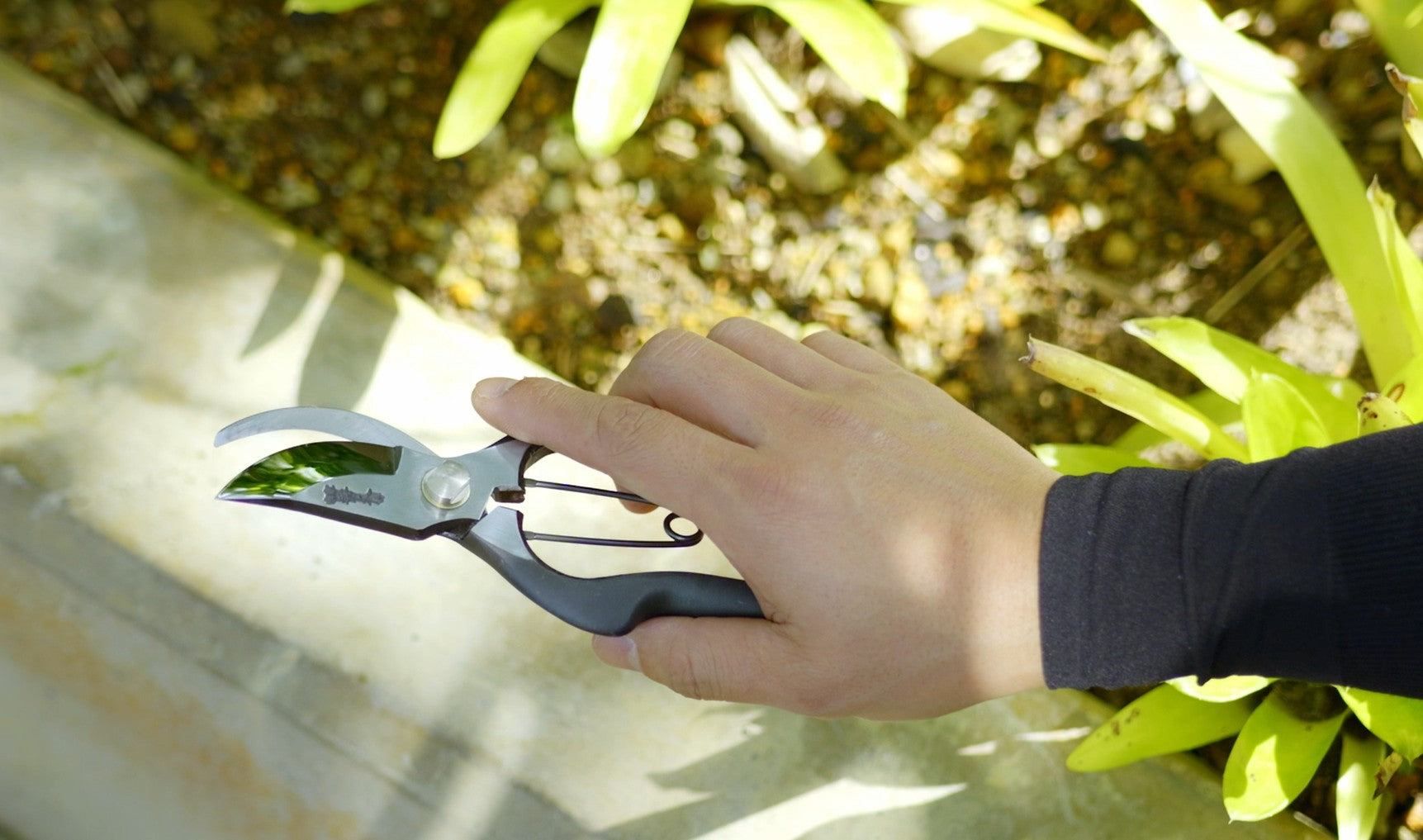
It might surprise you, but our spring-loaded snips — such as the T17 and T27 — are also an excellent choice for bonsai work. Their compact size and sharp, forged blades make them perfect for quick trimming, bud pinching, and light pruning tasks. The spring mechanism keeps your hand relaxed during repetitive work, which can be a real advantage during longer sessions.
We also offer stainless steel models for easier maintenance, as well as leather-wrapped handle versions for added comfort and grip. Take a look at our full snips collection to find the one that suits you best.
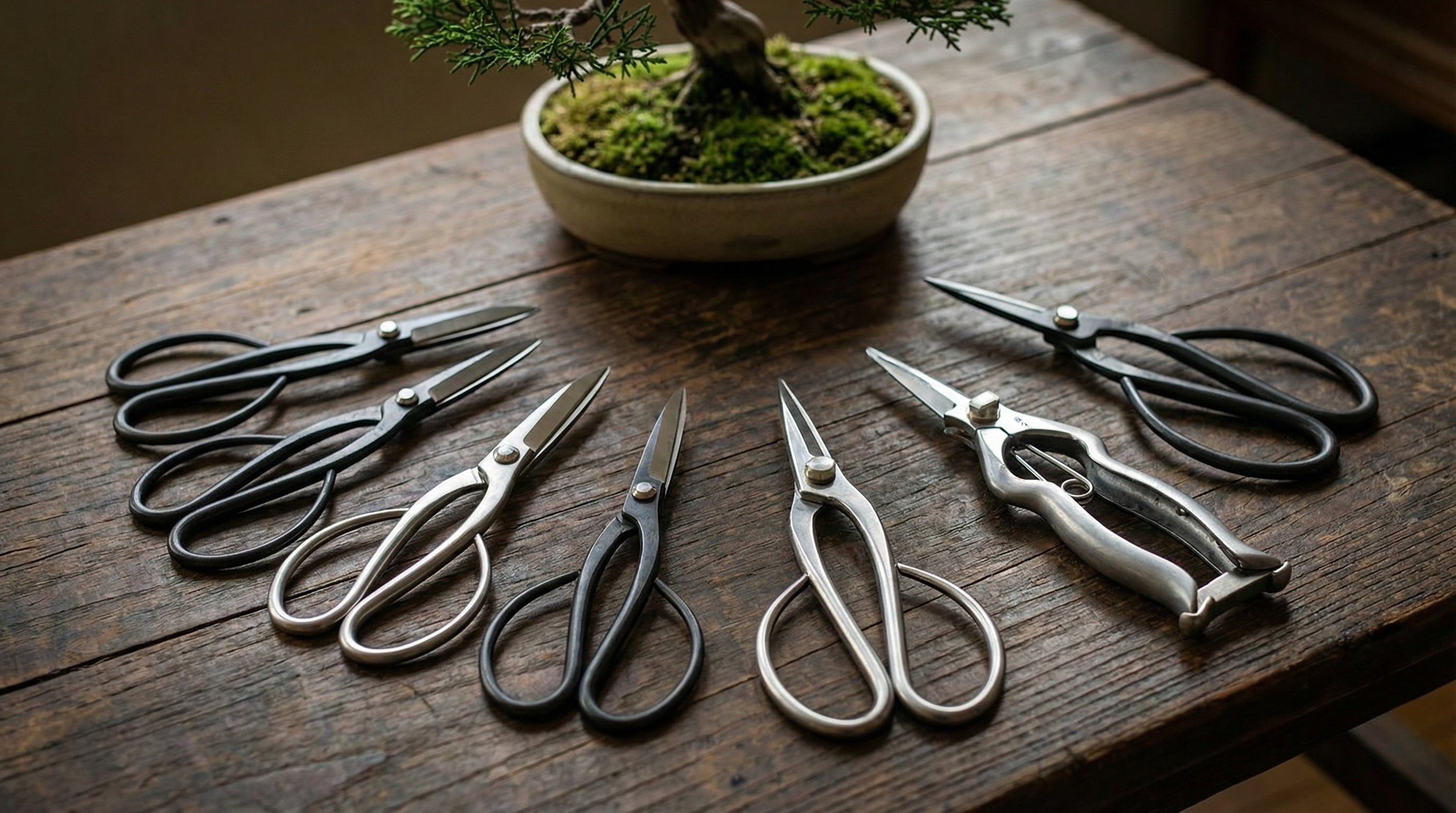
Steel Choice: High-Carbon vs Stainless
All Toyama Hamono shears are hand-forged in Sanjo, Niigata—a region with over 700 years of blade-making tradition. The choice of steel affects sharpness, longevity, and how you care for the tool.
High-Carbon Steel
Harder steel that holds a keener edge. Once sharpened it stays sharp longer during heavy use. Requires a light coat of oil after use to prevent rust. Preferred by professional gardeners who sharpen regularly.
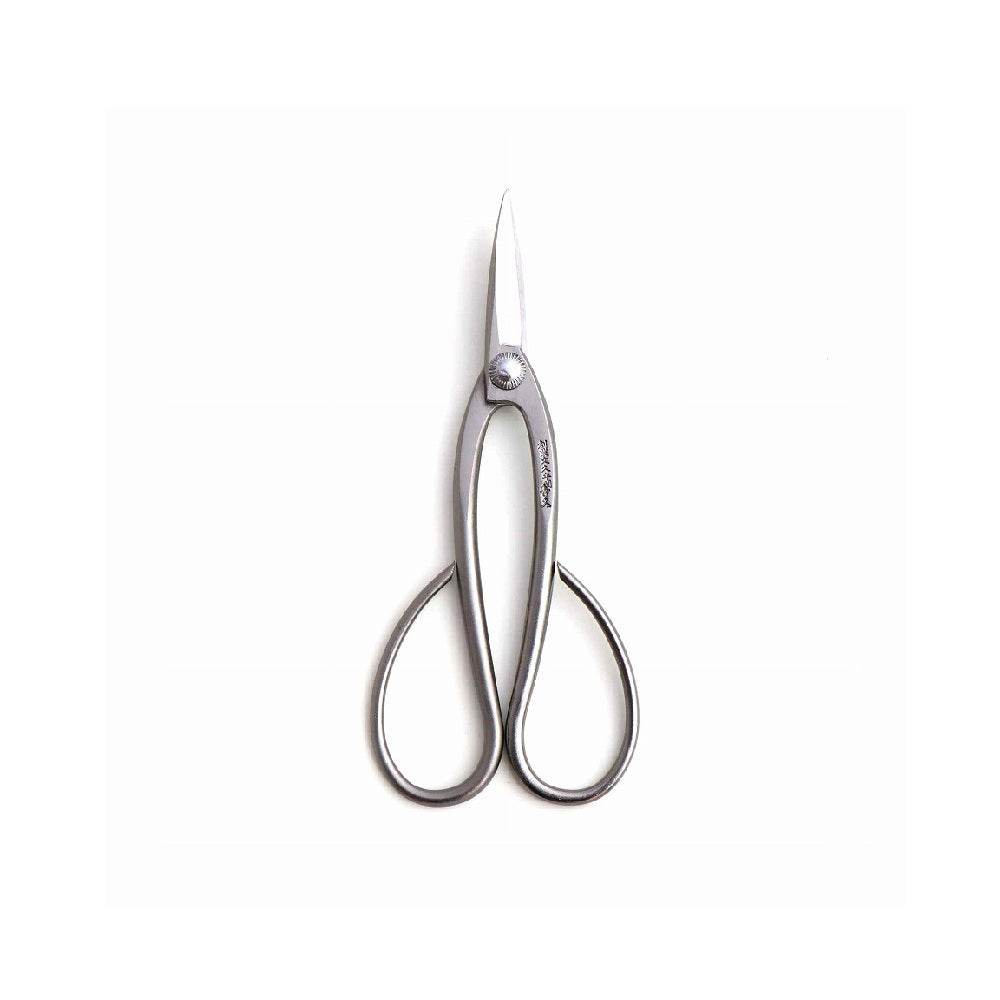
Stainless Steel
Rust-resistant by nature. The ideal choice for wet environments—cutting under running water for ikebana, working in rain, or any situation where thorough drying isn't practical. Slightly softer than carbon steel, so edges may need more frequent maintenance.
FAQs
Which bonsai scissors should I start with?
We recommend the T4-3 Long-Handle Bonsai Scissors as a versatile starting point. They cover a wide range of tasks — from trimming branches to tending indoor houseplants. Available in both high-carbon steel and stainless steel.
What's the difference between Koedakiri and Satsuki scissors?
Both are designed for fine, detailed bonsai work with slim, pointed blades that reach into dense foliage. Koedakiri originally evolved for cutting small twigs, while Satsuki was developed for tending azalea plants — but today they serve much the same purpose. Choosing between them is largely a matter of personal preference.
When do I need knob cutters or concave branch cutters?
Use Kobu-kiri (knob cutters) when you want to remove a branch flush with the trunk for a flat, clean surface. Use Mataeda-kiri (concave branch cutters) for tight spots near the trunk — they leave a slightly concave cut that heals inward for a neater finish over time.
Can I use snips for bonsai work?
Absolutely. Spring-loaded snips like the T17 and T27 are excellent for quick trimming, bud pinching, and light pruning. The spring mechanism keeps your hand relaxed during longer sessions, making them a great complement to traditional bonsai scissors.
Should I choose high-carbon steel or stainless steel?
High-carbon steel holds a finer edge and is favored for its superior cutting feel, but requires more care to prevent rust. Stainless steel is more resistant to rust and easier to maintain day to day. Both are hand-forged using the same traditional techniques — the quality of craftsmanship is the same. For more detail, see our High-Carbon vs. Stainless Steel guide.
How do I care for my bonsai scissors?
Wipe the blades clean after each use, keep them dry, and apply oil regularly. With proper care, your scissors will stay sharp and reliable for years. For full instructions, visit our How to Care page.
How thick a branch can bonsai scissors cut?
It depends on the model and where along the blade you cut. As a general guide for live, green wood:
T4-3 / T4-3S (Long-Handle Bonsai Scissors)
- Near the tip of the blade: up to 5 mm
- Near the base of the blade: up to 10 mm
T4-4 (Koedakiri Scissors)
- Near the tip of the blade: up to 3 mm
- Near the base of the blade: up to 8 mm
TH10 / TH11 Series (Satsuki Scissors)
- Near the tip of the blade: up to 3 mm
- Near the base of the blade: up to 5 mm
These figures are for live wood only — dead or dried branches are much harder and may chip or crack the blade. Never force the tool through material that feels too tough. For anything thicker, we recommend using knob cutters, concave branch cutters, or a pruning saw. For exact specifications, please check the product details for each model.
I have small hands — can I still use bonsai scissors comfortably?
Yes. Our bonsai scissors come in one size, but their long, slender handle design naturally accommodates a wide range of hand sizes. Whether your hands are small or large, the scissors sit comfortably and allow easy control.
The Forged Edge Blog
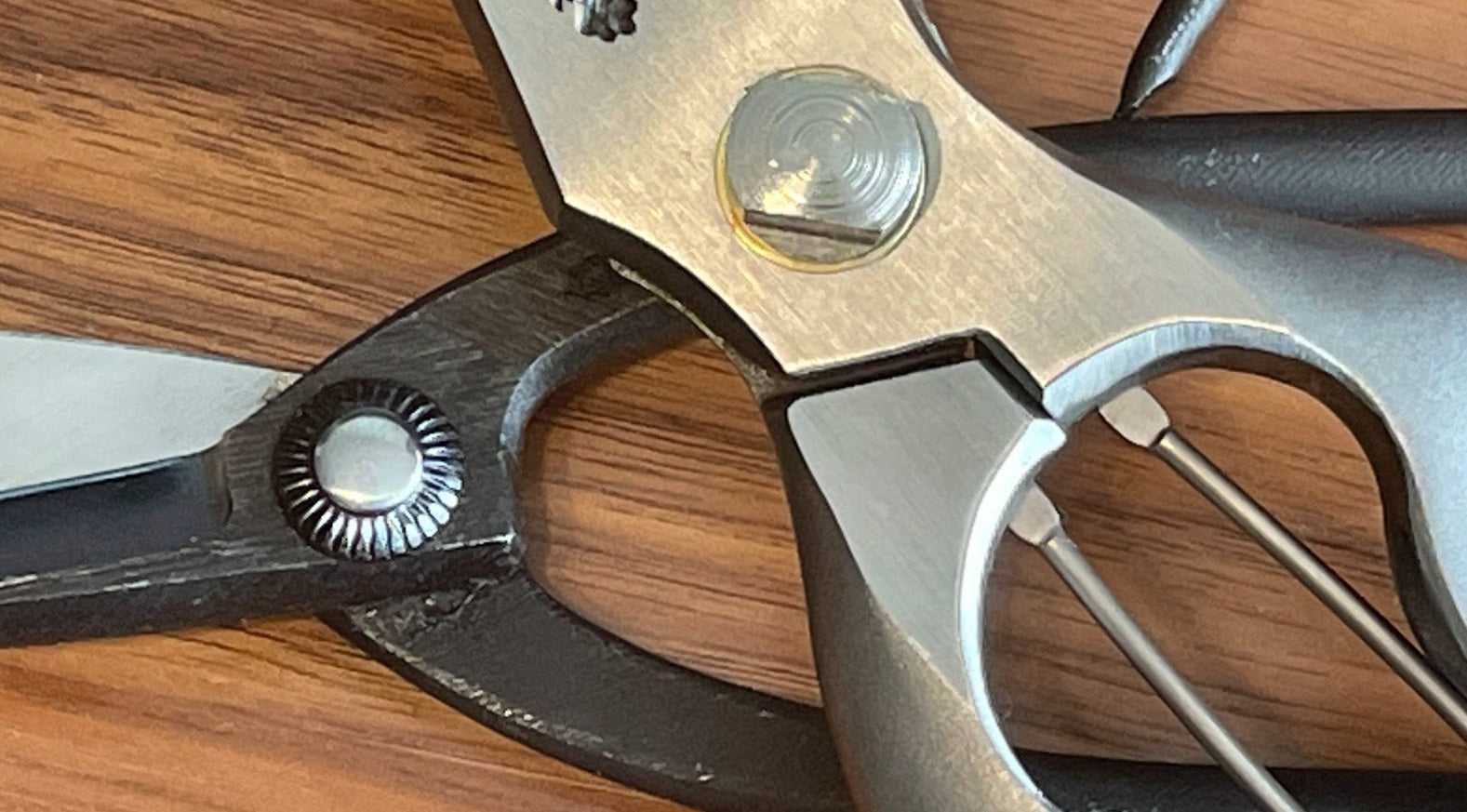
How to Adjust the Pivot on Japanese Garden Shears
Why We Rethought the Pruning Shear Handle
Japanese Garden Shear Types: Okubo, Type A & Type B
