
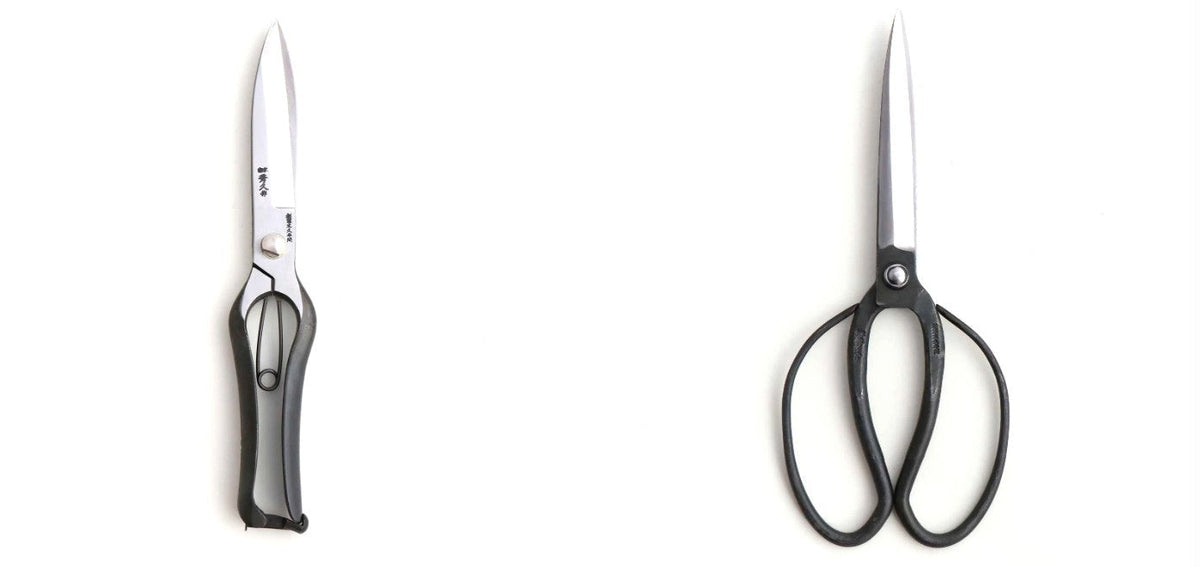
One-handed hedge shears are finishing shears used to shape the outer surface of hedges, shrubs, and topiary. The defining feature is right in the name — you operate them with one hand.
That single fact changes how you work. With your other hand free, you can steady a branch, hold back foliage, check the line of a topiary curve, or brace yourself while reaching into a shrub. They are easier to guide in places where two-handed tools feel too large or awkward, and the work feels closer to guiding a line than forcing a cut.
They are designed for the last stage of trimming. Once pruning shears have set the structure and larger shears have taken down the bulk, one-handed hedge shears bring the surface into focus — the line a viewer actually sees.
This makes them especially useful for boxwood balls, azalea hedges, small topiary forms, Japanese-style garden maintenance, and any plant where the silhouette matters.
How They Differ from Other Garden Shears

The three main types of garden shears overlap in appearance but serve distinct roles.
Pruning Shears: Branch by Branch
Pruning shears cut individual branches, one at a time. They handle structural work — removing branches, opening up a shrub, shaping the skeleton of a plant. They are not built to smooth a continuous surface; using them across foliage produces a choppy, uneven result.
One-handed hedge shears work the opposite way. The blades glide along the outer surface and trim many leaves and shoots in a single pass.
Two-Handed Hedge Shears: Larger Strokes
Two-handed hedge shears use both arms and longer blades to cover ground quickly. They suit long hedge runs, broad flat faces, and high-volume work.
One-handed shears trade that reach for control. They are slower across a wide hedge but better on smaller forms, curved surfaces, and detailed corrections.
Comparison Table: Three Types of Shears
|
Tool |
Primary Role |
Best For |
Avoid Using For |
|
Pruning Shears |
Cutting selected branches |
Structural pruning, branch removal |
Smoothing surfaces |
|
Two-Handed Hedge Shears |
Trimming wide surfaces |
Long hedges, broad faces, high-volume work |
Tight spaces, small curves |
|
One-Handed Hedge Shears |
Refining the outer surface |
Topiary, small shrubs, curves, leaf trimming |
Thick branches, hardened wood, and structural pruning |
In practice, all three work in sequence: pruning shears for the structure, two-handed shears for the bulk, one-handed shears for the visible surface.
How to Use One-Handed Hedge Shears

Basic Motion
Guide the blades along the surface rather than pushing them into it. On a flat hedge face, hold the blades just above the outer leaves and trim only what breaks the line. On a rounded shrub or topiary, move your wrist with the curve and take a small amount on each pass.
A sharp edge does the work. If you find yourself squeezing hard, the material is too thick for these shears — switch to pruning shears.
Step back often. A surface that looks even at arm’s length can reveal flat spots and bumps from a few meters away, and the overall shape only becomes clear at distance.
What to Cut — and What to Avoid
One-handed hedge shears are designed for soft material:
-
Leaves and new shoots
-
Soft green growth
-
Thin branches at the outer layer of a hedge or shrub
They should not be used on:
-
Thick or established branches
-
Dry or hardened wood
-
Bamboo
-
Wire, plastic, artificial flowers, or any non-plant material
Forcing the blades through hard material can damage the edge, strain the pivot, and leave a torn wound rather than a clean cut.
Tips for a Cleaner Result
Take many light passes rather than a few heavy ones. Smaller, cleaner cuts leave less torn tissue and a neater overall surface than fewer heavier ones.
Use the full length of the blade when smoothing across a surface, and the tip alone for small corrections. On rounded forms, keep the motion continuous — short, chopping cuts produce a faceted look that does not read as natural curvature.
Toyama Hamono’s One-Handed Hedge Shears

Once you understand the role of one-handed hedge shears, the choice becomes less about size alone and more about how you prefer the tool to move in your hand.
Toyama Hamono offers two distinct styles: the spring-loaded T16 series and the traditional Okubo-style T5, T6, and T7.
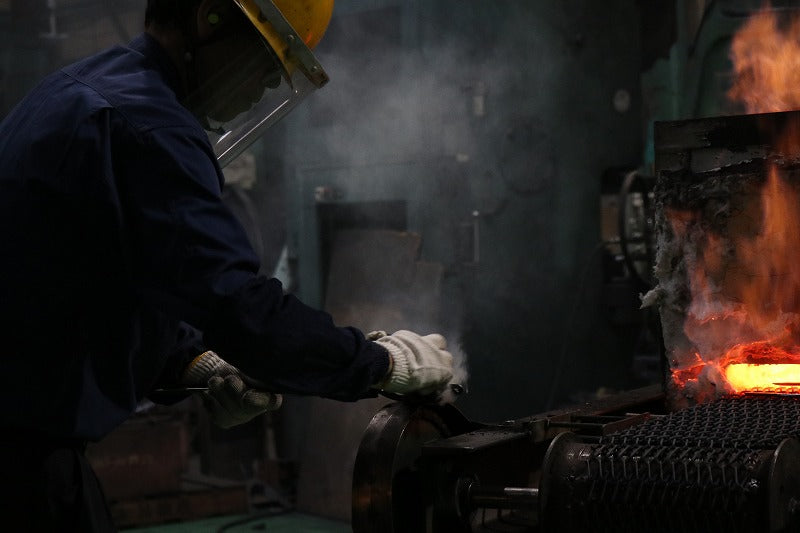
Each model is hand-forged in Sanjo, a historic blade-making region in Niigata, Japan, where tools have been crafted for centuries to balance sharpness, strength, and hand feel. All five models are made from forged high-carbon steel and built for the same kind of finishing work — they differ in how they move in the hand.
Lineup at a Glance
|
Model |
Style |
Blade Length |
Best For |
|
T16 |
Spring-loaded |
110 mm |
Repeated trimming, hedges and topiary, comfortable action |
|
T16L |
Spring-loaded (left-handed) |
110 mm |
Left-handed use, with reversed blade overlap |
|
T5 |
Okubo (traditional) |
105 mm |
Small shrubs, tight spaces, detailed shaping |
|
T6 |
Okubo (traditional) |
120 mm |
General hedge and shrub finishing |
|
T7 |
Okubo (traditional) |
150 mm |
Larger surfaces, broader hedges |
Spring-Loaded: T16 and T16L

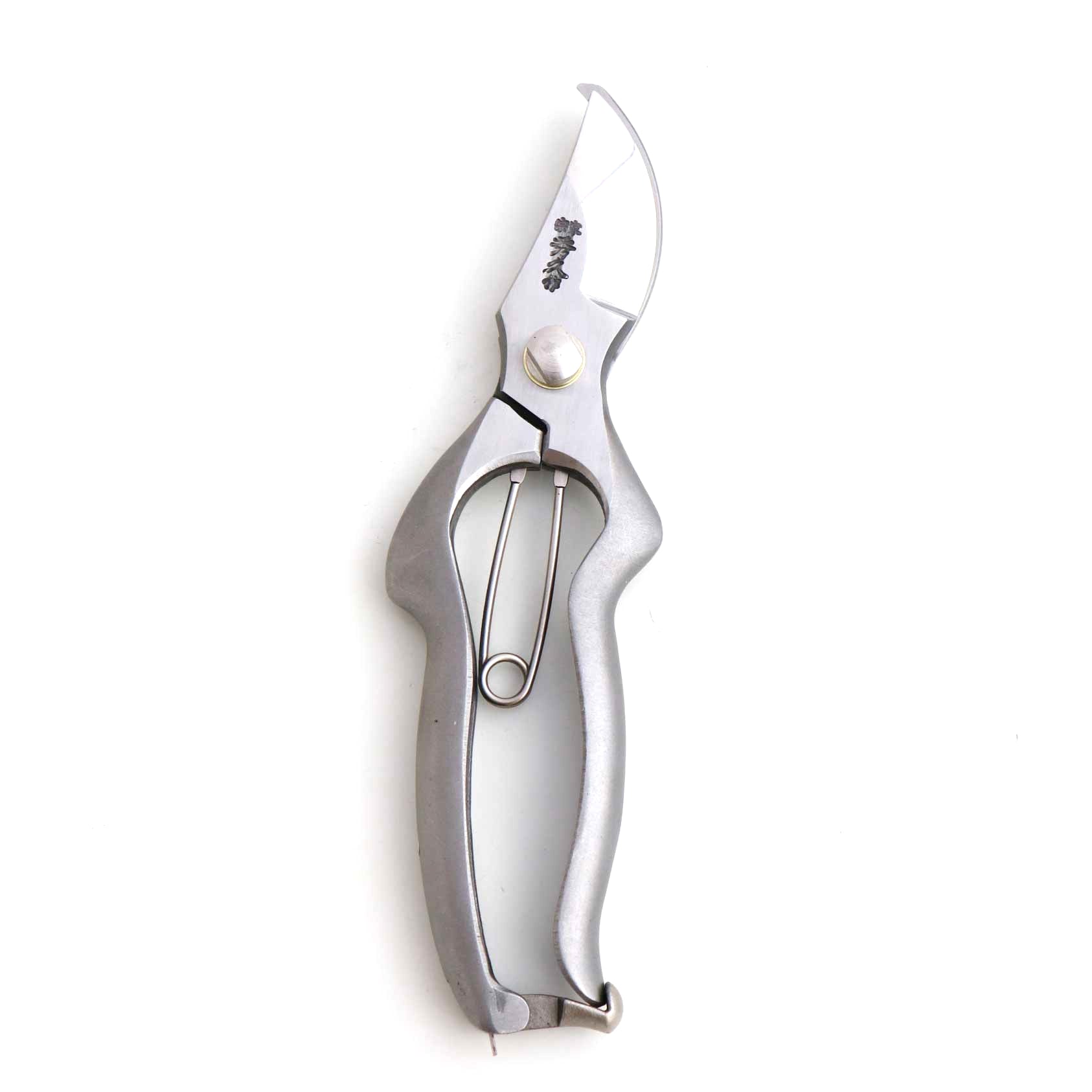
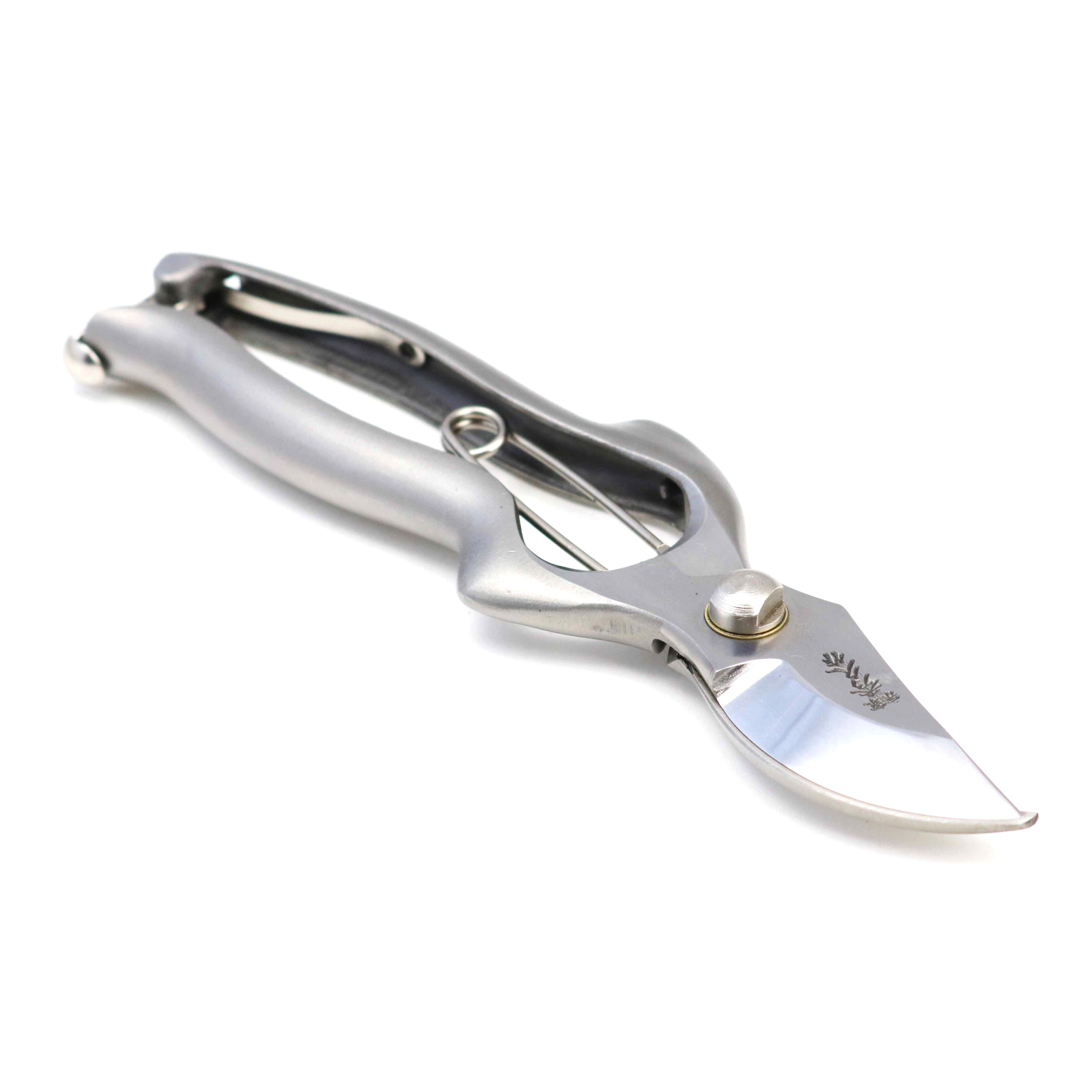
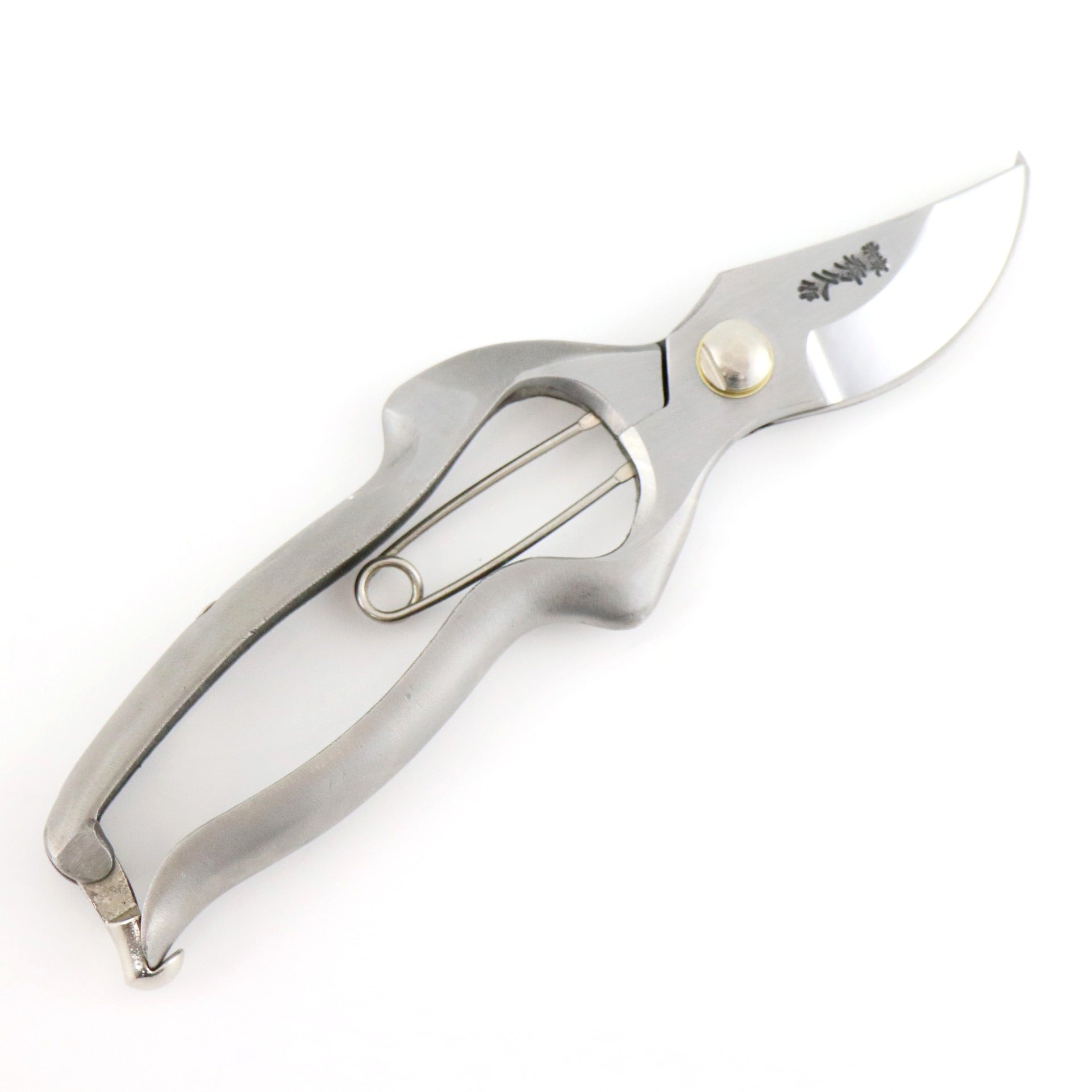
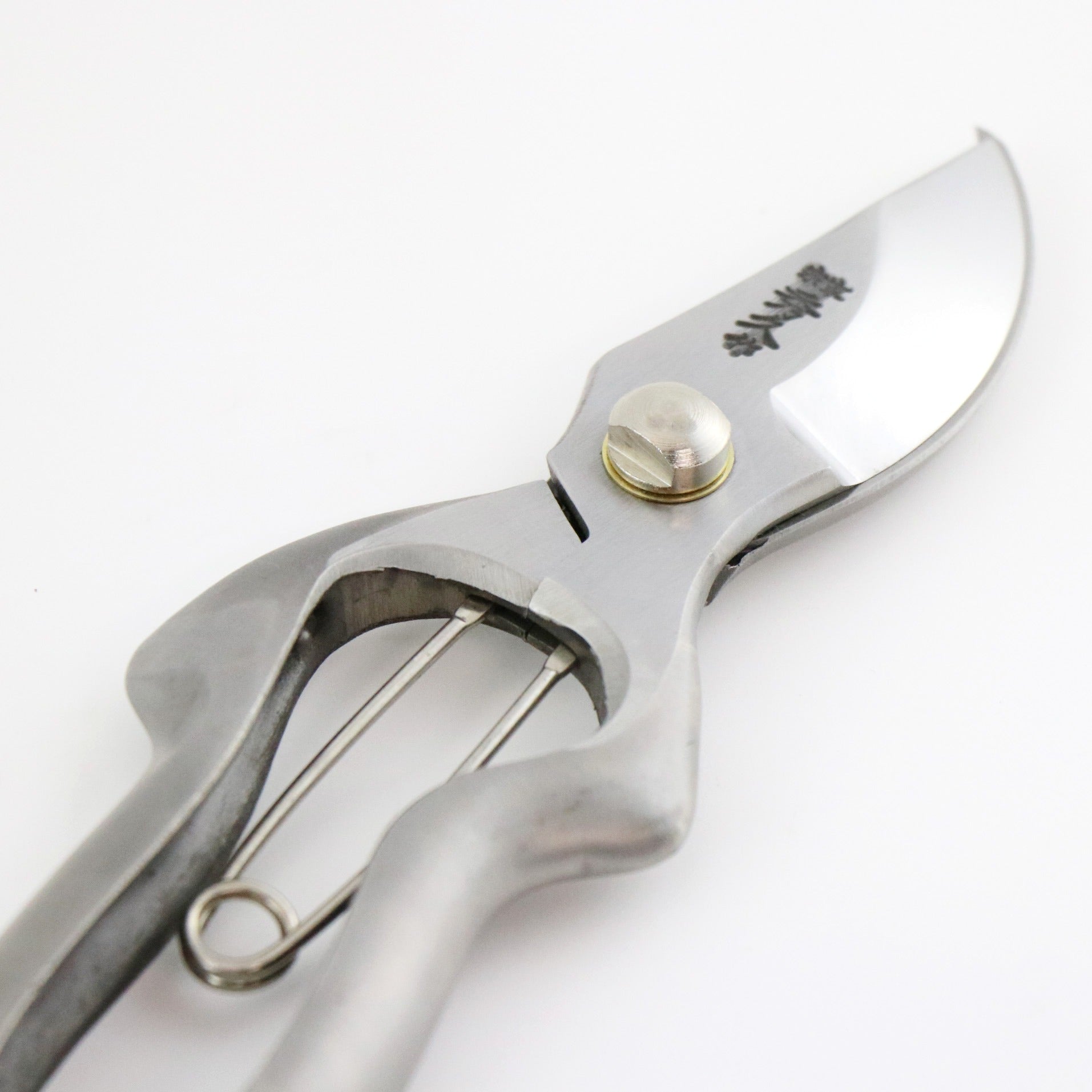
Photo: T16 Original Model, left; T16L Left-Handed Model, right
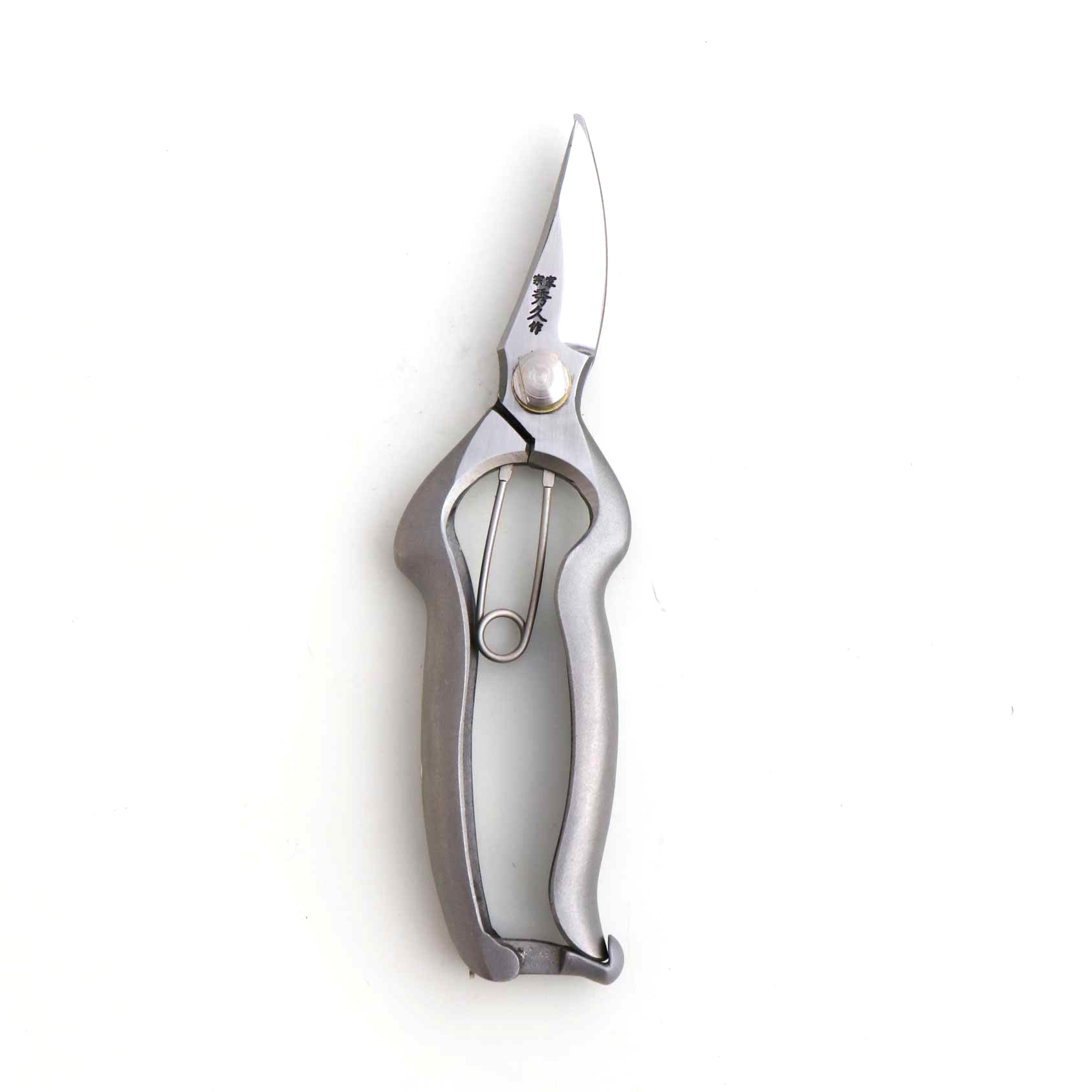
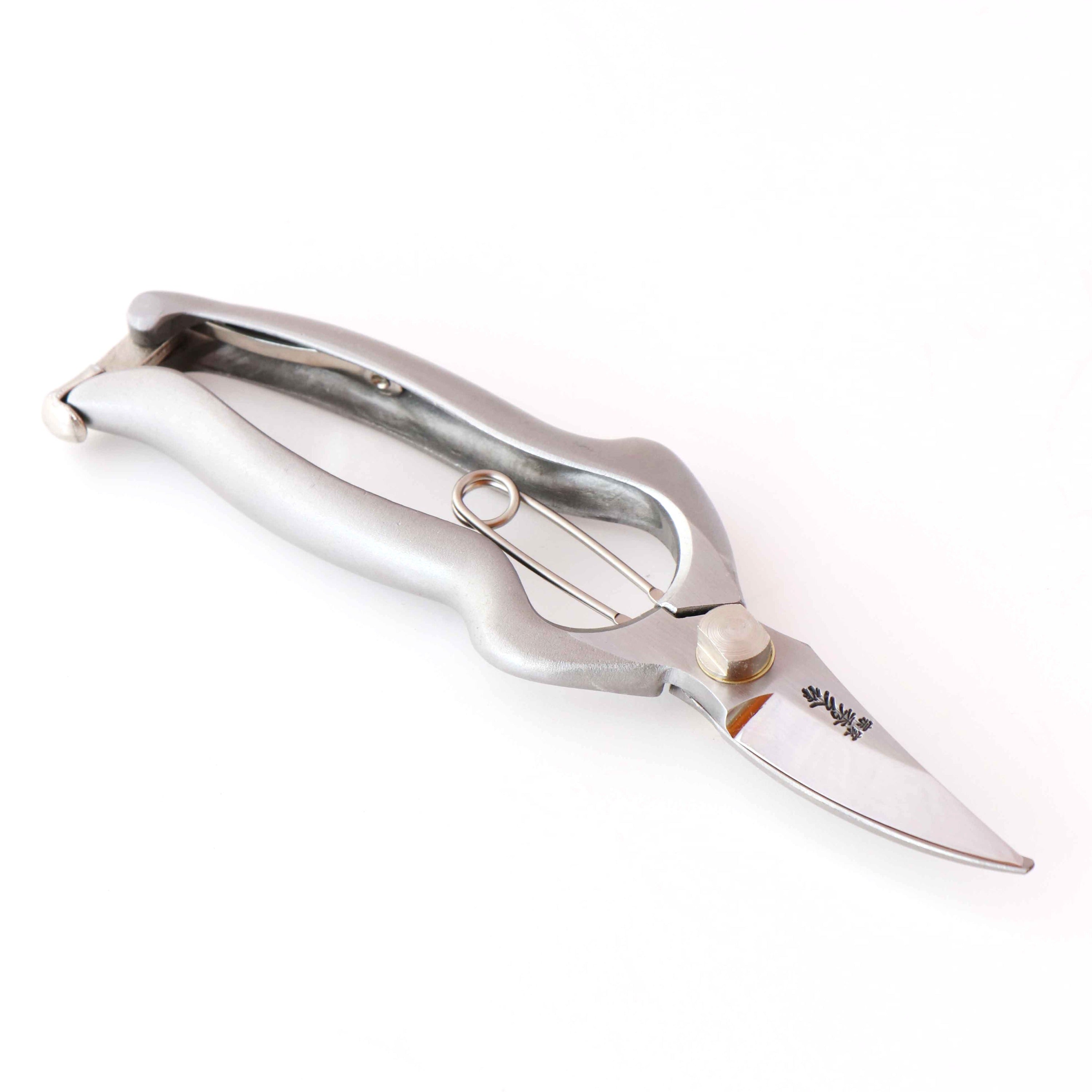
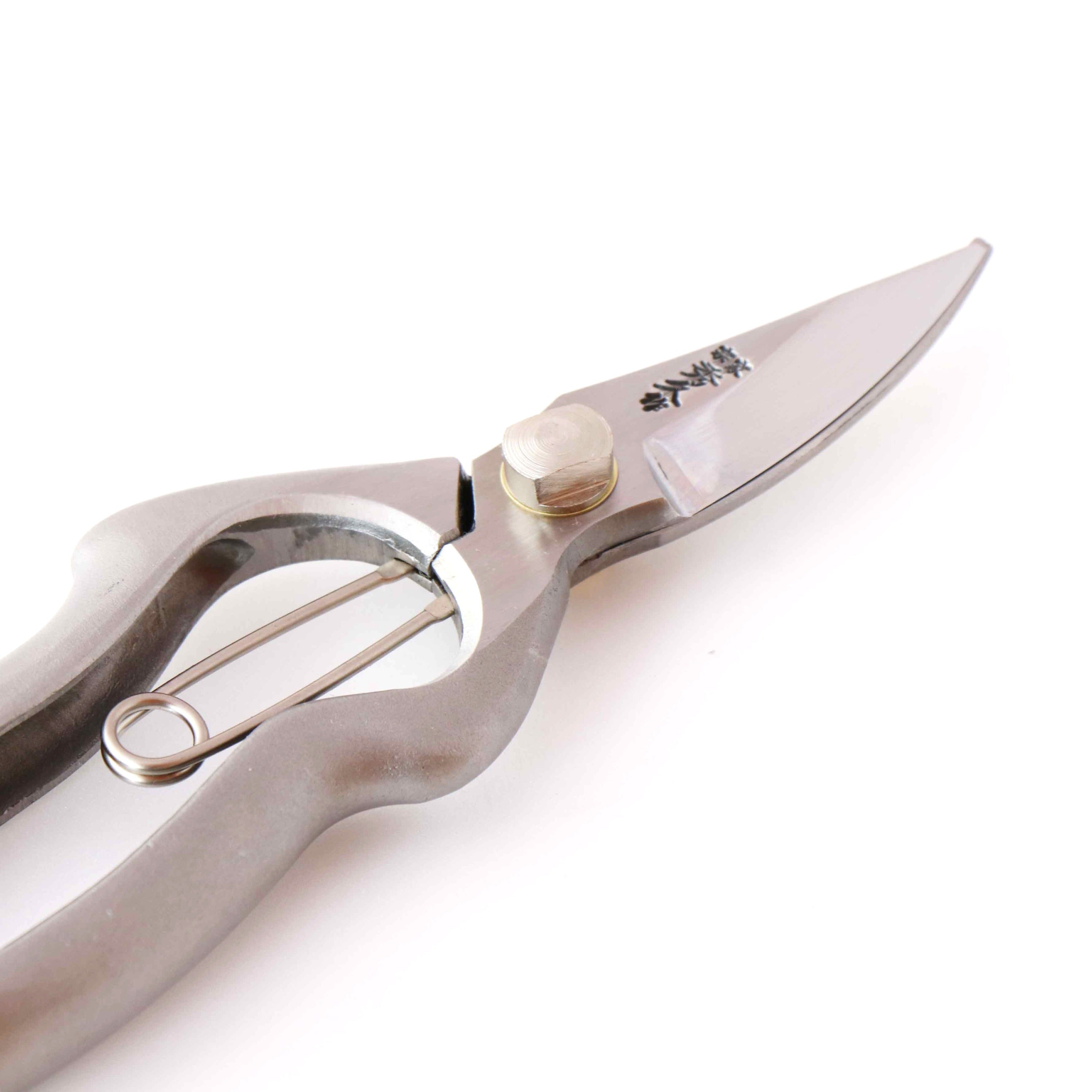
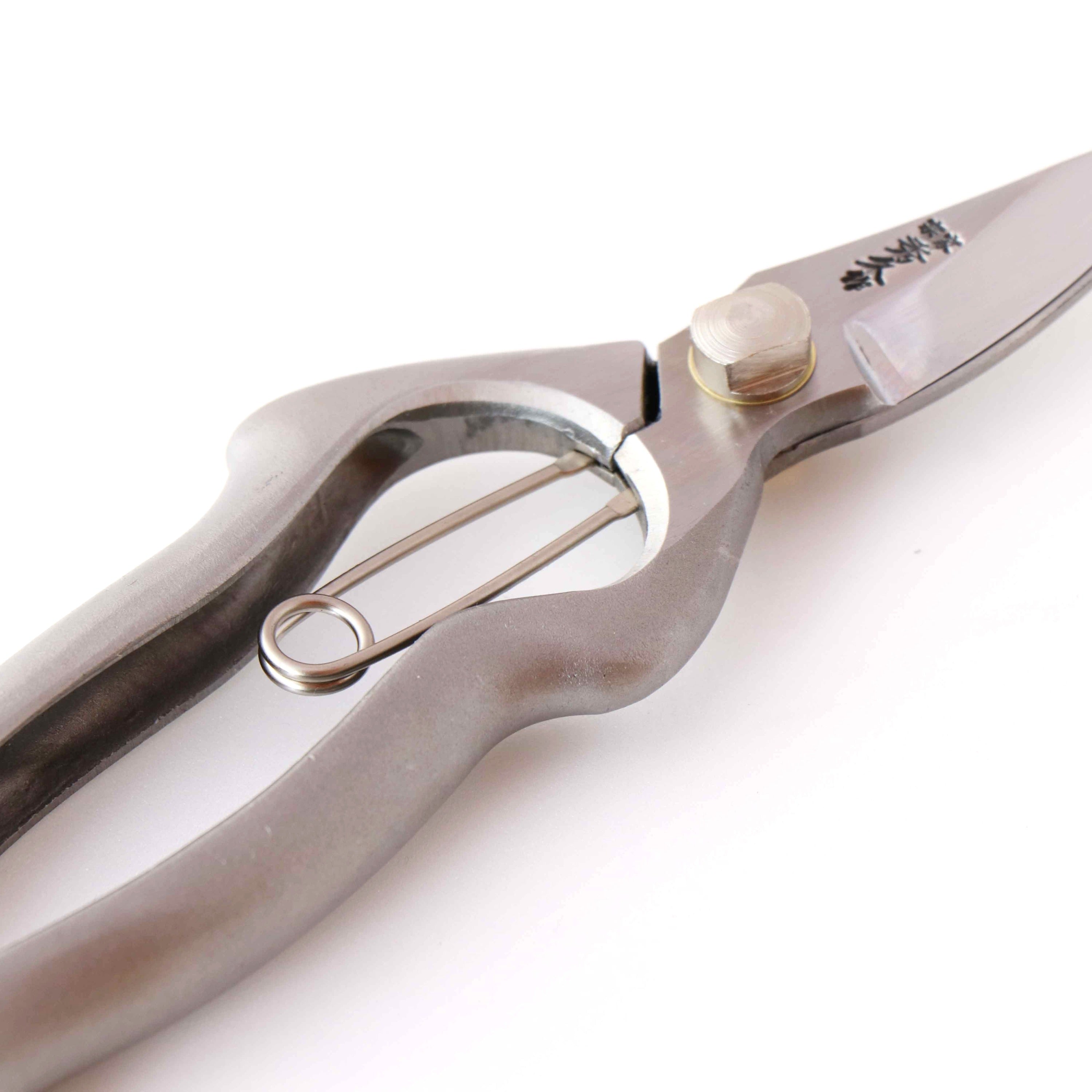
The T16 has a coil spring that reopens the blades after each cut. The rhythm is light and comfortable, which helps during longer sessions on hedges or topiary where the same motion repeats hundreds of times.
The T16 measures 270 mm in total length, with a 110 mm blade and a working weight of around 305 g. Its cutting capacity is roughly 3 mm at the tip and 8 mm at the base, on live plant material only. Treat that capacity as a limit rather than a target — staying well within it is what keeps the edge healthy over years of use. (Cutting capacity differs by model; for the T5, T6, and T7, follow the guidance on each product page.)
The T16L is the left-handed counterpart, with the same 270 mm total length and 110 mm blade. Shears are directional tools — the blade overlap determines which side gives you a clear view of the cutting line. A right-handed shear used in the left hand makes the cut harder to track and the grip less natural. The T16L reverses the overlap to suit left-handed use.
Okubo-Style: T5, T6, and T7

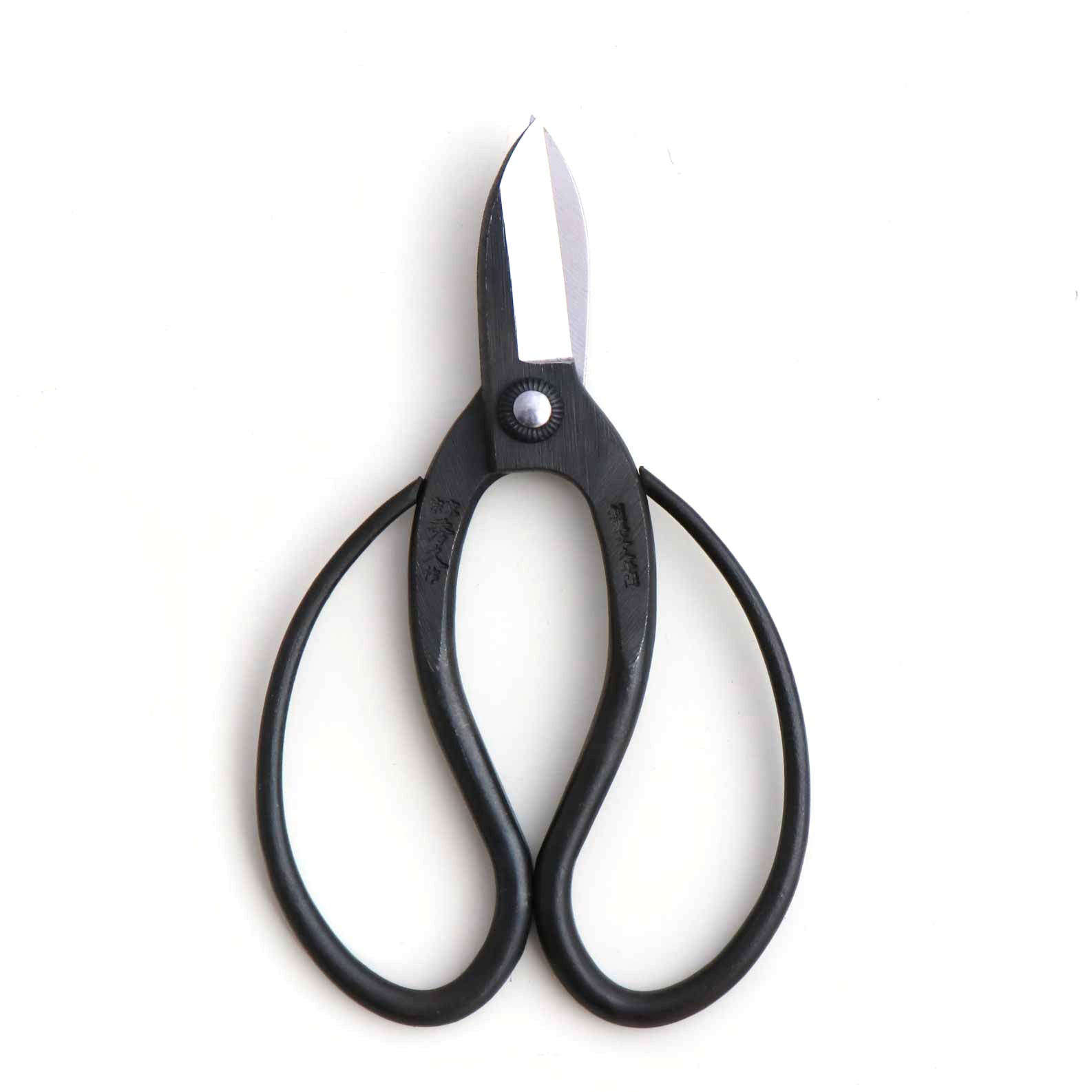
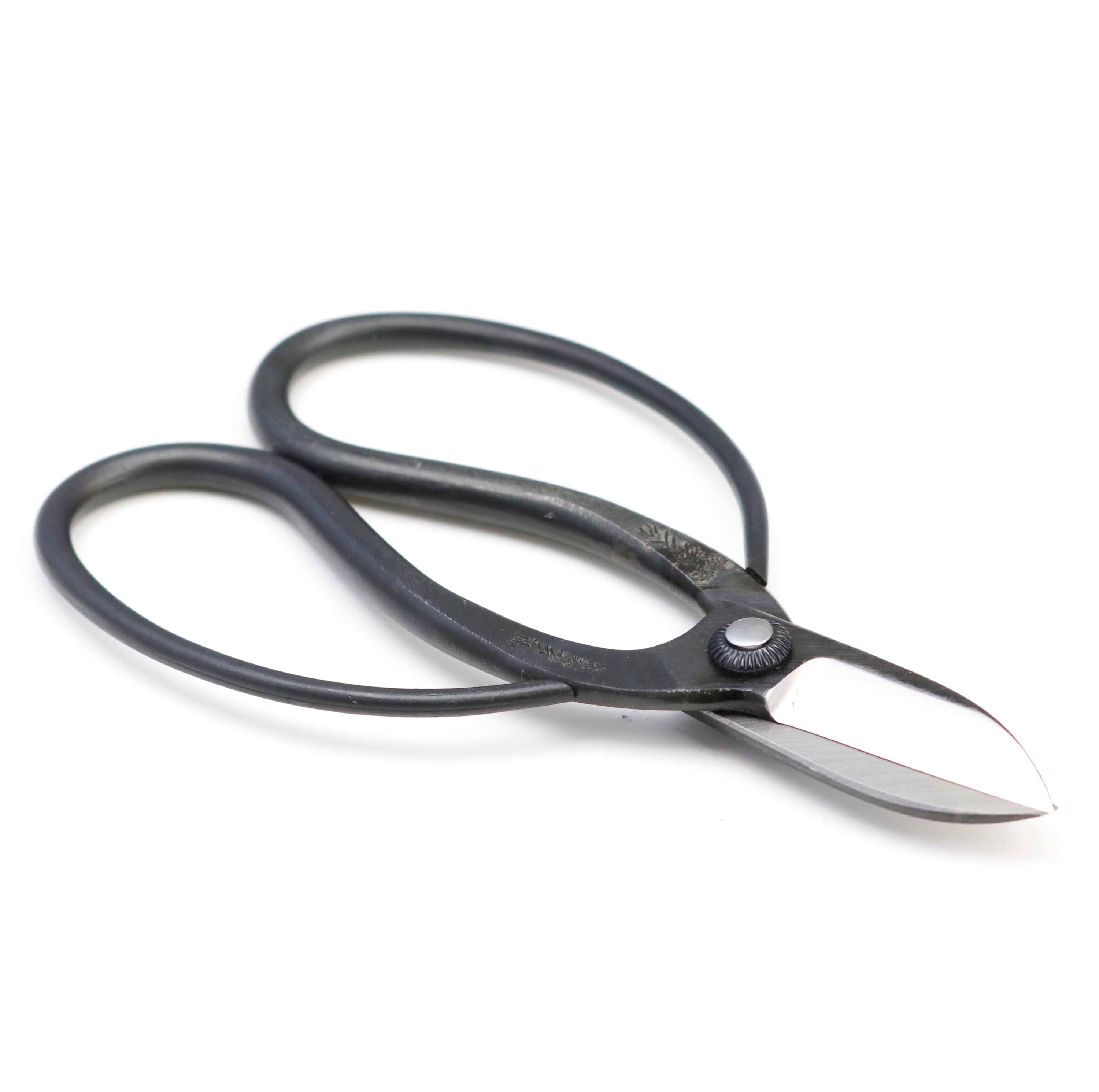
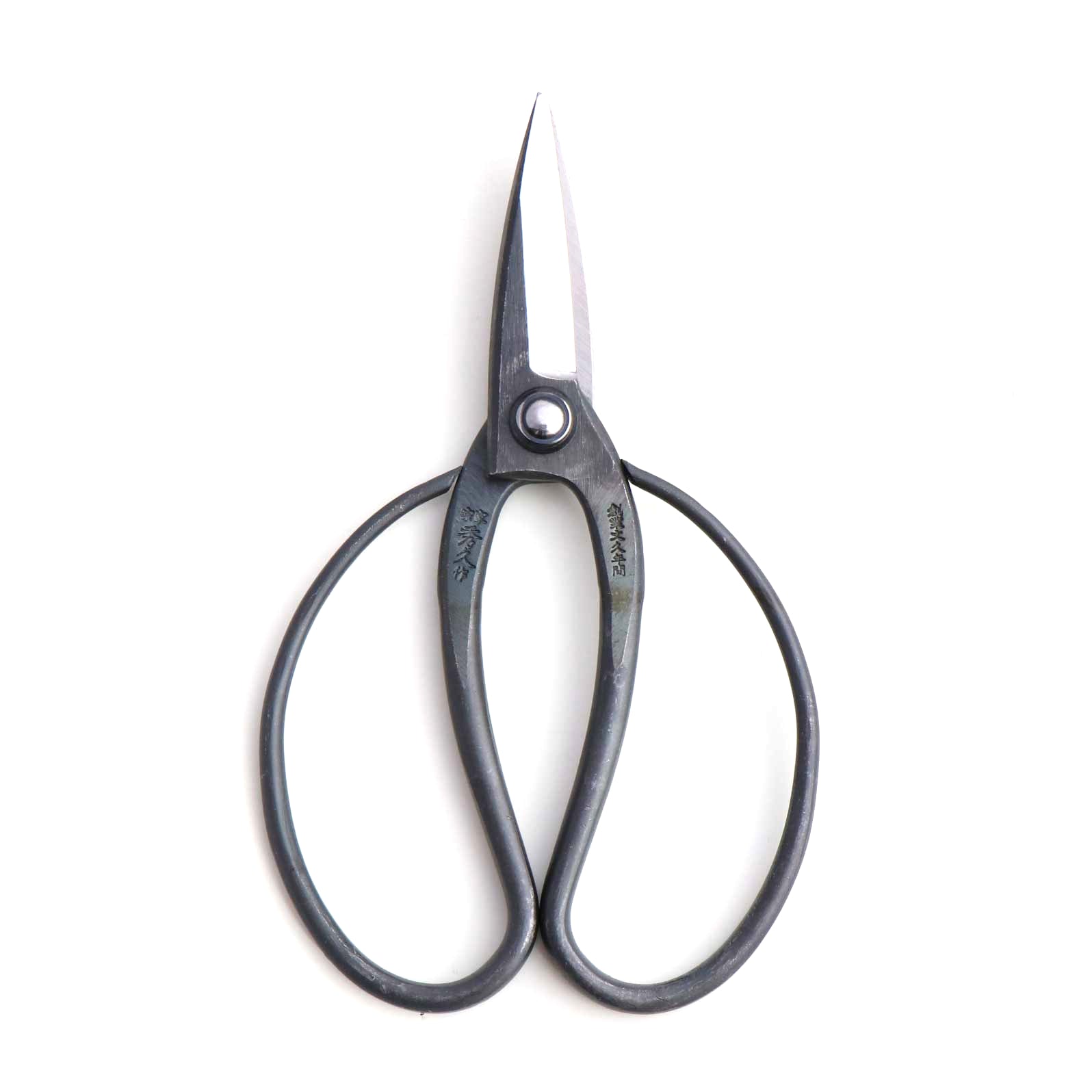
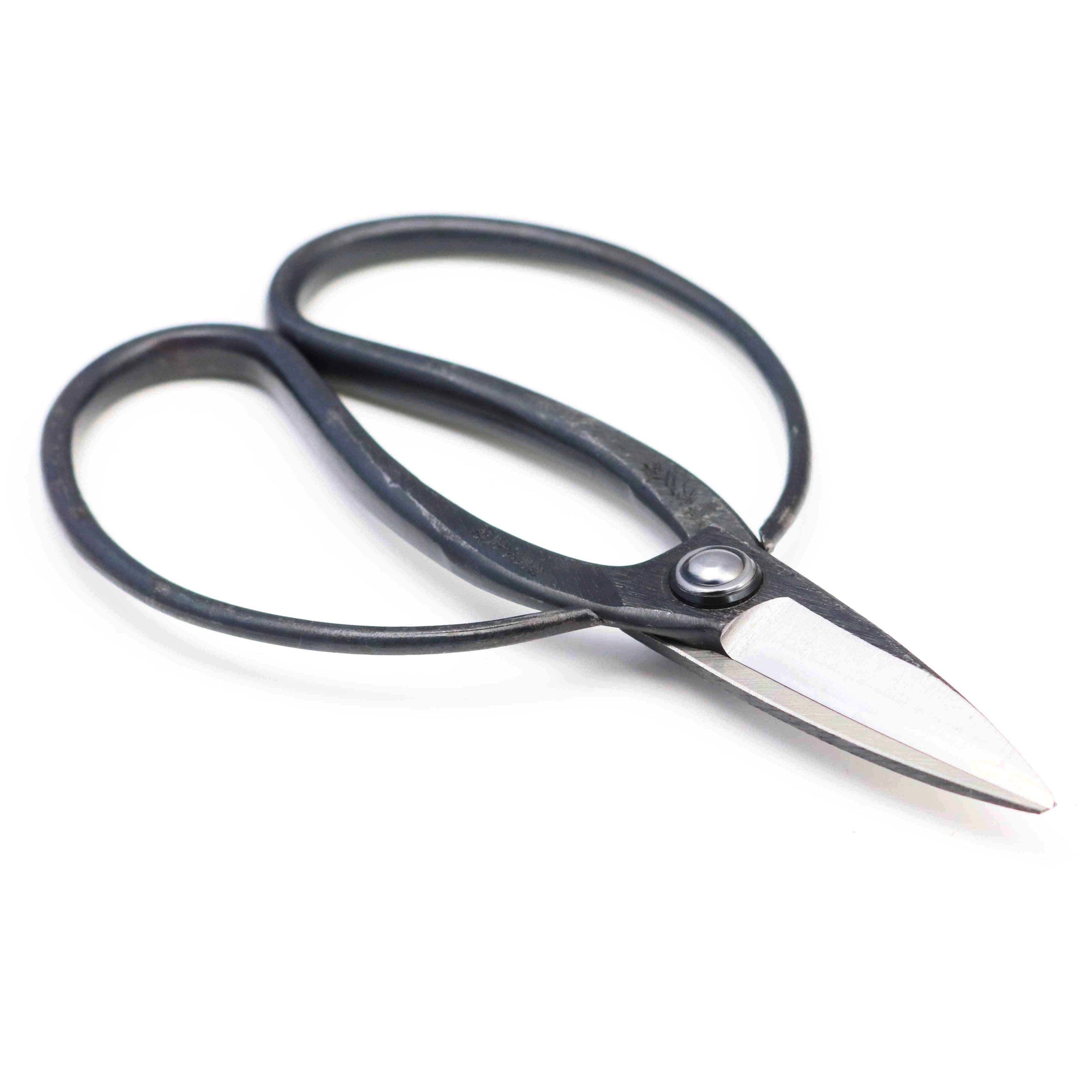
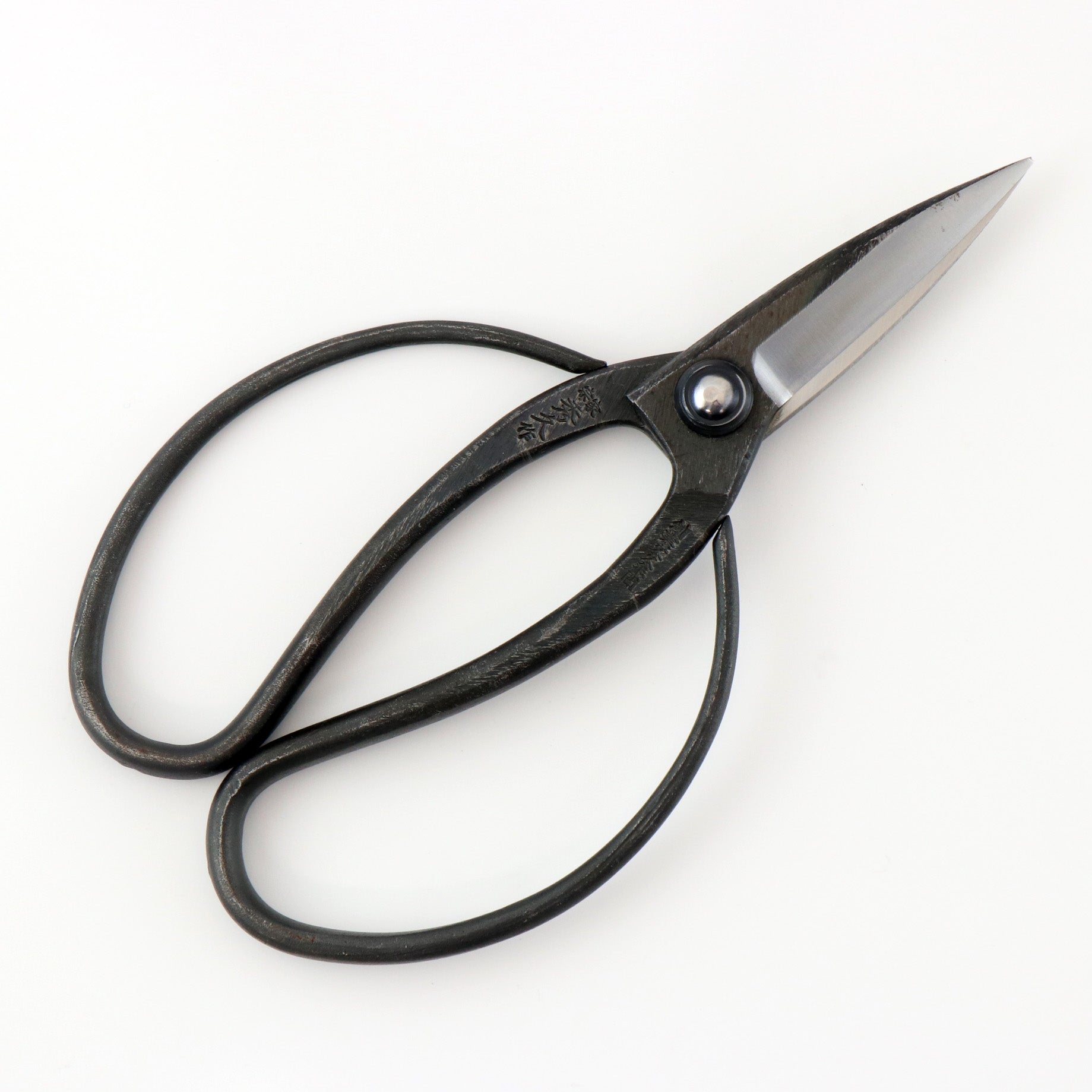
Photo: T5 (105 mm), left; T6 (120 mm), center; T7 (150 mm), right
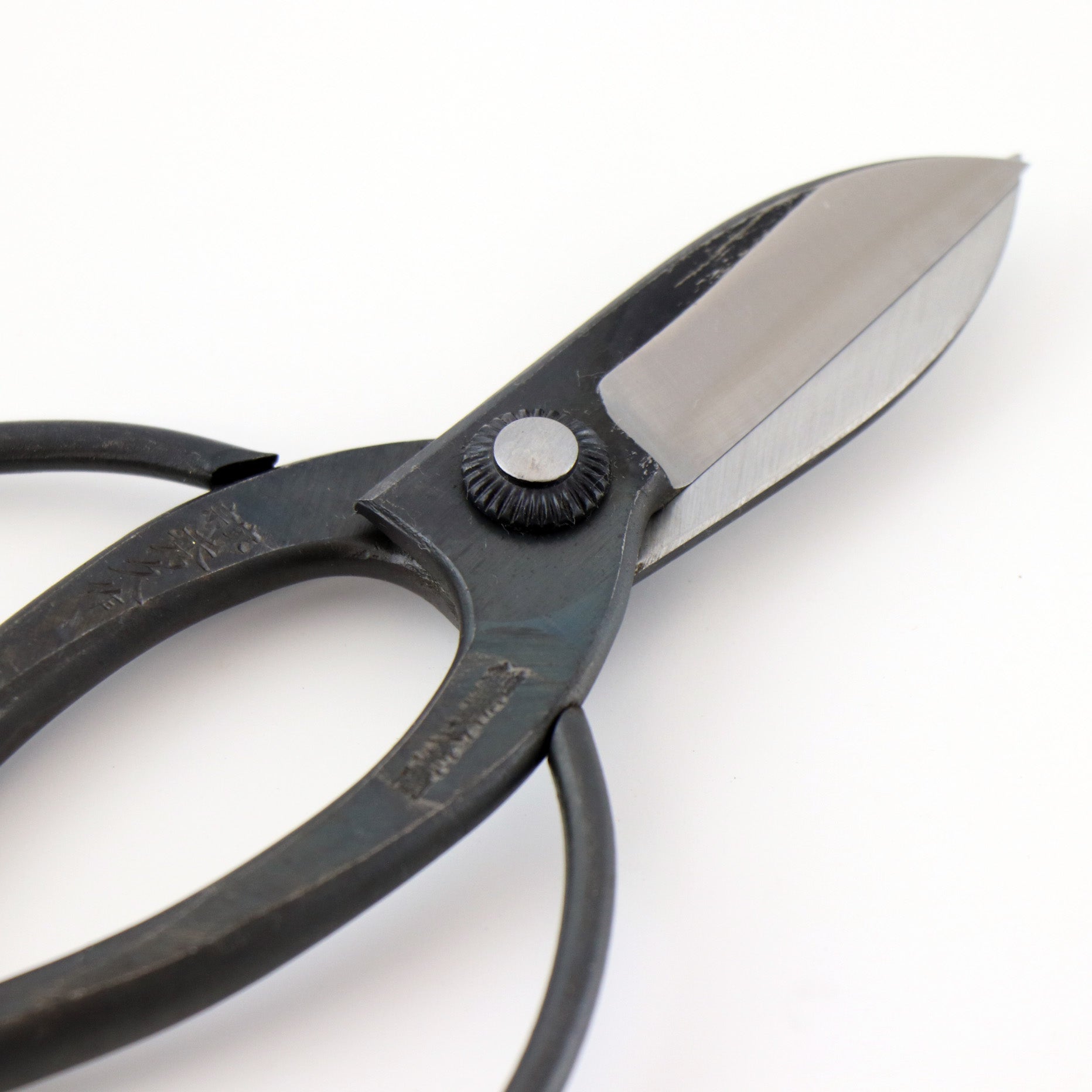
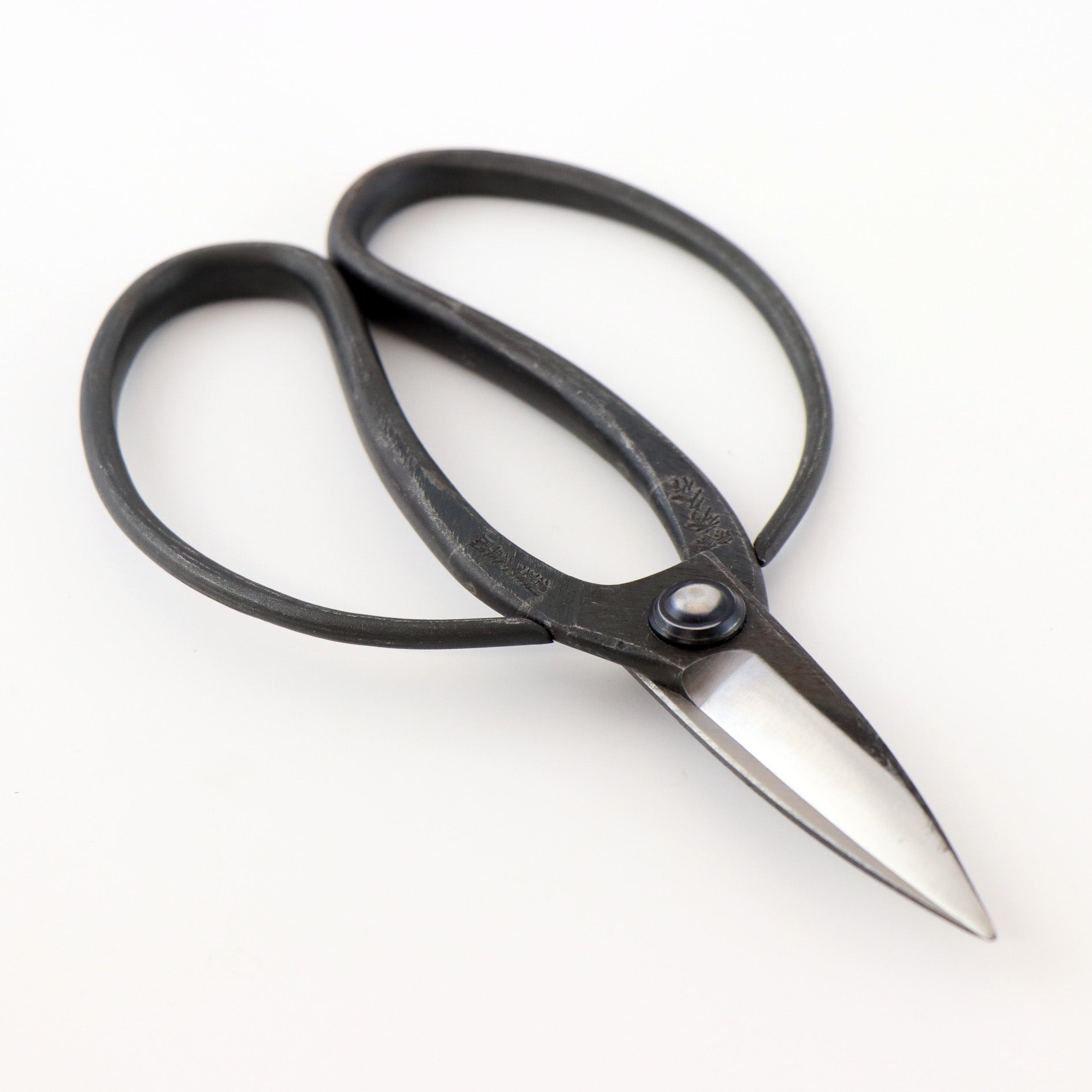
The T5, T6, and T7 follow the traditional Okubo pattern — a style of Japanese finishing shear with longer, straight blades and no spring. The user opens and closes the blades through finger movement alone.
The result is a slower, more deliberate feel. Each cut is controlled directly by the hand, with no spring rebound between movements. Some gardeners prefer this direct feel for subtle finishing work, where rhythm matters less than precision.
The three models share the same form and differ mainly in blade length:
-
T5 (105 mm) — the most compact and easiest to control in tight spots and on small shrubs.
-
T6 (120 mm) — a balanced middle option that handles most everyday hedge and shrub finishing.
-
T7 (150 mm) — the longest blade in the group, useful for broader hedge faces and longer continuous strokes.
Spring-Loaded or Okubo: Which to Choose
The spring mainly changes the rhythm of the work — how quickly and comfortably the blades reopen — rather than the basic purpose of the tool. Both styles are built for the same finishing work and produce clean results in skilled hands.
Choose the T16 or T16L if you want:
-
A lighter, more comfortable action during repeated cuts
-
An intuitive starting point if you are new to hedge finishing
-
Less hand fatigue during long sessions
Choose a T5, T6, or T7 if you want:
-
Direct control over every movement of the blade
-
The traditional feel of Japanese hand-forged shears
-
A specific blade length for your plants and working style
For a first one-handed shear, the T16 is the easier introduction. The Okubo models suit gardeners who already enjoy hand tools and want closer contact with each cut.
How to Care for One-Handed Hedge Shears
High-carbon steel takes a sharp edge but rusts quickly when sap and moisture are left on it. A few minutes of care after each session keeps the shears working as designed.
After each use:
-
Wipe sap and dirt off the blades with a dry cloth.
-
Confirm the blades are completely dry.
-
Apply a thin coat of camellia oil or another light tool oil.
-
Store indoors in a dry place, ideally in a pouch or tool box.
When the blades start dragging through soft leaves or tearing edges instead of slicing them, the edge has dulled. Sharpen at that point, or have the blades professionally adjusted if you are unsure of the technique. Forcing dull shears damages both the blade and the plant.
Frequently Asked Questions
Can beginners use one-handed hedge shears?
Yes. The T16 is the easiest starting point because the spring reopens the blades for you. You will still need practice to shape clean, even surfaces, but the opening motion feels more familiar to most beginners. Start on small areas of soft growth before working on full hedges or shaped topiary.
Can they replace pruning shears or two-handed hedge shears?
No. They complement them.
Pruning shears remain the right tool for branches and structural work. Two-handed hedge shears remain more efficient on long hedges and broad faces. One-handed hedge shears do the work neither of those is designed for: refining the visible surface. A complete hedge or topiary trim usually involves all three.
Can left-handed gardeners use them?
Yes. The T16L is built specifically for left-handed use, with the blade overlap reversed so the cutting line is clearly visible from the left.
The Okubo-style models (T5, T6, T7) have near-symmetrical handles, but the blade overlap is set for right-handed use. Left-handed gardeners who want the clearest cutting line and most natural feel should start with the T16L.
How often should the blades be sharpened?
The cutting feel is the main signal. When soft leaves start tearing or crushing instead of slicing cleanly, the edge has dulled. Frequency depends on how much you use the shears and what you cut, but regular wiping and oiling significantly extends the time between sharpenings.
Can I cut small branches with them?
These shears are designed for soft growth — leaves, new shoots, and the outer layer of foliage — not for branch work. Each model has a stated cutting capacity on the product page (for the T16, roughly 3 mm at the tip and 8 mm at the base on live plant material), but it is best treated as a safety limit rather than something to test. For anything thicker, switch to pruning shears.
Choosing Your One-Handed Hedge Shears
One-handed hedge shears do not replace other garden tools — they finish what those tools begin. Pruning shears set the structure. Two-handed hedge shears handle the bulk. One-handed shears, with the other hand free to guide and stabilize, refine the surface that everyone actually sees.
Toyama Hamono’s range covers two ways of working. The hand-forged T16 and T16L bring a smooth, spring-loaded action to repeated finishing work. The Okubo-style T5, T6, and T7 offer the direct, traditional feel of fingers fully in control of each cut.
Quick Guide: Which Model to Start With
|
If you want… |
Start with… |
|
The easiest first one-handed shear |
|
|
A left-handed model |
|
|
Compact control for small shrubs |
|
|
A balanced Okubo-style option |
|
|
More coverage for broader hedge faces |
If you are new to one-handed shears, start with the T16. If you want the traditional Japanese hand-tool feel, the T6 is a balanced first choice from the Okubo line. From there, the right model depends on the plants you shape, the way your hand works, and the finish you want to leave behind.



Share:
Japanese Ikebana & Flower Shears Explained: Warabi-te, Tsuru-te, and Multi-Purpose Pruning Shears
Bypass vs. Anvil Pruners: Which Should You Choose?