
What Are Japanese Flower Shears — and Why Are There Two Handle Shapes?
If you have ever seen a pair of Japanese flower shears for the first time, you probably noticed the handles before the blade.
One type has a curled tip that seems to serve no obvious purpose. Another has wide loops that look oversized for the blade. Neither looks like the spring-loaded snips or bypass pruners that most Western florists reach for.
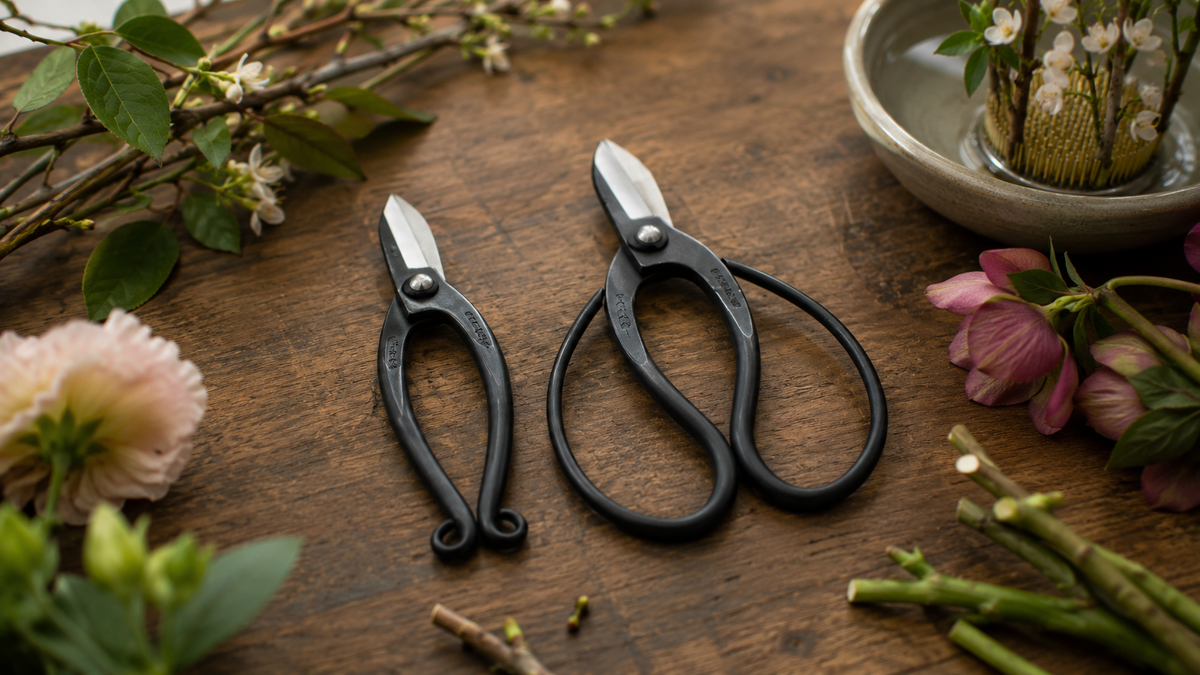
These are hana-basami — Japanese flower shears. They are tools made specifically for cutting living plant material: flower stems, branches, leaves, and the mixed botanical material used in ikebana and floral arrangement.
Japanese flower shears come in two traditional handle forms:
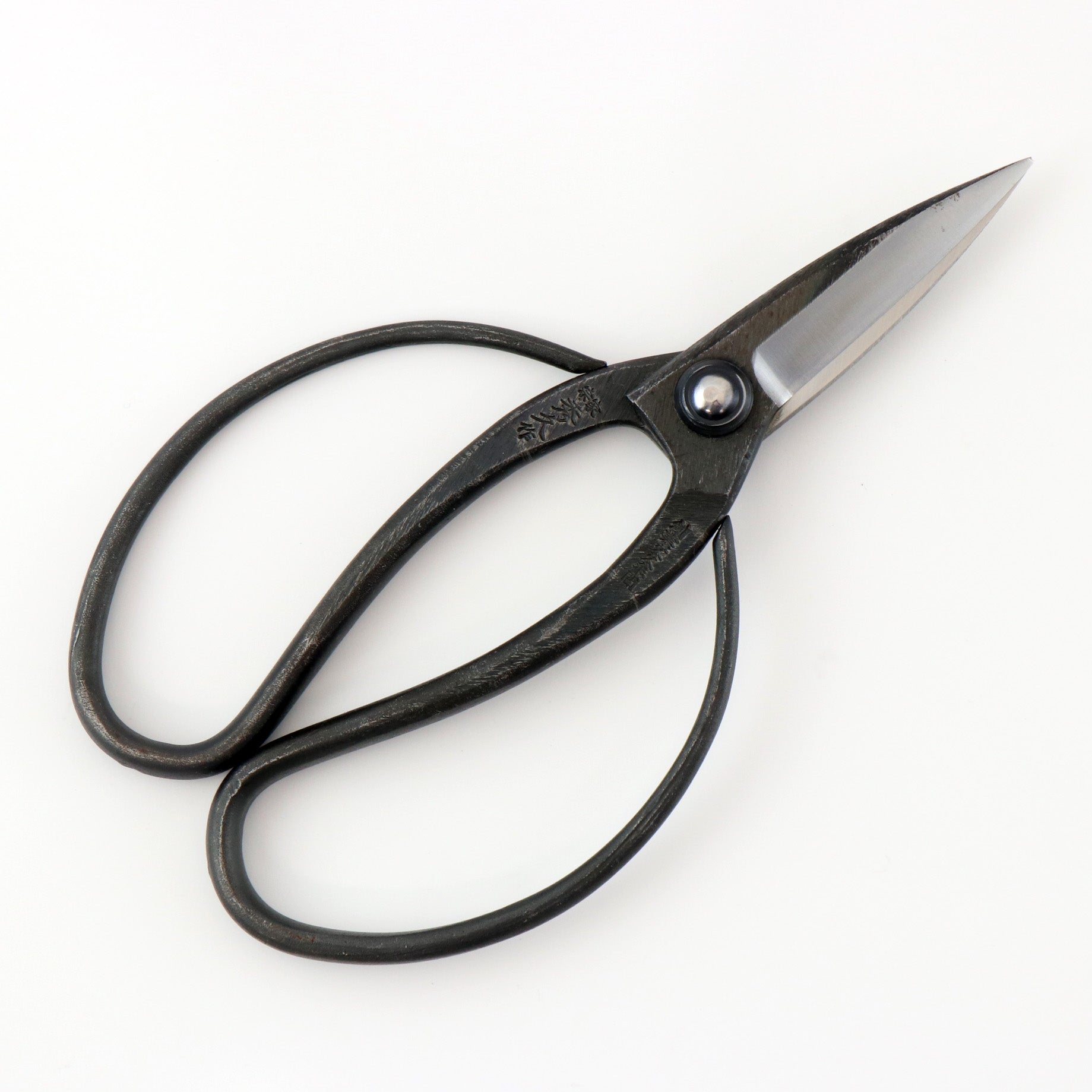
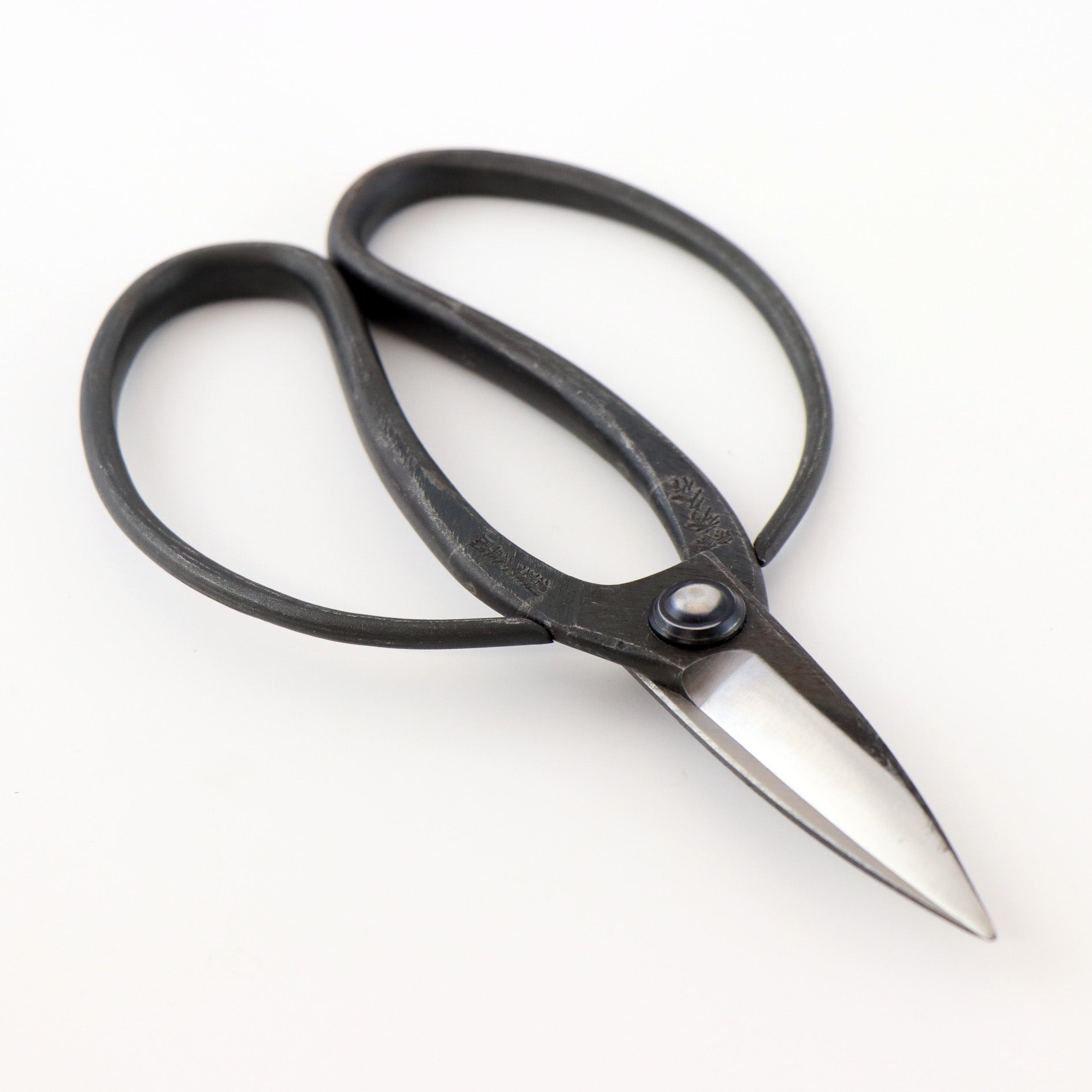
Warabi-te shears have a handle that curls into a small round shape at its tip.
Tsuru-te shears have a handle that forms a loop through which the fingers pass.
The difference between these two forms is not about the blade. On Toyama Hamono’s T8 (warabi-te) and T9 (tsuru-te), the blades are finished in the same way, and the cutting performance is the same. Both cut the same materials with the same sharpness.
The difference is in how the shears sit in your hand — how you hold them, how they feel during use, and how each form has been used in Japanese floral practice.
If your daily work is primarily in Western floristry — bouquets, events, installations — you may want to start with the Multi-Purpose Pruning Shears section below.
Warabi-te — The Curled Handle

Warabi-te shears take their name from the warabi, or bracken fern. The handle tip curls into a small round shape that resembles the tightly coiled head of a young fern frond before it unfurls.
Unlike Western scissors, the warabi-te handle is not designed to receive the fingers through a loop. Instead, the shears sit in the palm, with the curled tip resting against the hand. The grip is closer to holding a tool than operating a scissor.
This palm-held grip gives the warabi-te a compact, close-to-the-hand feel. The T8 weighs approximately 150 g, making it the lighter of the two traditional forms.
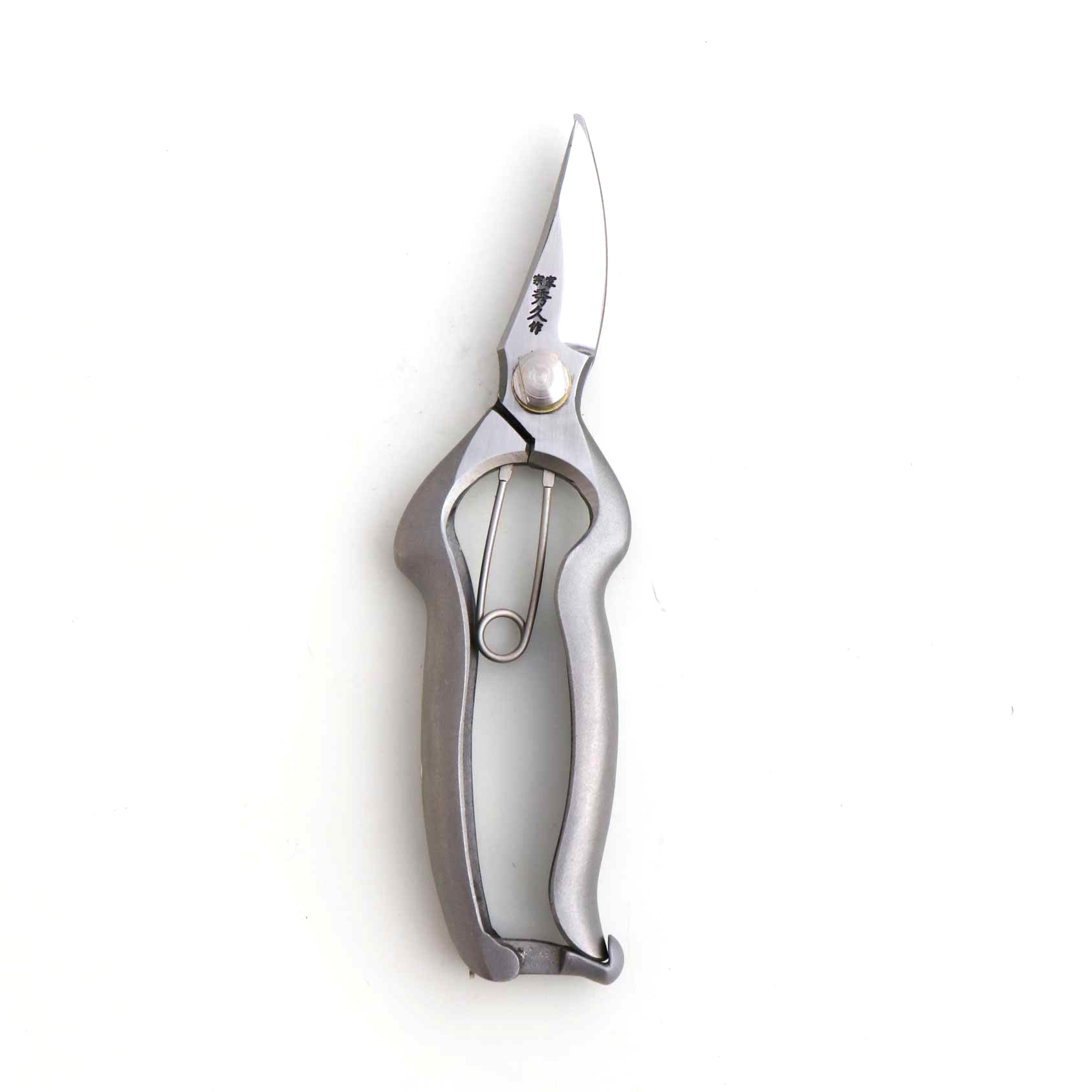
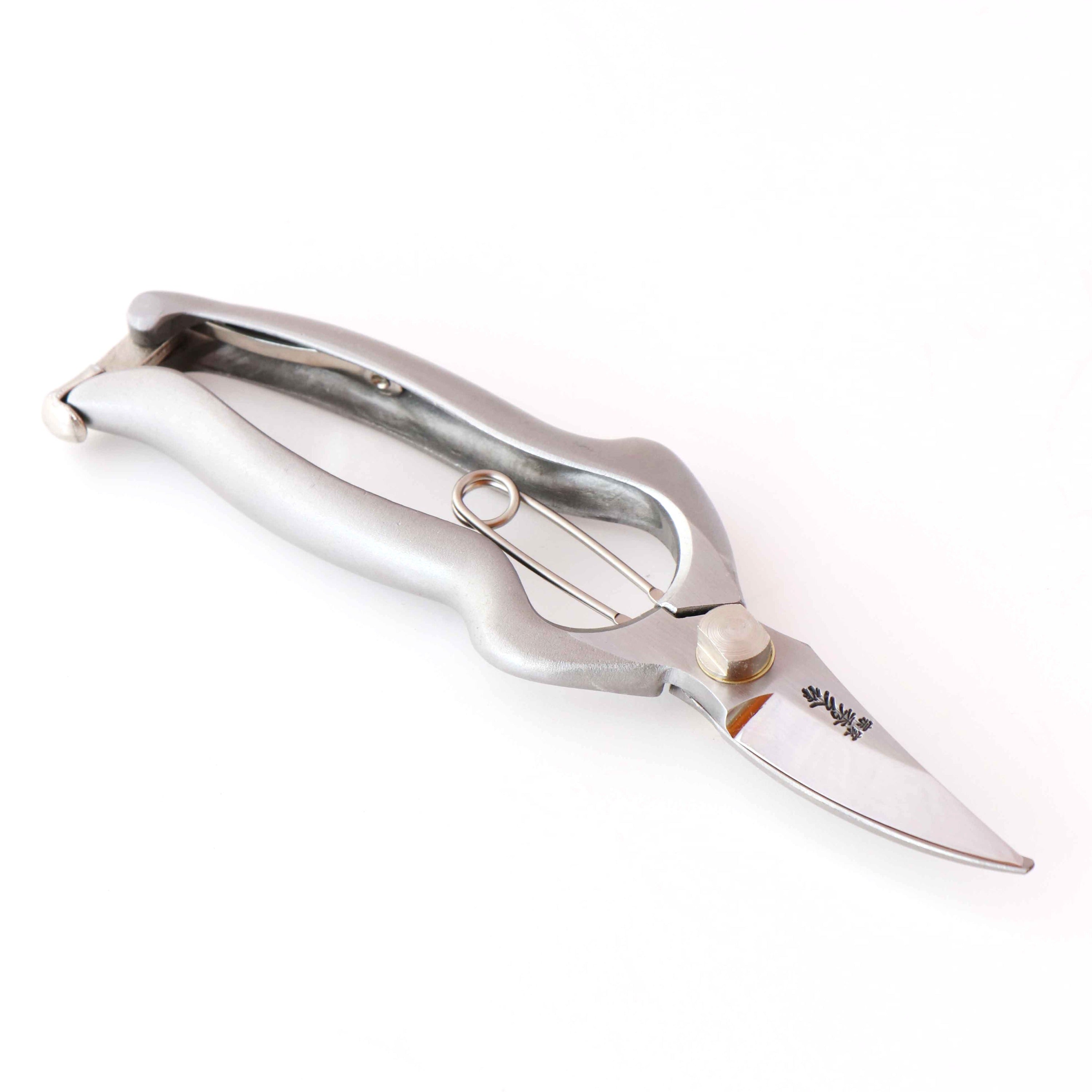
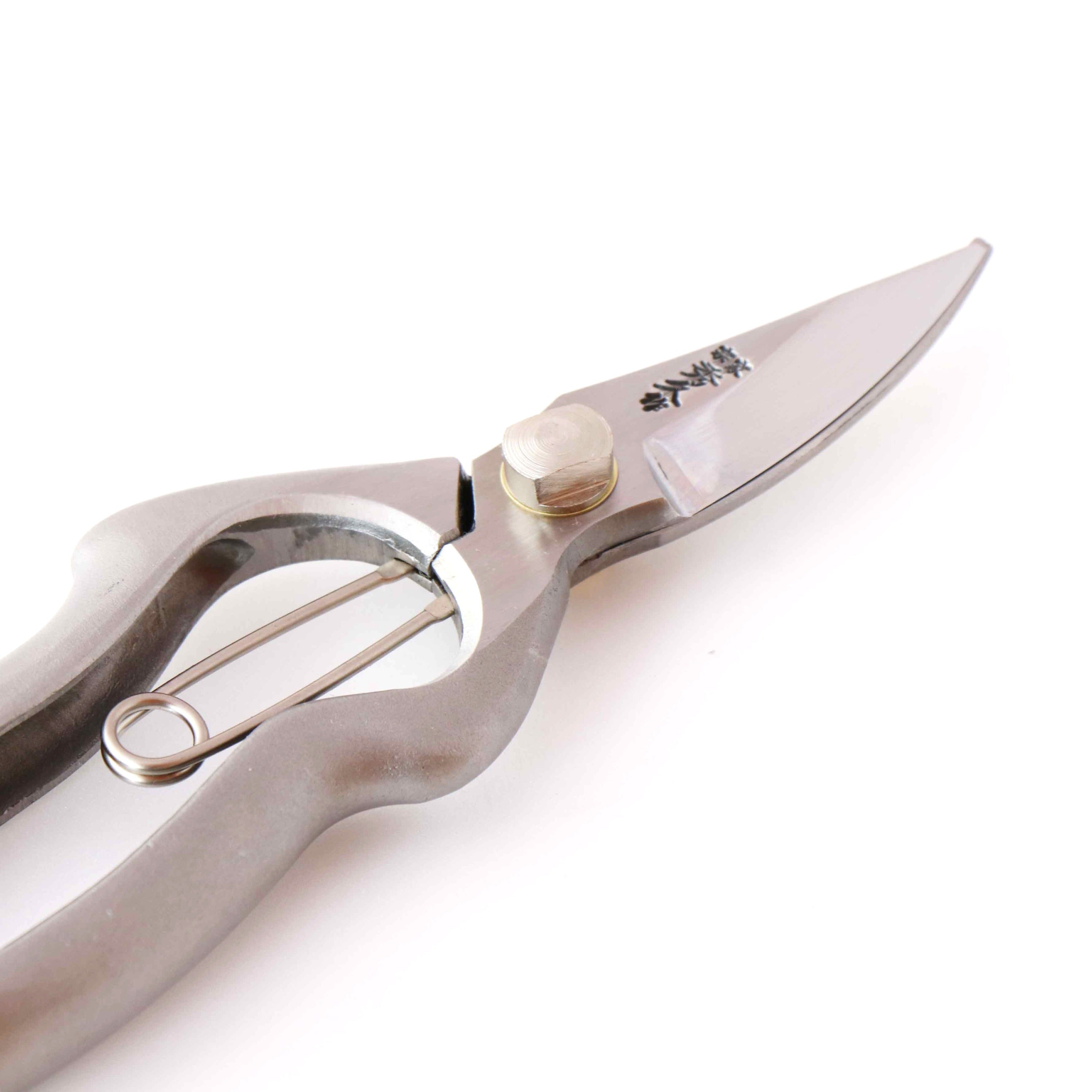
T8 — Toyama Hamono’s Warabi-te Shear

Photo: T8
Hand-forged high-carbon steel. 165 mm overall length, 50 mm blade, approximately 150 g.
The junior size is currently available only in Japan.
T8 Jr — 150 mm overall length, 30 mm blade, approximately 120 g. Suited to smaller hands or lighter work.
For cutting capacity and detailed specifications, please refer to each product page.
Tsuru-te — The Looped Handle

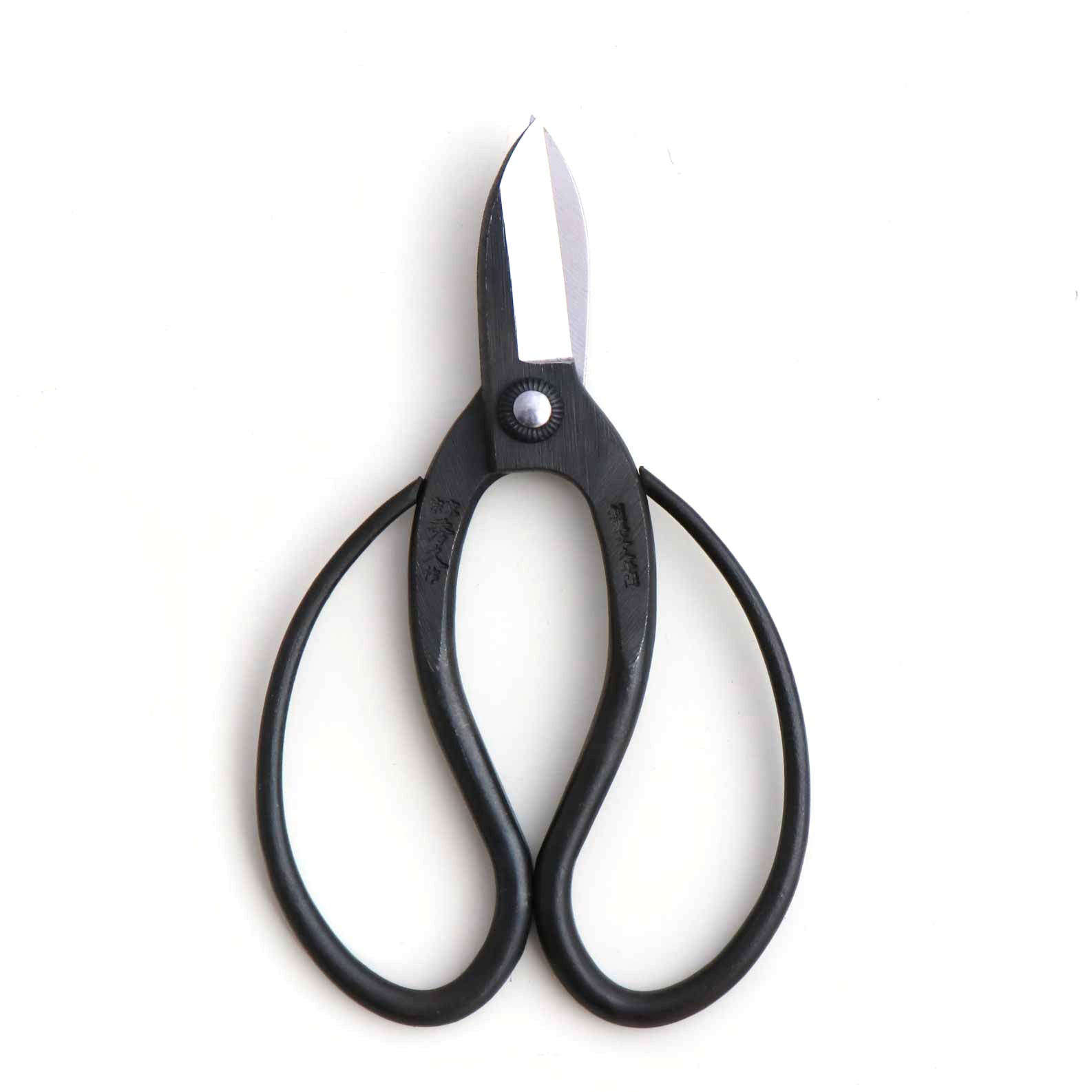
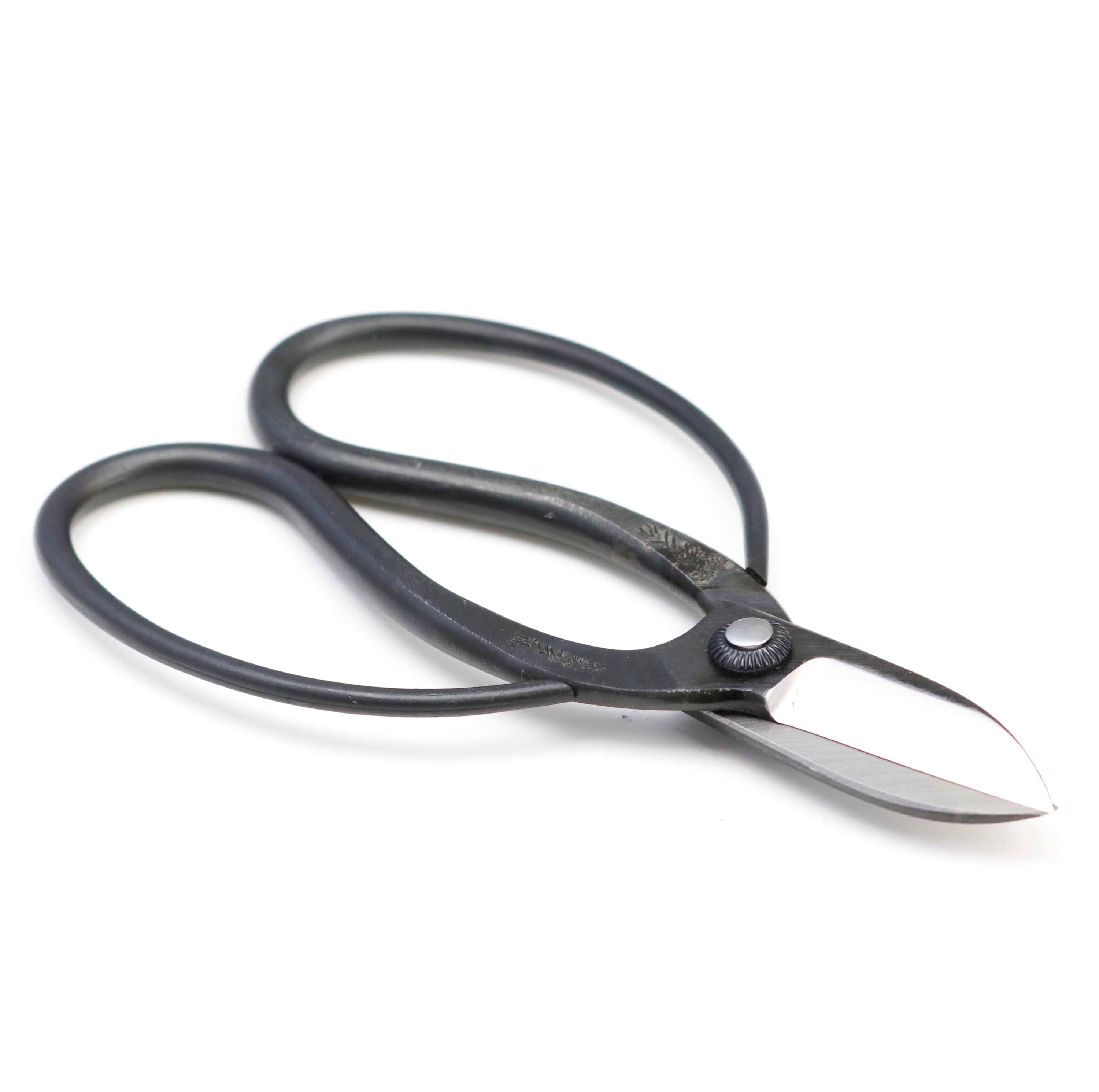
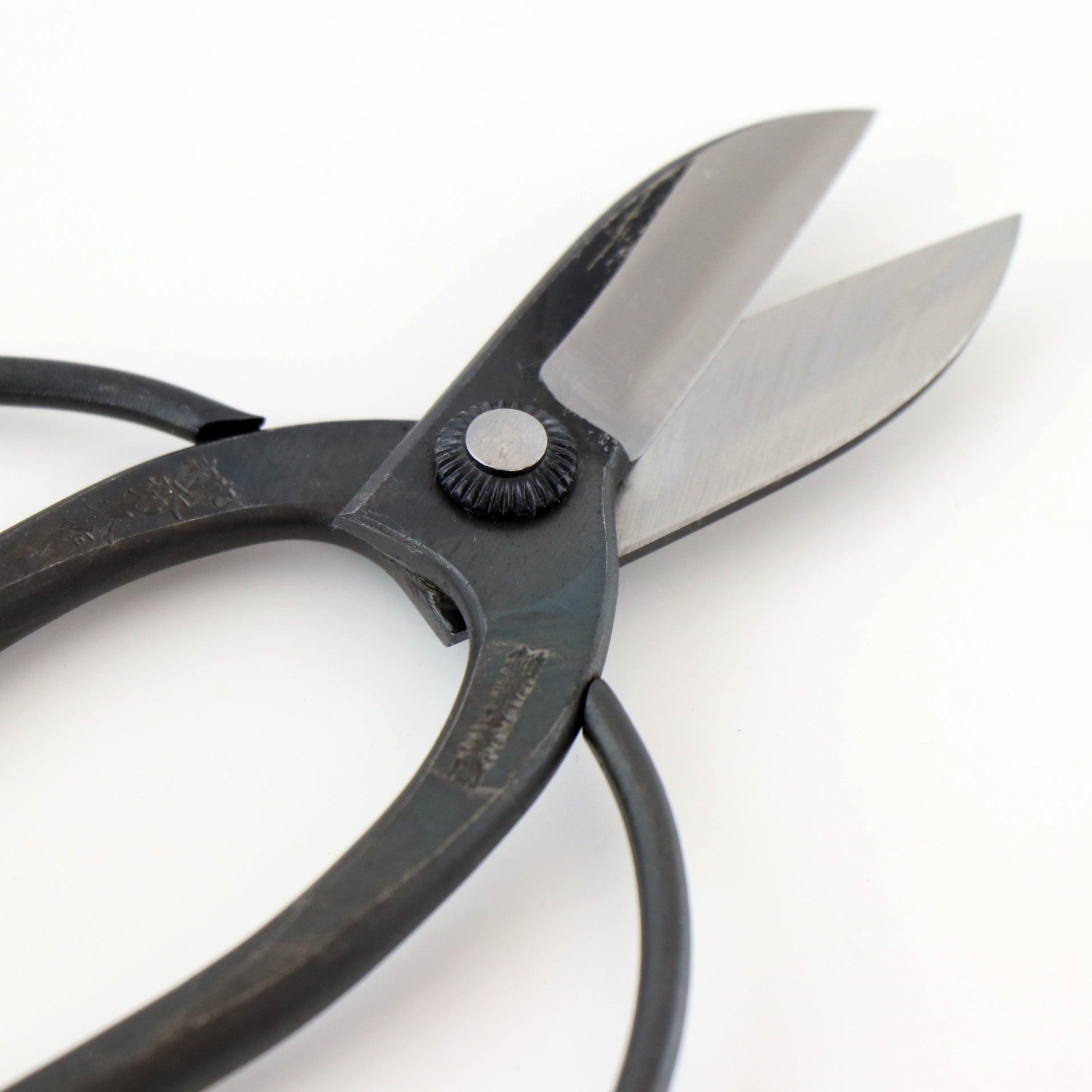
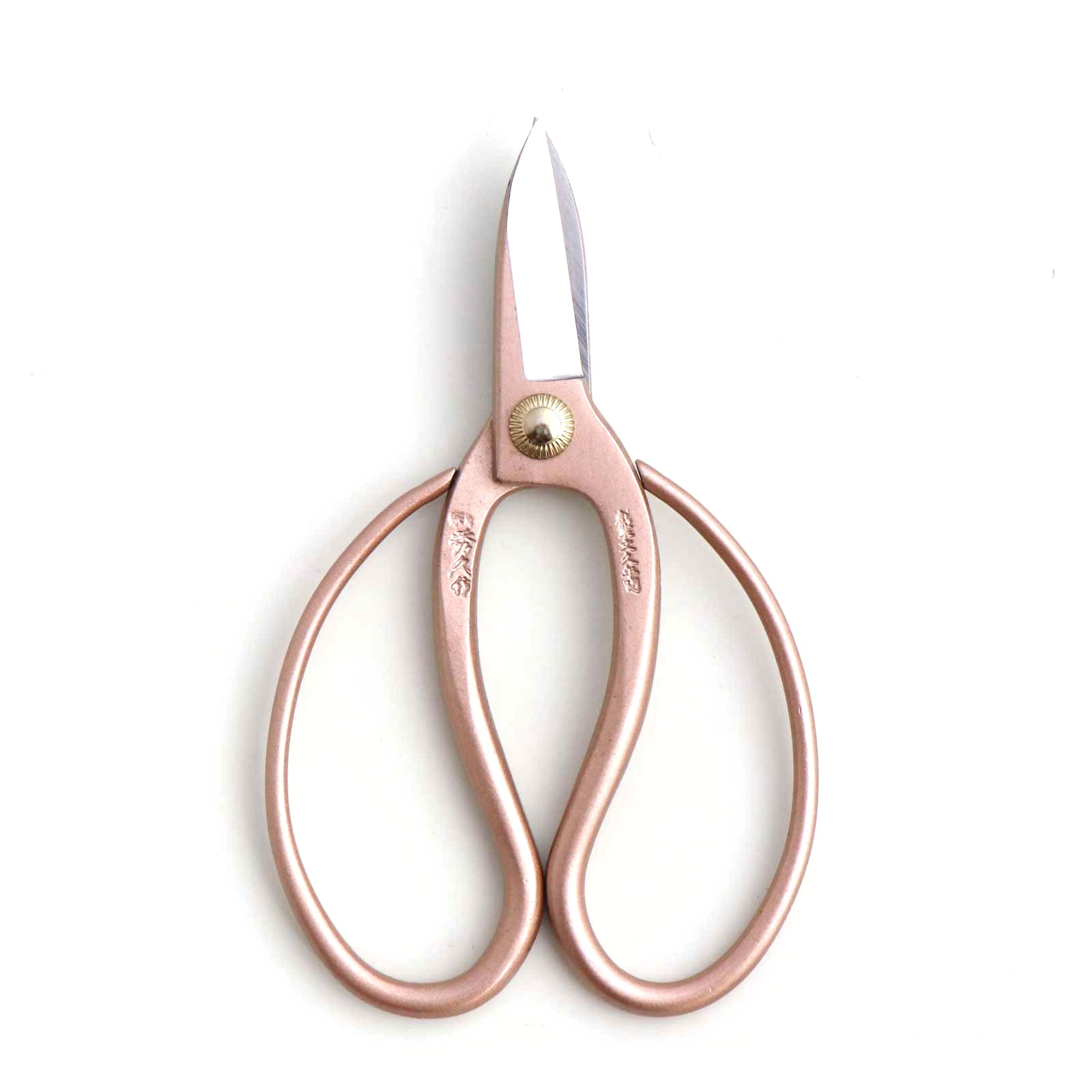
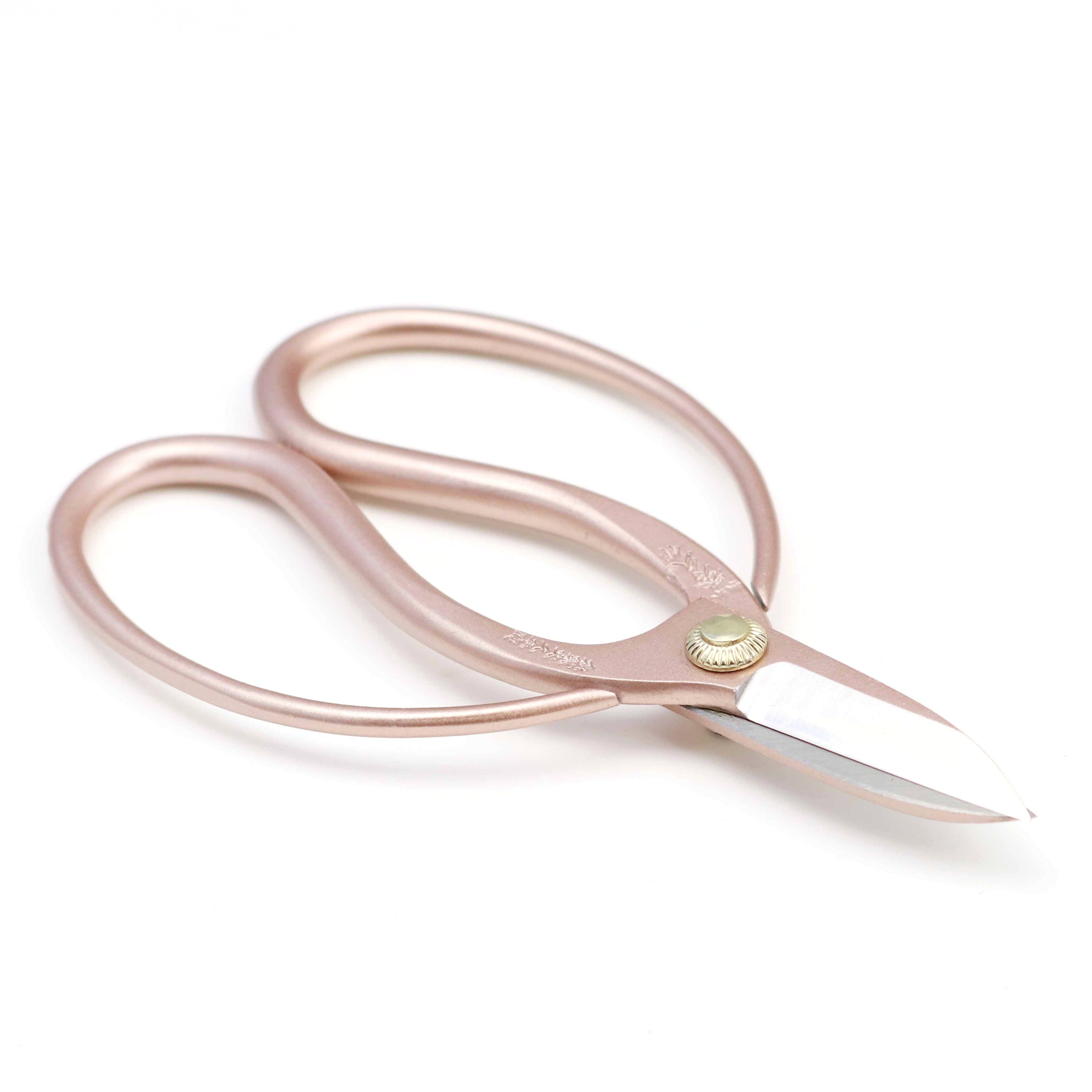
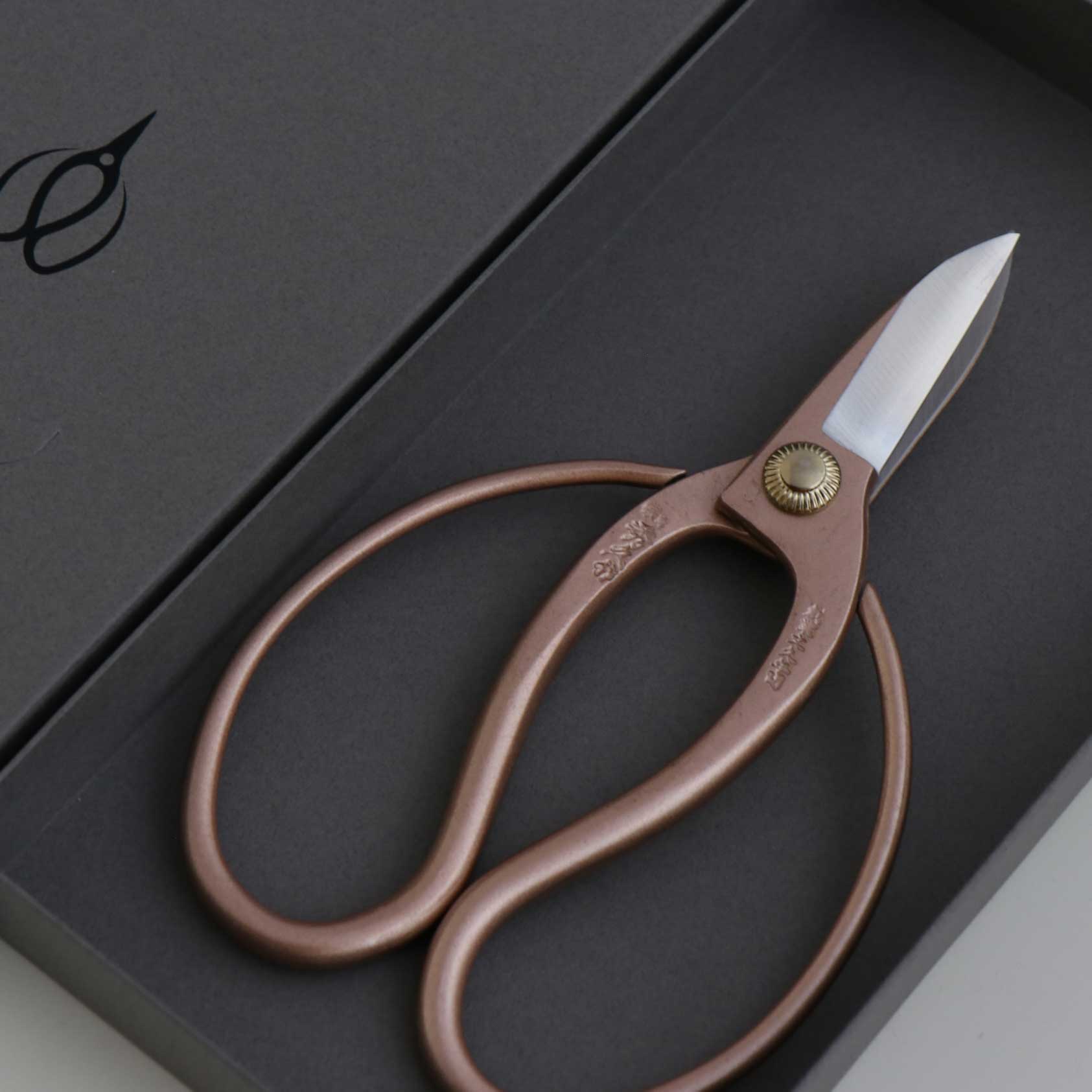
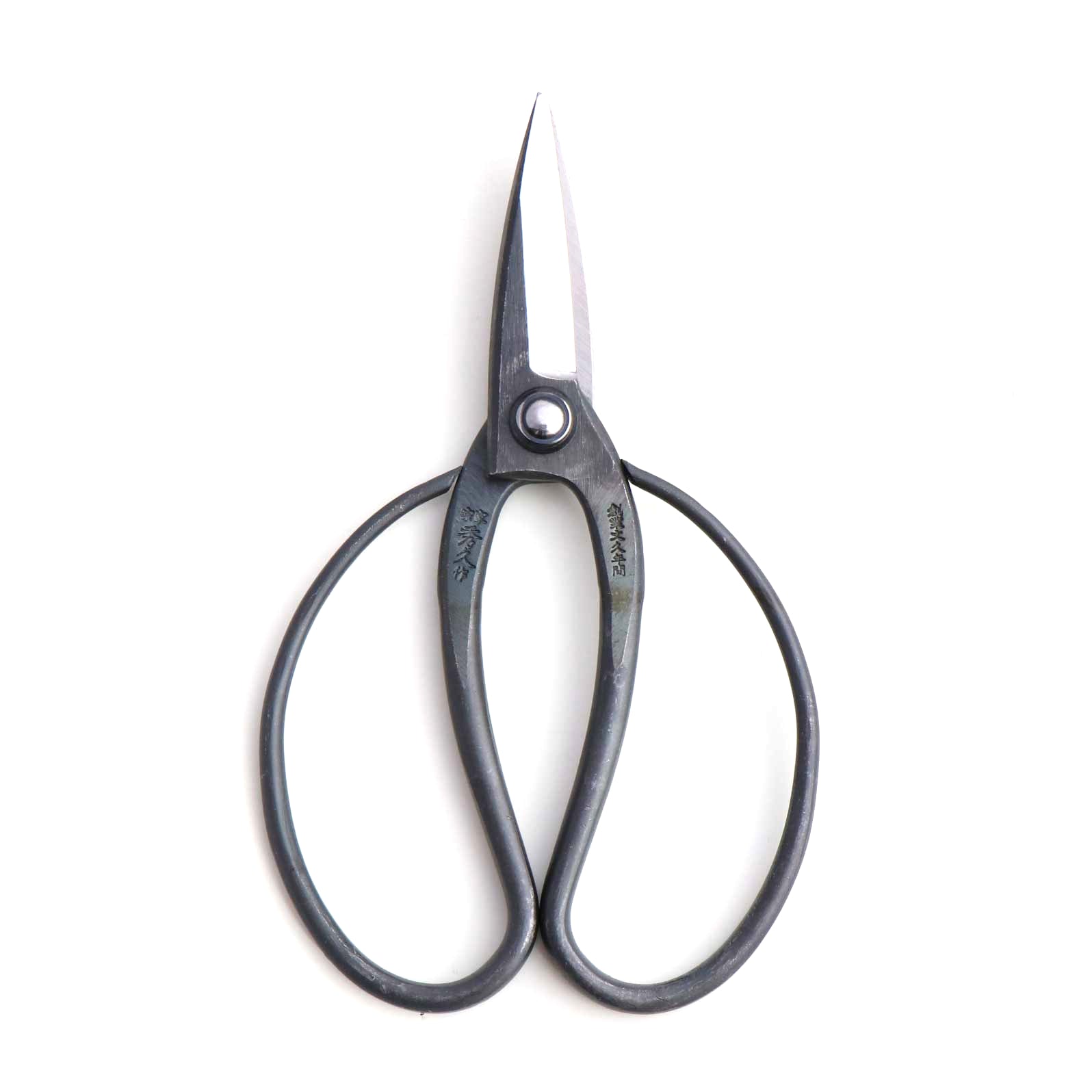
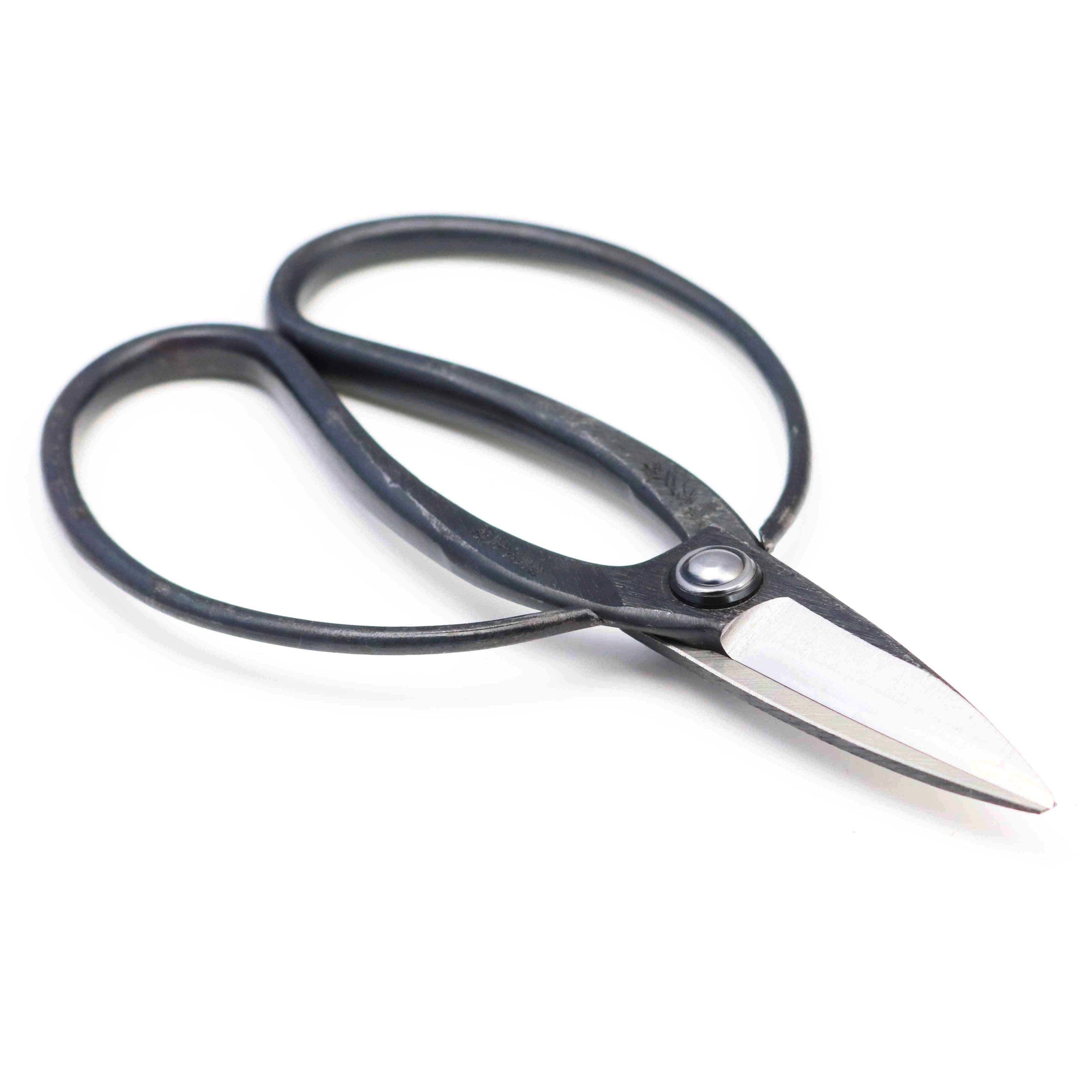
Tsuru-te shears have a looped handle — a wide ring through which the fingers pass.
The looped grip may look more familiar to anyone accustomed to Western scissors, but it sits within a Japanese floral tradition. The finger-through hold gives a different sense of control compared to the palm-held warabi-te: the tool moves as an extension of the fingers rather than resting in the hand as a whole.
The T9 weighs approximately 210 g — noticeably heavier than the T8. That extra weight gives the tool a steadier, more grounded feel during cutting. Some practitioners find this helps maintain a consistent hand during longer sessions.
T9 — Toyama Hamono’s Tsuru-te Shear

Photo: T9
Hand-forged high-carbon steel. 165 mm overall length, 50 mm blade, approximately 210 g.
For cutting capacity and detailed specifications, please refer to each product page.
Why Two Handle Forms? A Brief History

The roots of ikebana lie in the practice of offering flowers at Buddhist altars — a custom that spread in Japan after the arrival of Buddhism in the sixth century. Over time, flower arrangement developed into a structured art, and by the Muromachi period (14th–16th centuries), distinct schools with specific philosophies began to form.
Different schools developed different ways of working, and with them, different preferences in tools.
Ikenobō, the oldest formalized school, is closely tied to the origins of ikebana itself. Warabi-te shears have long been associated with this tradition.
Sogetsu, founded in 1927, embraces modern and non-traditional materials alongside living plants. Warabi-te is also commonly seen in Sogetsu practice.
Koryū lineages, associated with the seika (formal flower) style, have traditionally favored tsuru-te — the looped-handle form.
These are traditions of use, not fixed rules. Today, a practitioner’s choice is influenced by teacher guidance, hand size, the type of material they work with most often, and personal preference. The school name attached to a handle shape describes a historical tendency — not a requirement.
What the Blade Is Designed For
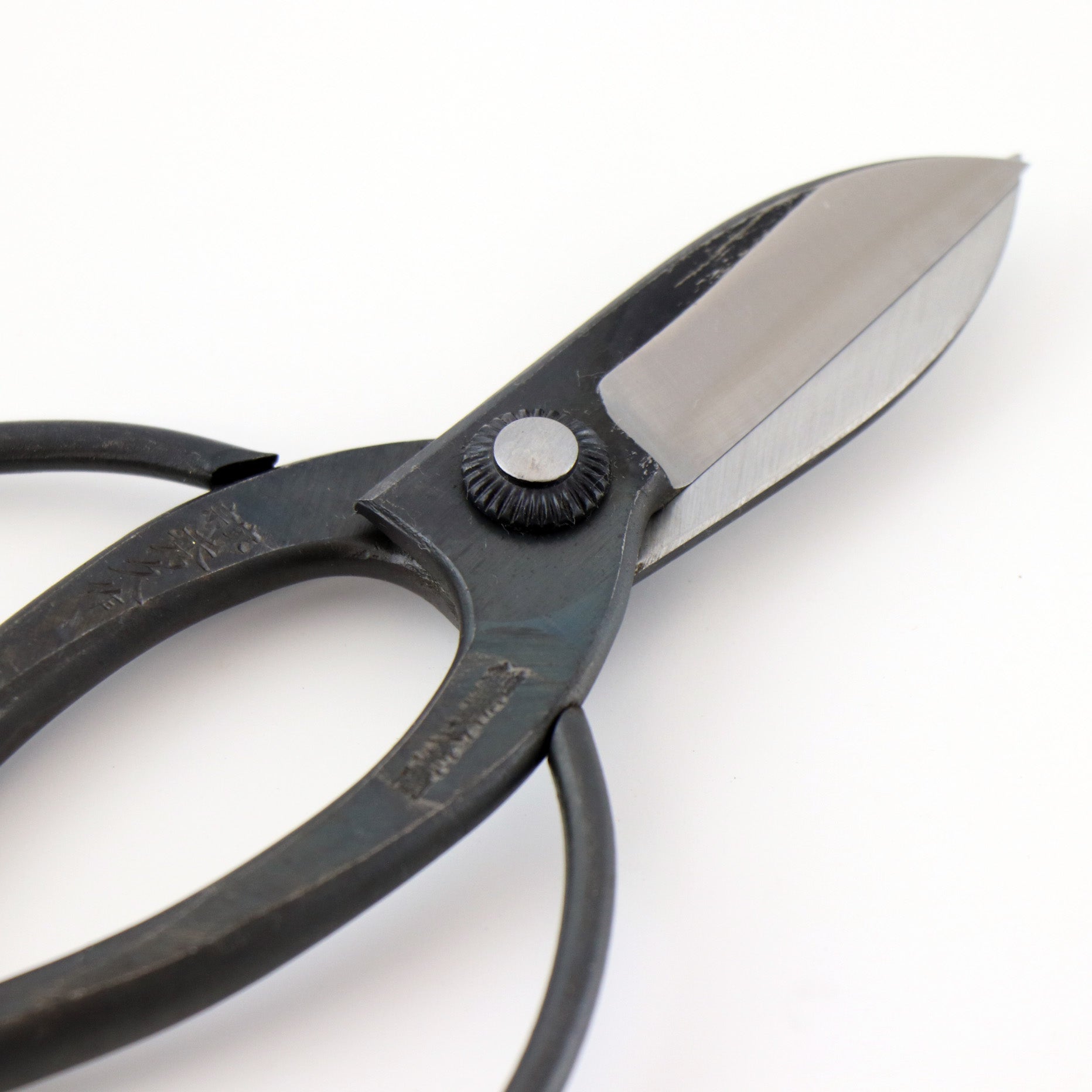
Both warabi-te and tsuru-te flower shears share the same blade design: a short, thick cutting edge — typically around 50 mm on a 165 mm tool.
A short blade is rigid. It enters the stem and stays in line, even against dense or woody material. A longer, thinner blade would flex and crush rather than cut.
Toyama Hamono’s T8 and T9 blades are hand-forged from high-carbon steel and finished to the same standard.
Why a clean cut matters
For most cut flowers, the quality of the cut affects how well the stem takes up water.
A stem is a bundle of microscopic tubes — vascular tissue — that draws water up to the bloom. When a stem is crushed or torn, those tubes can collapse, reducing water uptake.
A clean slice helps keep those tubes open. This is why flower shears are sharpened to take a fine edge, and why the blade is thick enough not to flex under pressure.
The goal is to cut, not squeeze.
For more on how forging compares to other manufacturing methods, see our article: Forged vs. Stamped Pruning Shears.
For Florists Who Work Across Materials

Multi-Purpose Pruning Shears
If your practice is rooted in Western floristry — weddings, installations, retail bouquets, event design — your daily work probably looks different from a single ikebana arrangement.
You move through dozens of stems in a session. You cut roses, foliage, woody branches, and soft herbaceous material with the same tool. You need speed without sacrificing cut quality, and your hands need to last through long working hours.
Traditional hana-basami excel at deliberate, controlled cuts — especially in ikebana. For high-volume work across mixed materials, many florists prefer a spring-loaded bypass tool that reduces hand fatigue over longer sessions.
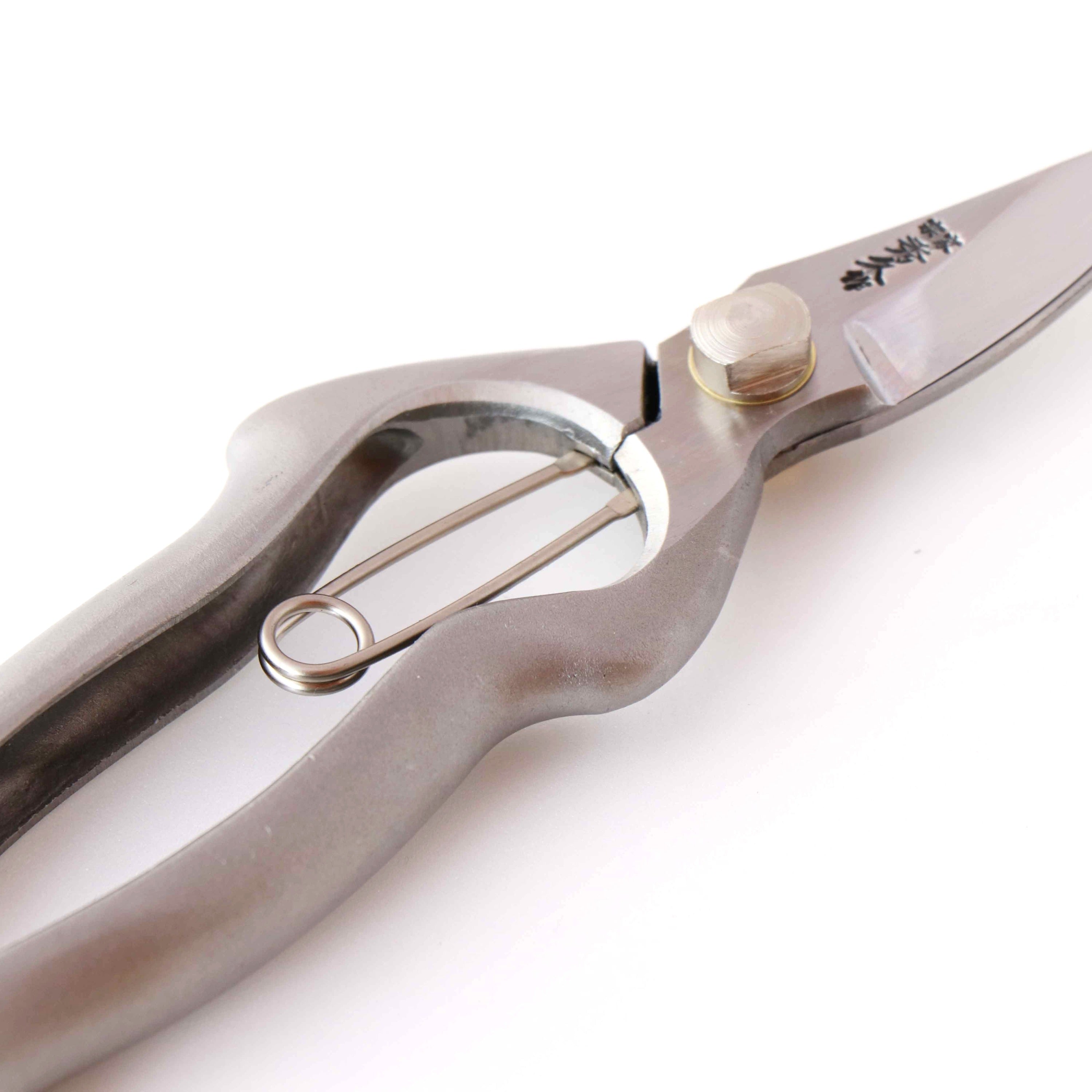
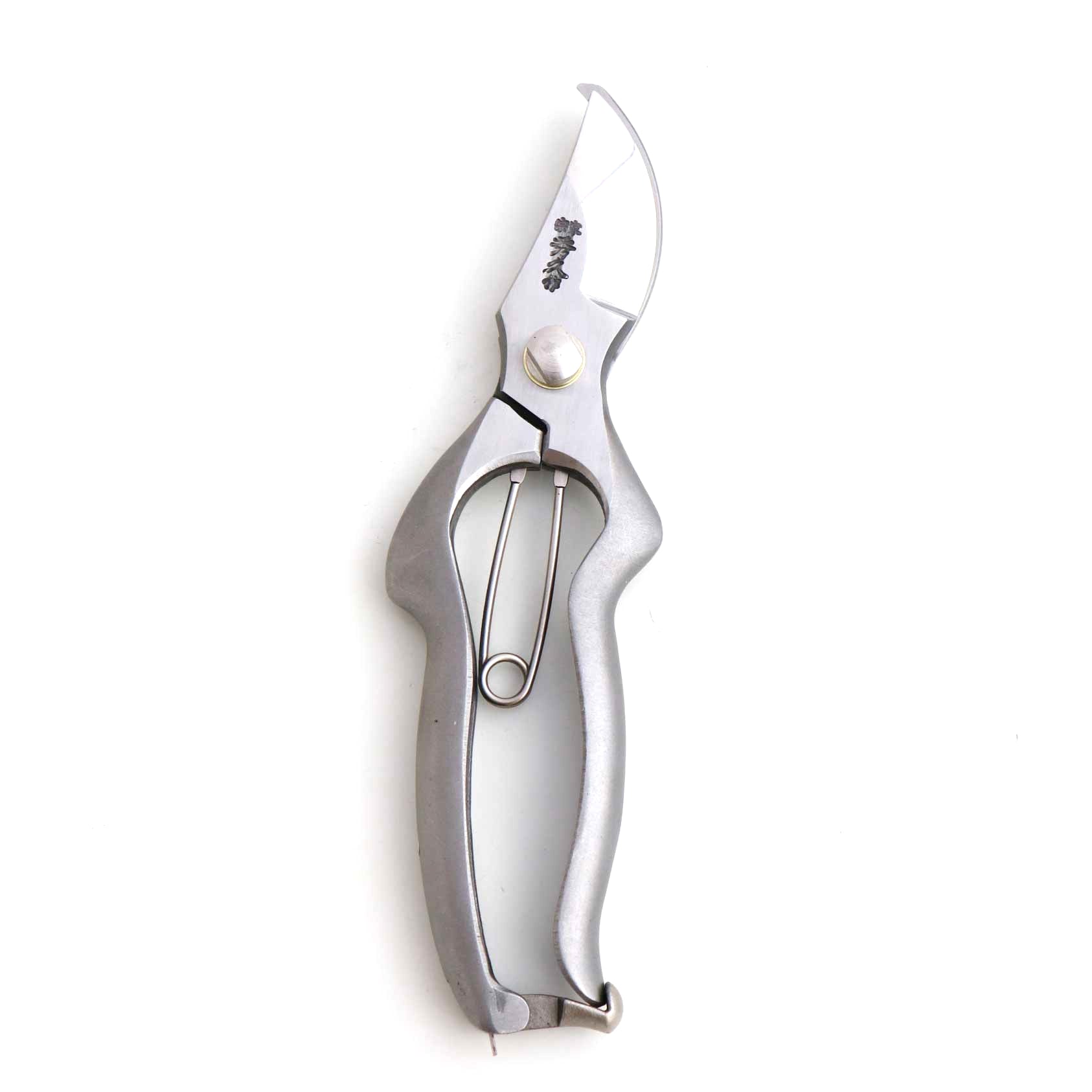
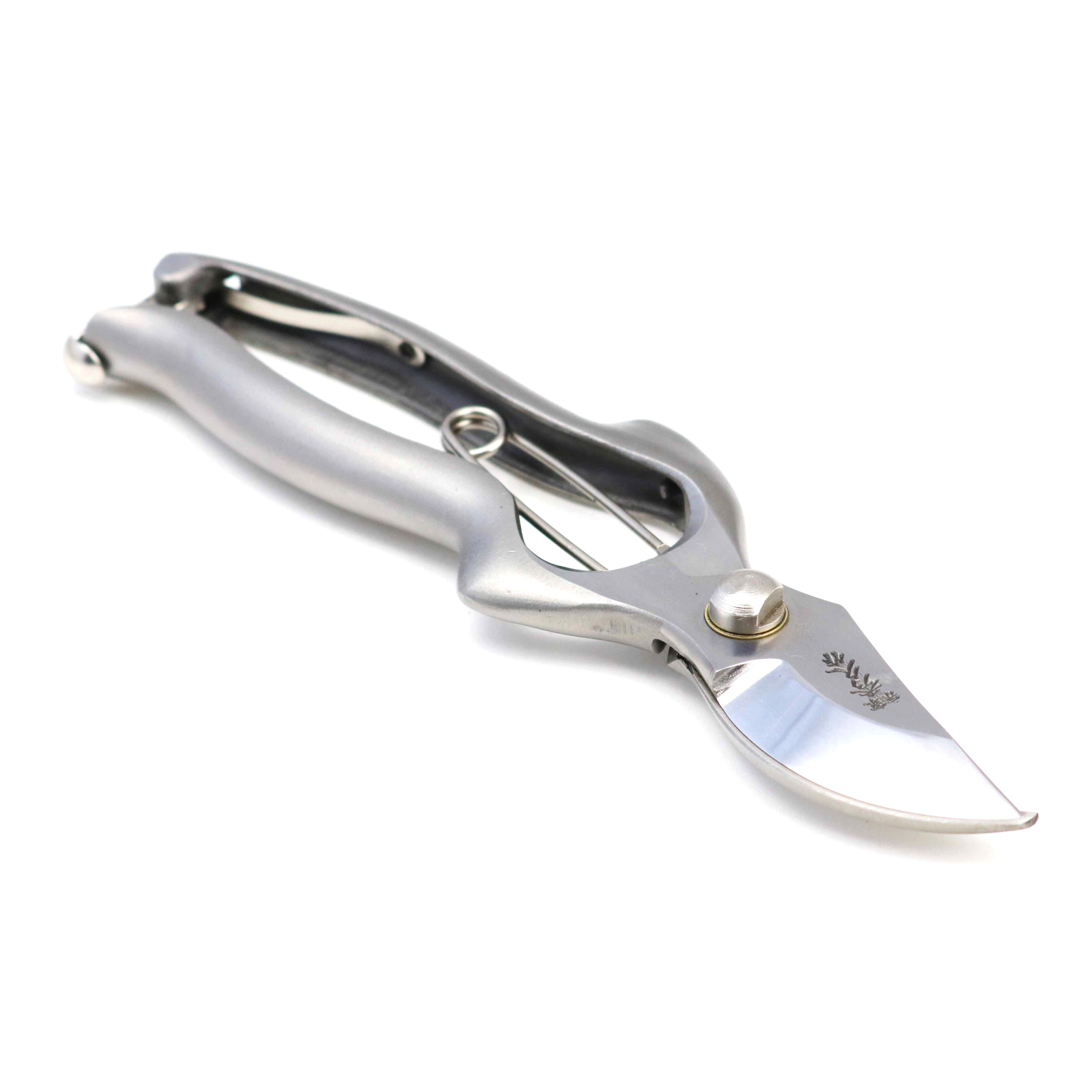
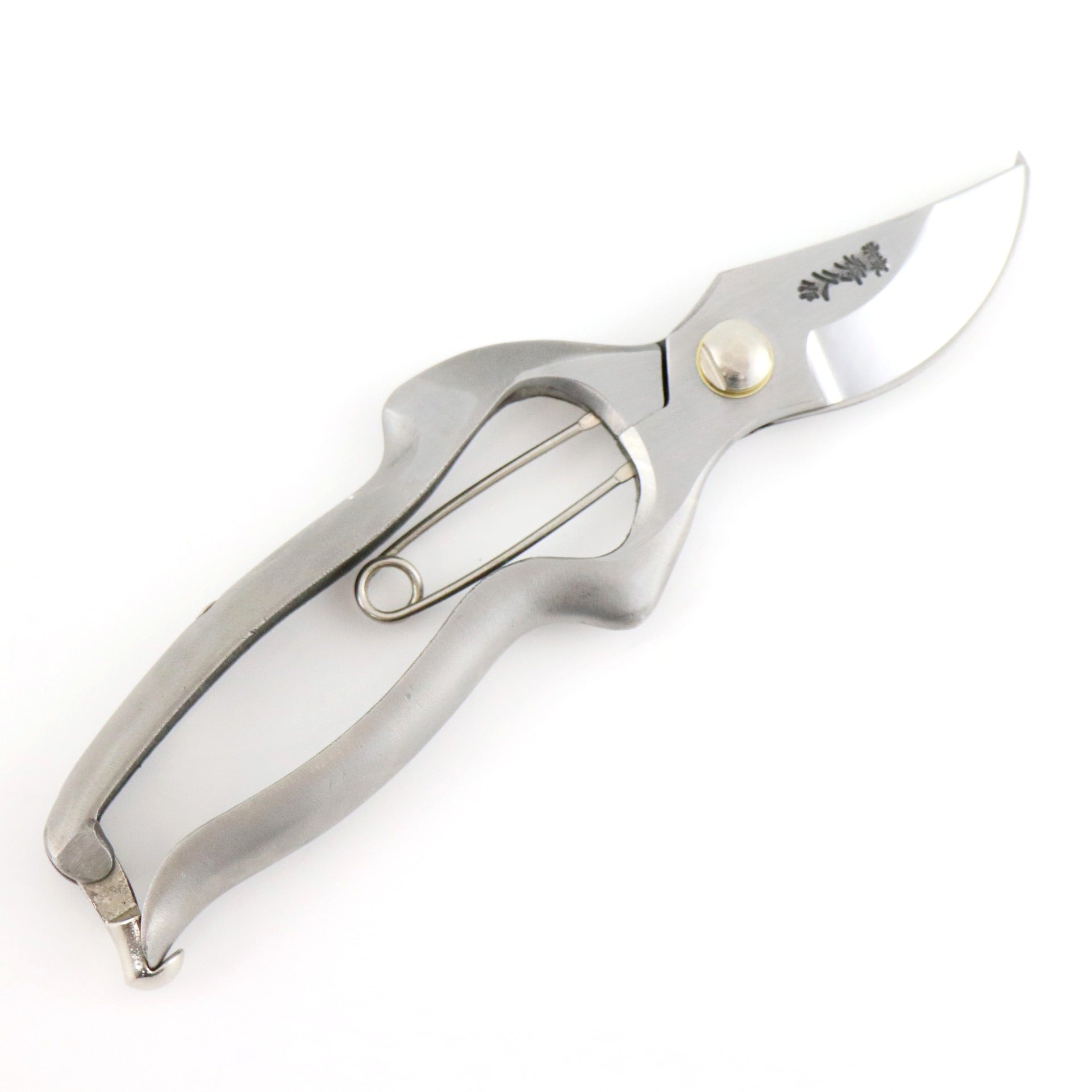
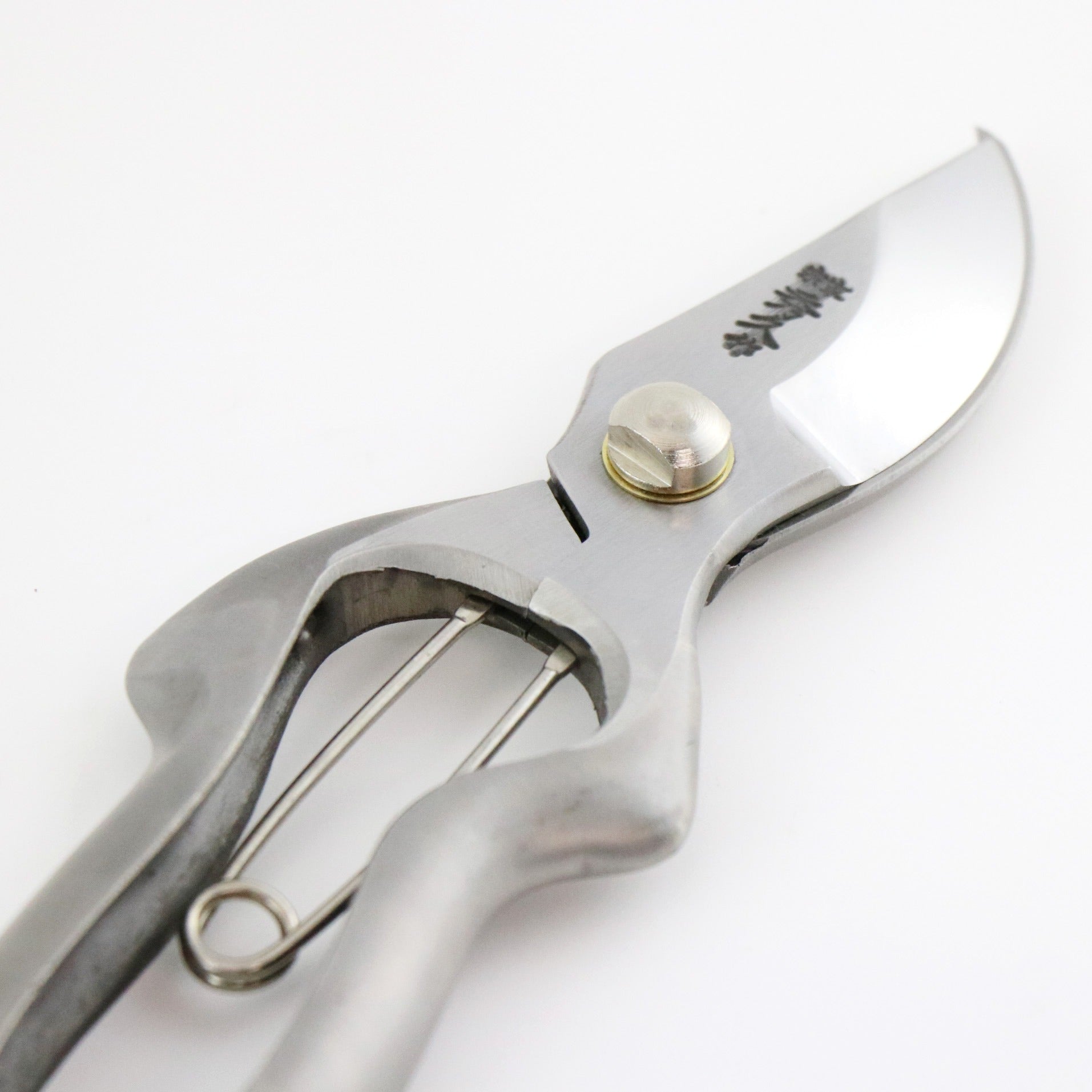
T19 and T519

Photo: T19 High-Carbon Steel Model, left; T519 Stainless Steel Model, right
T19 — Hand-forged high-carbon steel, with a standard metal grip. 190 mm overall length, 65 mm blade, approximately 190 g. The longer, slimmer blade and bypass action produce clean cuts on living material with less hand strain during repeated cutting.
T519 — The same design in forged stainless steel, offering rust resistance for florists who work in humid conditions or prefer lower-maintenance tools.
Both are designed for roses, flowers, plants, and garden material.
Neither is a replacement for T8 or T9. They are a different tool for a different kind of work.
Do not cut dry wood, bamboo, frozen branches, wire, artificial flowers, or plastic with these shears. They are made for living plant material.
Choosing Your Shears
|
T8 Warabi-te |
T9 Tsuru-te |
T19 / T519 Multi-Purpose |
|
|---|---|---|---|
|
Tool type |
Traditional flower shear |
Traditional flower shear |
Modern pruning shear |
|
Handle |
Curled, palm-held |
Looped, finger-through |
Standard Metal Grip, spring-loaded |
|
Blade |
50 mm, short and thick |
50 mm, short and thick |
65 mm, longer and slimmer |
|
Weight |
~150 g |
~210 g |
~190 g |
|
Length |
165 mm |
165 mm |
190 mm |
|
Material |
Forged high-carbon steel |
Forged high-carbon steel |
T19: high-carbon / T519: stainless |
|
Choose if… |
You prefer a lighter, palm-held grip |
You prefer a heavier, finger-through grip with a steadier feel |
You need a spring-loaded tool for repeated cuts across mixed materials |
Studying ikebana? Follow your teacher’s guidance on whether T8 or T9 suits your school and practice. The choice comes down to handle form, weight, and how the tool feels in your hand.
Looking for a traditional Japanese flower shear but not studying with a teacher? Try both handle forms if possible. The T8 is lighter and palm-held; the T9 is heavier and finger-through. Choose whichever sits more naturally in your hand.
Western florist, event designer, or gardener working across many materials? Multi-Purpose Pruning Shears are usually the most practical starting point — T19 for high-carbon steel, or T519 for stainless steel.
Care and Maintenance
After each use, wipe the blade clean — especially any sap or moisture — and store the shears in a dry place.
A thin coat of tool oil (camellia oil or sewing machine oil) protects the blade and helps prevent rust. All four models in this article are high-carbon steel (except the T519), so regular care is important.
For detailed sharpening and maintenance instructions, see our practical maintenance guide.
Frequently Asked Questions
What is the difference between Japanese flower shears and regular scissors?
Regular scissors are made for paper, fabric, or light household use. Japanese flower shears are made for living plant material. Their short, strong blades are designed to cut stems and small branches cleanly and with control.
What is the difference between warabi-te and tsuru-te?
The handle shape. Warabi-te has a curled handle tip; tsuru-te has a looped handle. On Toyama Hamono’s T8 and T9, the blade is the same — the cutting performance is identical. The difference is in how the tool sits in your hand, and how each form has been used in Japanese floral practice.
Which is better for ikebana — warabi-te or tsuru-te?
Neither is universally better. The choice depends on your school tradition, your teacher’s guidance, hand size, and personal preference. If you are new to ikebana and unsure, ask your instructor.
Can I use ikebana shears for general gardening?
Yes, within their cutting capacity. T8 and T9 work well for roses, herbaceous perennials, and light pruning. Do not use them on dry wood, wire, bamboo, artificial flowers, or any material beyond their stated capacity.
Are Multi-Purpose Pruning Shears a replacement for ikebana shears?
No. They are a modern tool for florists and gardeners who make repeated cuts across many materials. Traditional flower shears serve a different purpose — deliberate, controlled cutting shaped by tradition and practice. The two complement each other.
In Japanese floral work, a cut is not just preparation. It shapes how the material lives, moves, and holds its place in the arrangement.
Whether you choose a traditional flower shear or a spring-loaded pruning shear, the right tool should feel natural in your hand and respectful to the stem.
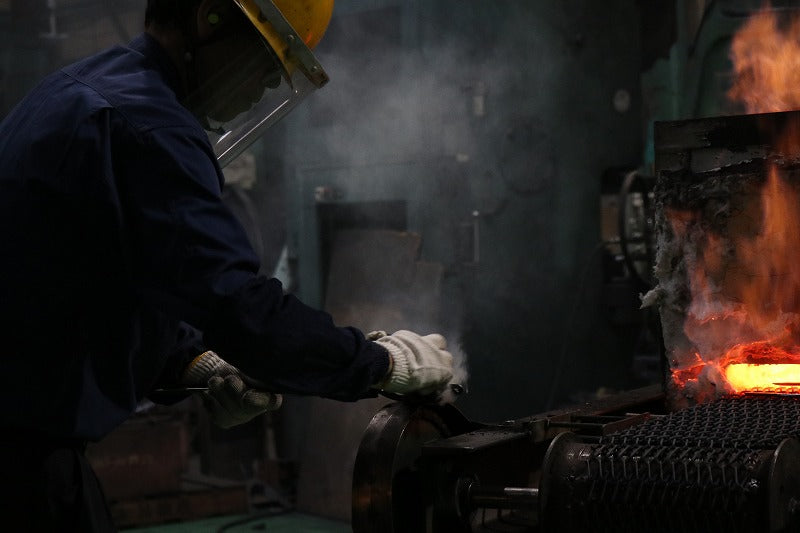
Toyama Hamono flower shears are made in Sanjo, Niigata, Japan, continuing a workshop tradition that dates back to 1861.
Explore Toyama Hamono’s Flower Shears →
Related Reading



Share:
What Are Garden Snips? Japanese Snips for Precision Pruning
What Are One-Handed Hedge Shears?