
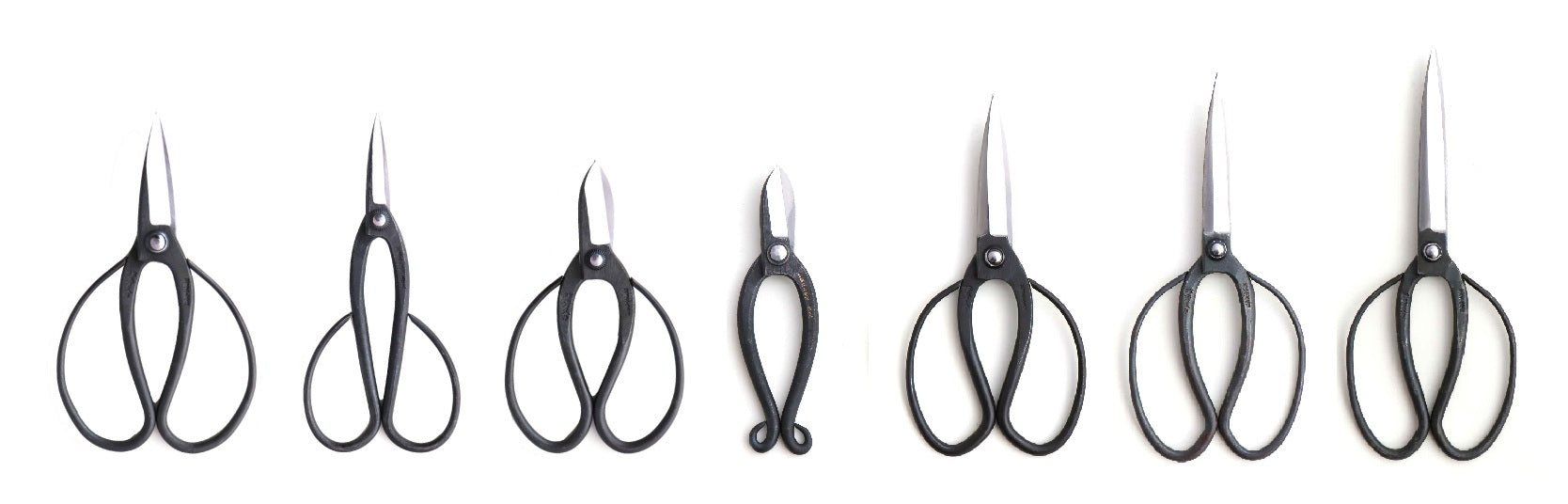
"They all look about the same — so what is the difference?"
That is one of the questions we hear most from Gardeners seeing Toyama Hamono shears for the first time.
Many of our traditional models share the same visual roots: a dark, fire-forged finish and a familiar loop-handle shape that sits naturally in the hand. But each pair of shears has a clear job. The intended use, blade length, handling, and even how the finished cut is achieved all vary from model to model.
This guide breaks down the differences between our core models in plain language. If you decide what you cut most often before you read any further, choosing becomes much easier.
Which Shears Match Which Job?

Choosing shears is not about finding the single "best" model. It is about finding the pair that fits the work you actually do.
- One pair for general garden work → T1 (Okubo garden shears)
- Bonsai and careful work around fine branches → T4-3 (bonsai shears)
- Cut flowers, ikebana (Japanese flower arranging), and floral design → T8 / T9 (ikebana shears)
- Leaf trimming and hedge shaping — flattening and refining surfaces → T5 / T6 / T7 (long-blade garden shears)
On our product pages, each model is clearly labeled by use and strengths. Below, we will walk through each one so you can see exactly where it shines.
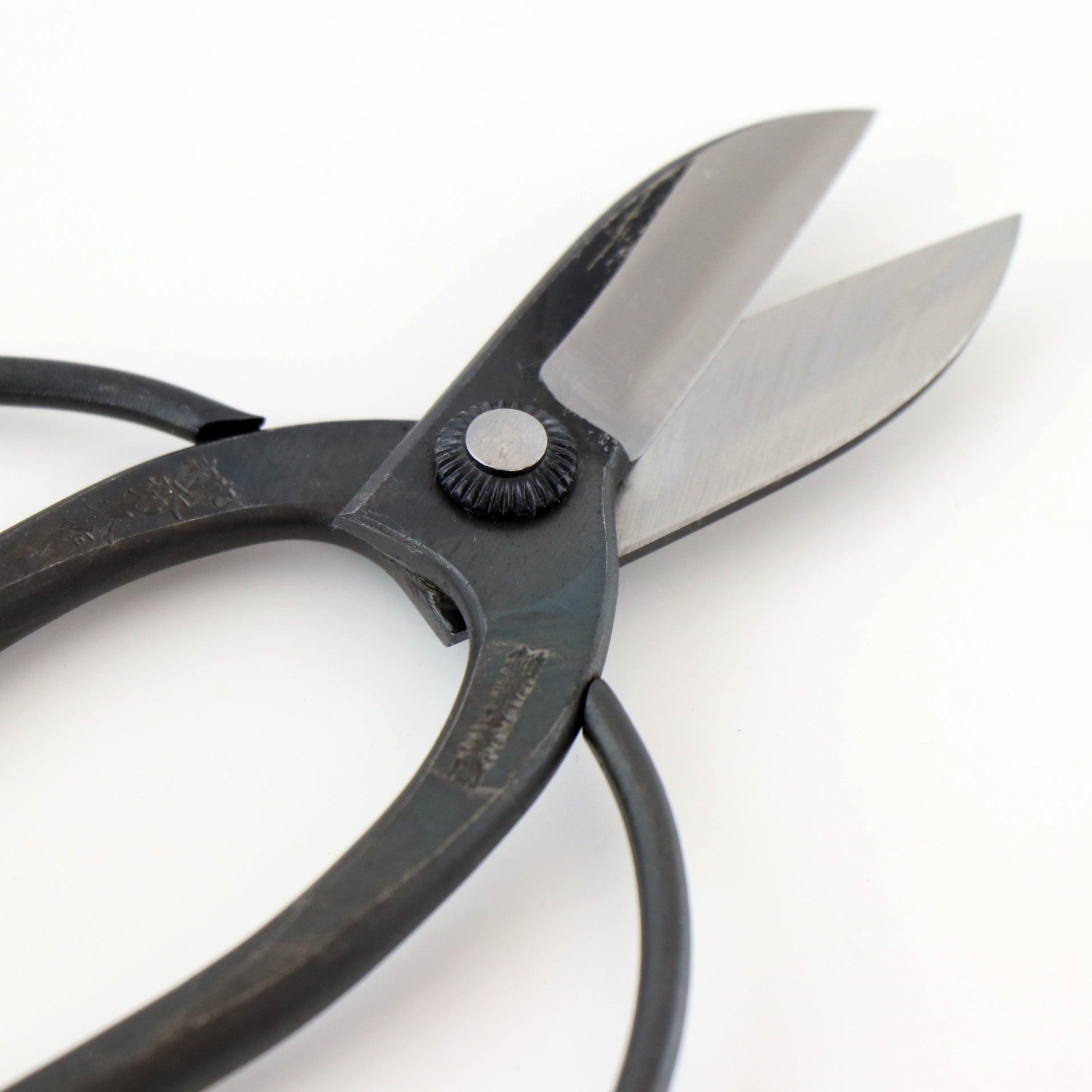
T1 Okubo Garden Shears: The All-Purpose Starting Point

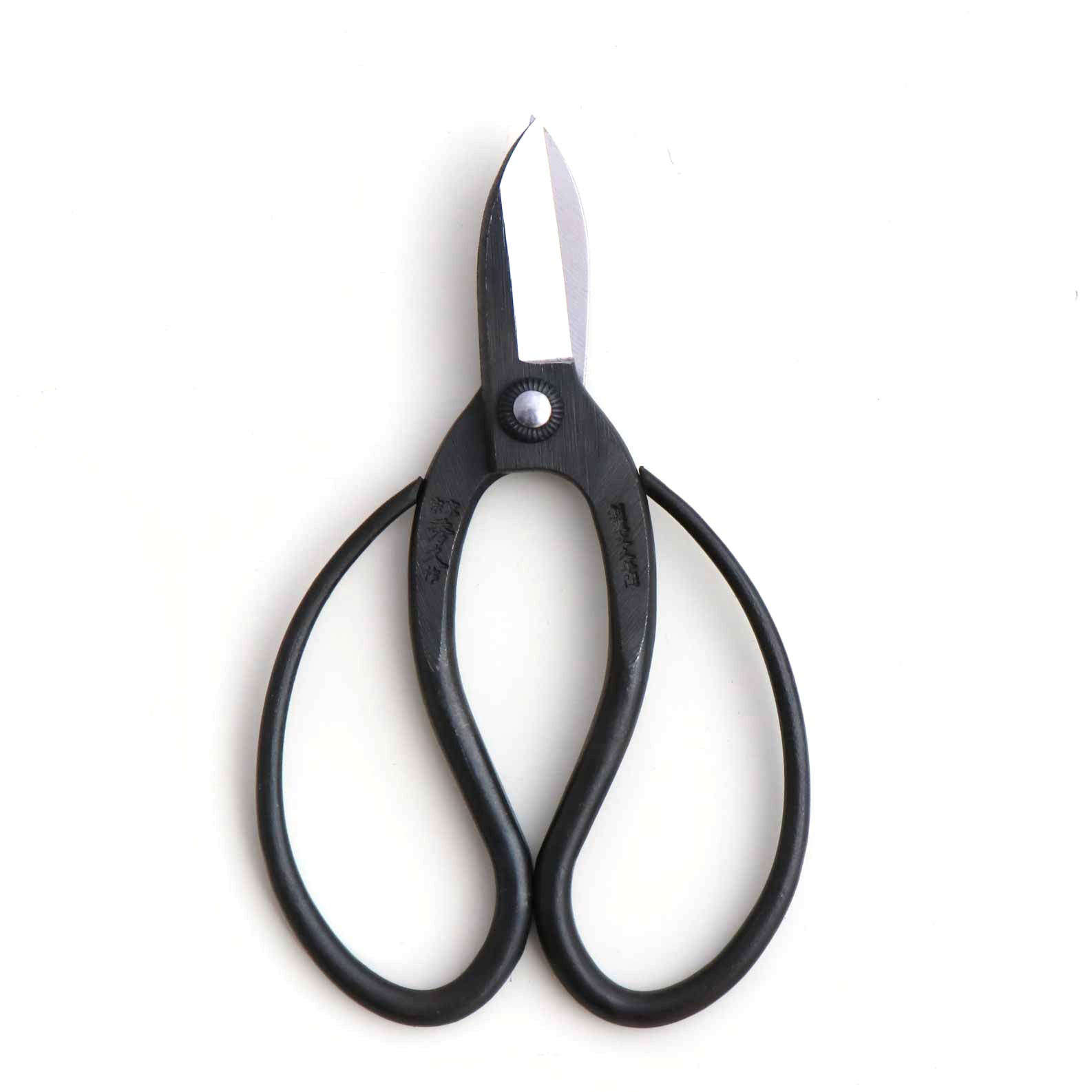
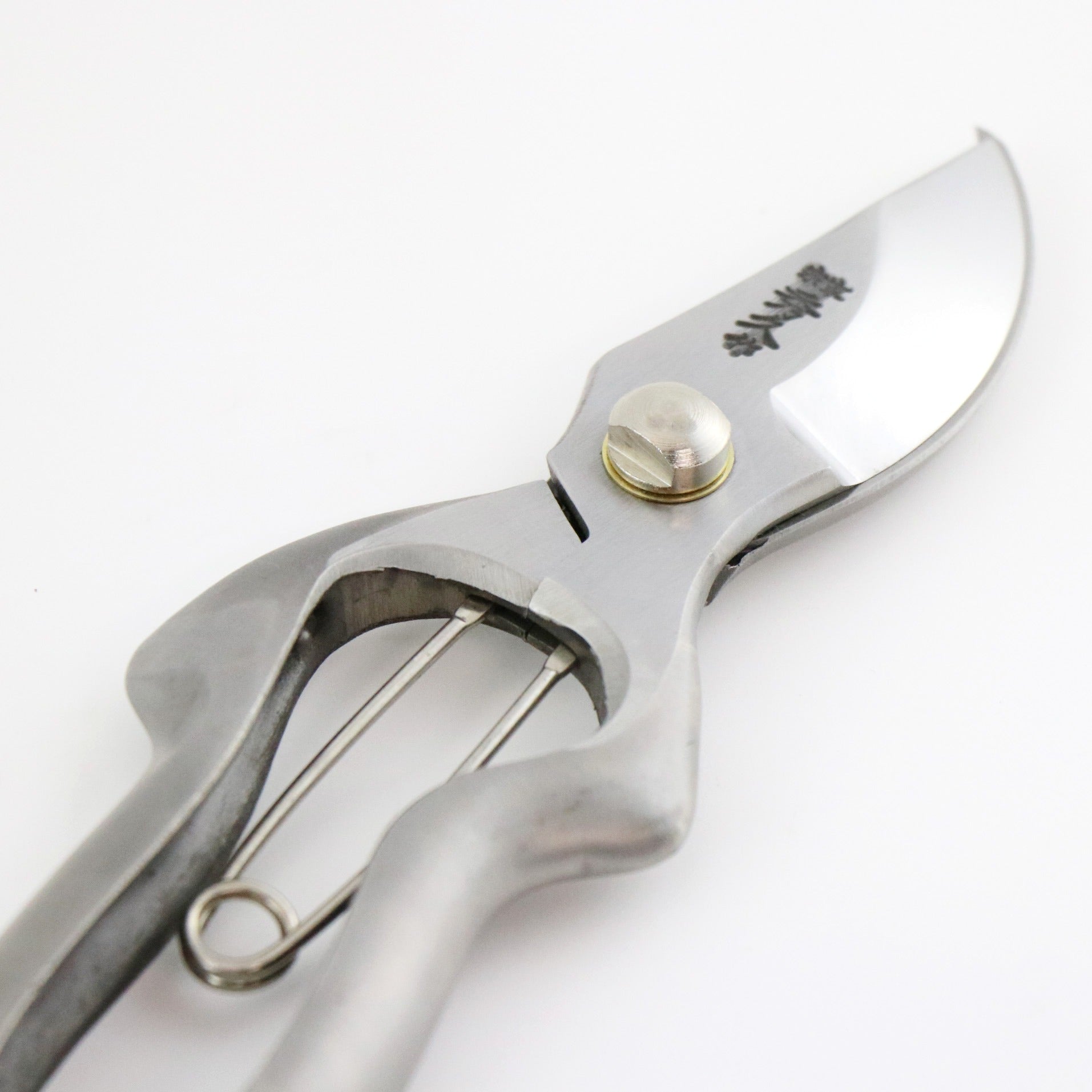
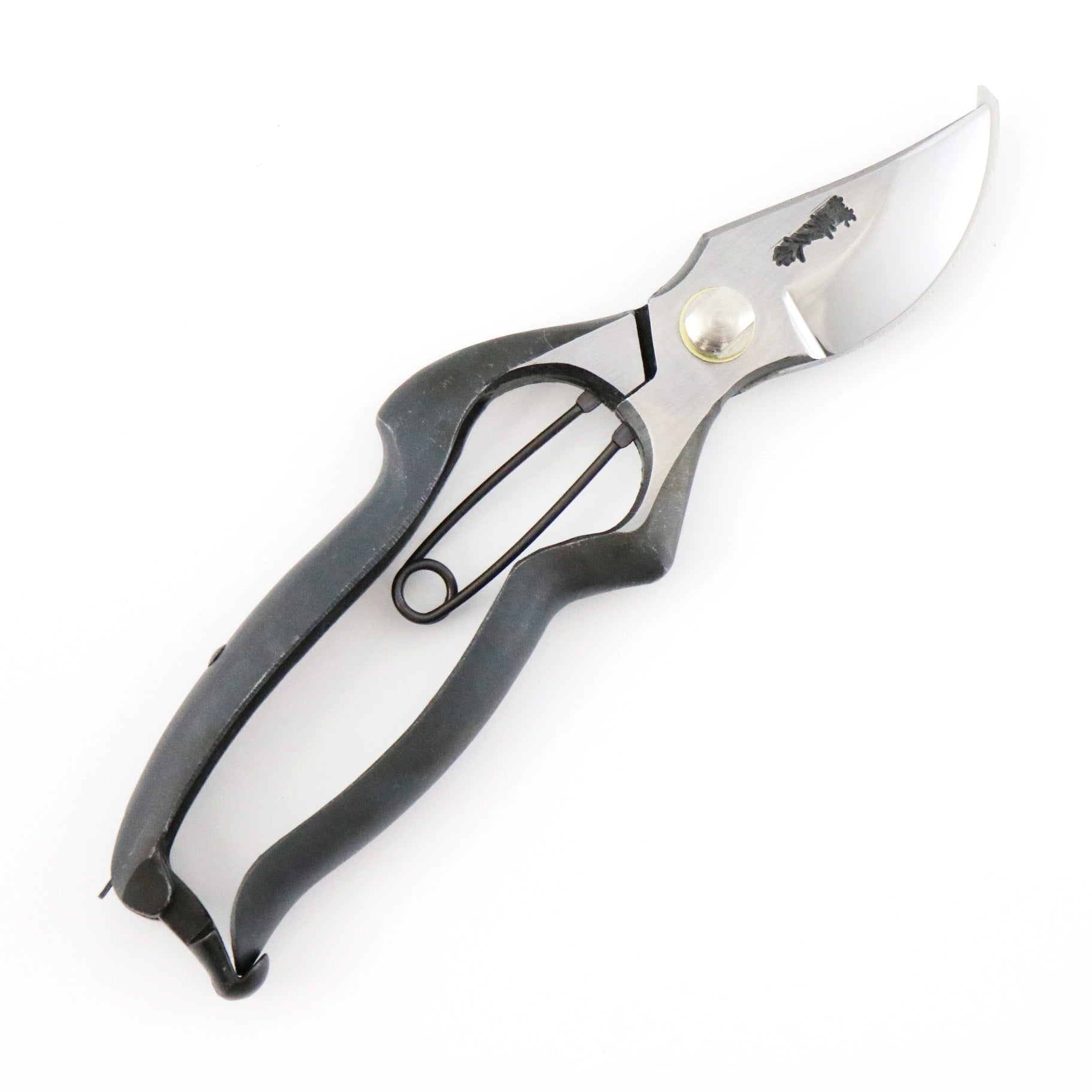
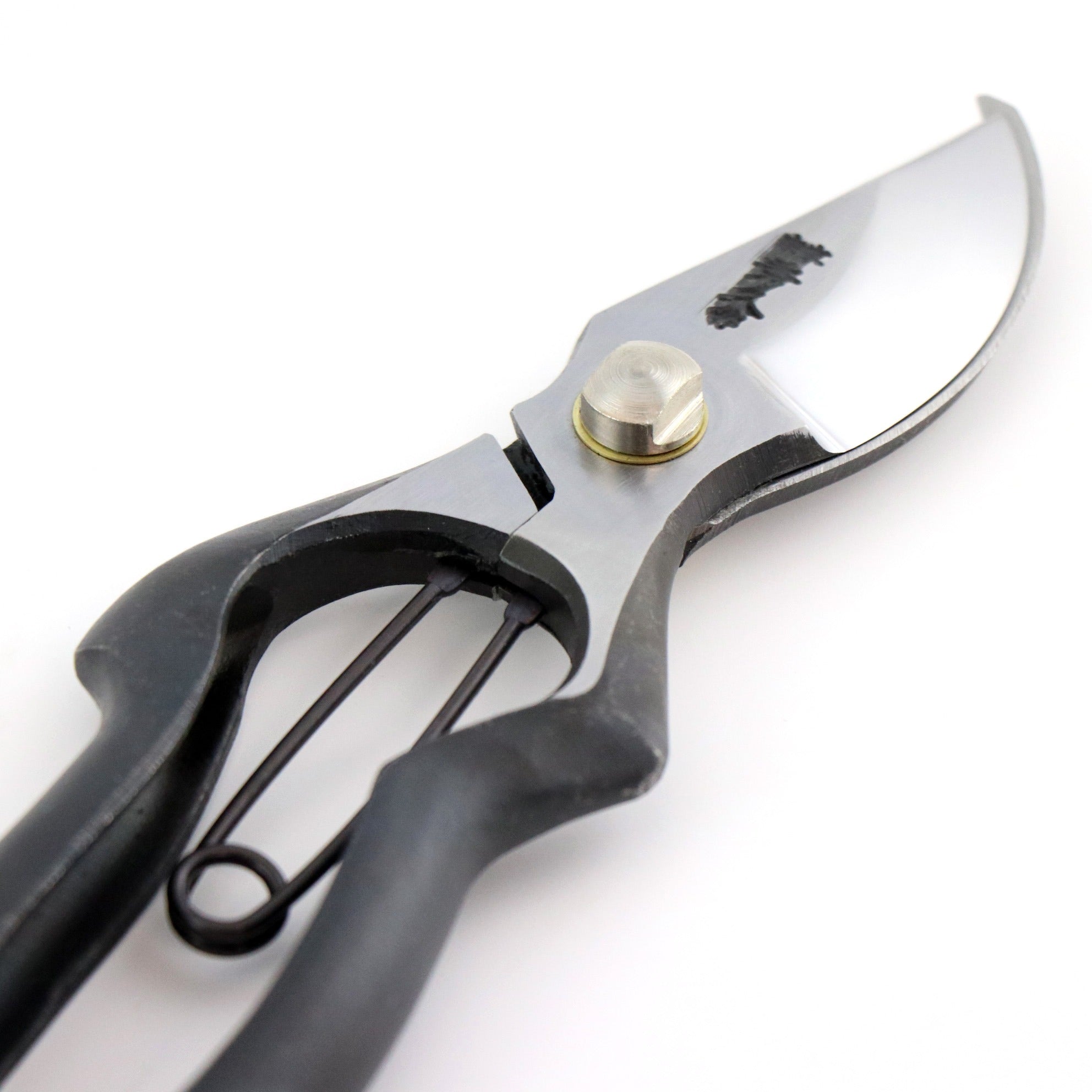
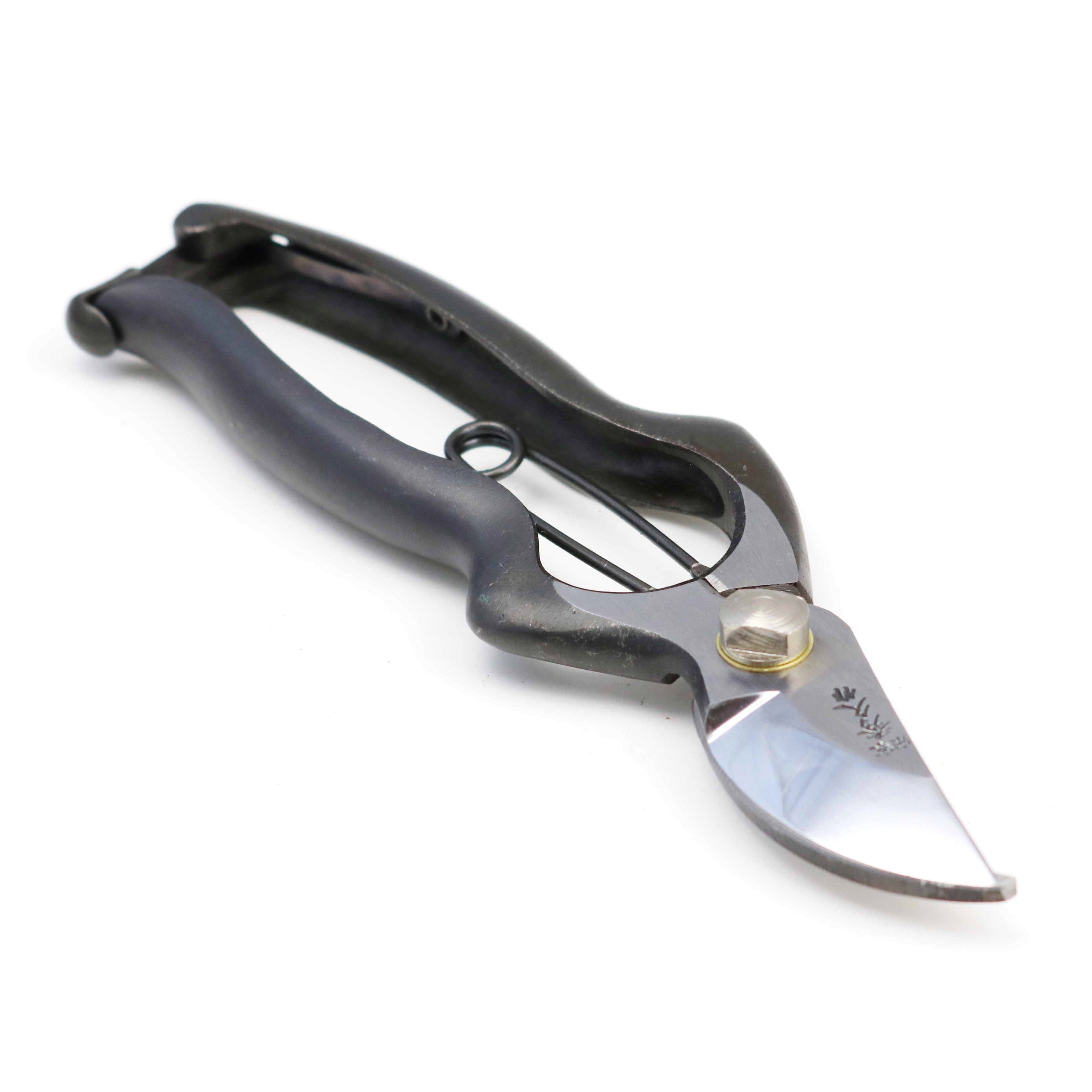
Photo: T1 Japanese Traditional Bonsai/Garden Shears "Okubo" Style
If you are choosing your first pair, start here.
The T1 is one of the easiest models in our lineup to use for a wide range of garden tasks. It is built for pruning, thinning, cut-backs, selective trimming, and even light shearing.
The blade is slim, so it slips into tight, busy growth without disturbing what you want to keep. The heel of the blade handles small twigs well. And because it covers so many everyday jobs, it is a strong first pair for any Gardener who wants one reliable tool to reach for.
Key specs
- Overall length: about 200 mm
- Blade length: about 70 mm
- Weight: about 215 g
- Max cutting capacity (green wood): about 8 mm at the heel, about 3 mm at the tip
- Steel: forged high-carbon steel (JIS)
T4-3 Bonsai Shears: Precision Where It Counts

Photo: T4-3 Japanese Traditional Bonsai Scissors Long Handle
For detailed work, when you want to cut exactly where you intend
The T4-3 is in our bonsai shears category. Compared to the T1, it has a slightly longer handle and a shorter, slimmer tip. That shape makes it easier to slip the blade between dense branches and place a precise cut without disturbing what you want to keep.
While it is designed with bonsai in mind, it also works well for general indoor and outdoor gardening — especially for light pruning and selective thinning of small branches. The T1 and T4 series point in a similar direction, but the T4 models feel more compact and tend to favor close-in control. There is also a stainless steel version.
This model is a good fit if you:
- Work inside the tight bonsai branch structure and need tip accuracy
- Often cut at one exact point in dense growth
- Prefer a slightly more compact feel than the T1
Key specs
- Overall length: about 200 mm
- Blade length: about 60 mm
- Weight: about 215 g
- Max cutting capacity (green wood): about 10 mm at the heel, about 5 mm at the tip
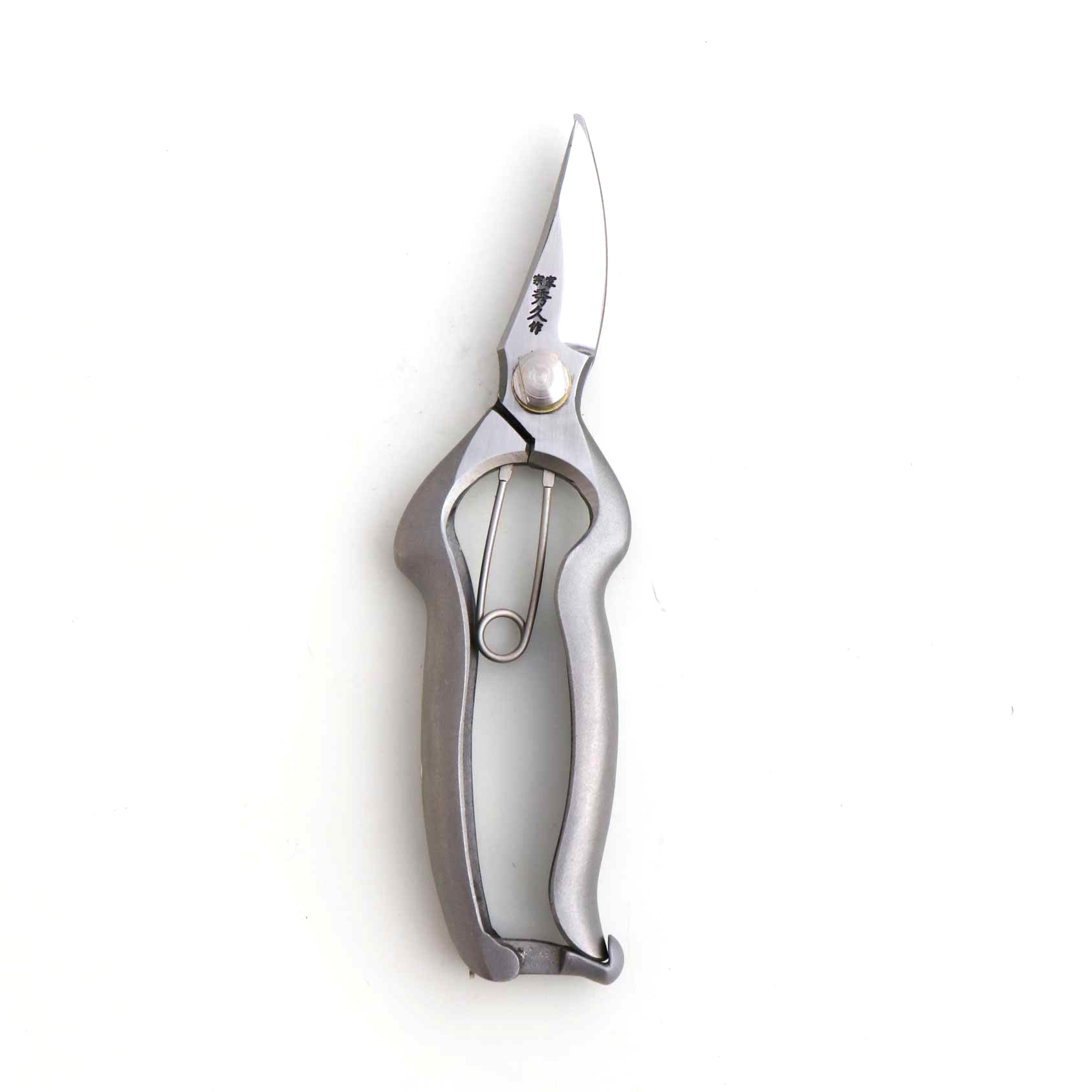
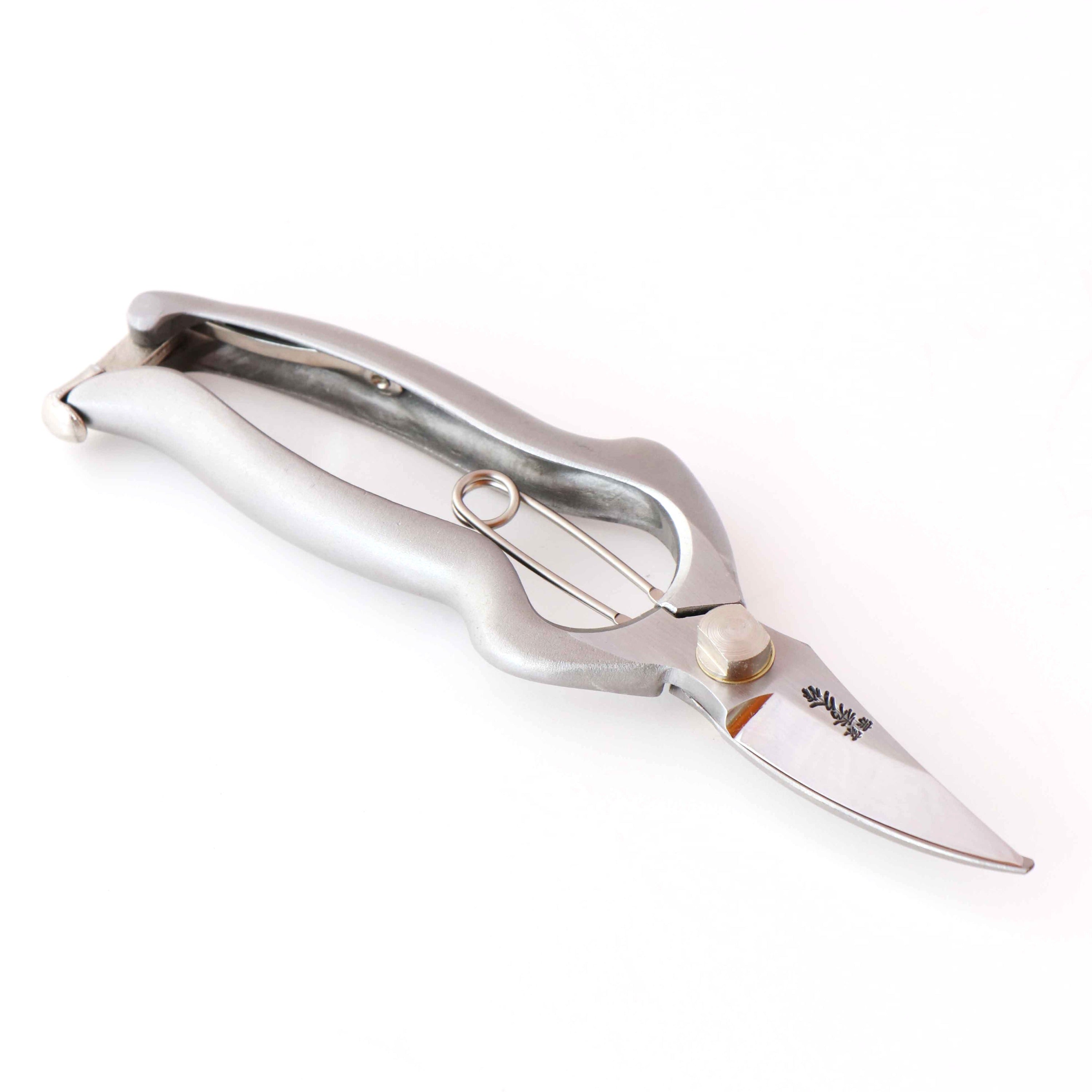
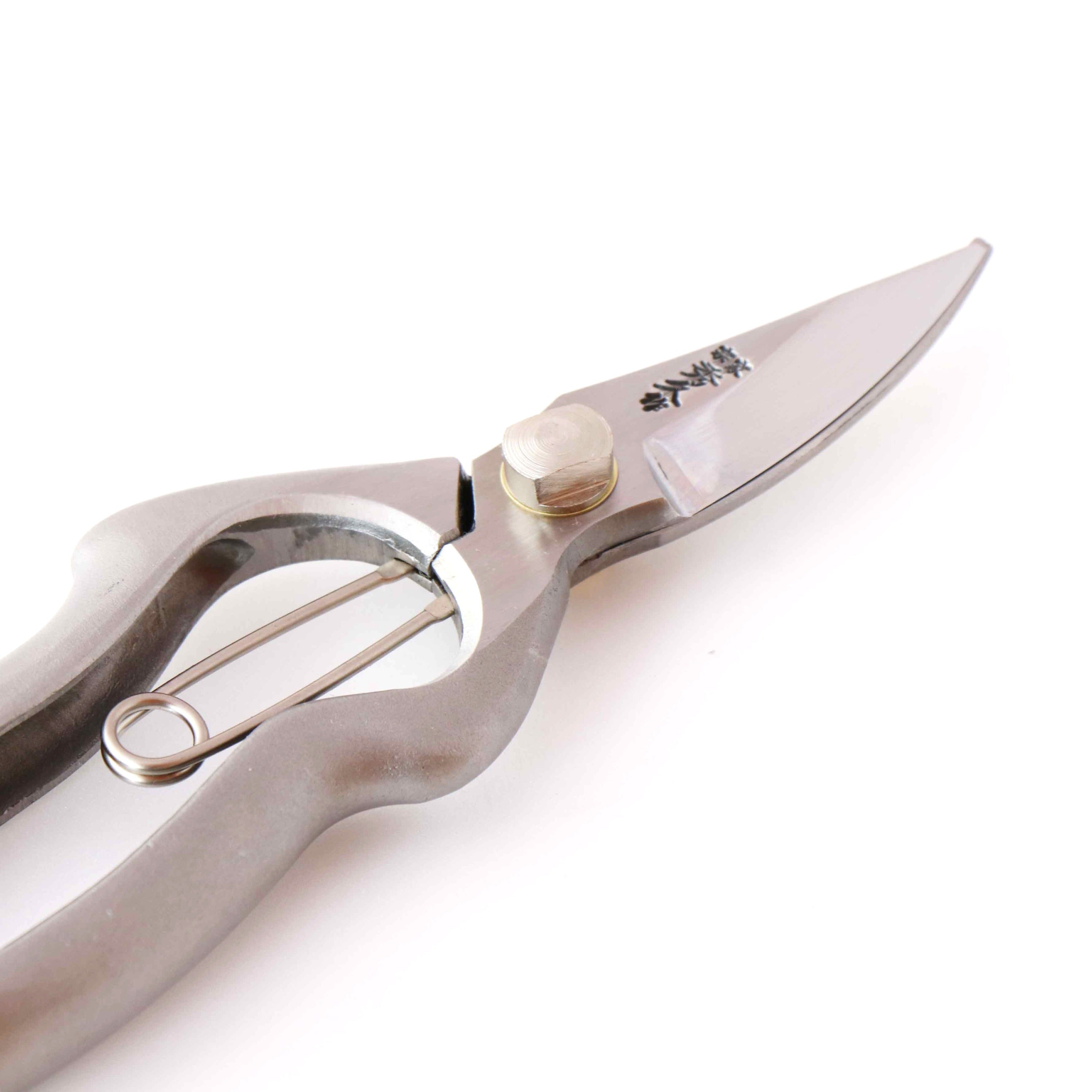
T8 and T9 Ikebana Shears: Built for Flowers and Floral Design

Left: T8 Traditional Japanese Ikebana Floral Shears "Warabi-te" Grip
Right:T9 Traditional Japanese Ikebana Floral Shears Looped Grip
For cut flowers, ikebana, and floral arrangement
The T8 and T9 are our ikebana shears (flower scissors). They are especially well-suited for fresh flowers and floral arrangements, including indoor work and houseplant care.
Both models share the same overall length (about 165 mm), blade length (about 50 mm), and cutting capacity (about 10 mm in green wood, about 5 mm at the tip). The difference comes down to how they feel in your hand.
What Is the Difference between the T8 and T9?
Traditional Japanese ikebana shears come in different handle styles depending on the school of ikebana and the Artisan's preference. Our two models reflect that tradition:
T8 (Warabi-te handle) — About 150 g. This style has no finger loops. It is lighter in the hand and feels more open, but it takes a bit of getting used to if you have only ever used loop handles.
T9 (Loop handle) — About 200 g. Same purpose, but with a heavier, steadier feel that many Florists find reassuring during long sessions.
Ikebana shears are the kind of tool where personal preference matters most — especially if you work long sessions or have smaller hands. If you are choosing between T8 and T9, start with two simple questions: Do you prefer a lighter tool? And which handle shape feels natural to you?
T5, T6, and T7 Long-Blade Garden Shears: For Shaping and Finishing

Left: T5 Japanese Traditional Garden Shears ”Okubo” Style 105mm Blade
Middle: T6 Japanese Traditional Garden Shears ”Okubo” Style 120mm Blade
Right: T7 Japanese Traditional Garden Shears ”Okubo” Style 150mm Blade
For leaf trimming and shearing — when you want to refine a surface
The T5, T6, and T7 are based on the Okubo-style shape but with longer blades. All three are designed for leaf trimming, shearing, and finishing work — jobs where you are refining the outer line of a plant rather than cutting individual branches.
These models shine when you are shaping and smoothing. They are not meant for forcing through hard, thick material.
How Do the Three Long-Blade Models Compare?
The main difference between them is blade length. A longer blade covers more surface per stroke, so the right choice depends on how much ground you need to cover.
T5 (105 mm blade) — Overall length about 230 mm, weight about 235 g. A friendly entry point for leaf trimming and light shearing.
T6 (120 mm blade) — Overall length about 250 mm, weight about 250 g. Covers a wider surface more efficiently.
T7 (150 mm blade) — Overall length about 275 mm, weight about 280 g. Best when you want a longer blade for committed shearing work on larger plants.
All three have a cutting capacity guideline of about 10 mm in green wood and about 3 mm at the tip. Weight varies slightly from pair to pair because each is handmade.
How Do I Choose the Right Japanese Garden Shears?
If you are still not sure which model to pick, answer these five questions. They will narrow it down quickly.
1. What do I cut most often?
- General garden trees and shrubs → T1
- Bonsai and fine branch work → T4-3
- Cut flowers and ikebana → T8 or T9
- Leaf trimming and hedge shaping → T5, T6, or T7
2. Where do I cut?
- Inside dense growth, deeper in the plant → T1 or T4-3
- Broad outer surfaces, shaping clean lines → T5, T6, or T7
3. How long are my sessions?
For short sessions, preference matters most. For long sessions, weight matters more than most Gardeners expect — especially when comparing the T8 (about 150 g) and the T9 (about 200 g).
4. How thick is the material?
The models above are mainly for thin to small branches. If your main job involves thicker branches, consider our pruning shears category instead. Browse pruning shears →
5. What kind of finish am I aiming for?
- Shaping branch by branch, one cut at a time → T1 or T4-3
- Refining a surface line, creating a clean outline → T5, T6, or T7
Once you think in terms of the finish you want, the "they all look the same" problem disappears.
What Do All Toyama Hamono Shears Have in Common?
Even with the differences above, our shears share a few things that make them easy to keep using for years:
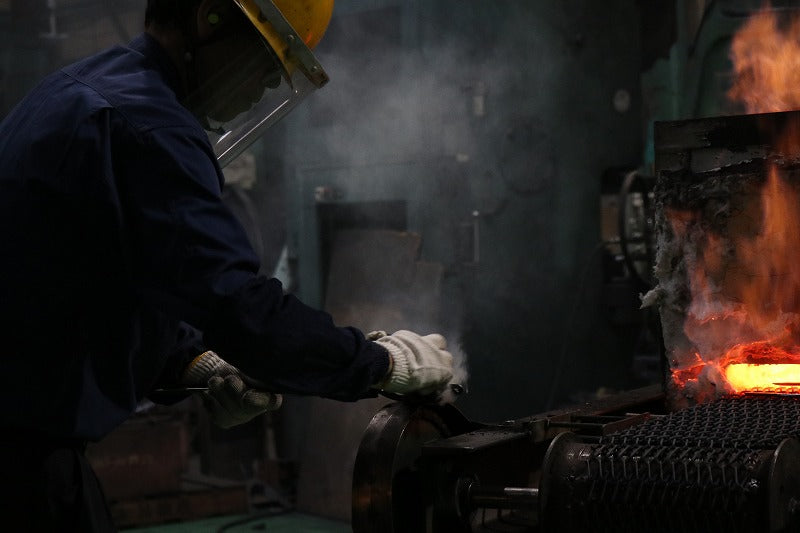
- Hand-forged in Sanjo, a city in Niigata Prefecture known for its metalworking heritage, using tanzo (traditional forging) — the same methods once used to forge Katana
- A sharp edge that helps plants heal cleanly after the cut
- A dark, silk finish (a distinctive baked-on surface created by heating iron at a specific temperature without chemicals)
- Small, natural variations in size and weight occur because each pair is shaped by hand
- Every purchase includes a free blade-sharpening coupon, and we ship every order free of charge
These are tools built to be lifelong companions — not something to replace next season.
Looking for a gift? Traditional Japanese garden shears make a thoughtful and personal present for a birthday, holiday, or gardening milestone. We also offer custom engraving — your recipient's name, hand-etched onto the tool.
Choose by Your Work, Not by the Shape
Even when the silhouettes look similar, the roles are clearly different:
- One versatile pair for general gardening → T1 Okubo garden shears
- Careful bonsai and fine branch control → T4-3 bonsai shears
- Cut flowers and ikebana → T8 or T9 ikebana shears
- Leaf trimming and shaping lines → T5, T6, or T7 long-blade garden shears
The best choice is not the one that looks right on the table. It is the one that matches what you do most often.
If you are not sure which model fits your work, tell us what you cut and how you use your shears. We will help you find the right pair.
Contact us




Share:
Forged vs. Stamped Pruning Shears: What's the Difference?
How to Choose the Right Grip for Your Pruning Shears