
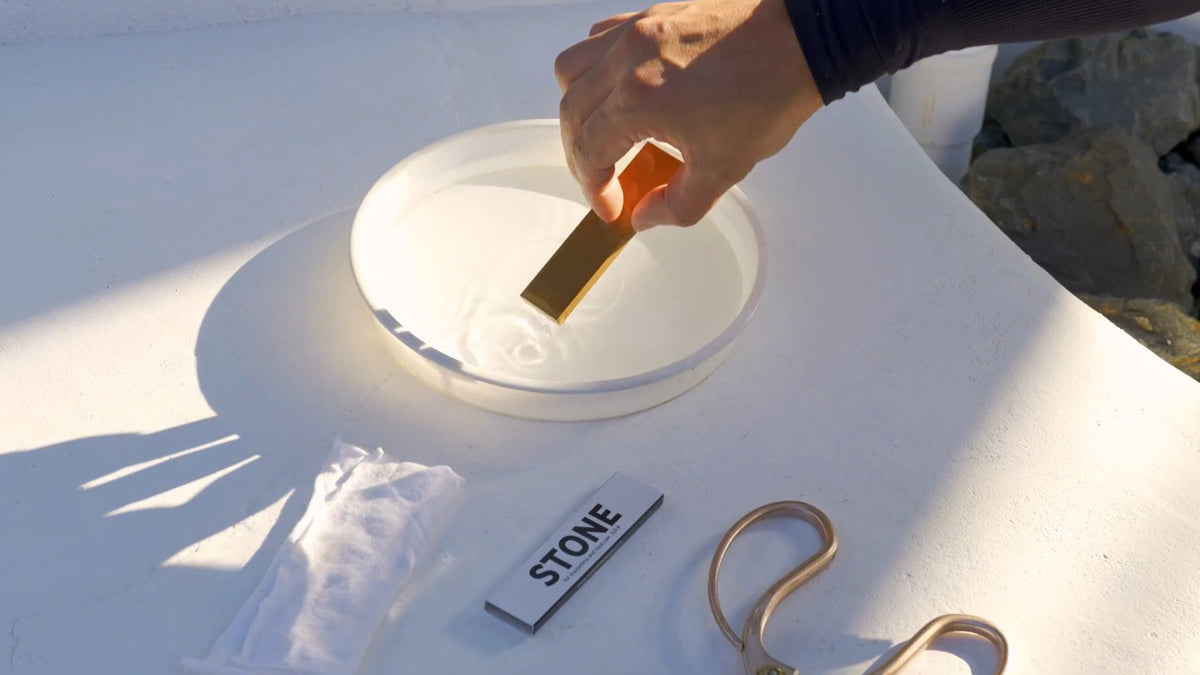
When your pruning shears start to feel a little dull, reaching for a whetstone is a natural first instinct. But before you do, there is something worth checking.
Sap, residue, and light surface rust can make blades feel heavier and less responsive — even when the edge itself is still sound. Start by wiping down the blades with a cleaning eraser. Unlike a whetstone, a cleaning eraser is a solid abrasive bar made for blade maintenance. It lifts oxidation, sap, and surface rust without reshaping the blade. Often, this step alone is enough to restore the cutting feel you are looking for. Sharpening, if it is needed at all, comes after.
Before diving in, three principles guide everything here:
-
Sharpen only the outer bevel, following the original angle
-
Clean the inner face with an eraser — never a whetstone
-
Work with the shear assembled, without disassembly
Keep these in mind as you read, and the rest will follow.
Why Sharpness in Garden Shears Is About More Than the Edge
A knife cuts by driving a single blade through material. Garden shears work differently. Two blades cross and slide past each other, cutting progressively from the pivot toward the tip. Because of this, how sharp the edge feels matters less than where and how the two blades make contact with each other.
A well-made pair of Japanese pruning shears enters a branch cleanly, cuts without resistance, and leaves a smooth finish on the stem. The edge is only part of it. What matters just as much is the geometry of the whole shear — and once you understand that, the rest of shear care falls into place.
Uratogi — The Craft Behind the Cut

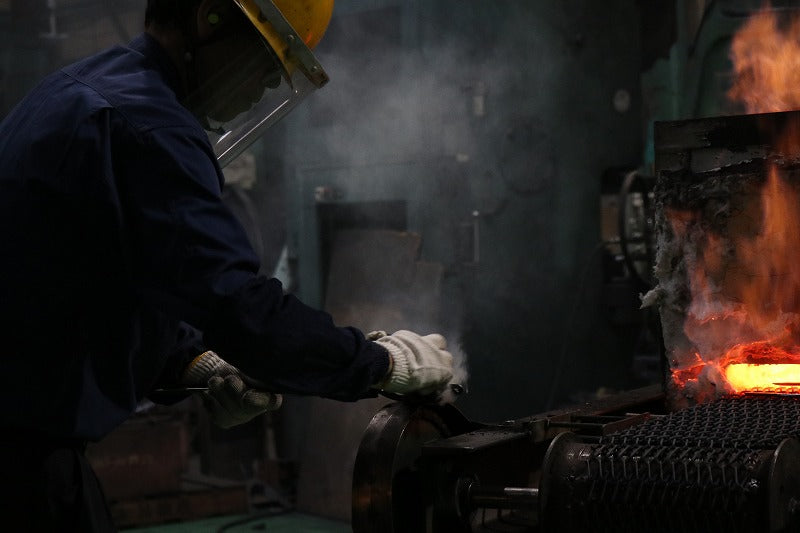
We have been forging shears in Sanjo, a city in Niigata Prefecture known for its metalworking heritage, since 1861. Five generations have worked in this same forge — from our founder Ryumatsu to the current head, Hidenobu Toyama. That continuity draws from the same craft tradition that has shaped Sanjo's metalworkers for centuries.
At the heart of every Toyama Hamono shear is a technique called uratogi (裏研ぎ) — the hand-finishing of the inner blade face. In Japanese scissor-making, there is a saying: hasami wa ura de kiru — the shears cut with the back. The inner face plays a larger role in cutting performance than most gardeners expect.
The uratogi technique has been carried through every one of those generations, hand to hand. Every blade still passes through a craftsperson's hands before it leaves Sanjo.
The Urasuki — Why the Inner Face Works the Way It Does

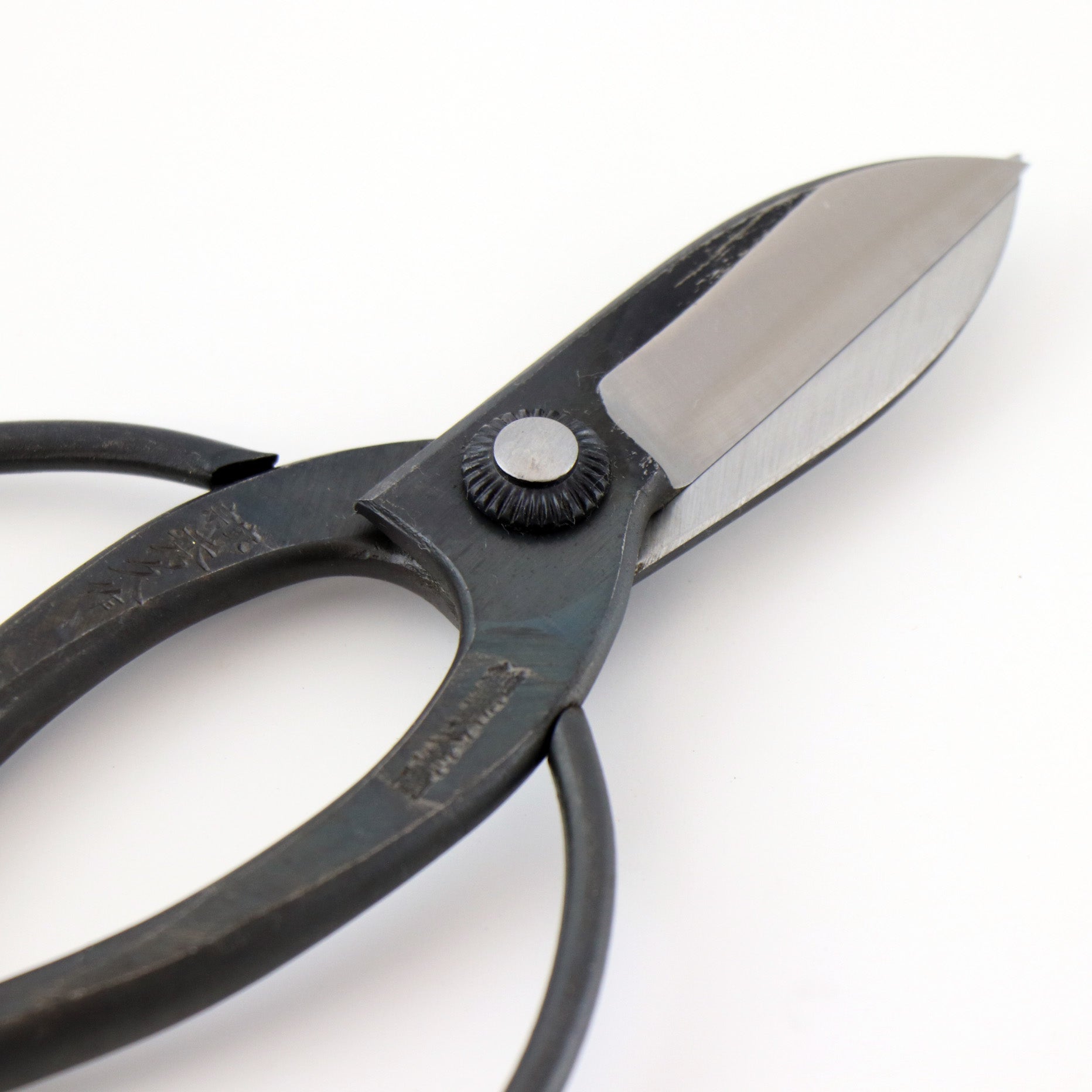
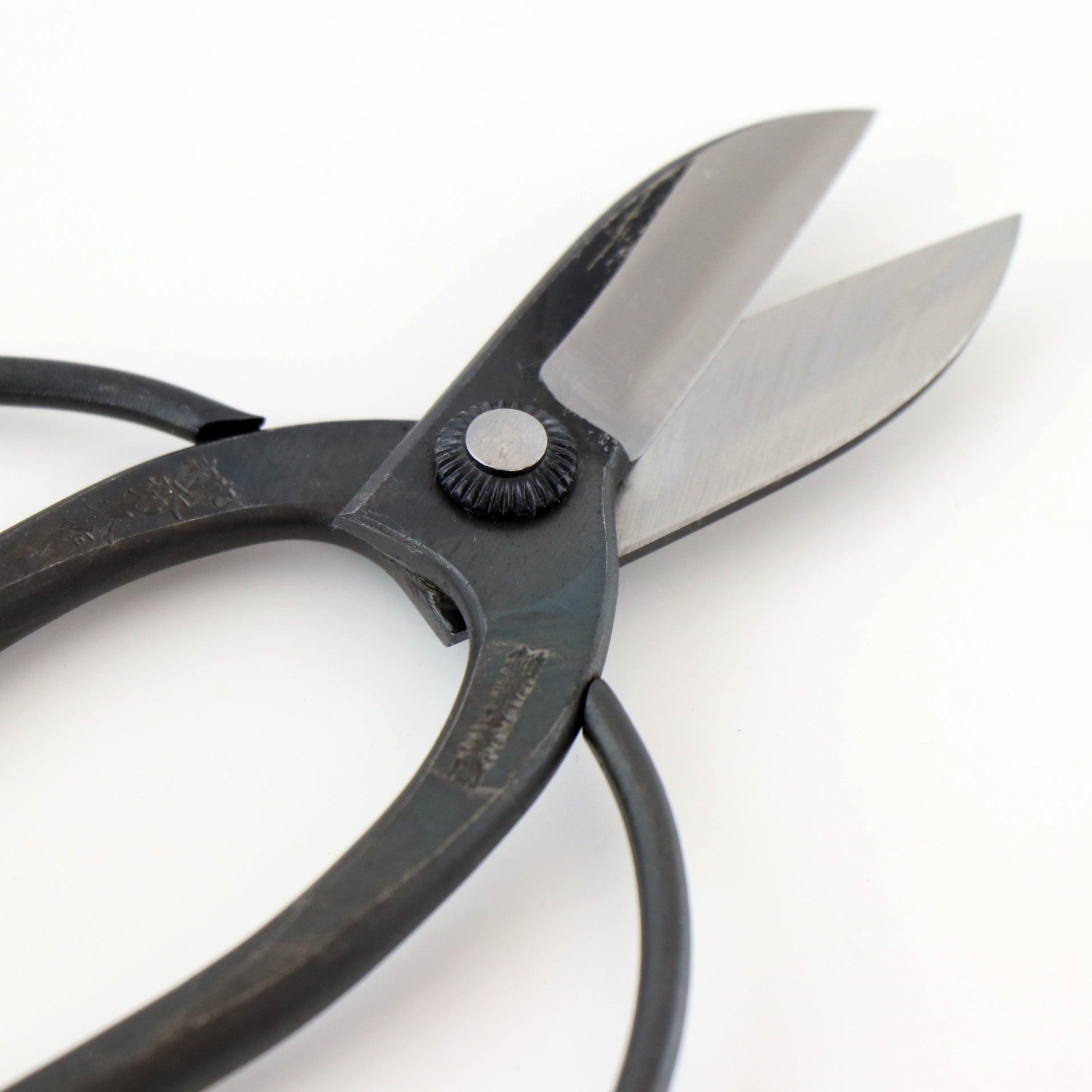
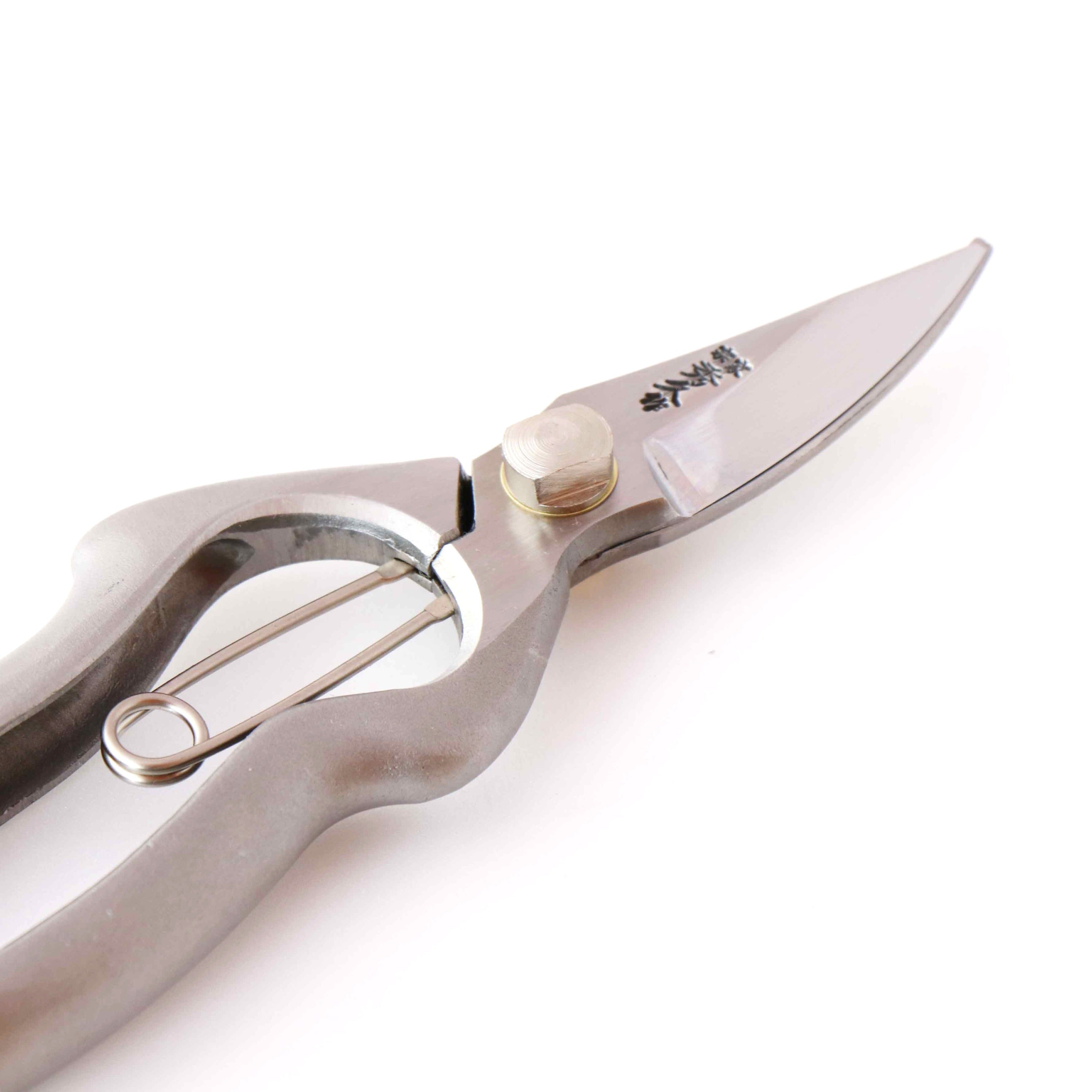
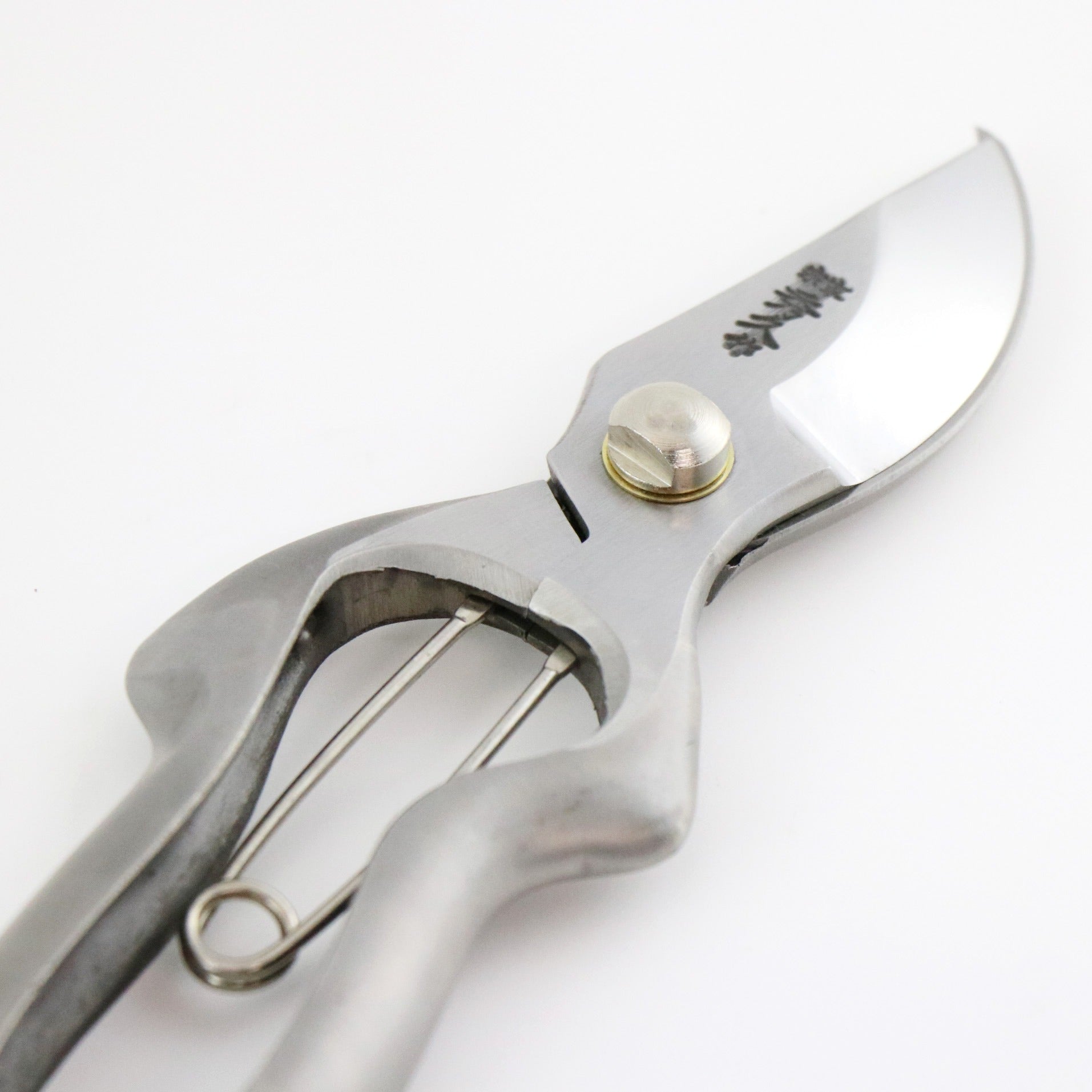
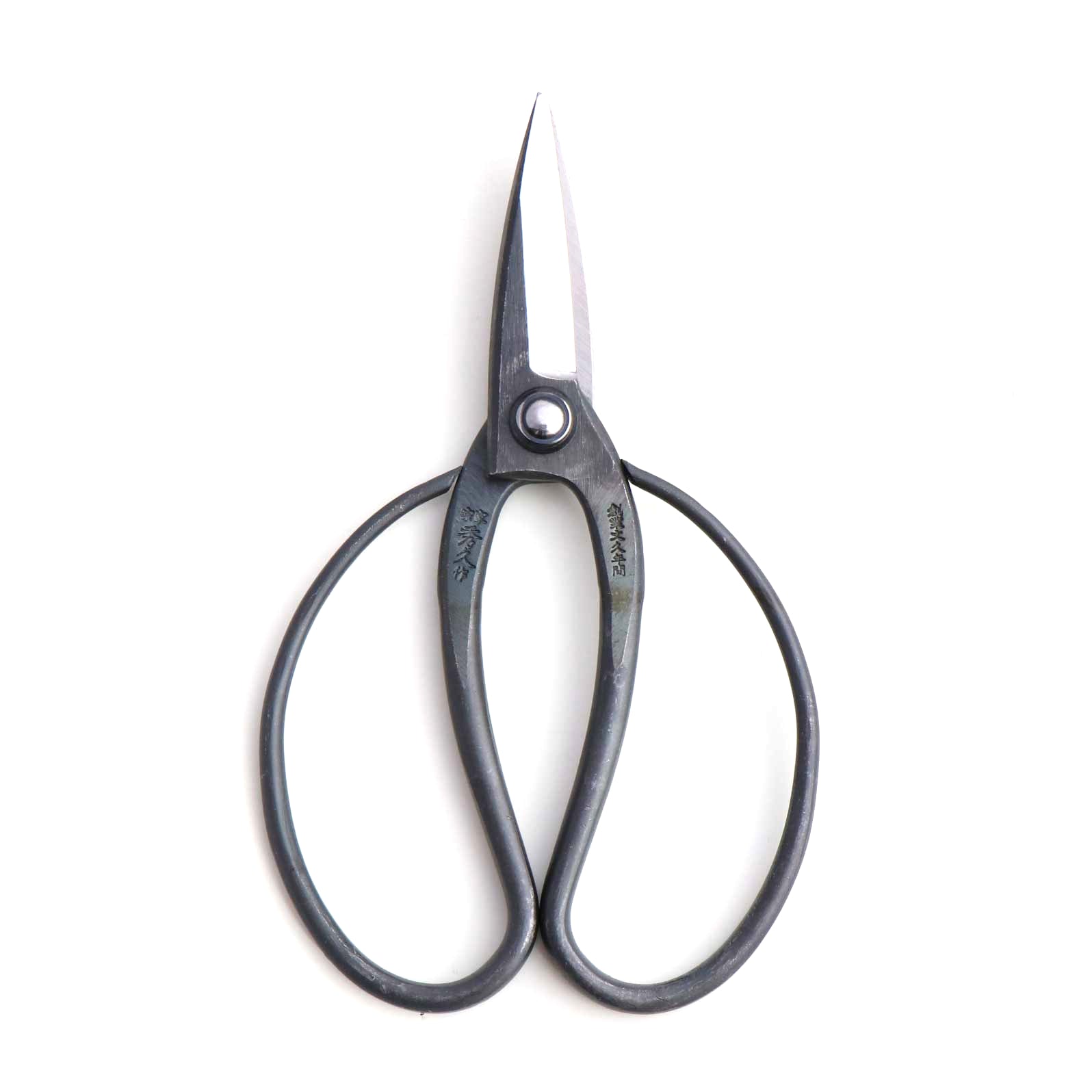
Photo: The inner face of a Japanese shear — whether a traditional bonsai scissor or a spring-loaded pruning shear — appears flat to the eye. In reality, each blade carries a subtle concave hollow called sawa. That hollow determines how the two blades meet at the cutting edge and how the shear feels in the hand.
To the eye, the inner face of a shear blade looks flat. In reality, it carries a subtle concave hollow called urasuki (裏隙き), or more specifically, sawa. Each blade is hand-finished to carry this hollow along with precisely controlled curves and adjustments that govern how the two blades track and close against each other. The blades meet in a narrow, controlled area at the cutting edge — not across the full surface. That contact keeps the pressure consistent and the edge sharp, cut after cut.
After the inner face is finished comes aibadori. A craftsperson holds the assembled shear, listens to the sound of the blades closing, feels the resistance in the pivot, and adjusts until the action is right. Not by measurement. By feel.
It is this process — tanzo (forging), uratogi, and aibadori — that brings a Toyama Hamono shear to life. And it is why the inner blade face deserves particular care when you maintain your shears at home.
Why the Inner Face Should Be Left Alone
The urasuki geometry is precise, and routine maintenance can quietly undo it. Running a whetstone across the inner face — even lightly, even once — can shift the contact point between the blades. The shears may look cleaner afterward, but the cut may become rougher, and the action may feel heavier than before.
For routine home maintenance, we recommend cleaning the inner face with a cleaning eraser, not a whetstone. The eraser lifts surface contamination — sap, rust, oxidation — without removing material or disturbing the geometry beneath.
If you notice visible chipping along the edge or the blades feel misaligned when closed, routine sharpening will not be enough. Seek a specialist rather than continuing. Pushing further in those conditions tends to make the issue harder to resolve.
Daily Sharpening: The Outer Bevel, at the Original Angle

For routine maintenance of your Japanese garden shears, sharpening belongs on the outer bevel only — the angled face of the blade. The goal is not to create a new angle. It is to restore the original one, refreshing the edge without changing what is already there.
Hold the whetstone at a consistent angle against the bevel and draw it toward you in a smooth stroke, lifting gently at the end. No heavy pressure. No repeated passes beyond what the blade needs. Work gradually, check the edge between strokes, and stop once it feels right. Fewer passes, applied with care, will serve the blade better than grinding ever will.
When you sharpen the outer bevel, a small burr will form on the inner face. Use the cleaning eraser to remove it. Do not bring the whetstone into contact with the inner surface.
Shears do not cut better simply because more material has been removed. The geometry is what does the work. Preserve it.
Sharpening Without Disassembly
How to Sharpen Traditional Japanese Garden Shears
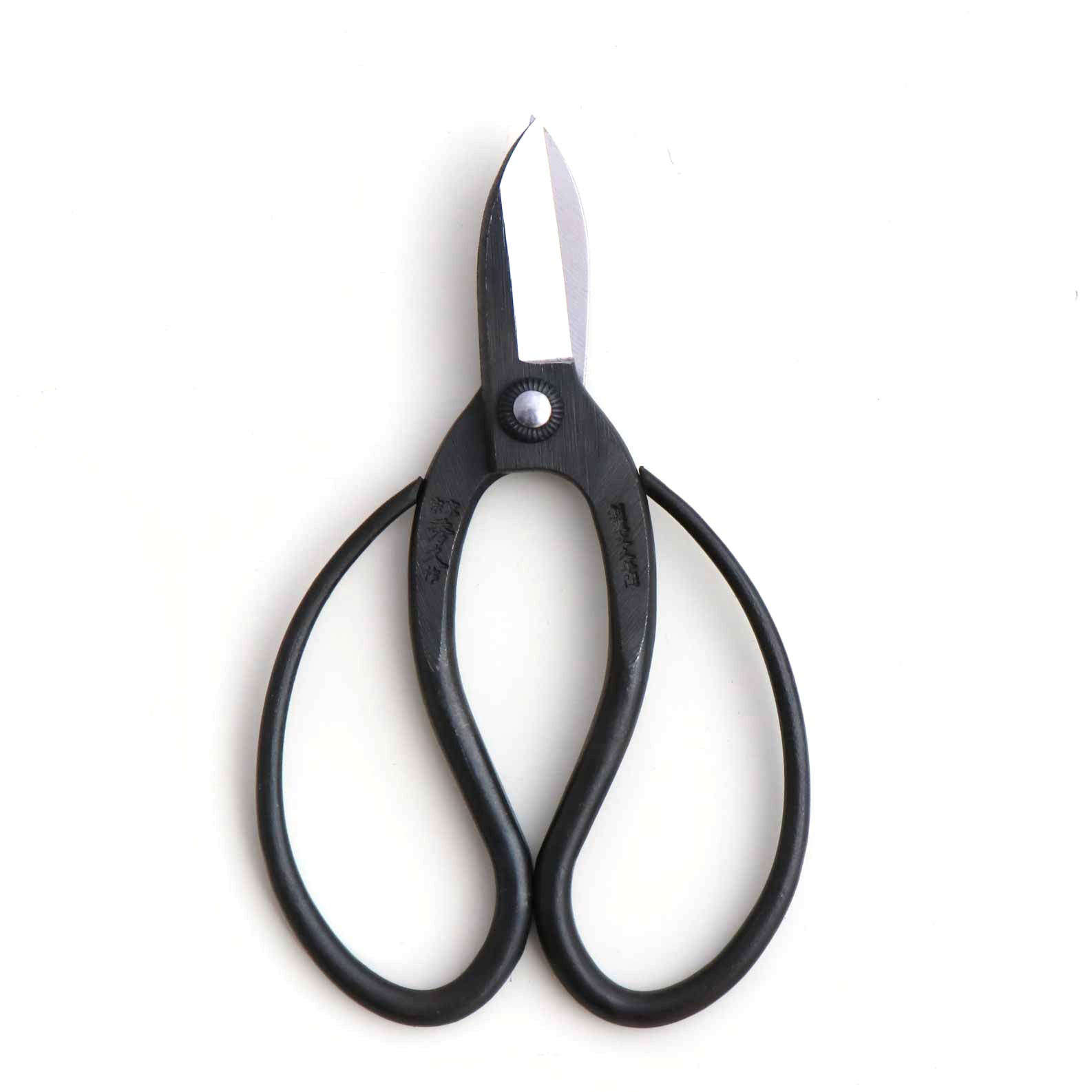
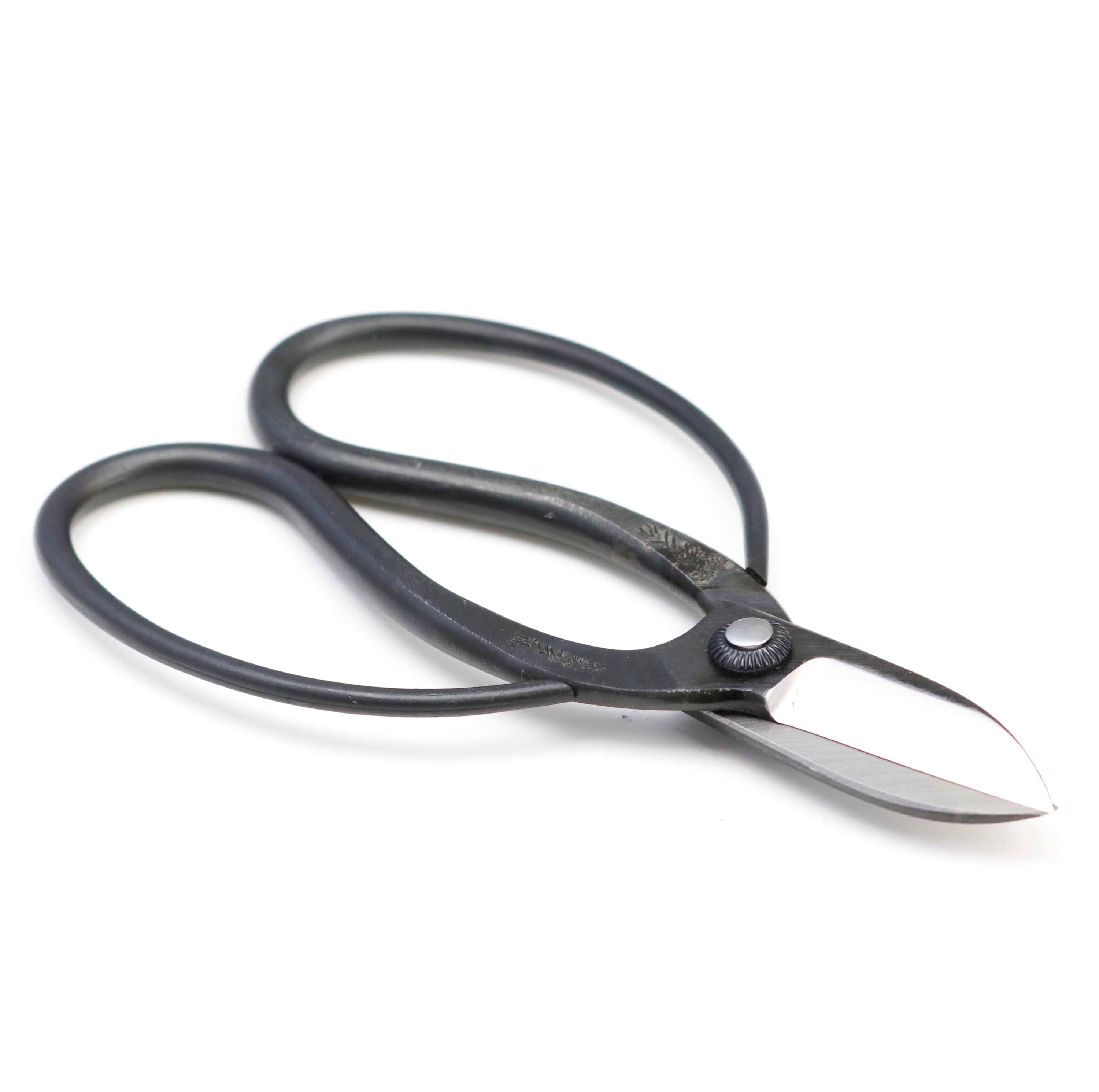
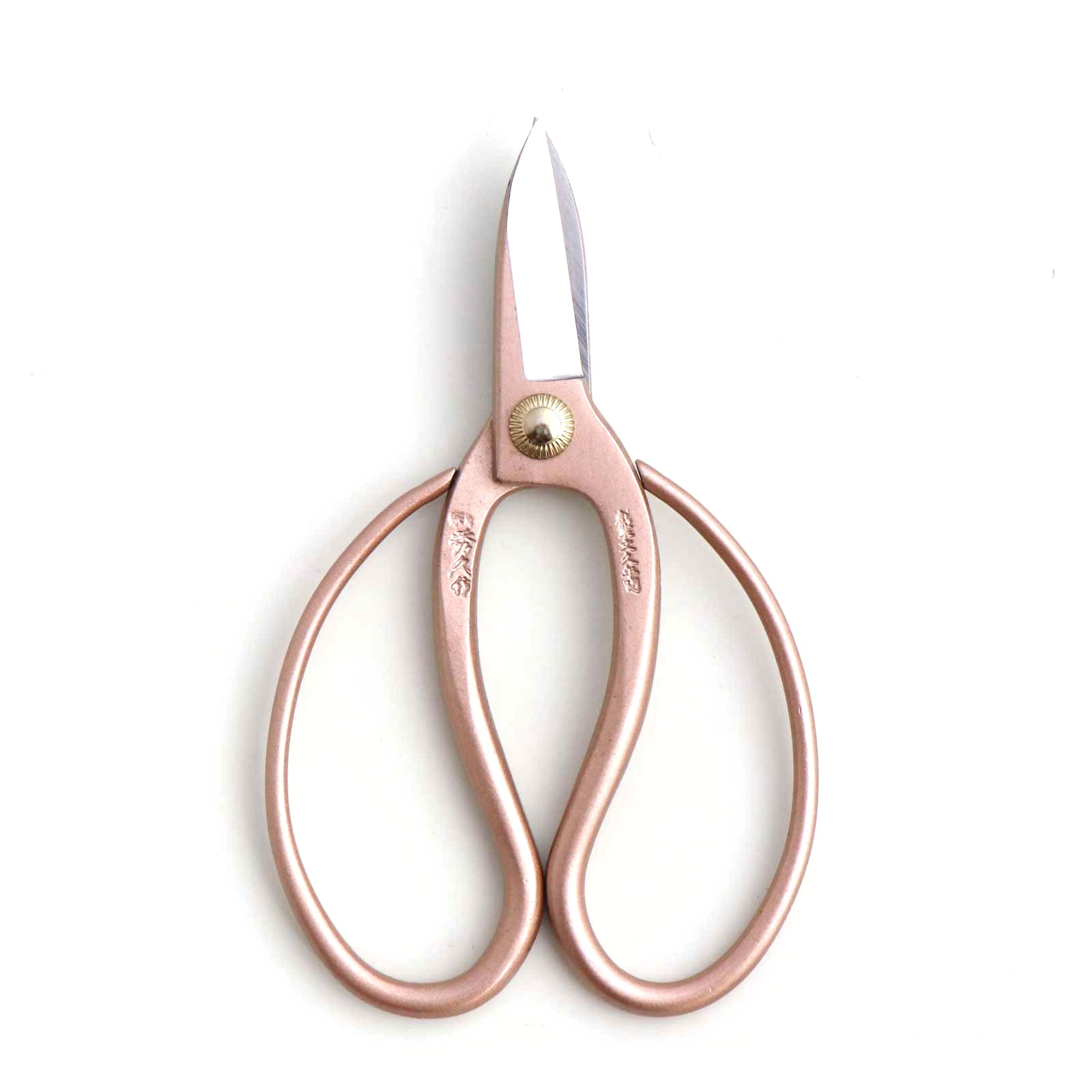
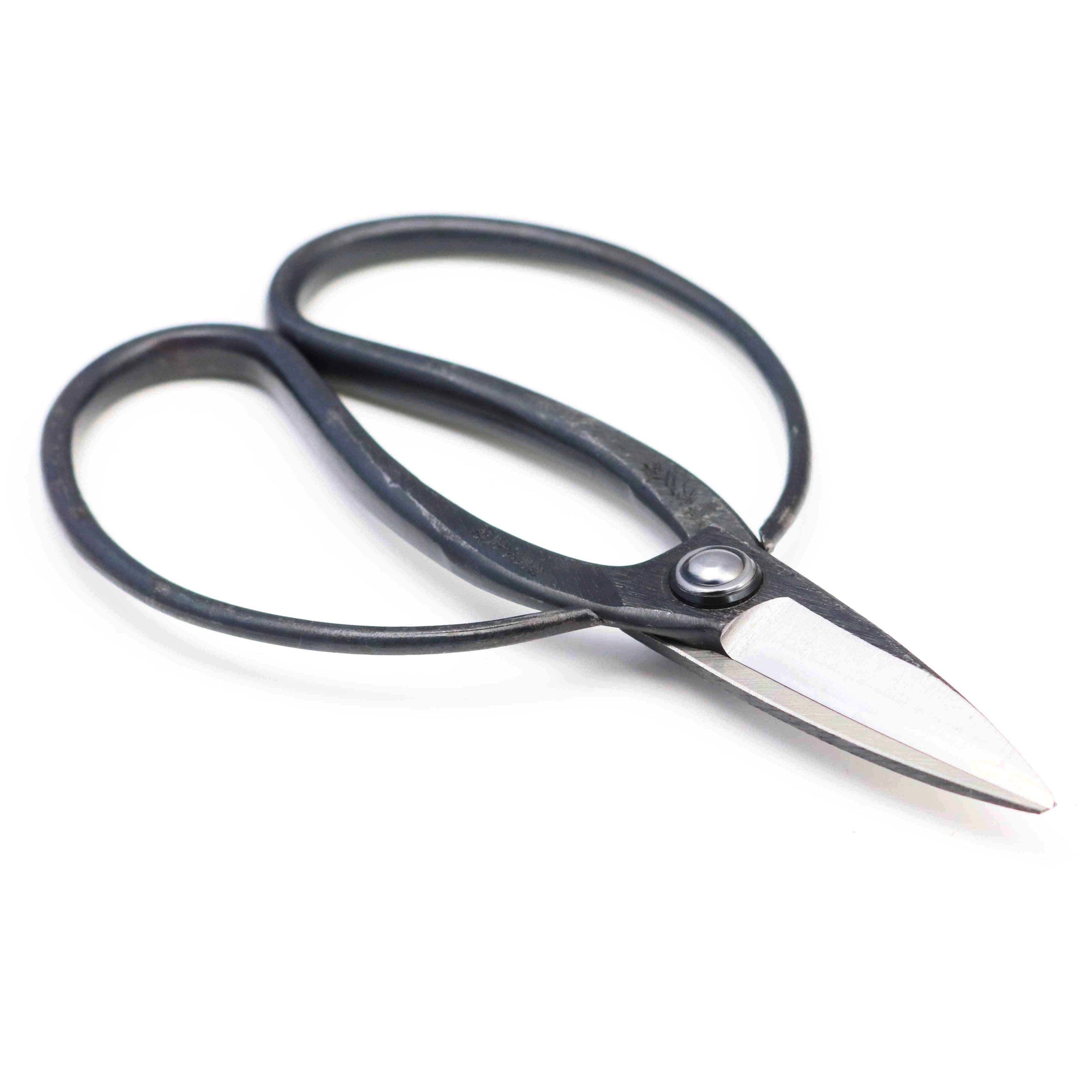
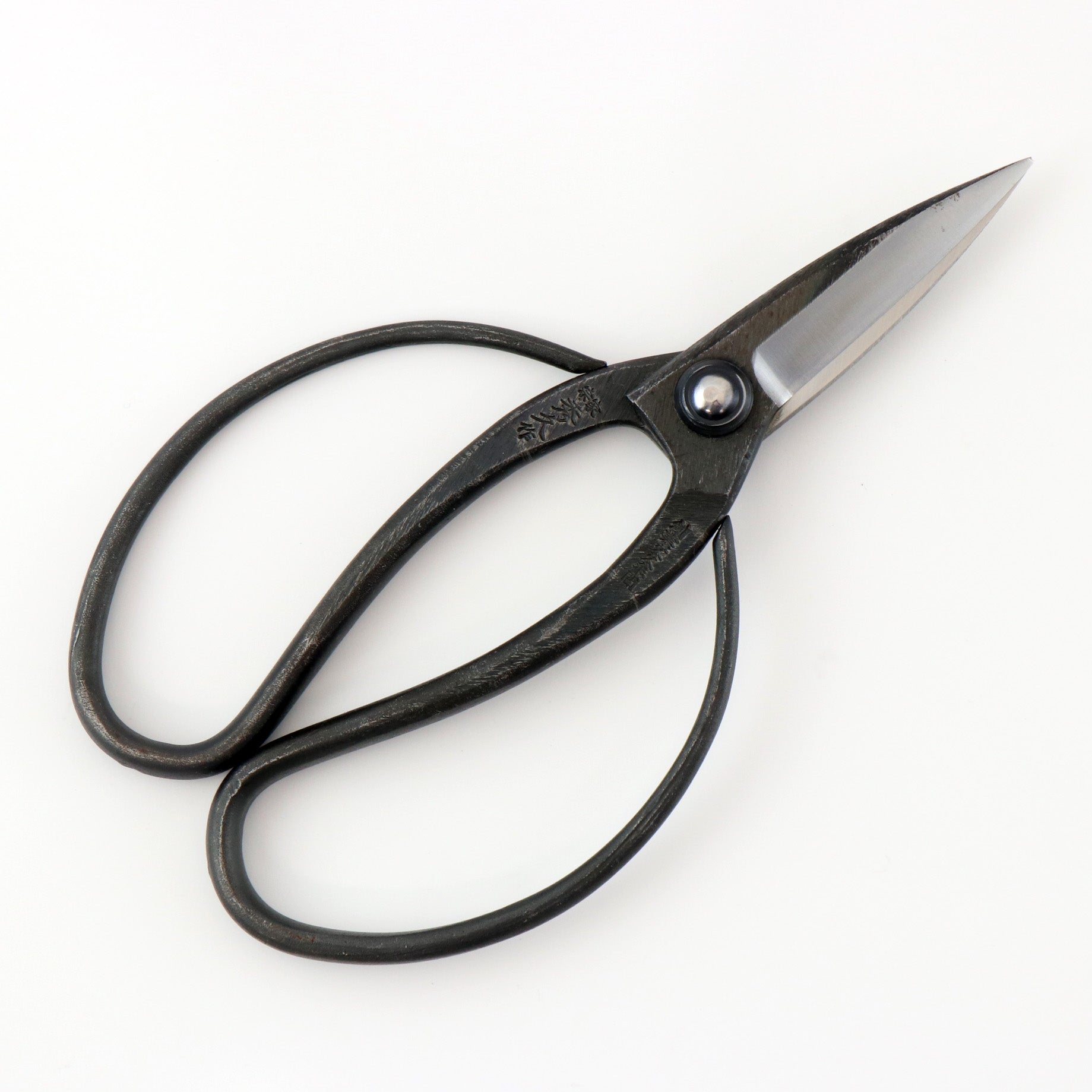
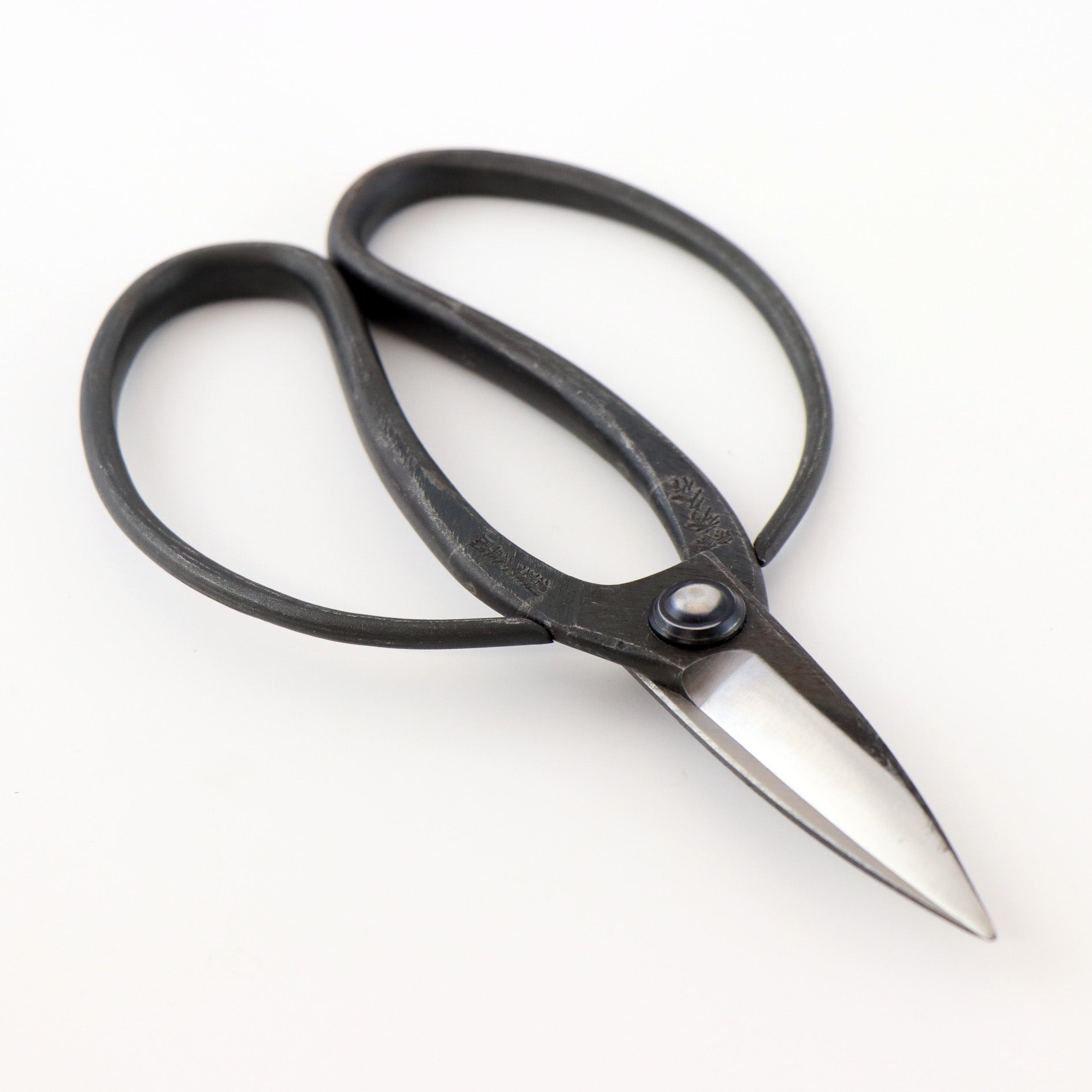
Traditional Japanese garden shears have a straight blade. Hold the whetstone at the angle of the outer bevel and draw it upward in a smooth, diagonal stroke — about five passes is enough. The diagonal motion keeps the angle consistent. The upward lift at the end helps the edge form cleanly, without building up a burr.
How to Sharpen Pruning Shears
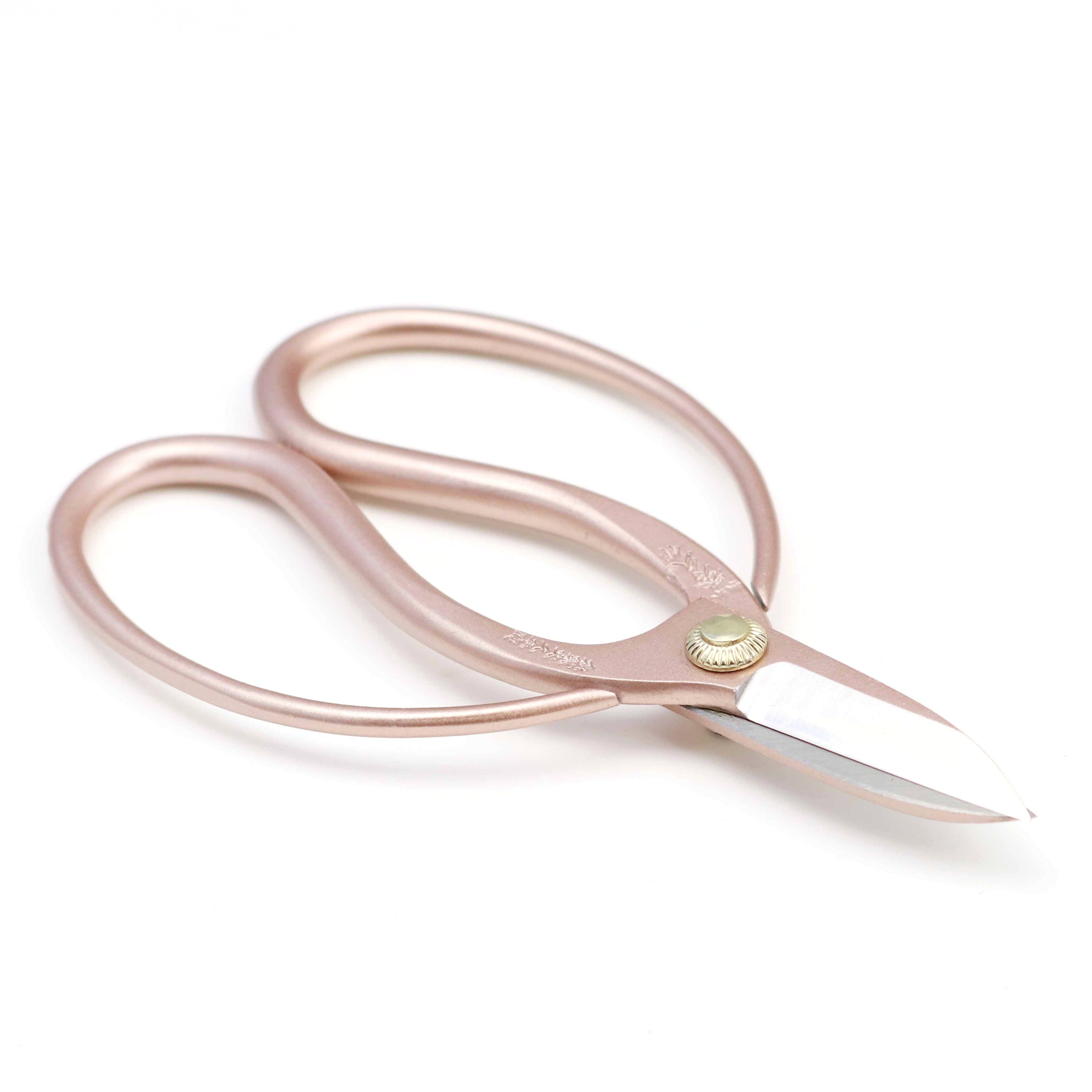
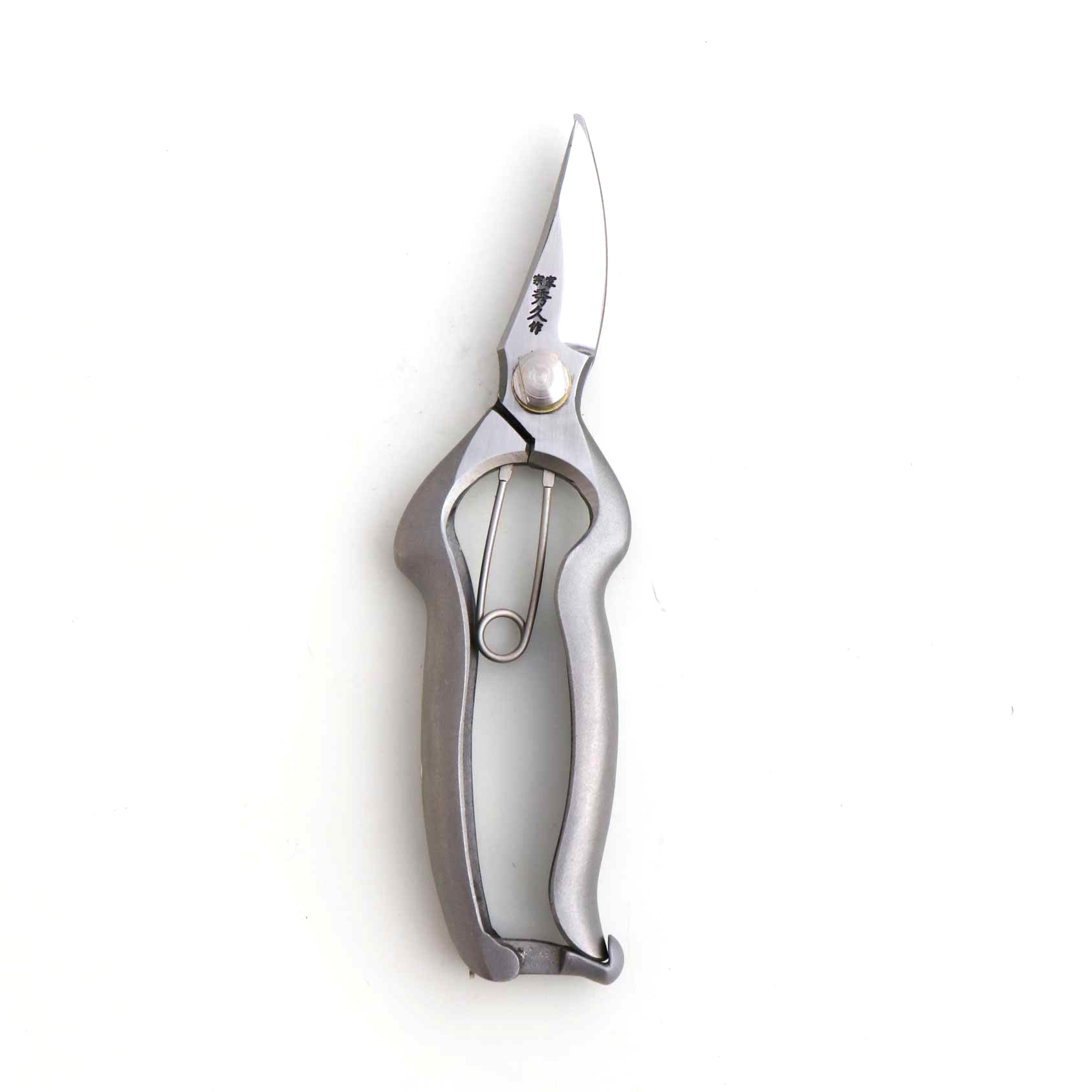
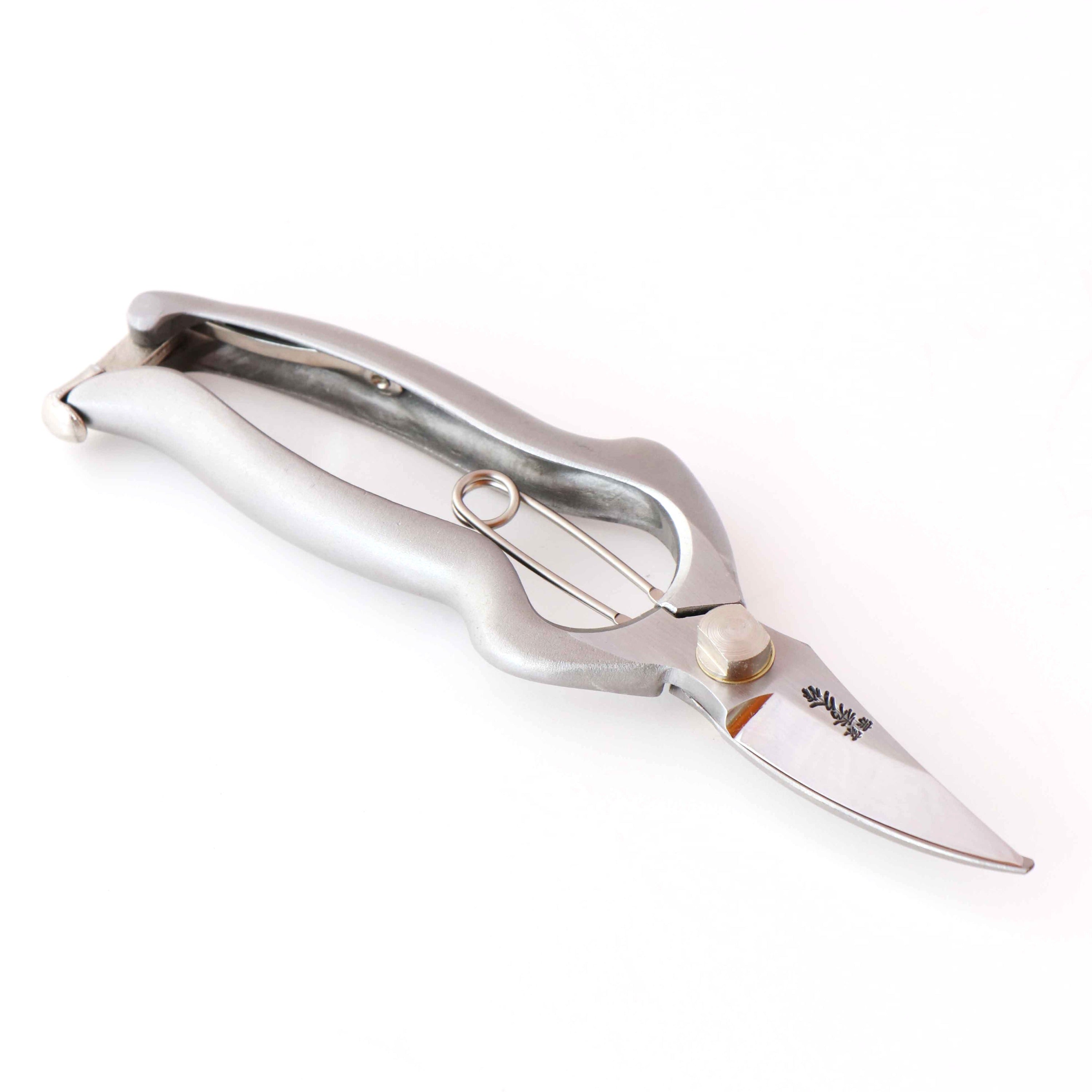
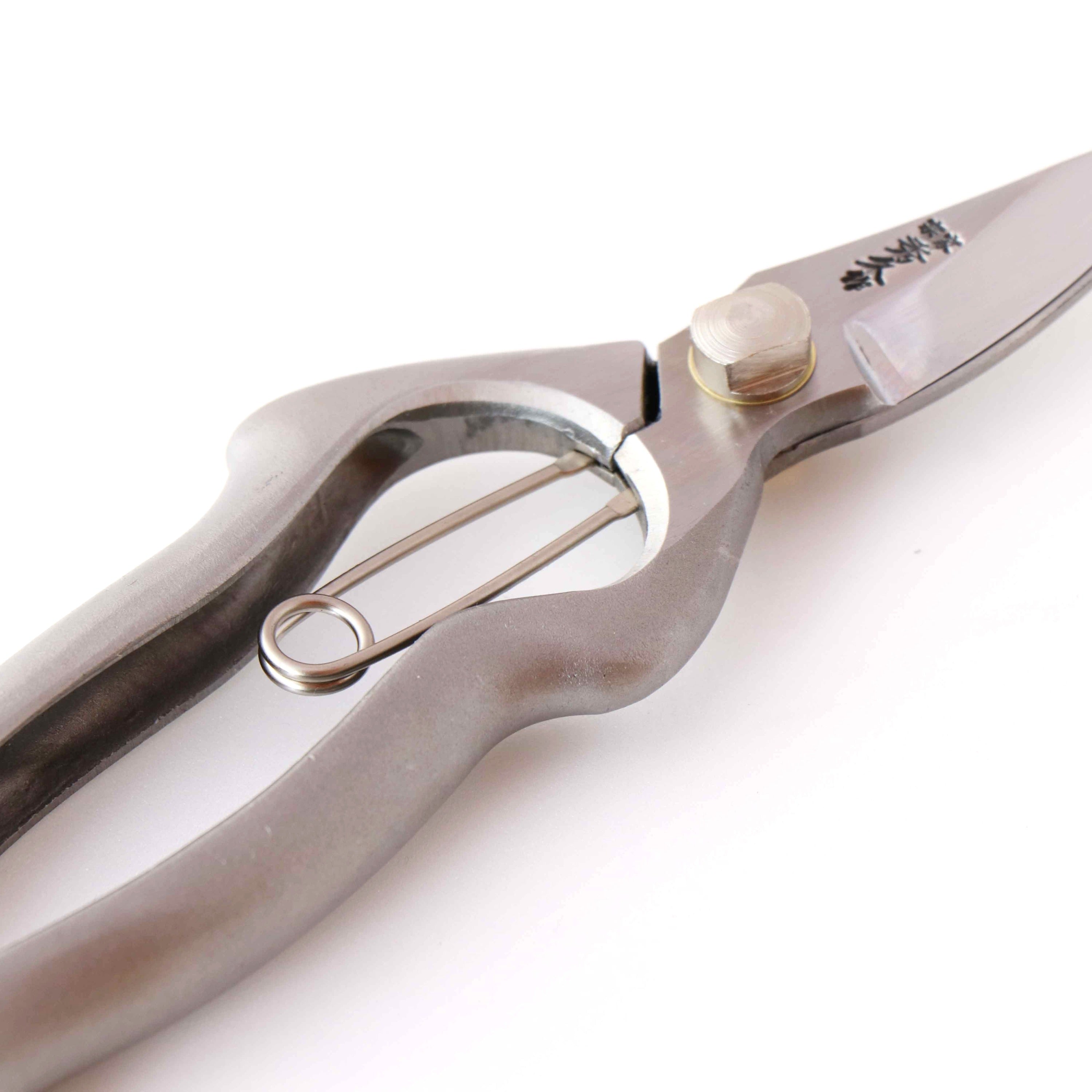
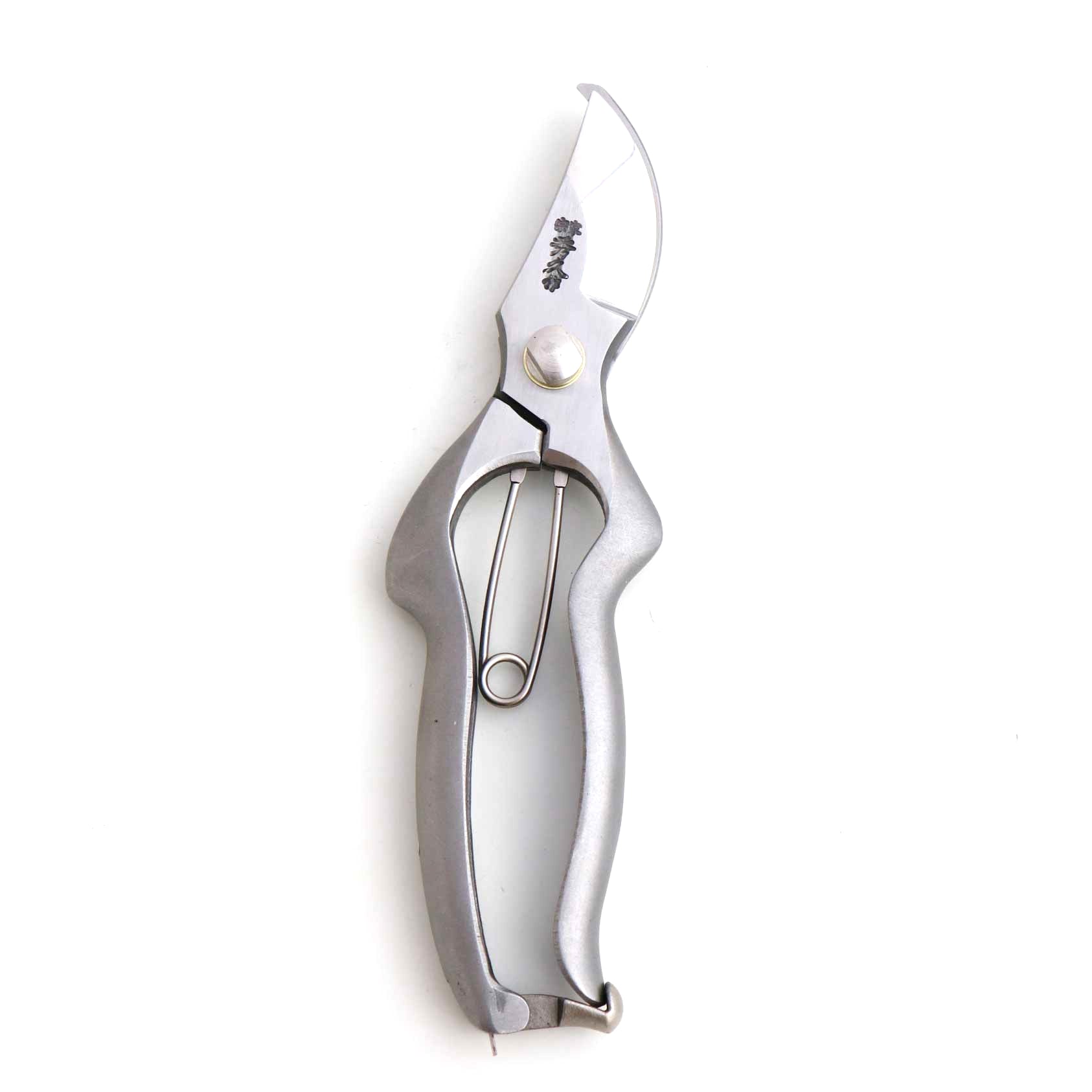
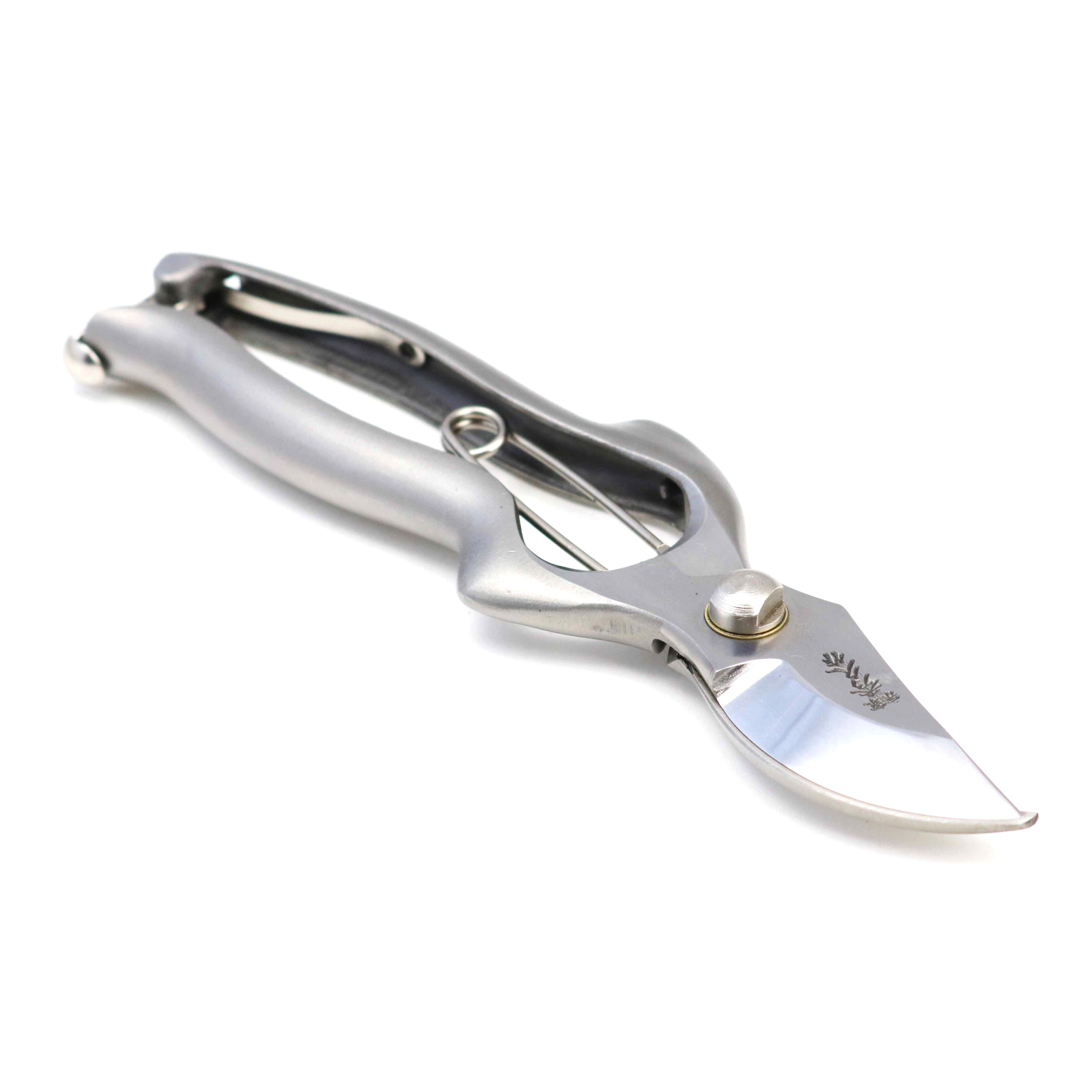
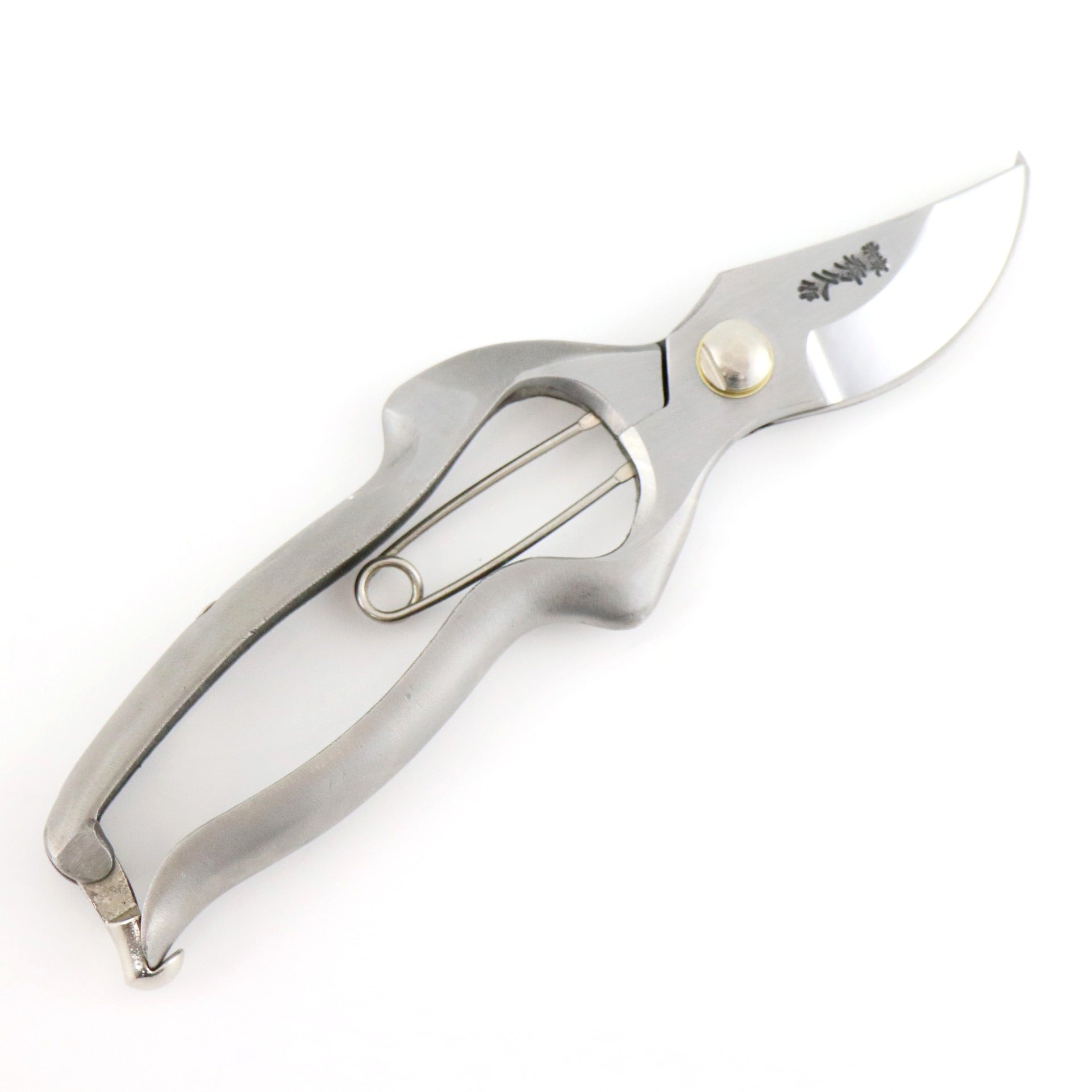
The outer face of our pruning shear blade is convex, ground, and polished to a mirror finish. To protect that finish, sharpen with the same upward stroke — following the curve of the blade, lifting gently at the end. Again, around five passes. Let the motion follow the blade, and the edge will take care of itself.
The pivot of a shear — how tightly the blades are joined — is part of what Aibadori establishes at the end of production. Taking a shear apart to adjust it introduces variability that is not always easy to reverse, and most day-to-day maintenance on Japanese pruning shears does not call for it. Working assembled, touching only what needs attention — that is how a shear stays true to itself.
At Toyama Hamono, we approach routine sharpening this way — working with the shear assembled, without disassembly. A slim whetstone can reach the bevel near the blade overlap without disturbing the pivot.
For this kind of maintenance, we designed the R2 Slim Shear Whetstone. Its narrow profile — shaped for Japanese-style shears — sits cleanly along the outer bevel, including in the tight area near the overlap where a standard stone loses contact. Soak it in water for about fifteen minutes before use. Grit #320. A stone made for careful work: precise where it needs to be, and no further.
The Right Order of Care
Knowing where to begin makes the process straightforward. When your pruning shears or garden scissors start to feel less responsive, look at the blades before reaching for a whetstone.
If there is visible sap, residue, or surface discoloration, reach for the cleaning eraser first. Work it across both the outer and inner surfaces, then hold the shear up to the light and reassess. Often, that is all it takes. If the blades still feel dull after cleaning, then move to sharpening.
The sequence we recommend for routine care:
-
Clean — Work the cleaning eraser across both blade surfaces to remove sap, residue, and surface rust
-
Sharpen — Refresh the outer bevel with a whetstone, following the original angle
-
Oil — Apply a thin coat of blade oil to protect the steel against rust
-
Break in — Open and close the shears several times to let the blades settle after sharpening
Full instructions and video are on our How to Care page. The video is worth watching once, seeing the whetstone angle held steady across the full length of the bevel is easier to follow than any written description.
Sharpening as Restoration
Sharpening is not about remaking a shear. It is about returning it to what it already is.
Whether you work with traditional Japanese hasami, Western-style pruning shears, or snips, the principles here apply across our full range of forged shears. All are available in both high-carbon steel and stainless steel.
Every pair has been forged, finished through uratogi, and tuned through aibadori. The cutting quality you feel in your hand is the result of that work — craft carried forward in Sanjo, where this tradition began. Maintenance exists to honor that, not to override it.
Sharpen only the outer bevel. Leave the inner face to the cleaning eraser. Work with the shear assembled. Every gardener develops a feel for when the edge is right. These habits, kept up over time, are what keep a well-made shear well-made.
Good sharpening is quite a work. A few careful strokes. A clean edge. Shears that feel, once again, like themselves.



Share:
High-Carbon vs. Stainless Steel Pruning Shears
Your First Japanese Garden Shears: Snips, Pruning Shears, or Traditional Okubo-Style