
"Which one is the most versatile?"
That is one of the questions we hear most from first-time buyers. It sounds like the right place to begin. But in our experience, it often is not.
A more useful question is simpler: what do you actually cut?
You may be caring for houseplants by the window. You may be arranging flowers or tending roses at the kitchen table. You may be moving through a mixed garden of shrubs, herbs, and patio pots. The right first shears are not the ones that do the most on paper. They are the ones that fit your real work so naturally that you reach for them without thinking.
At Toyama Hamono, we have been forging shears by hand in Sanjo, a city in Niigata Prefecture known for its metalworking heritage, since 1861. Across five generations, our lineup has grown into three distinct families of shears:
- Snips — slim, precise tools for close, detailed work
- Pruning Shears (Secateurs) — the Western-style shape with pivot and spring, available in many forms for different kinds of garden work
- Traditional Japanese Garden Shears — the classic loop-handled form, used in Japan for generations across bonsai, ikebana, and general garden care
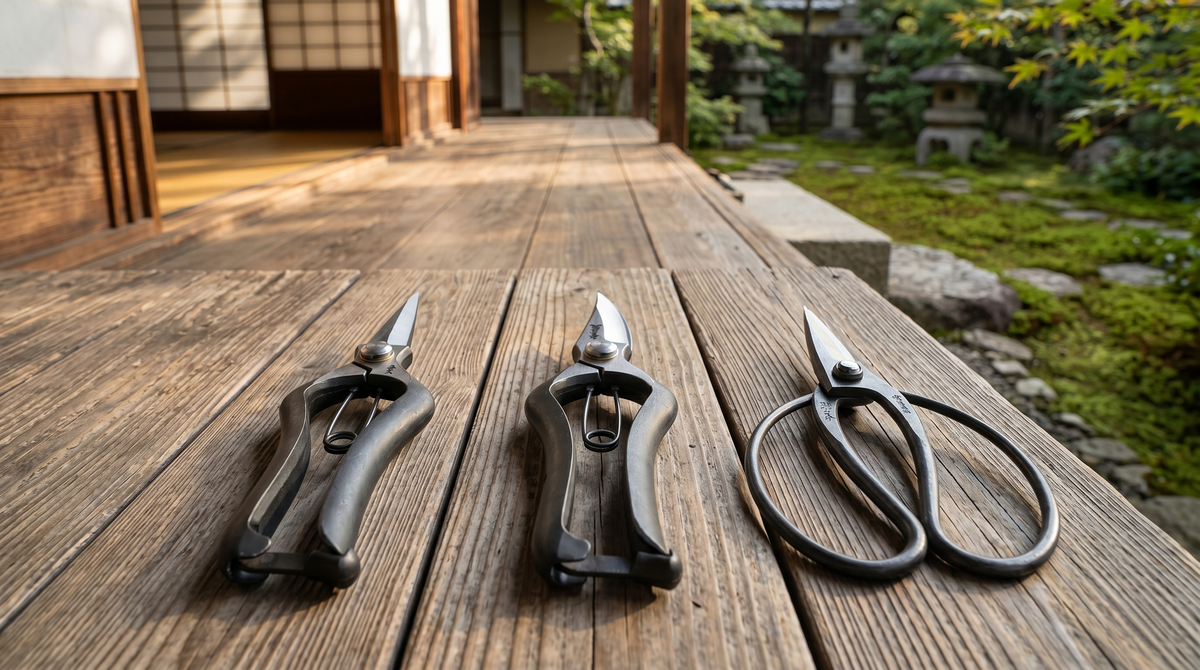
Within each family, we offer many specialized types. For a first shear, we recommend one representative model from each: the T17 Snips, the T19 Multi-Purpose Pruning Shears, and the T1 Okubo-Style.
Within each family, we offer many specialized types. For a first shear, we recommend one representative model from each: the T17 Snips, the T19 Multi-Purpose Pruning Shears, and the T1 Okubo-Style.
As you read on, keep three questions in mind:
- Is your cutting mostly small and precise — soft stems, spent blooms, or detail work inside crowded growth?
- Do you work with flowers, roses, or mixed plants that need both a slim reach and enough strength to cut a stem?
- Are you drawn to the traditional Japanese approach — one shear, learned over time?
Three Families of Shears — and the Right First Model in Each
1. Snips — For Close Detail Work Inside Crowded Growth

[Photo: T17 Snips]
Snips are the smallest and most focused family in our lineup. Their purpose is easy to understand: fine work, close to the plant.
Snips work by repetition. The spring opens the blades between cuts, so you can make many small, similar cuts in a single session — tidying a shelf of houseplants, deadheading a row of flowers, or cleaning up soft growth across a bonsai. The rhythm is light and steady, and the hand stays relaxed even through long sessions.
We offer several types of snips for different detail tasks. For a first shear in this family, we recommend the T17.
The T17 has a long, straight, slim blade. That shape is designed to be slipped into crowded growth — between stems, inside a bush, or along a branch — to select and cut thin growth without disturbing anything around it. Deadheading a spent bloom, removing a yellowing leaf at the base, trimming a soft stem in a crowded pot, tidying a young bonsai — these are the tasks snips do better than any other shear.
The T17 is a good first pair if you:
- Care for houseplants indoors
- Tidy soft stems, leaves, and small growth regularly
- Work inside crowded growth and need to slip a blade between stems
- Are beginning with bonsai or other detail work
- Prefer the spring-assisted feel of a pivot-and-spring shear
The T17 may not be the right fit if your main work involves thicker branches or trunks. The slim blade is built for selective, delicate cutting — not for heavier pruning. If you often cut material close to or above the shear's cutting capacity, the T19 or T1 will feel more natural to use.
T17 Snips — Key Specs
- Overall length: about 200 mm
- Blade length: about 70 mm
- Weight: about 175 g
- Max cutting capacity (green wood): about 8 mm at the heel, about 3 mm at the tip
- Steel: forged high-carbon steel (JIS)
If your interest is specifically bonsai, we have dedicated shears for that use as well. Our guide to traditional Japanese garden shears → walks through the T4-3 bonsai shears in detail.
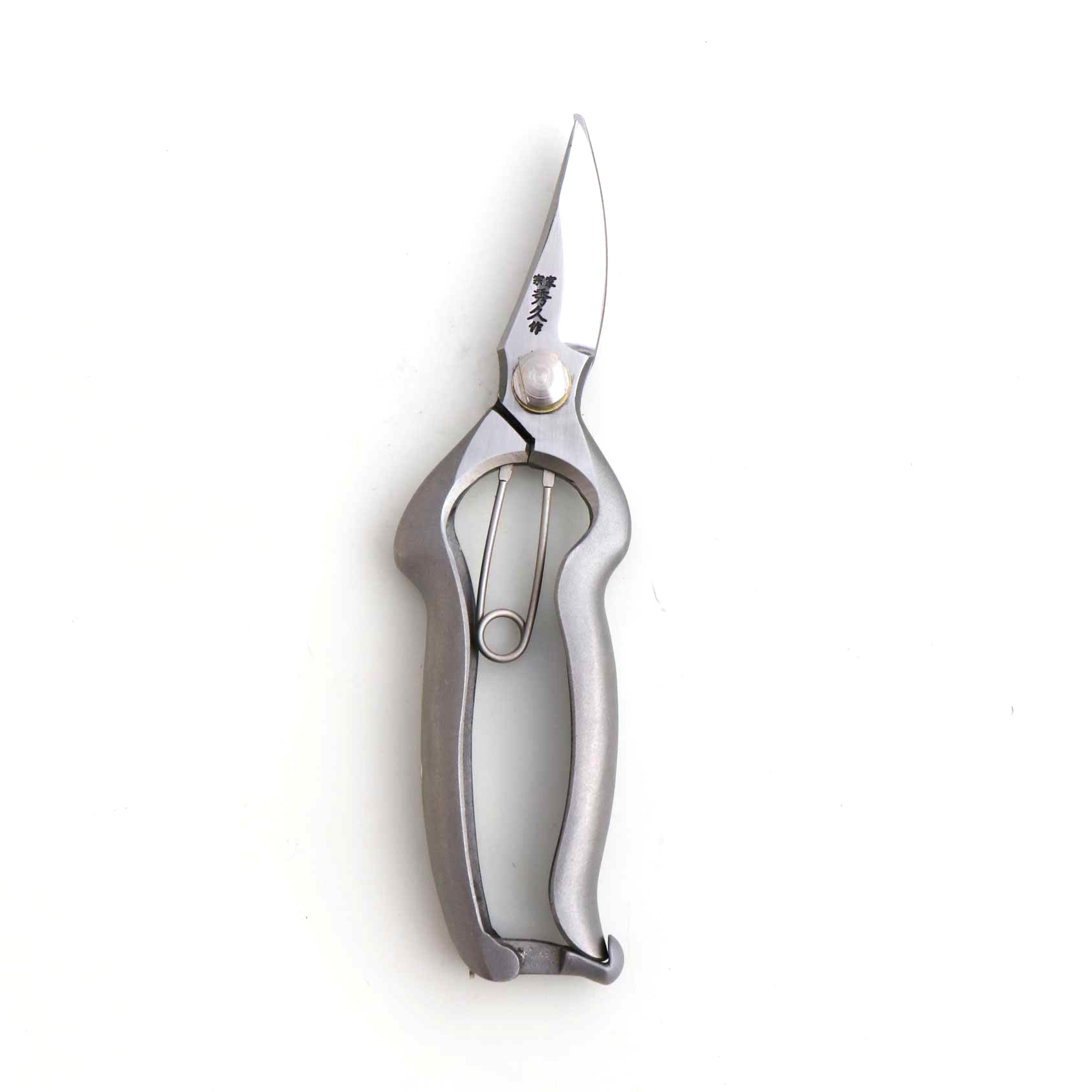
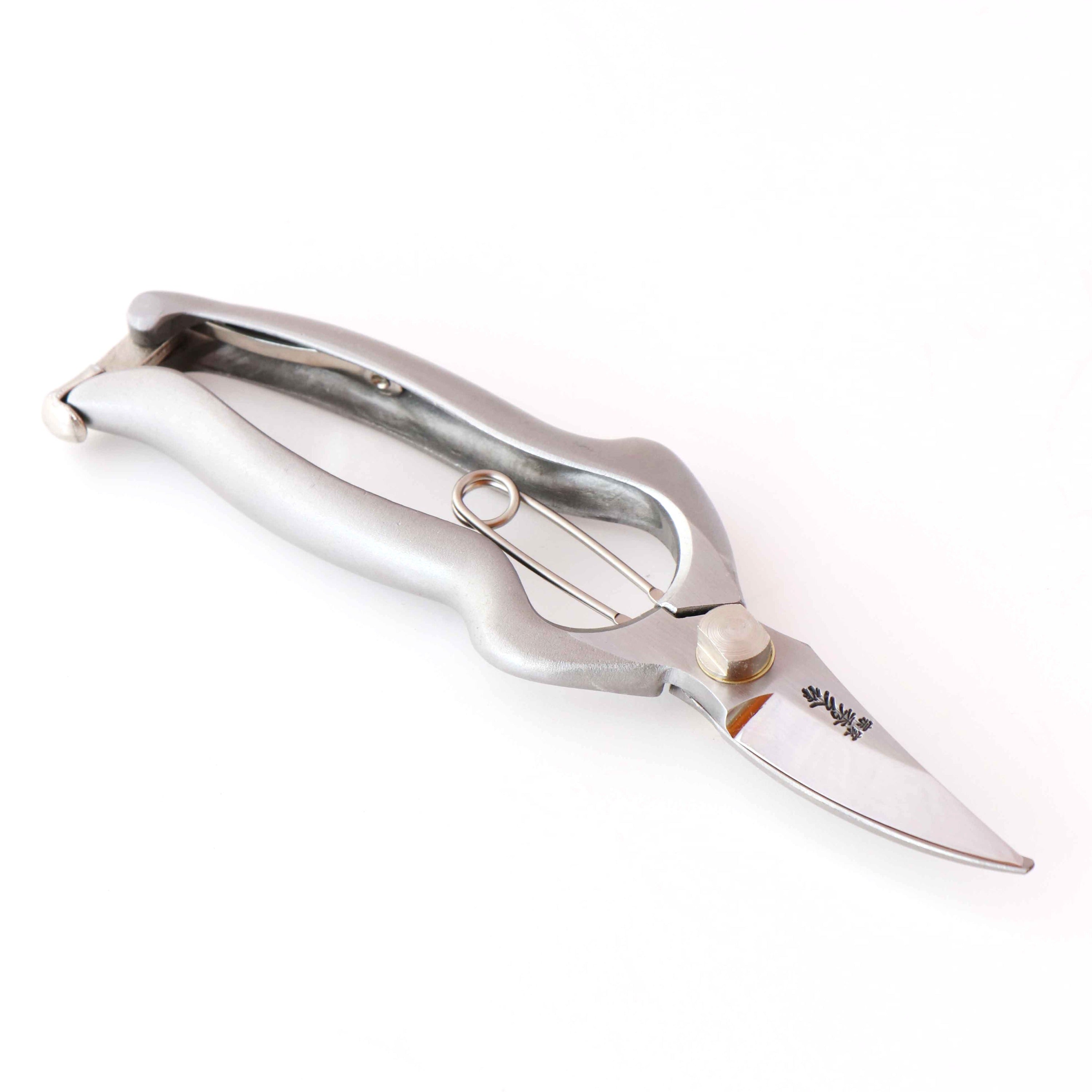
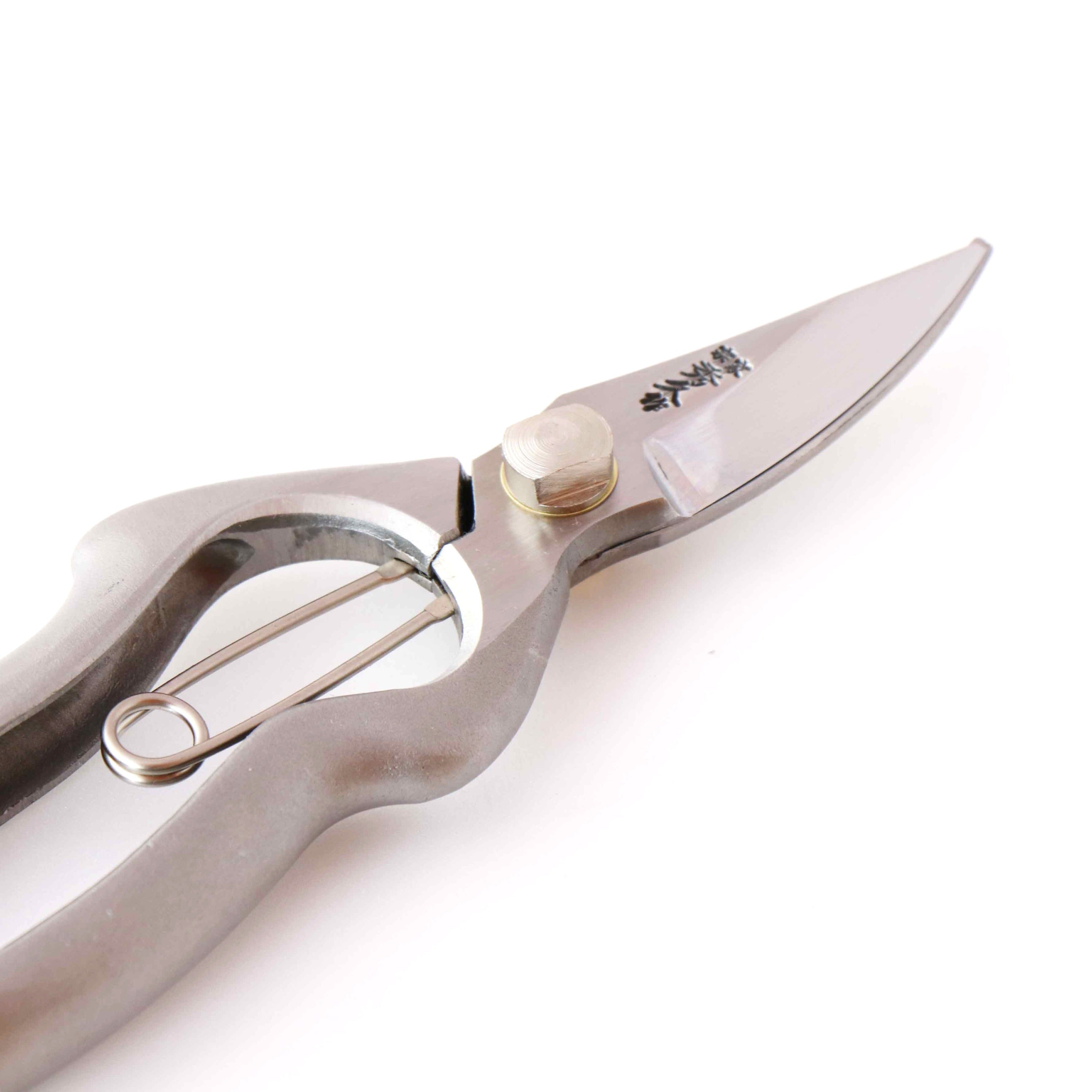
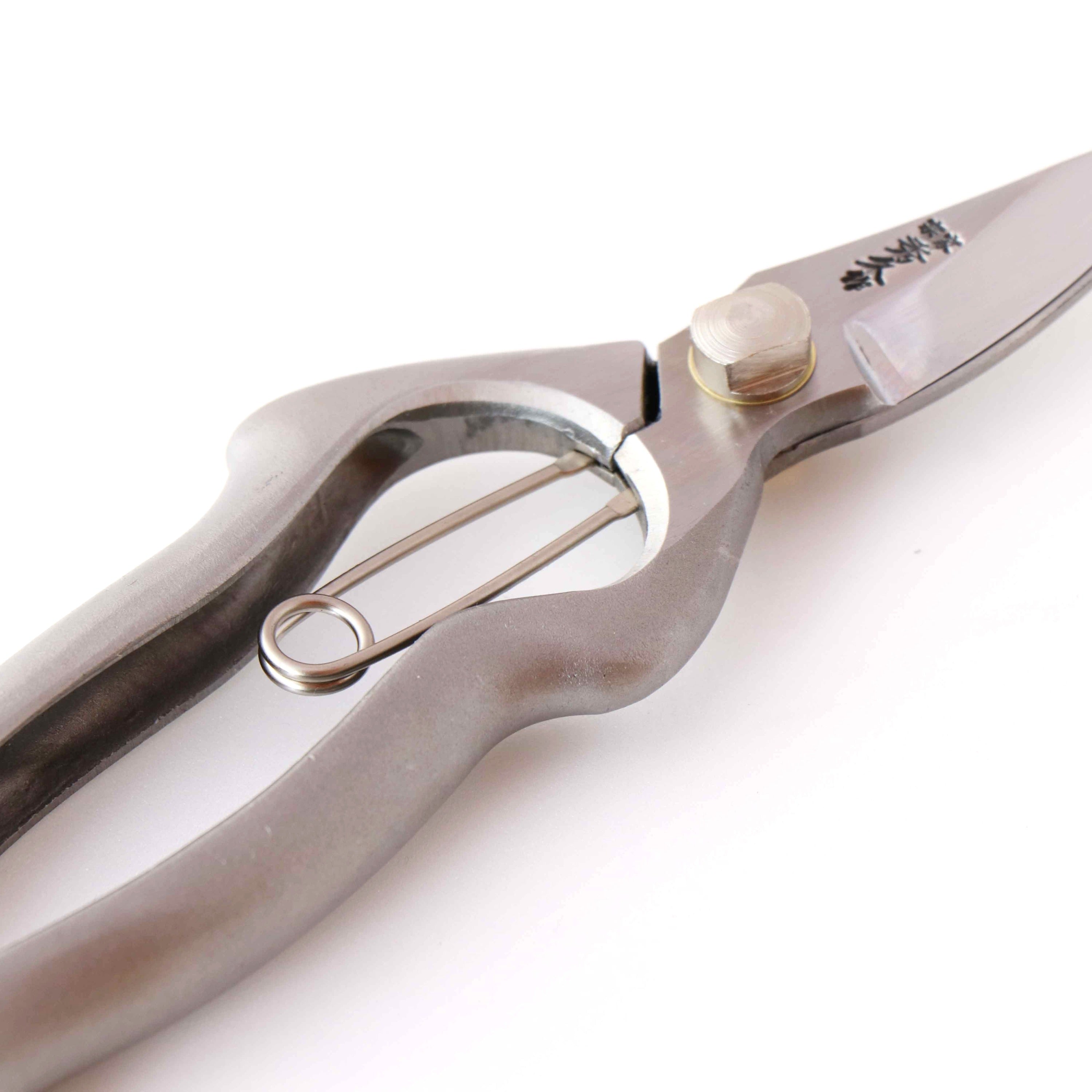
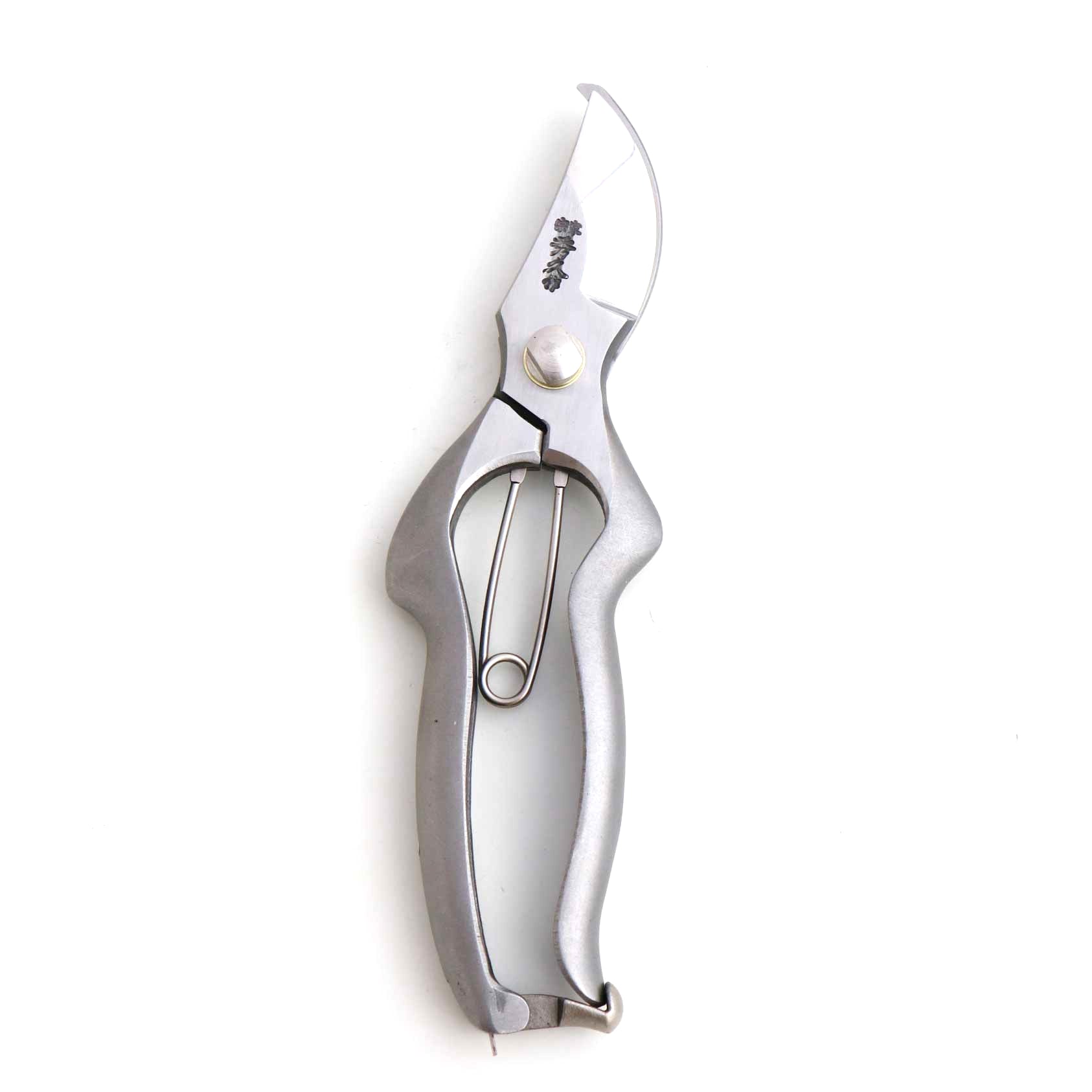
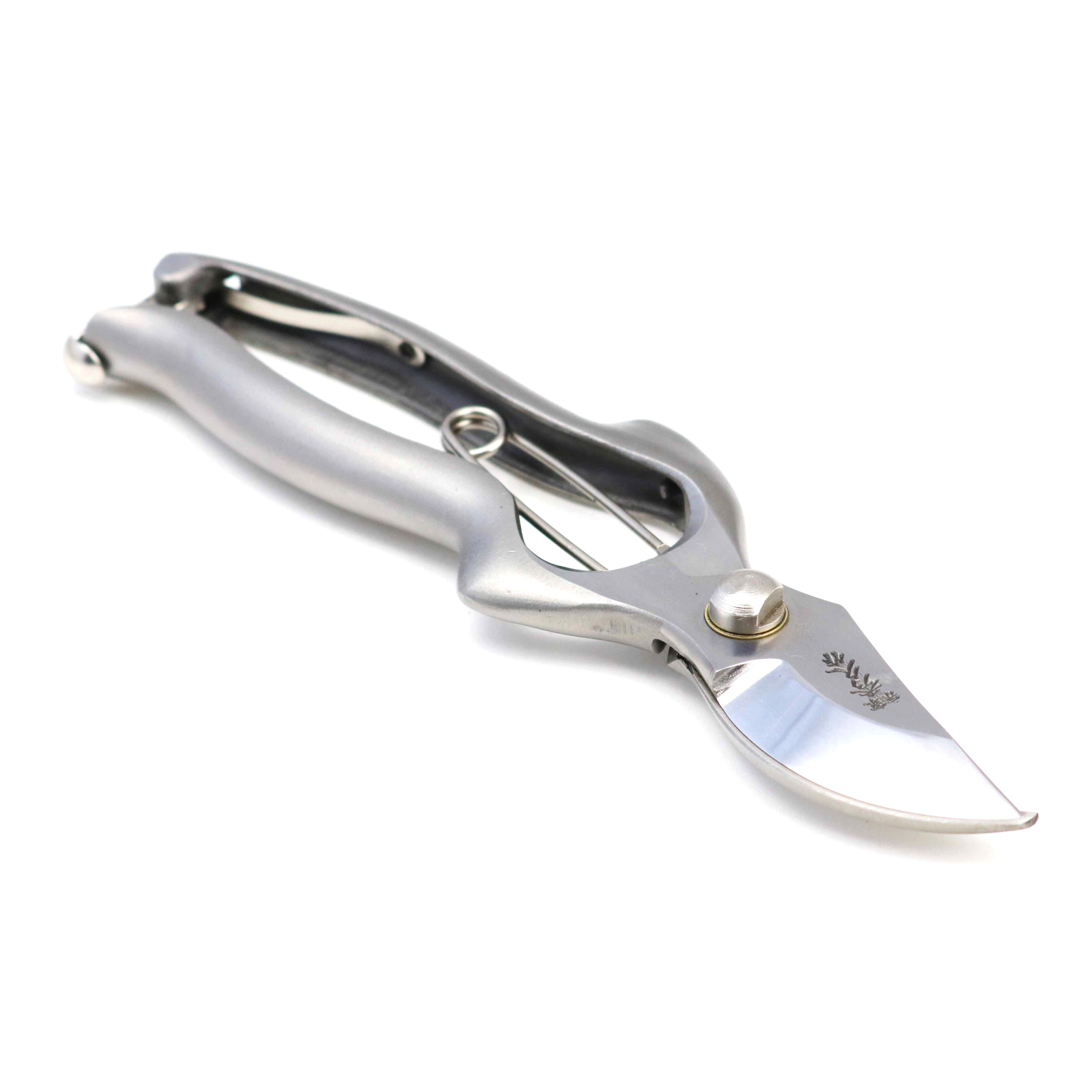
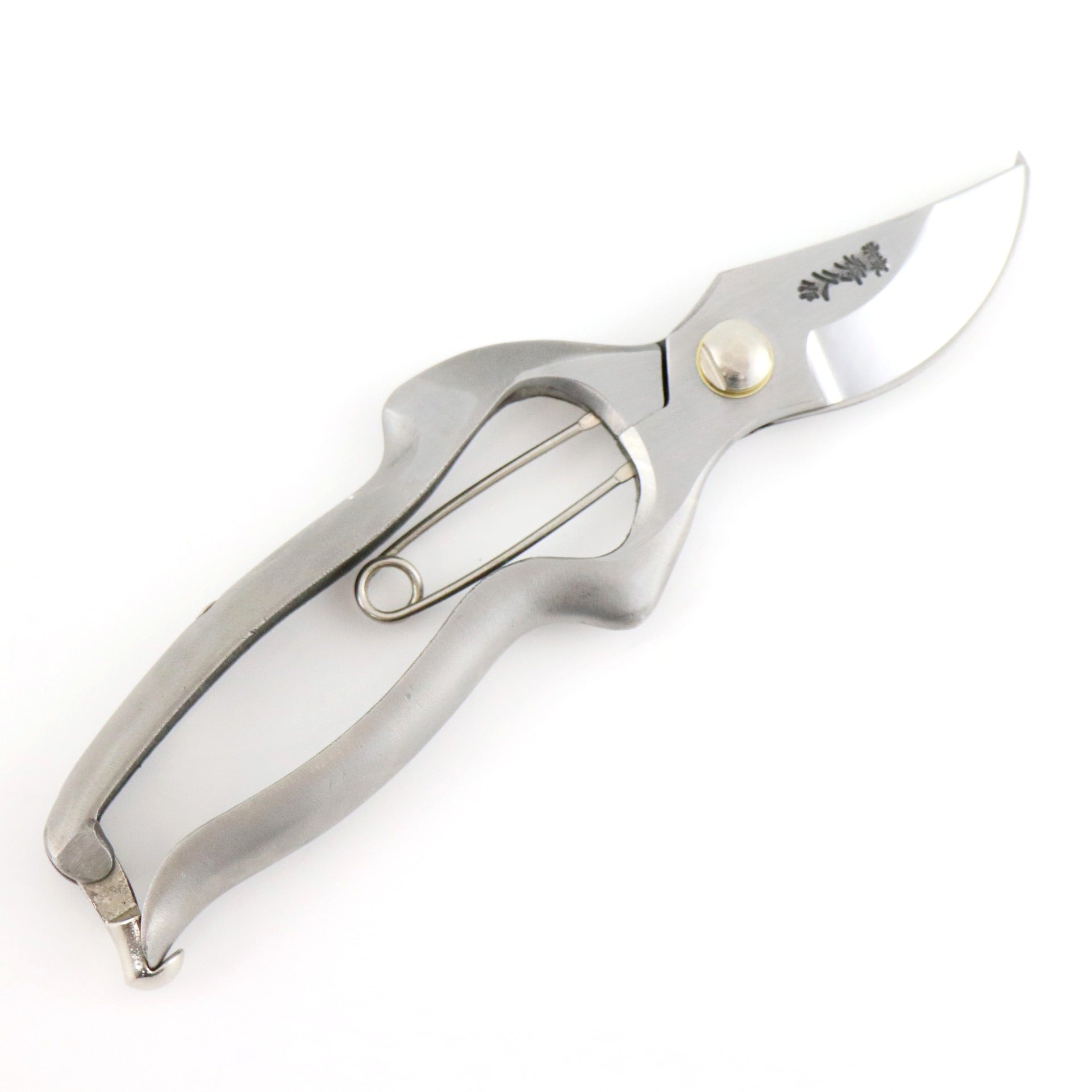
2. Pruning Shears — For Flowers, Roses, and a Wider Range of Tasks

[Photo: T19 Multi-Purpose Pruning Shears]
Pruning shears — or secateurs — are the familiar Western-style shape: two blades meeting at a pivot, a spring between the handles, and a grip shaped to fit the whole hand. This is the shear most gardeners around the world know first.
Within our pruning shear family, we offer a wide range of types — general-purpose shears, symmetrical grips, ergonomic grips, leather-wrapped handles, and more. Each suits a different kind of work. For a first shear, we recommend the T19 Multi-Purpose Pruning Shears.
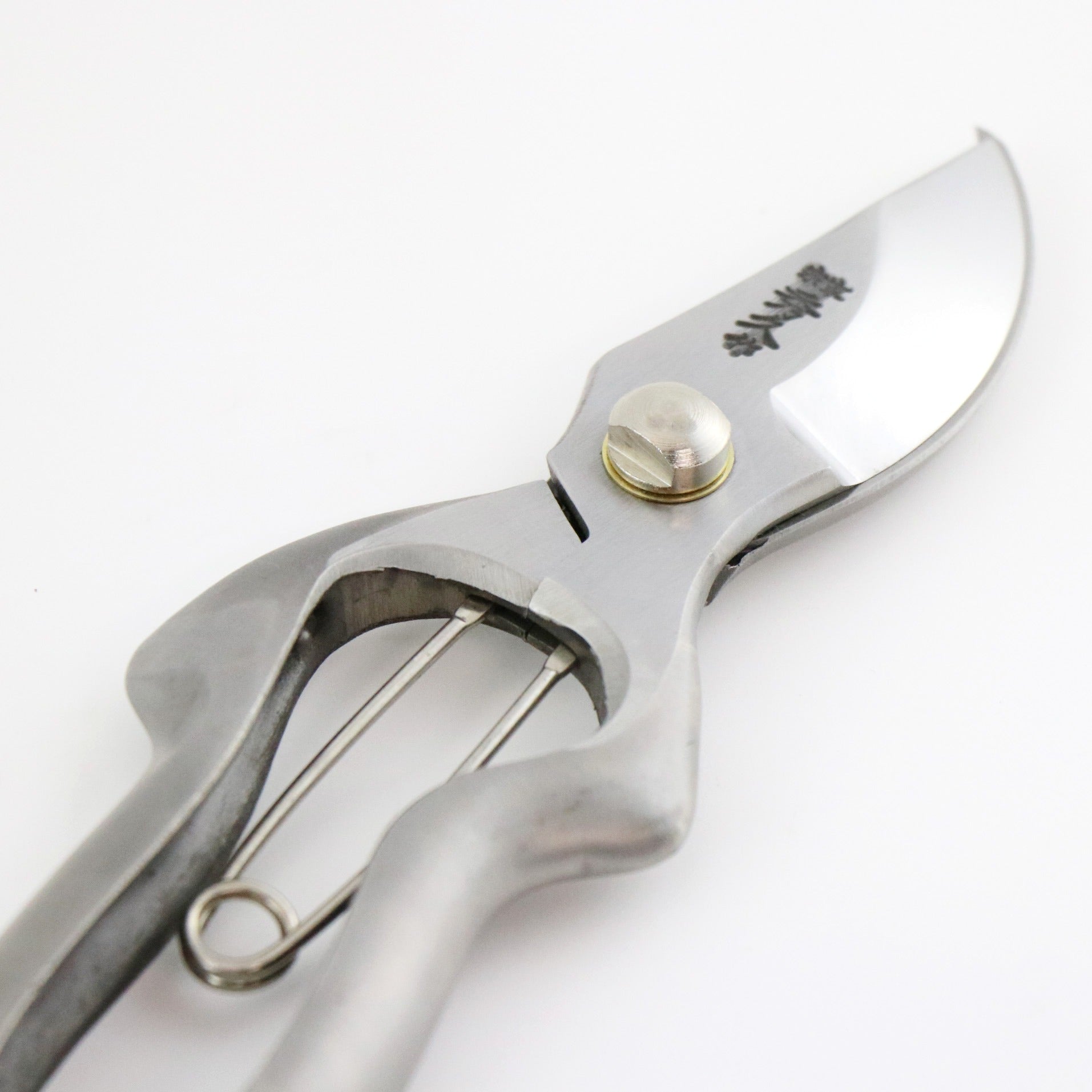
What makes the T19 stand out in this family is its blade. Where a standard secateur has a shorter, stouter blade for general garden work, the T19 features a long, slim blade, which makes this model genuinely multi-purpose.
That slim blade gives you enough strength to cut a flowering stem or a rose cane cleanly, while still being fine enough for more delicate work that would normally belong to a snip. You can move from cutting a rose stem to tidying a soft-stemmed houseplant without changing tools. The compact design fits both large and small hands. The cutting capacity (about 10 mm at the heel, about 5 mm at the tip) gives you more reach into varied materials than a pure snip.
In practice, the T19 is most at home with flowers, roses, and houseplants, as well as mixed plant care — both indoors and outdoors. It is the pair to choose when your cutting life spans more than one type of plant, but you still want a slim, precise blade.
The T19 is a good first pair if you:
- Work with cut flowers, roses, or floral arrangements
- Tend both houseplants and an outdoor garden, and want one pair for both
- Cut material of varying thickness throughout the season
- Want a slim, precise pruning shear rather than a bulky general-purpose secateur
The T19 may not be the right fit if your cutting is almost entirely small detail work — spent blooms, fine leaves, or close tidying on houseplants. For that narrower focus, a pure snip like the T17 will feel lighter and more direct in the hand.
T19 Multi-Purpose Pruning Shears — Key Specs
- Overall length: about 190 mm
- Blade length: about 65 mm
- Weight: about 180 g
- Max cutting capacity (green wood): about 10 mm at the heel, about 5 mm at the tip
- Steel: forged high-carbon steel (JIS)
The T19 is also available with leather-wrapped grips for added comfort and a tactile surface that ages with use: the T19C (Camel leather) and T19B (Black leather). If you would like to explore other pruning shear models with different grip styles, our guide to choosing the right grip for your pruning shears → walks through the full family.
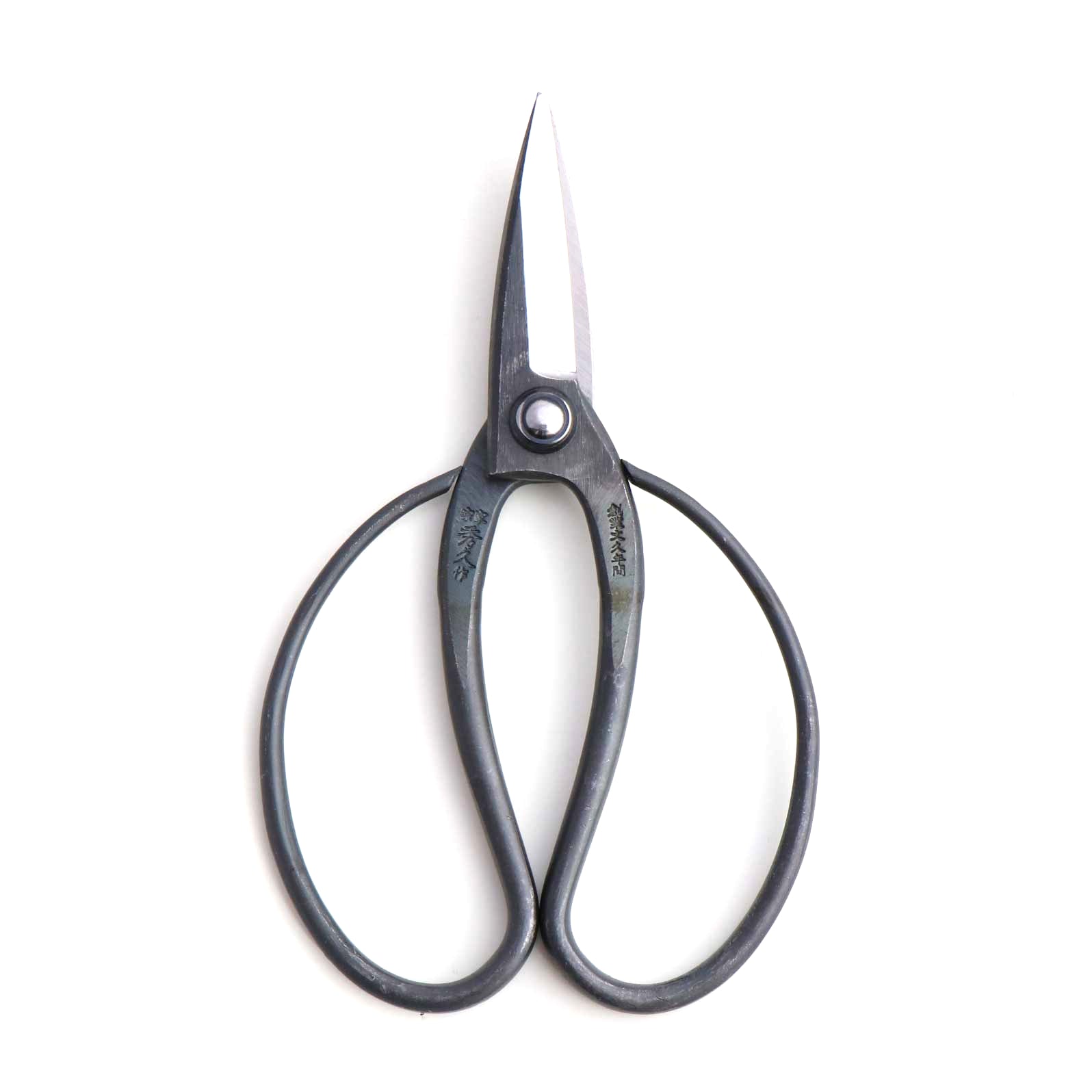
3. Traditional Japanese Garden Shears — For a Lifelong Japanese Tool

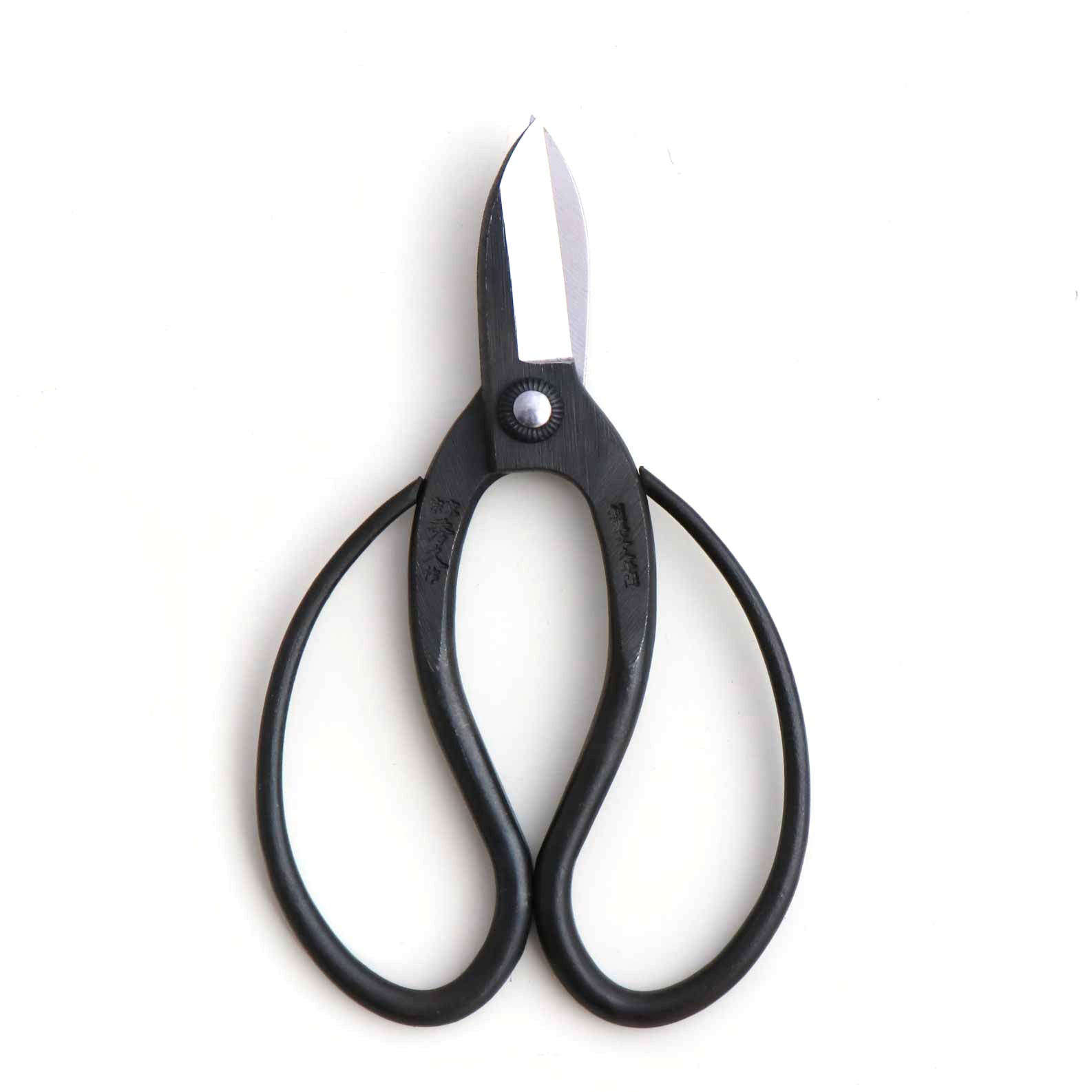
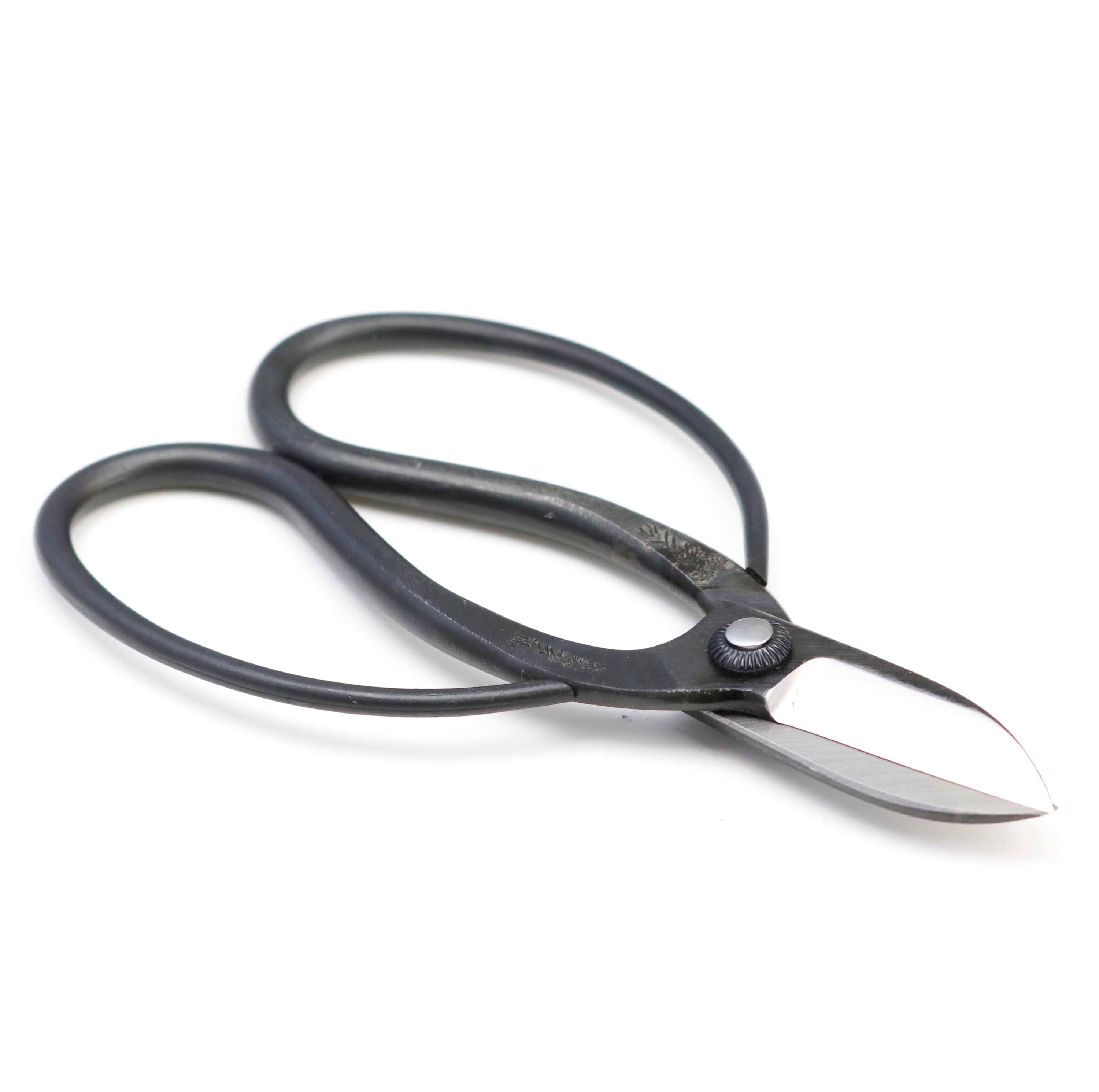
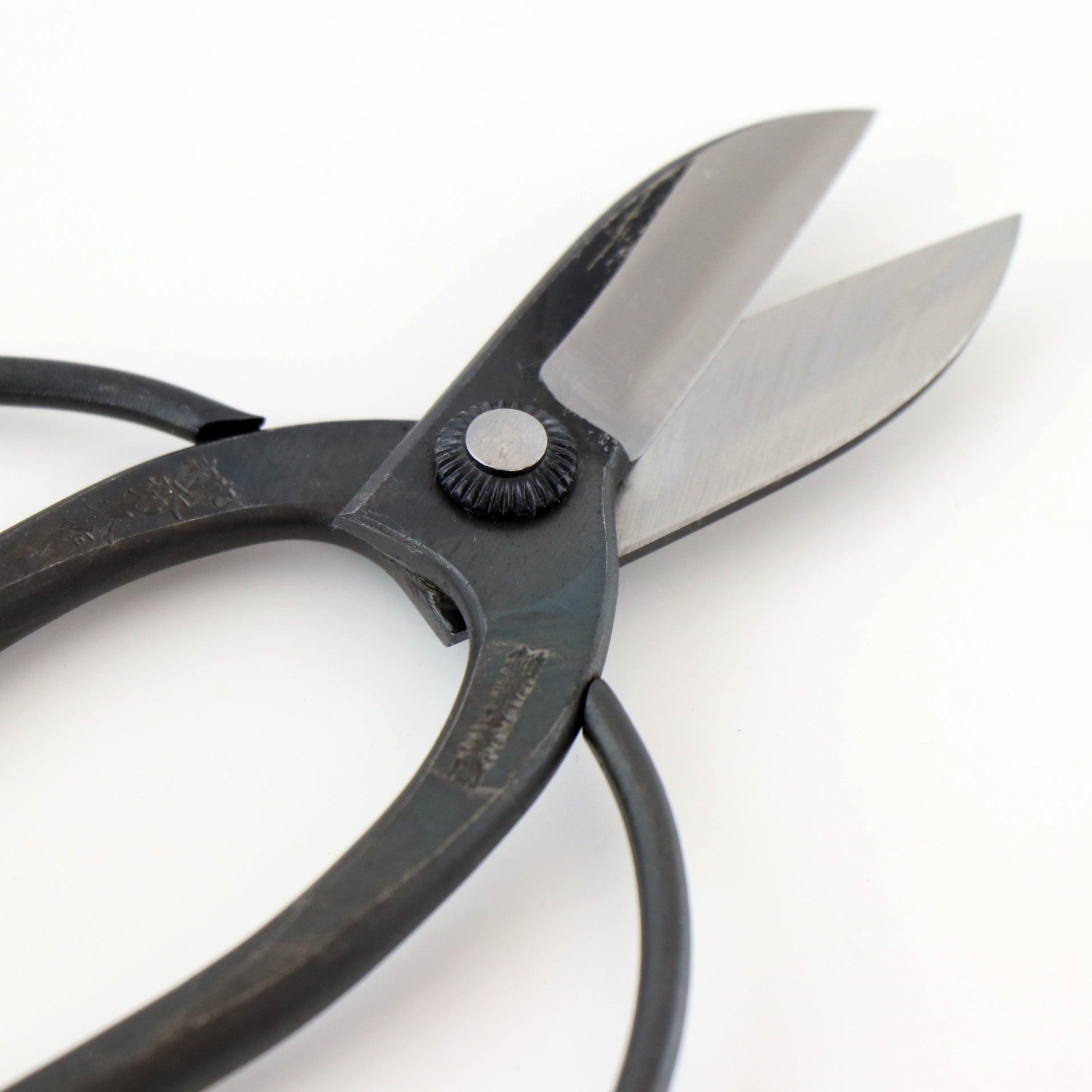
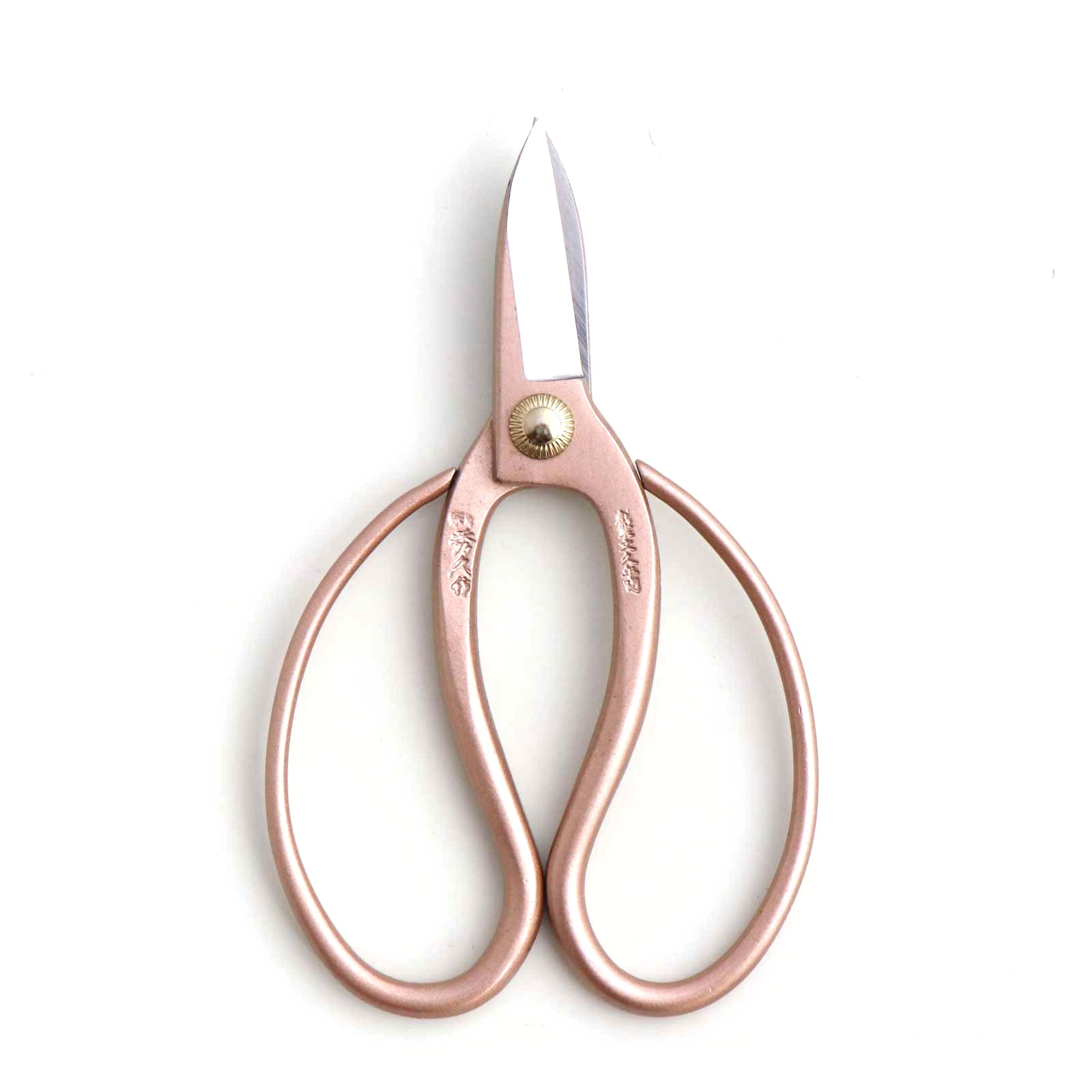
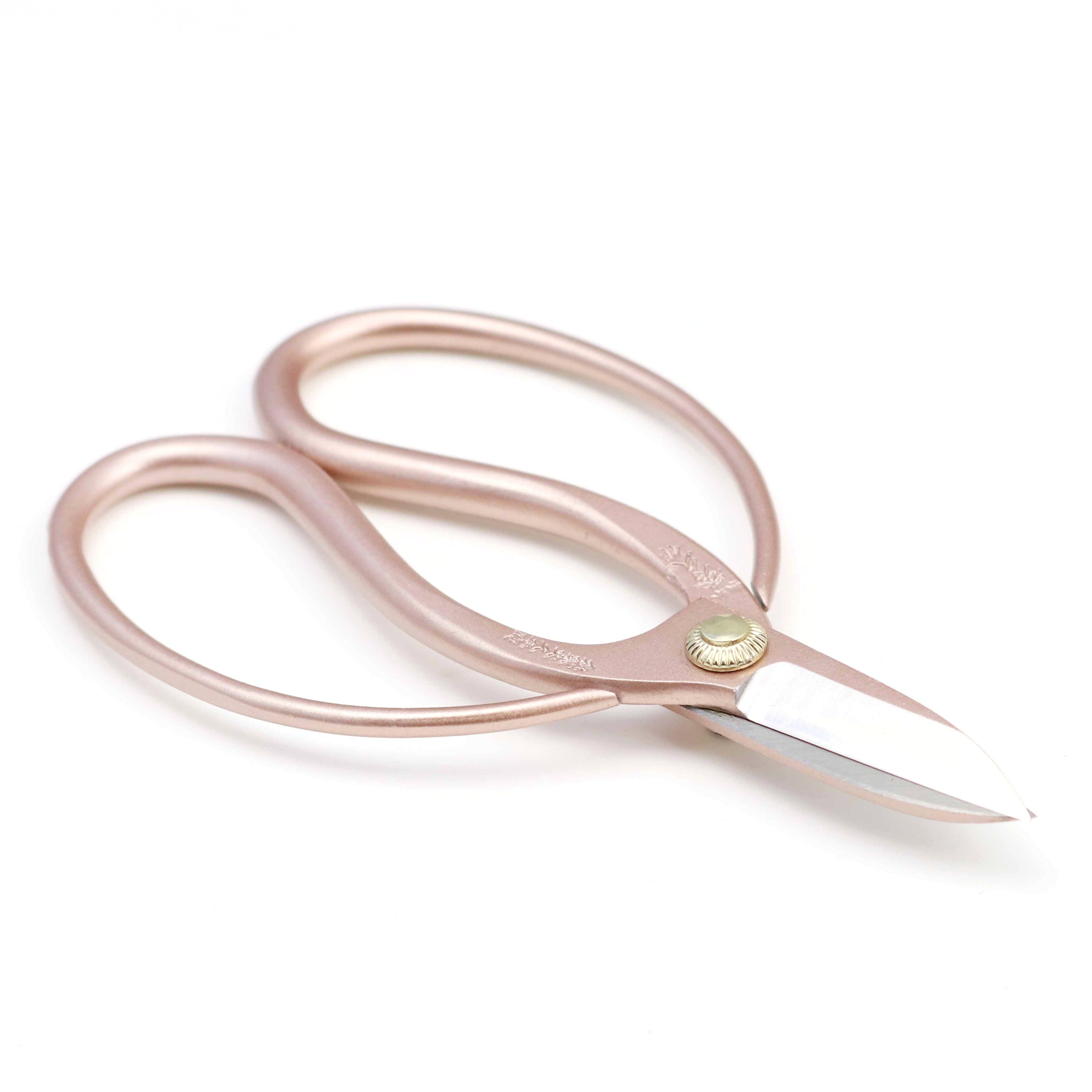
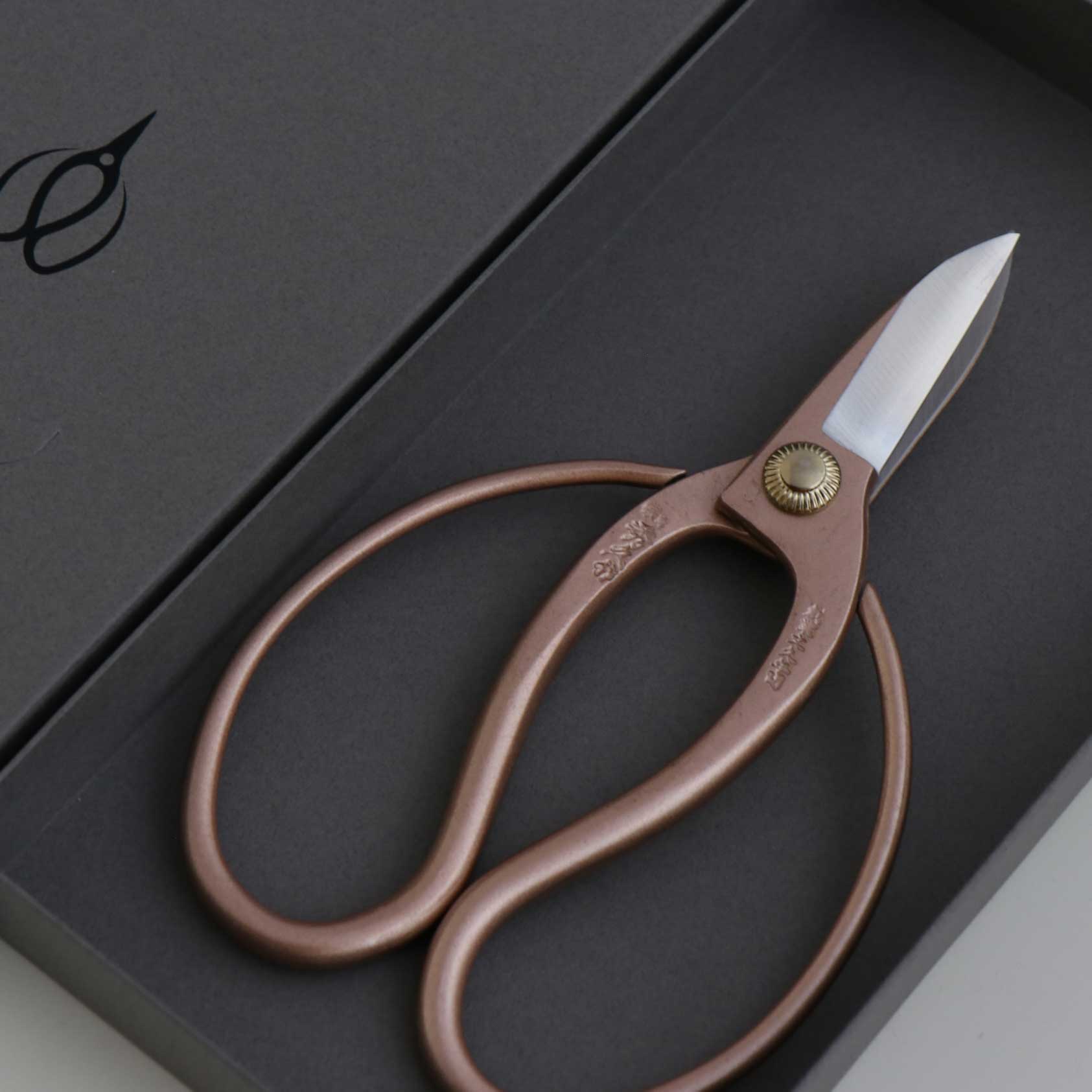
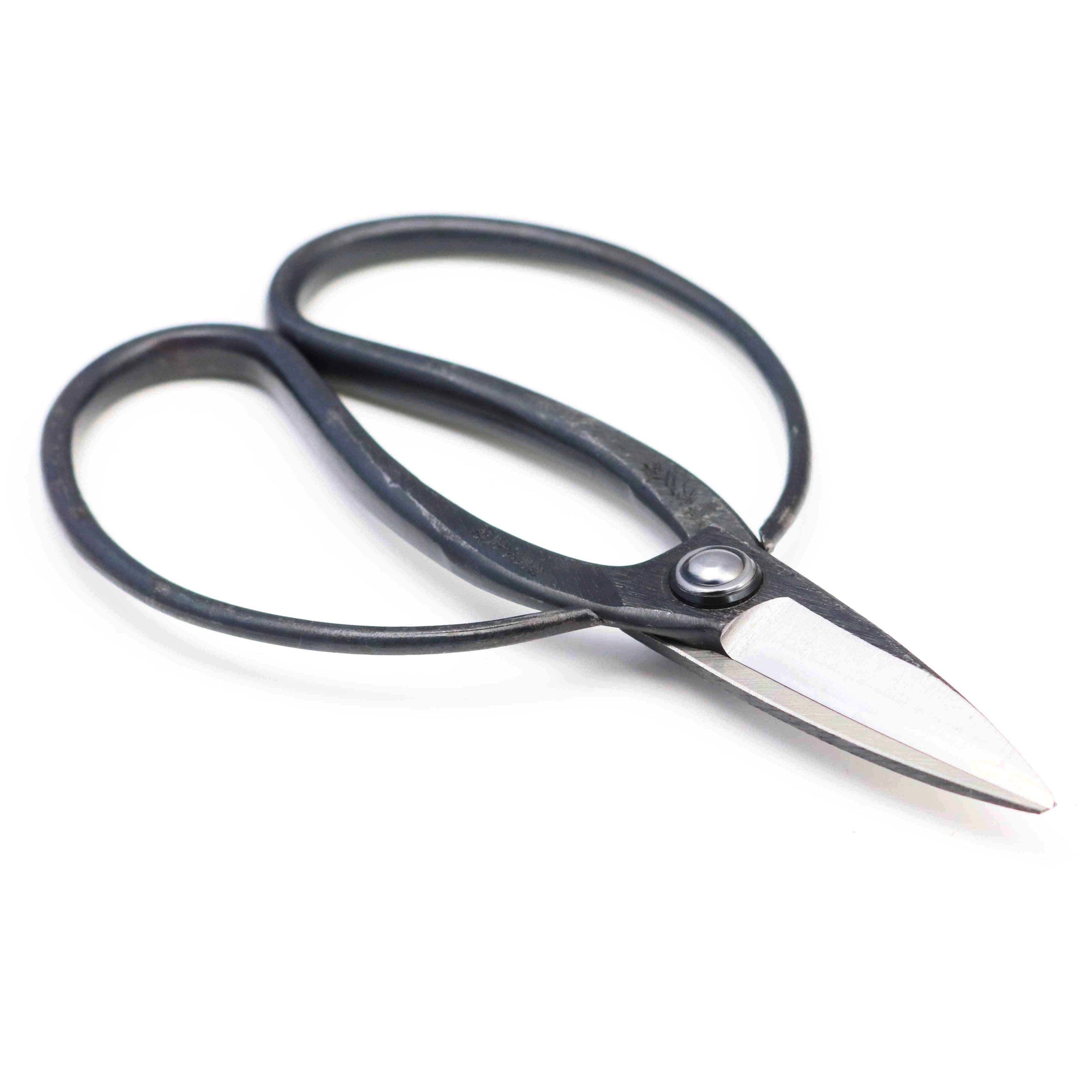
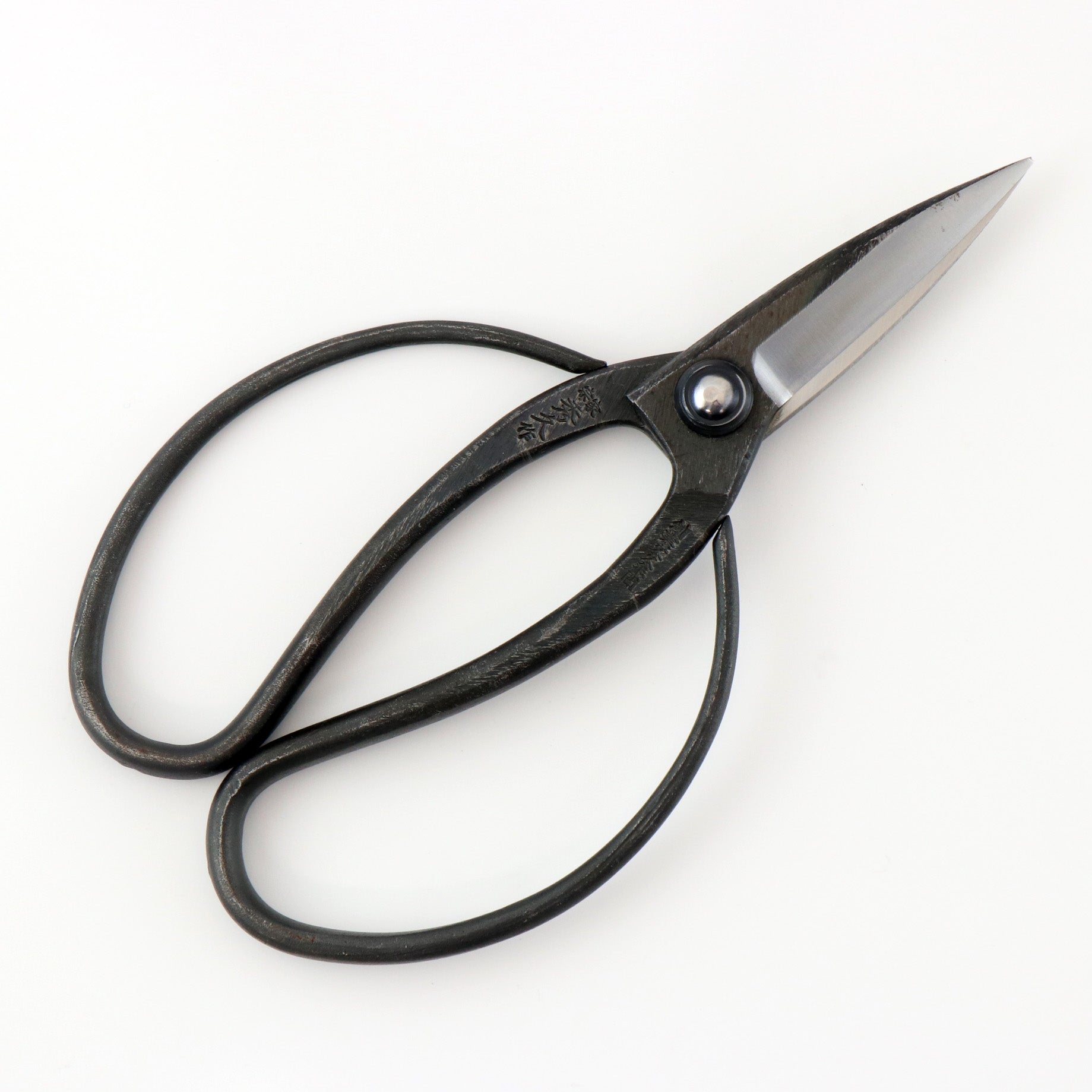
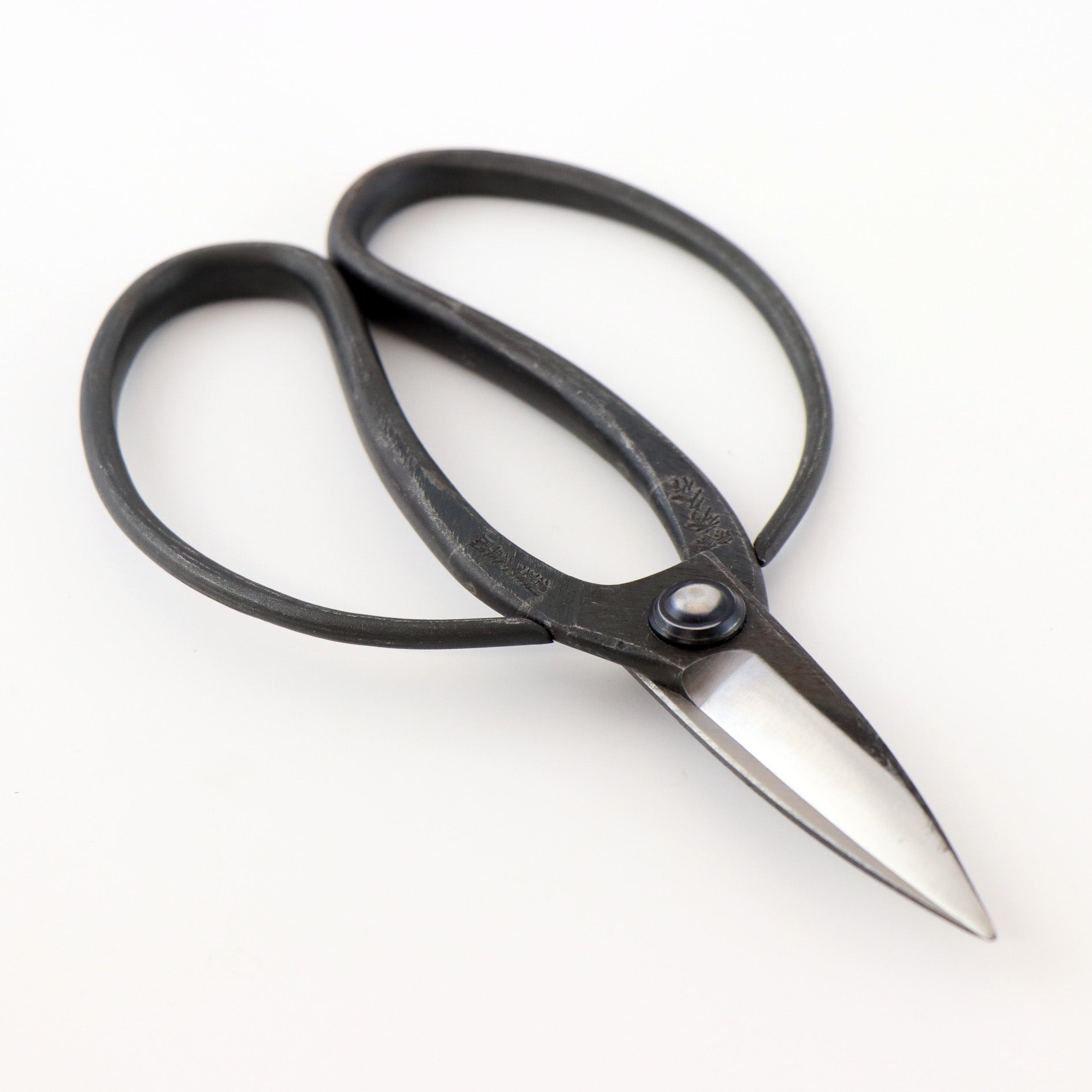
[Photo: T1 Traditional Okubo-Style Shears]
Traditional Japanese garden shears follow a different design principle.
Unlike a secateur, they have no pivoting spring. The blades open and close directly from the movement of your hand, guided by a loop handle — the same basic mechanism as an ordinary pair of household scissors, which means most people pick them up and use them naturally from the first cut. Some gardeners prefer this direct feel; others prefer the spring-assisted action of a secateur. It is a matter of personal preference, not experience level.
This family includes several traditional forms — bonsai shears, ikebana shears, and long-blade shears for hedge shaping and leaf trimming, each shaped for a specific kind of work. For a first shear in this family, we recommend the T1 Okubo-Style, the most classic and broadly useful form.
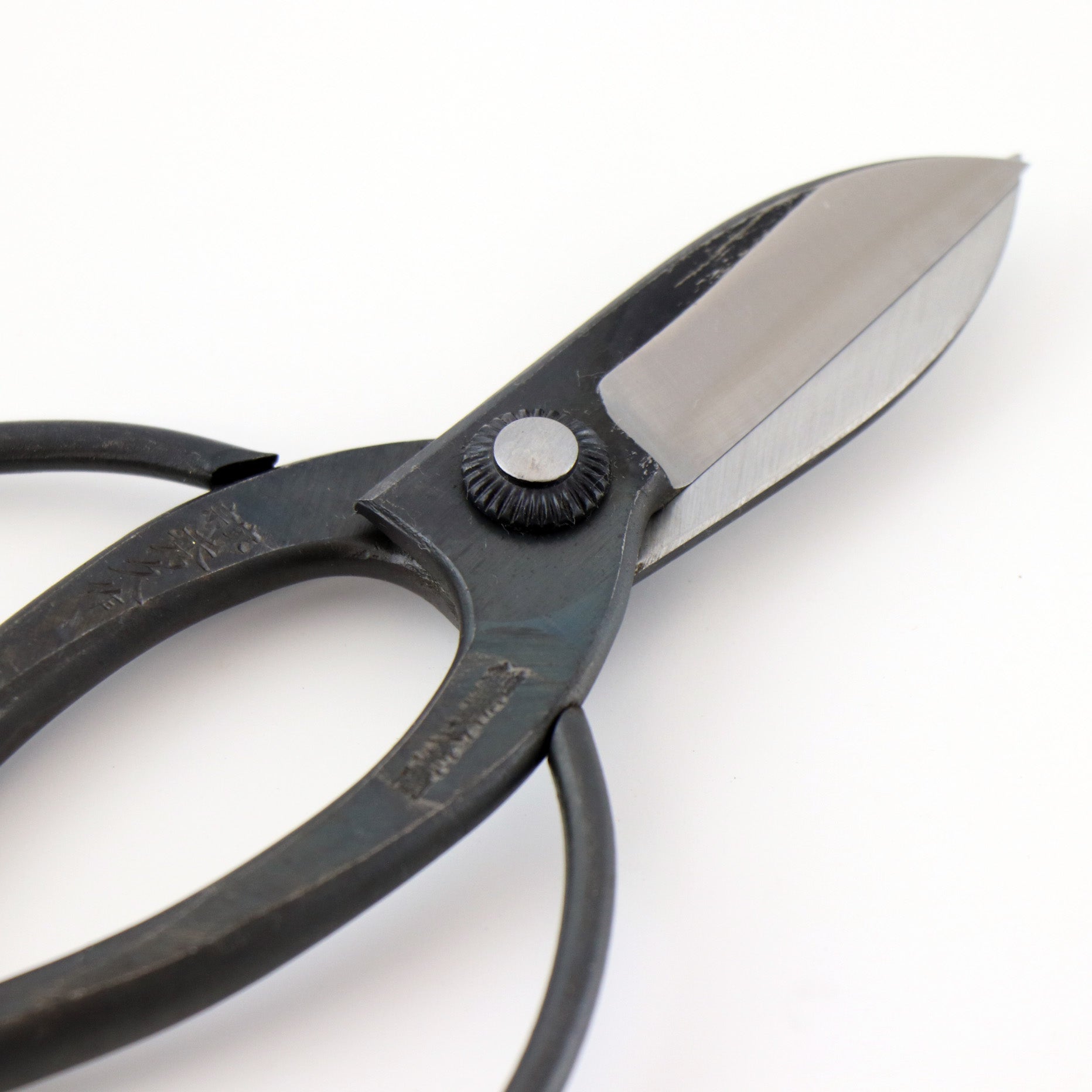
The T1's defining feature is its blade: wider and stouter than a snip's. That broader blade gives the T1 something a snip cannot offer — the structural strength to cut thicker branches cleanly. Where the T17 is built for delicate, selective work, the T1 is built to handle a genuinely wider range of material in the garden, from fine stems up to small branches. This is the quiet reason the Okubo style has remained the all-purpose garden shear in Japan for generations.
Where a snip works by repetition, the T1 works by variation. Within a single afternoon in the garden, you move between fine tip work and heavier heel cuts, adjusting your hand for each task. The tip of the slim blade edge handles detailed work — selective thinning, careful shaping, fine cuts in crowded growth. The heel of the broader blade cuts small branches and twigs cleanly—one tool, two working zones, used across many different tasks.
This is the classic form of Japanese garden shears. It has been used in Japan for generations for light pruning, selective thinning, cut-backs, and gentle shearing. It is not "all-purpose" in the disposable sense. It is all-purpose in the older sense: one well-made tool, shaped with care, that serves across many seasons of work.
The T1 is a good first pair if you:
- Tend a garden with ornamental shrubs, small trees, or varied plants
- Cut a range of materials in a single session, from fine stems to small branches
- Are drawn to the Japanese gardening tradition itself
- Prefer the direct, spring-free feel of a loop-handle shear
- Plan to sharpen, maintain, and keep one tool for many years
The T1 may not be the right fit if your work is mostly inside crowded growth, where a blade needs to slip between stems. The wider blade of the T1 does not enter narrow spaces as cleanly as the slim blade of the T17. If your cutting is almost always delicate and close in, a snip will reach where the T1 cannot. Similarly, if you prefer the spring-assisted feel of a pivot-and-spring shear, the T17 or T19 will feel more natural in daily use.
T1 Traditional Okubo-Style Shears — Key Specs
- Overall length: about 200 mm
- Blade length: about 70 mm
- Weight: about 215 g
- Max cutting capacity (green wood): about 8 mm at the heel, about 3 mm at the tip
- Steel: forged high-carbon steel (JIS)
If your work leans more specifically toward bonsai, ikebana, or hedge shaping, our guide to traditional Japanese garden shears → walks through the full family, including the T4-3 bonsai shears, T8/T9 ikebana shears, and T5/T6/T7 long-blade shears.
Quick Decision Guide
If you want the shortest version:
- Mostly houseplants, soft stems, or close detail work inside crowded growth → Start with the T17 Snips
- Flowers, roses, or a mix of indoor and outdoor plant care → Start with the T19 Multi-Purpose Pruning Shears
- A traditional Japanese shear for a lifetime of garden care, across fine cuts and small branches → Start with the T1 Okubo-Style
And if you are still between two:
- T17 or T19? → If your cuts are almost entirely small and delicate, choose the T17. If you also cut flowers, roses, or stems of varied thickness, choose the T19.
- T19 or T1? → If you prefer the spring-assisted feel of a secateur, choose the T19. If you prefer the direct, spring-free feel of a traditional Japanese shear — with the range to cut small branches as well — choose the T1.
- T17 or T1? → If most of your work happens inside crowded growth, where a slim blade needs to slip between stems, choose the T17. If your work spans a wider range — from fine stems to small branches in a single session — choose the T1. The T17's slim blade reaches where the T1 cannot; the T1's wider blade handles material the T17 cannot.
Still Not Sure Where to Start?
If you are between two families, the answer often becomes clear when you imagine the shears in your hand a year from now. Which pair do you still want to reach for?
If you would like help, tell us what you cut and how you use your shears. We will point you toward the most natural fit in our lineup. You can also see our full shear selection guide →.
A Few Last Questions
Which shears are best for houseplants? For most houseplant care, the T17 is the best fit. Its slim blade is designed to slip into crowded growth and make precise cuts on soft stems and leaves. If your indoor plant care also includes cut flowers or slightly firmer stems, the T19 becomes the better single choice.
I cut a lot of flowers and roses. Which shears are best? The T19 is designed for this. Its long, slim blade cuts flowering stems and rose canes cleanly, while remaining fine enough for delicate work on the same plant. It is equally at home indoors and outdoors, which is why we call it multi-purpose.
I want a pair of shears that handle a wide range of garden work. Which should I choose? The T1 Okubo-style is the clearest answer. Its wider blade gives it the strength to cut small branches at the heel, while the tip still handles finer work — one tool for a genuinely broad range of material. The shape has been used in Japan for generations for exactly this reason, and a well-maintained T1 can last you many seasons of garden care.
What All Three Share
Even with the differences above, every Toyama Hamono shear carries the same foundation:
- Hand-forged in Sanjo, Niigata, using tanzo (traditional forging) — the same fire-forging heritage that shaped Japanese blades for generations
- A sharp, clean edge that helps plants heal well after the cut
- A chemical-free, baked finish that gives each blade its distinctive dark surface
- Small, natural variations in size and weight, because each pair is shaped by hand
These are tools built to be lifelong companions, not replacements for next season. Every order ships worldwide for free and includes a complimentary blade-sharpening coupon, and custom name engraving is available if the shears are a gift.
Toyama Hamono has been forging shears in Sanjo, Niigata, since 1861. Each pair is hand-finished by skilled artisans and built to be maintained, sharpened, and used for years to come. Contact us → if you would like help choosing.




Share:
How to Sharpen Japanese Pruning Shears — A Practical Maintenance Guide
Why Forged Pruning Shears Are Worth Owning