
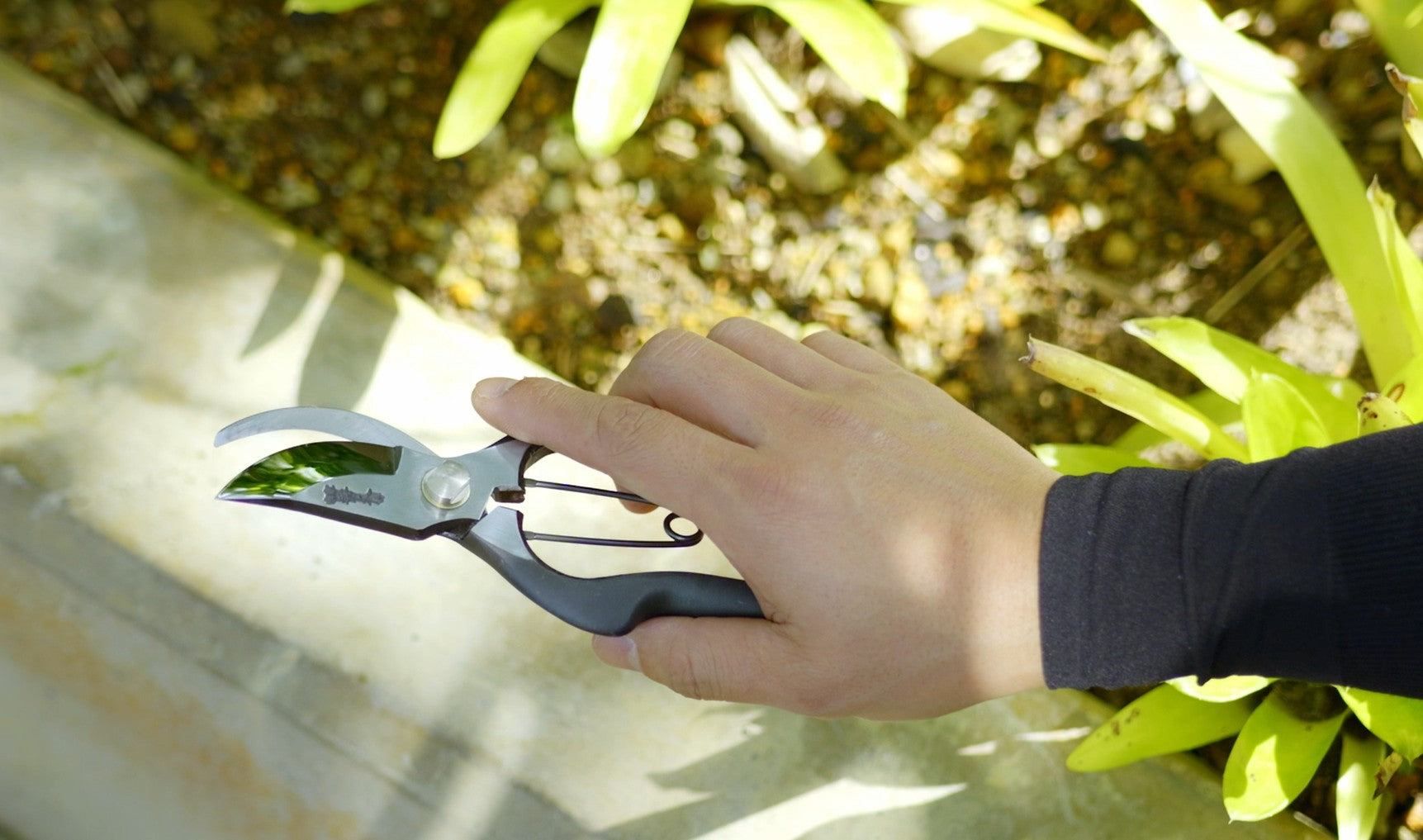
The Story Behind Toyama Hamono's Ergonomic Grips
By Hidenobu Toyama, CEO & Fifth-Generation Head of Toyama Hamono
For most of our history, the answer to "how do we make a better pair of shears?" was found in the blade. The steel. The thickness. The angle of the edge. The way the two blades meet.
By the late 1990s, we had begun to ask a different question.
We were making pruning shears — or secateurs — for people who open and close them several hundred, sometimes several thousand times in a working day. If we wanted those tools to cut better in their hands, did the next improvement have to come from the blade?
Or was it time to look at the part of the tool they were actually holding?
In brief: Toyama Hamono began rethinking the pruning shear handle in Sanjo, Niigata, around 1998. Hidehisa Toyama, Hideo Toyama, and Hidenobu Toyama brought together manufacturing knowledge, sales experience, and feedback from professional users. The first model followed roughly two years later, around 2000, and the work eventually led to the asymmetrical and symmetrical ergonomic grip families used in Toyama Hamono pruning shears today.
After Generations of Refining the Blade

Toyama Hamono began making wood shears in Sanjo, Niigata, in 1861, and our family has carried on the Echigo wood-shear tradition through five generations. Much of what we know is inherited: hi-zukuri forging, ura-suki (the shallow hollow on the inner face of the cutting blade), and aiba-dori (matching the two blades by hand so they meet along the intended line).
In the time of the third generation, Hidekichi, our main product was ueki-basami — traditional garden shears. Pruning shears were a smaller part of what we made. That changed under the fourth generation, Hidehisa. Pruning shears came into much wider use, our equipment changed with them, and the range of what we produced grew.
Through all of it, the work was the same work: make the blade cut better. Refine the steel. Refine the geometry. Refine the heat treatment. Refine the fit between the two blades.
By the late 1990s, there was a feeling in the workshop that the blade had been refined to a very high level.
That did not mean there was nothing left to improve. We still refine our blades today. It meant something more specific: that meaningful improvement might no longer come from the blade alone.
The next thing to look at was the hand.
What Professional Users Were Telling Us
We are fortunate in one specific way: many of the users closest to us are professionals. Gardeners, orchardists, and landscape professionals. They use the tool every working day, and the distance between them and our workshop has always been short. They tell us what works. They also tell us what does not.
At the time, the symmetrical Type B was already a familiar form in Japan. It has a lineage connected with Yamagata Prefecture, and its basic silhouette was widely shared among Japanese makers. There is nothing wrong with that form. It became established because it works, and we made it too.
But some of what we were hearing concerned the handle rather than the blade — professional users asking for a handle that remained comfortable through long, repetitive work. Those were needs the existing form could not answer for every user. At the same time, we wanted to make a pruning shear with a character that was clearly our own, rather than another variation on a familiar form.
One account from a professional gardener has stayed with us. With repeated use, the point where the handle pressed into his hand eventually wore through his work glove.
Not the blade wearing out. Not the tool breaking. The glove.
A pair of shears can feel perfectly acceptable when it is opened and closed a few times in a shop. A professional tool is judged differently. A small point of pressure, or a grip that asks for more effort than it needs to, becomes something much larger after thousands of repetitions.
In 1998, we began a project to reconsider what a pruning shear could be. Three of us led it: Hidehisa, the fourth-generation head of the workshop, from the manufacturing side; Hideo, my father, from the sales side; and myself. My part was largely to bring what customers were telling us into the development work.
Manufacturing knowledge, sales experience, and customer feedback were brought into the same project, and the three of us shared our thinking openly throughout. The difficulty turned out to be somewhere else entirely.
Why We Developed More Than One Ergonomic Grip

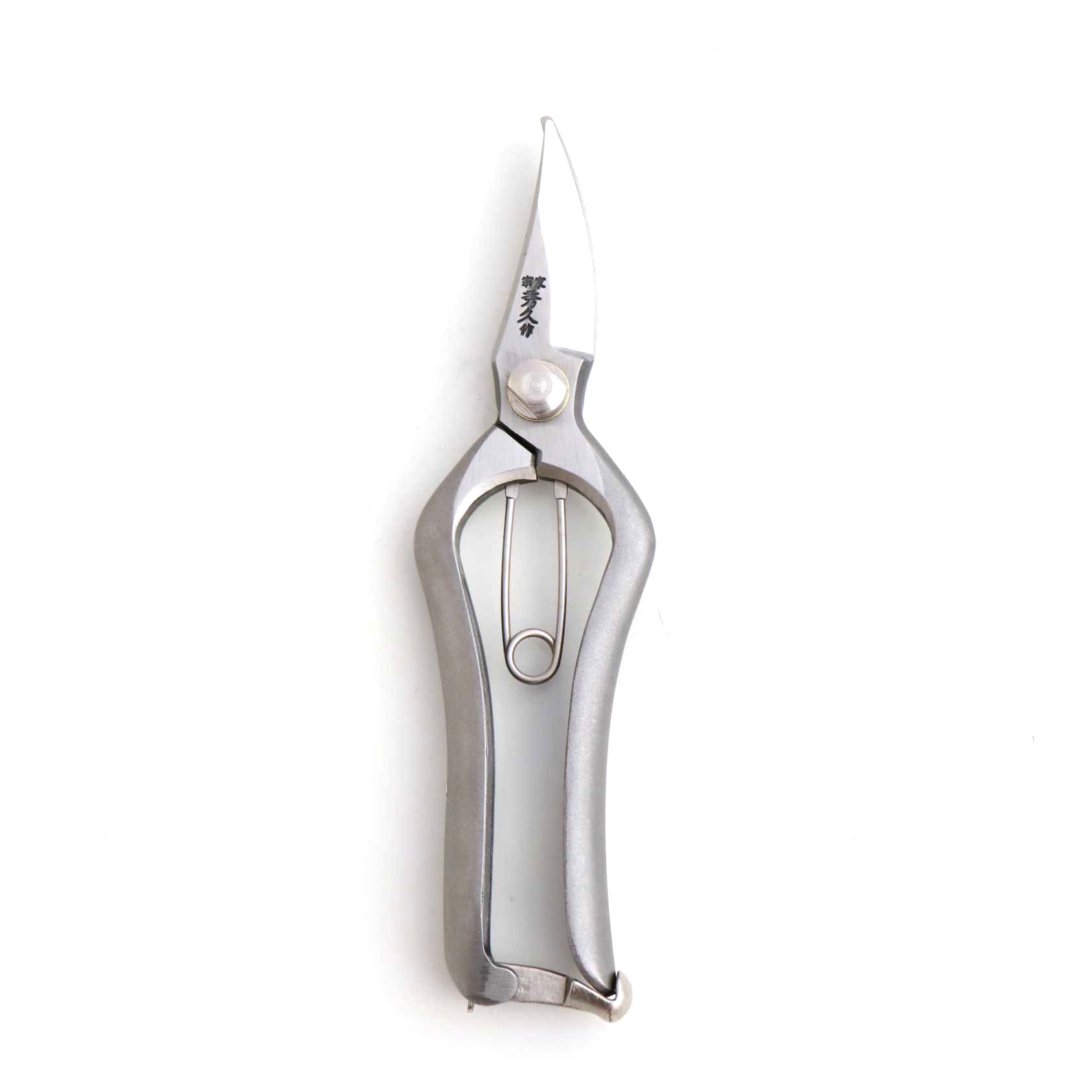
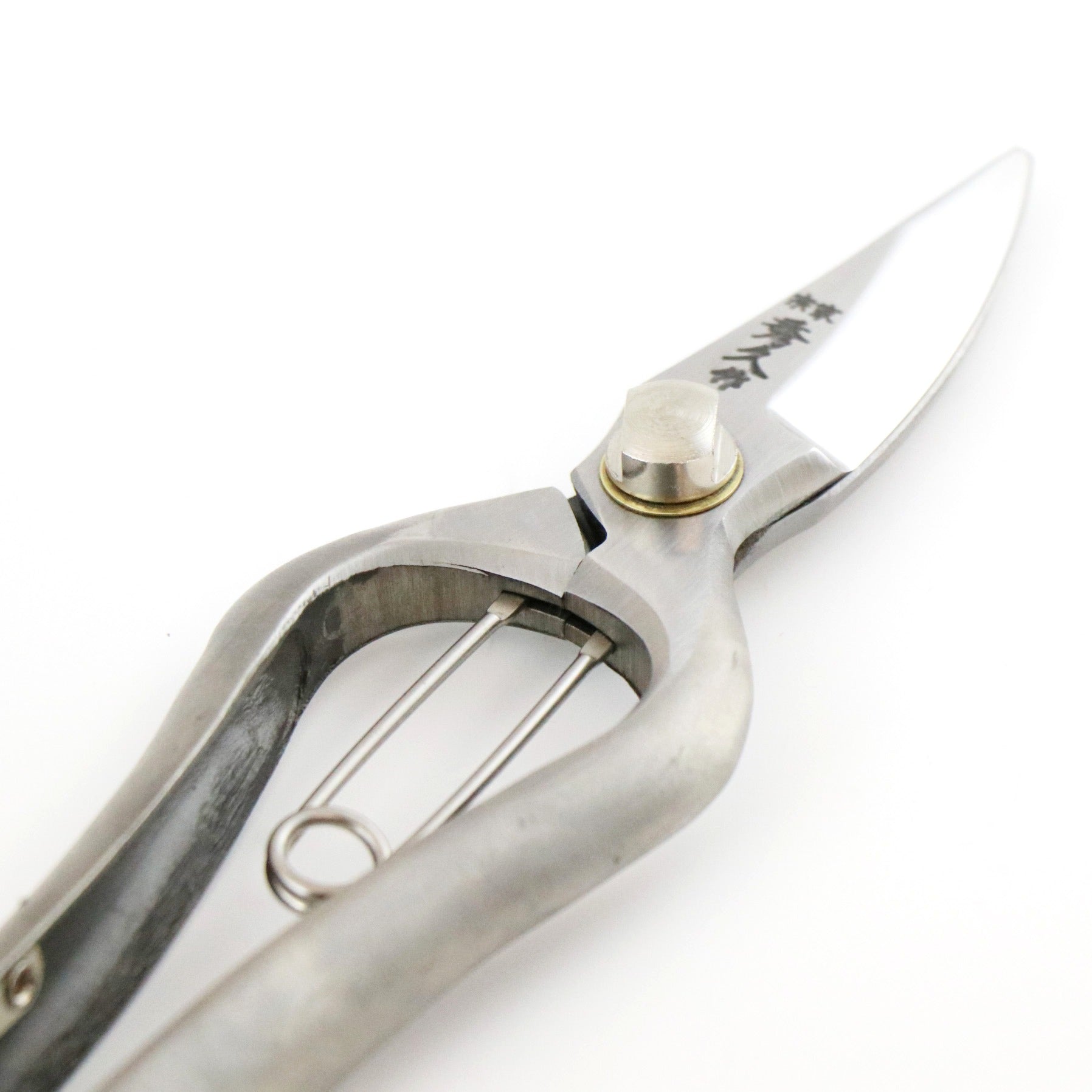
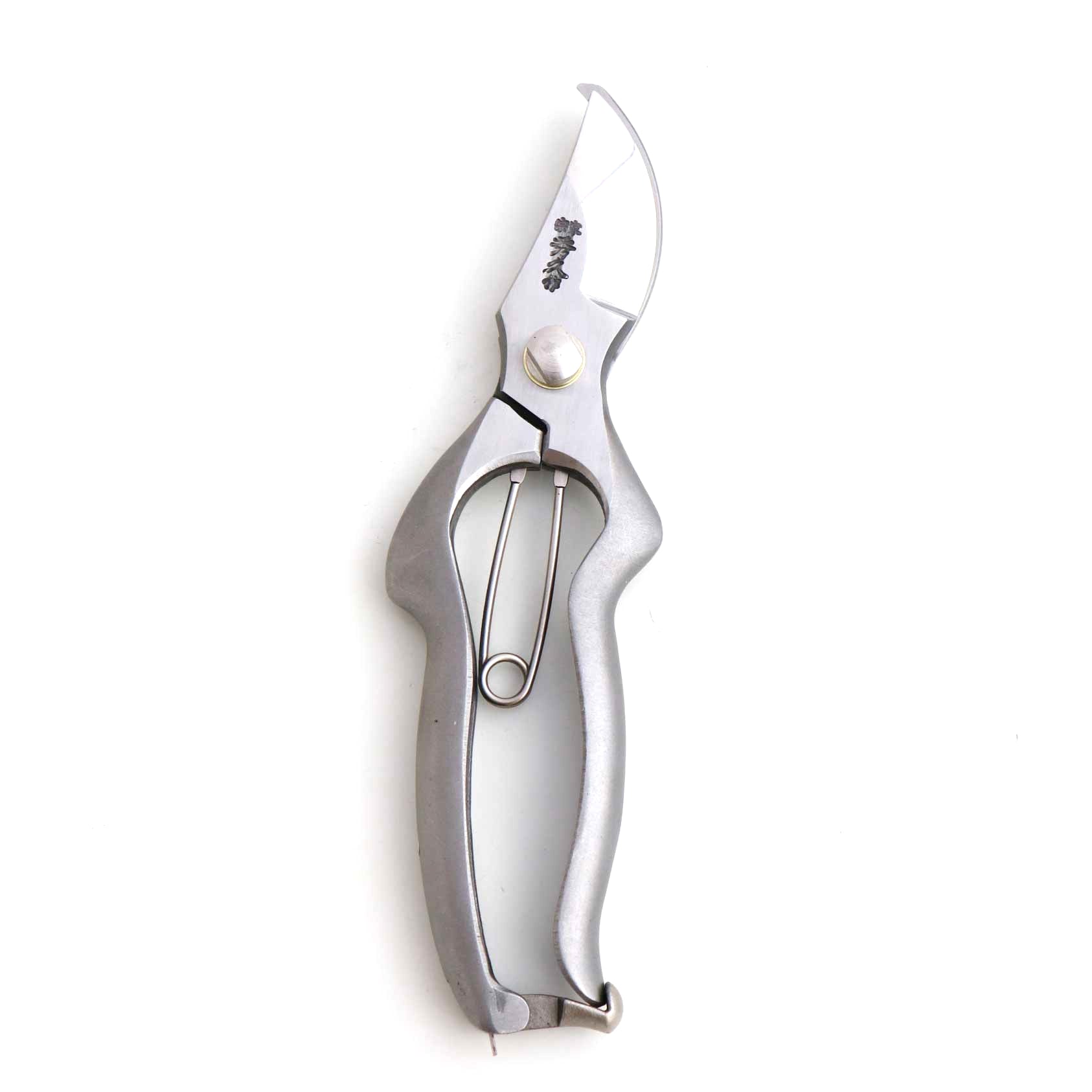
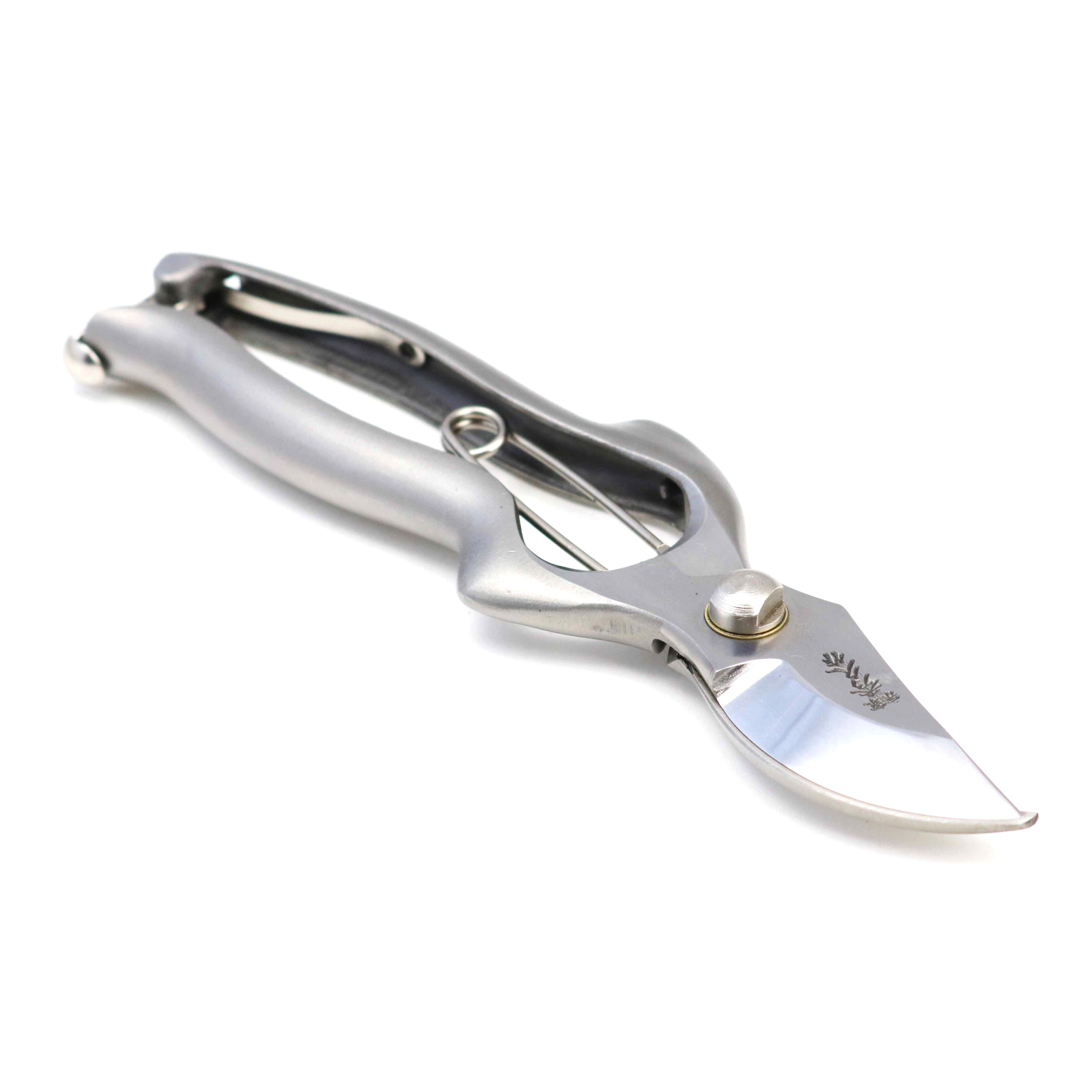
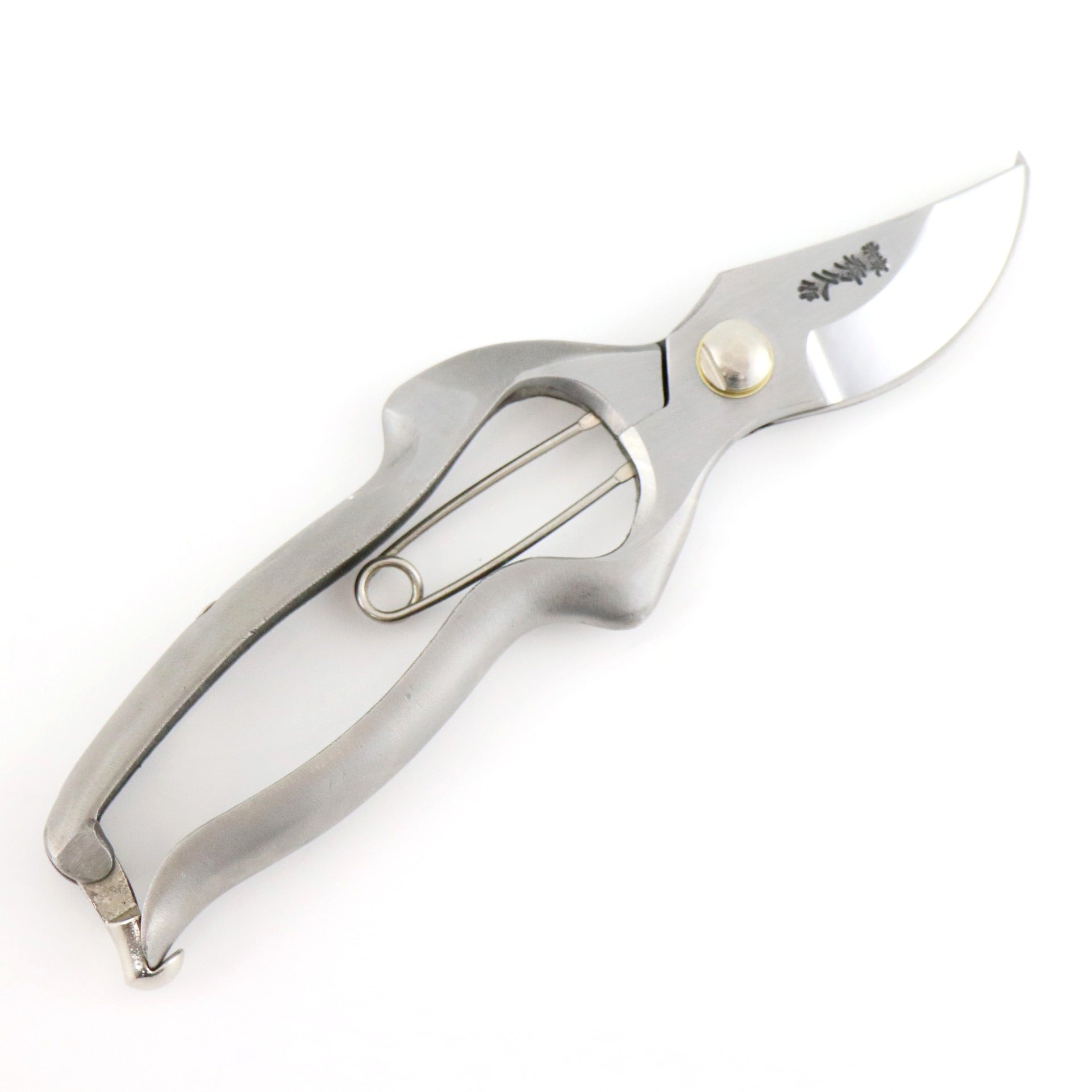
Photo: T13 and T22 (stainless steel version of the T21)
We started from the hand rather than from the tool.
We looked at hand size, using the hands of Japanese users as an important reference. We looked at how easily a handle could be held, how easily force could be applied, and how the tool felt when it stayed in the hand for a long time. We also studied pruning shears made outside Japan — not to copy them, but to understand what had been tried, and then to ask what was possible for us, working within forging.
The objective had not changed. We still wanted a tool that cut better. We had simply stopped thinking about only the edge of the blade.
The shape did not arrive in one attempt. The width, the thickness, and the line of the curve all changed along the way.
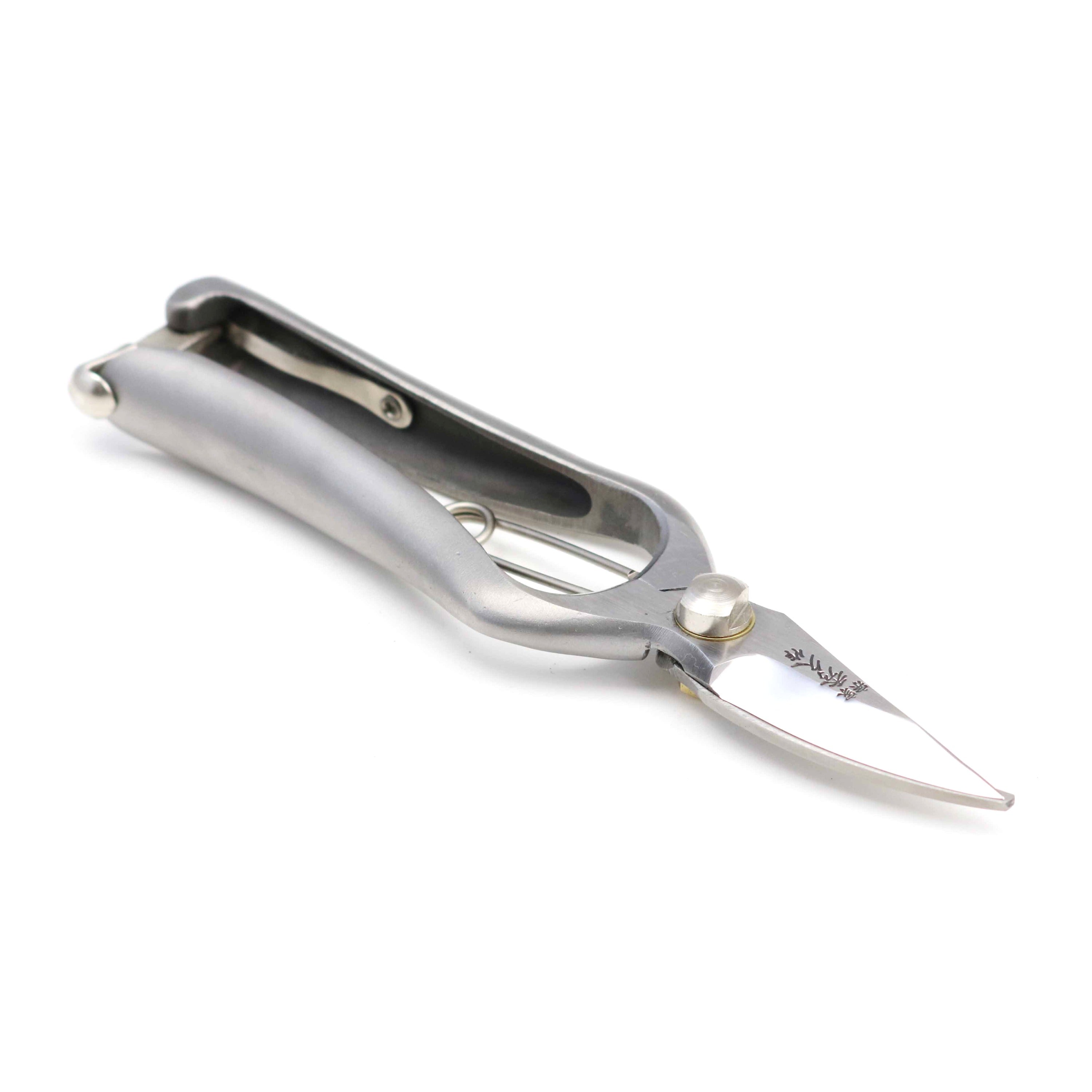
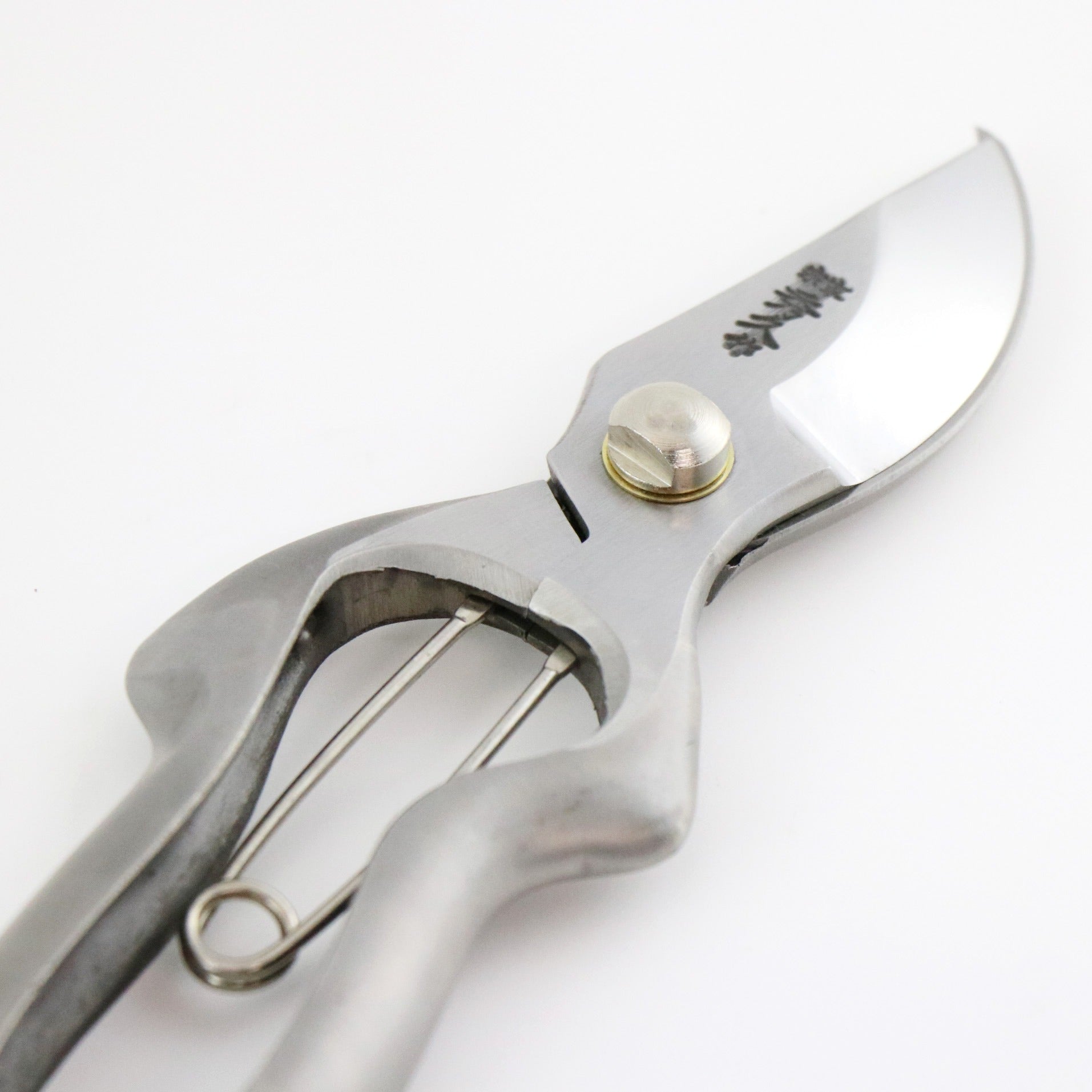
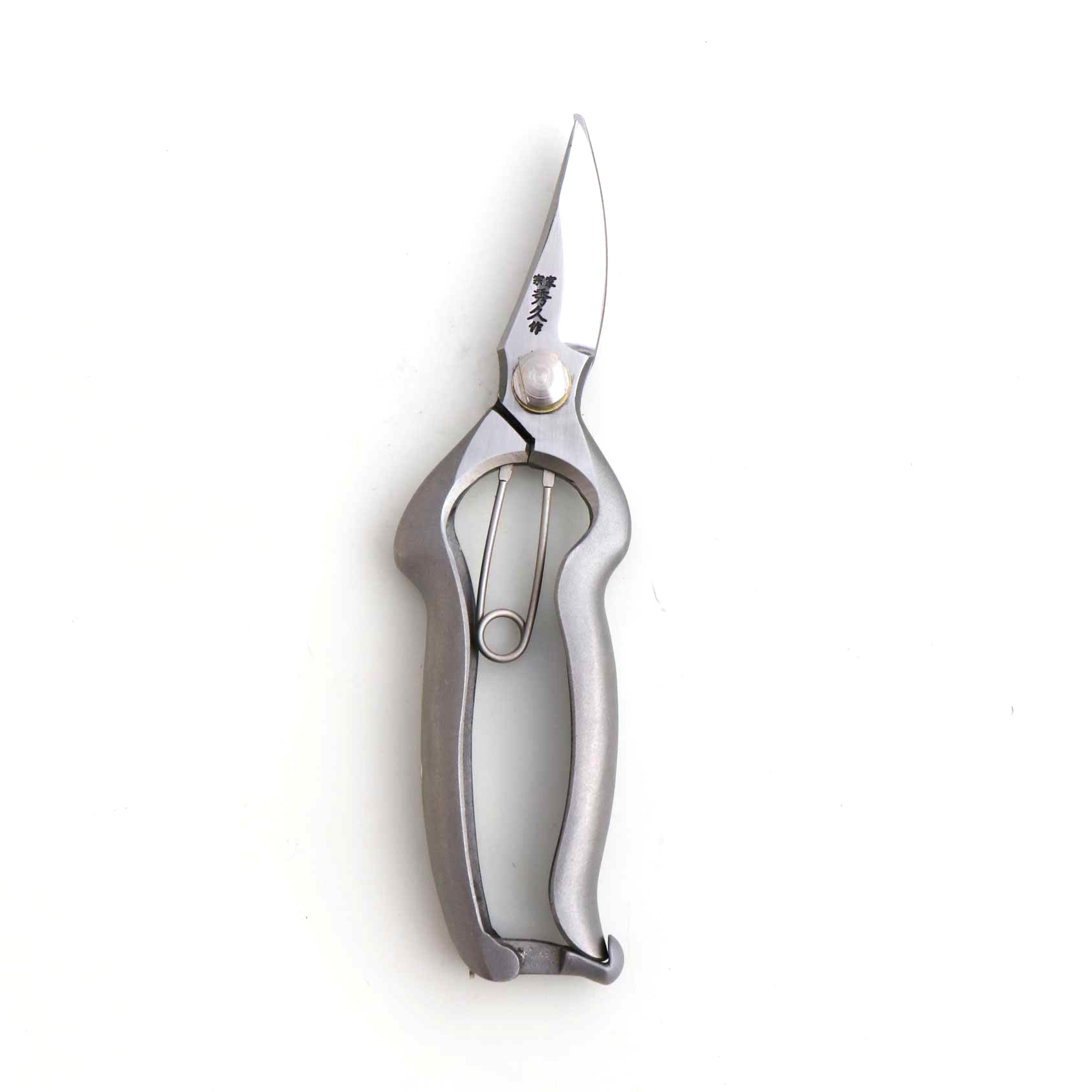
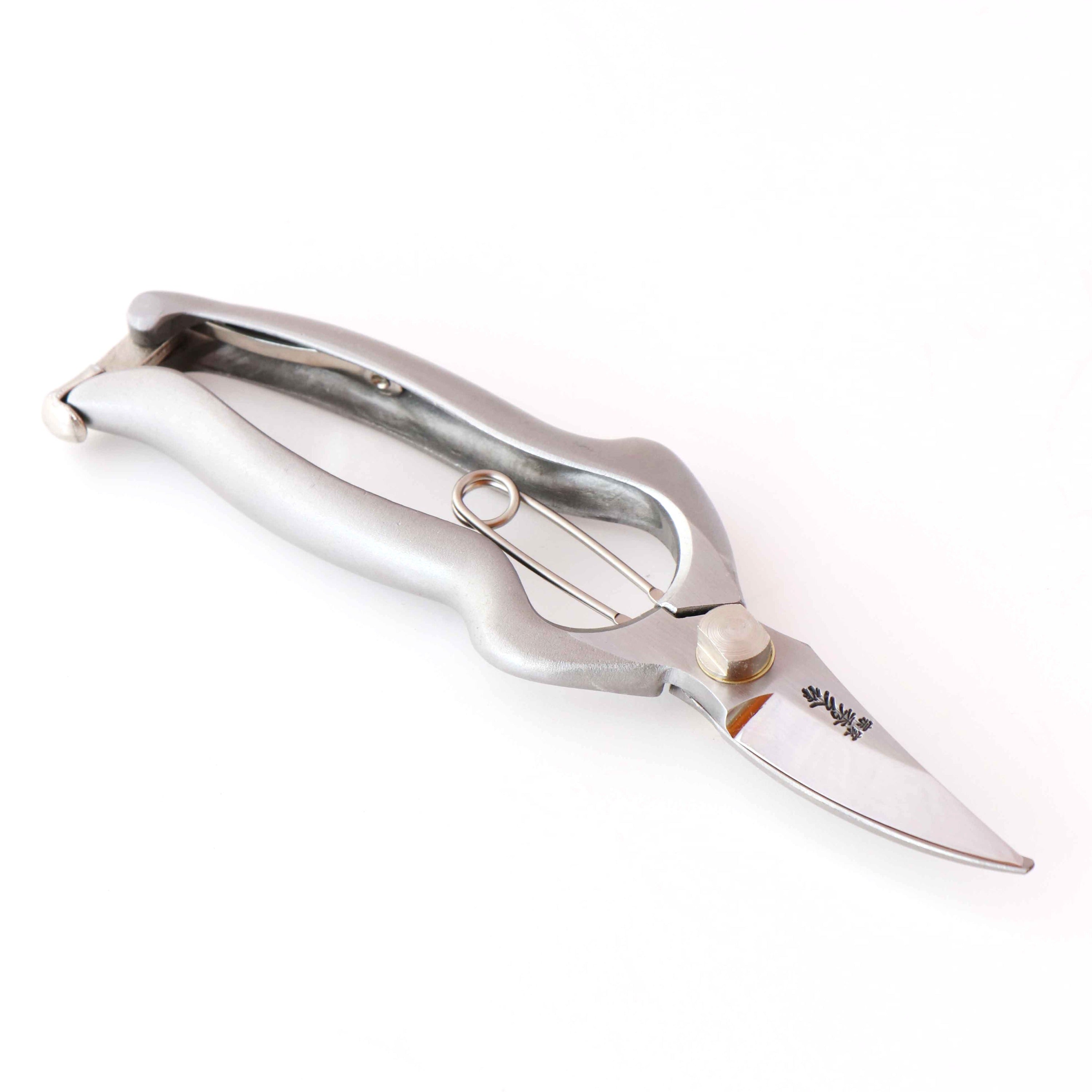
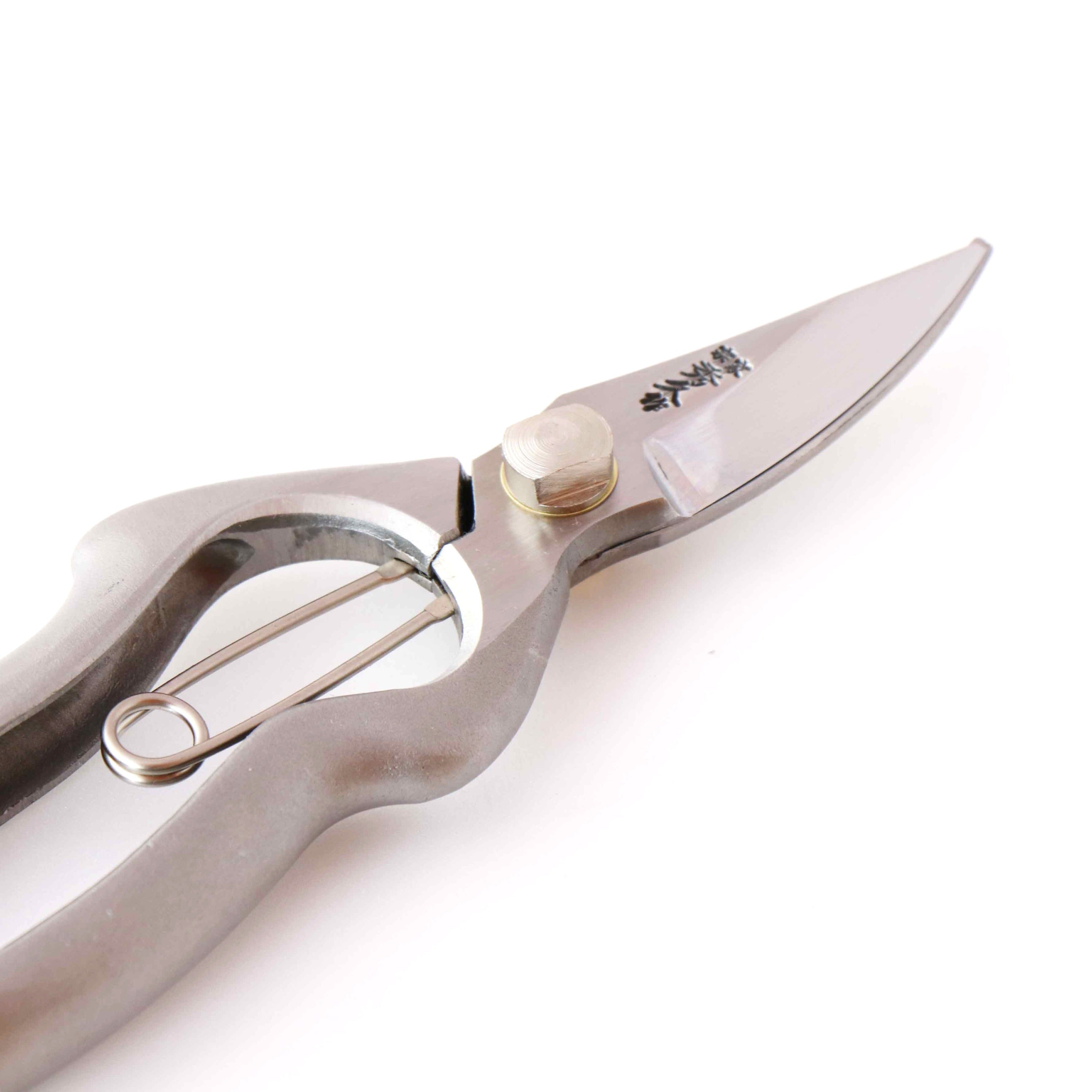
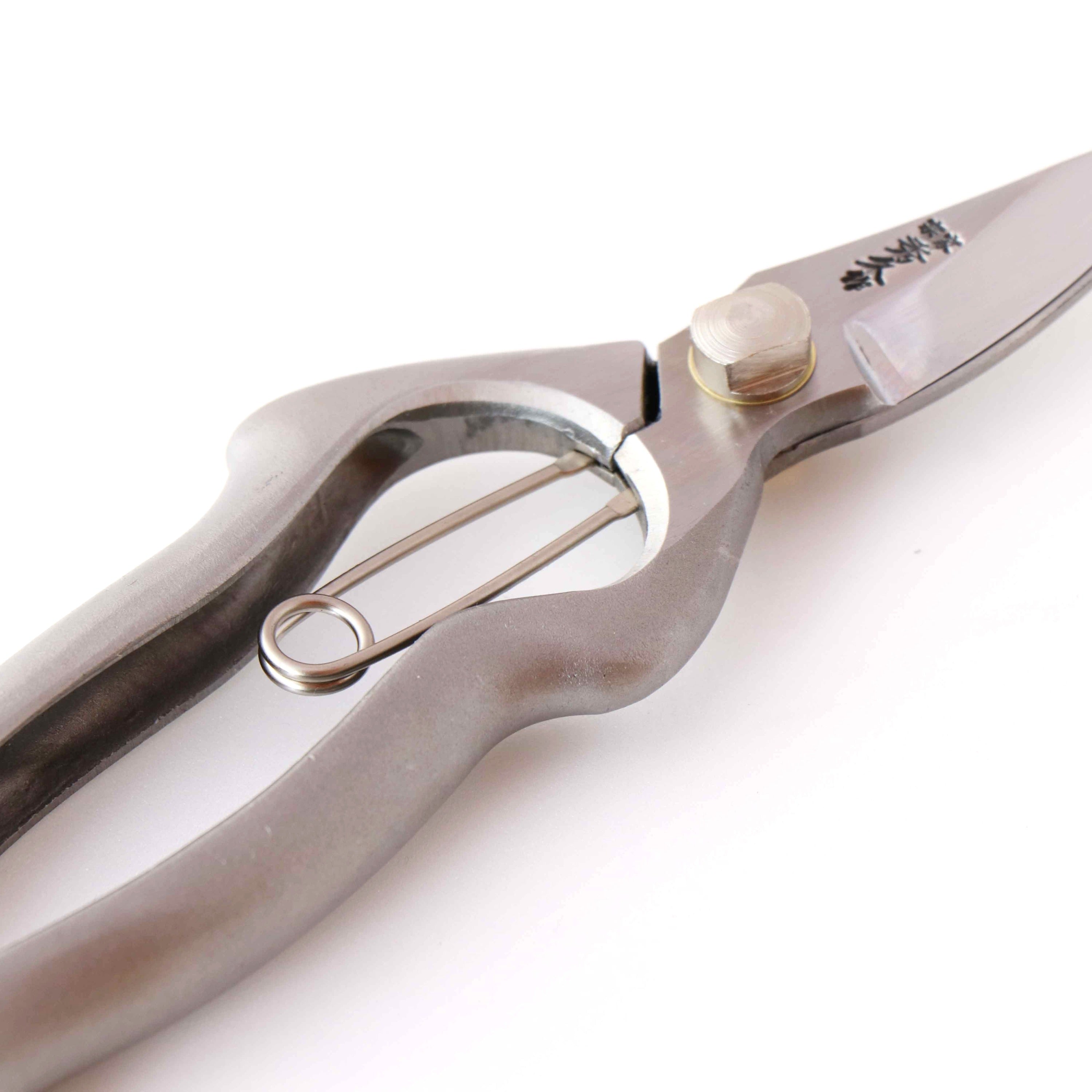
Over time, this work led to two ergonomic families: an asymmetrical ergonomic grip, which guides the hand into a more defined position, and a symmetrical ergonomic grip, wider and rounder, with a fuller surface meeting the palm.
We did not try to reduce this to a single answer. Hands are different, and so is the work. The feel one person prefers is not the feel another prefers, and we wanted the person holding the tool to have the choice.
That thinking is still part of our range today, which includes traditional symmetrical grips alongside both ergonomic families. If you want to compare how those grips differ in use, our guide on choosing pruning shears by grip covers it in detail.
This article is about something else: how difficult it was to turn those shapes into forged tools.
A Comfortable Shape Is One Thing. Forging It Is Another.

This is the part of the story that took the longest, and the part we tend to skip when we talk about the tool. It is not a story about design. It is a story about steel.
It helps to know how a Toyama Hamono shear is made.
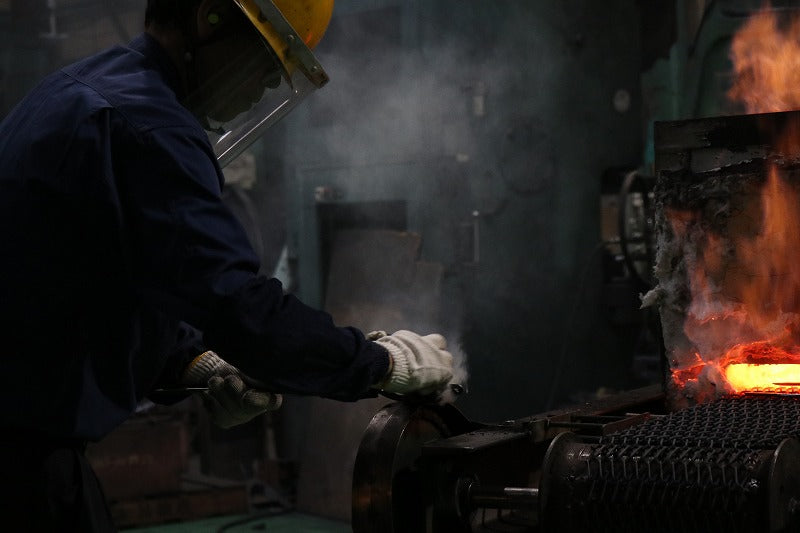
In casting, molten metal is poured into a mold and allowed to fill it. Forging does not work that way. We heat solid steel to around 1,000 degrees Celsius, until it glows red and becomes workable — the closest description is warm syrup, though it is nothing you could pour. It is then placed between dies that close on it with the speed of a hammer blow.
Everything depends on one condition: the material must reach every corner of the die.
As the form became wider, thinner, and more strongly curved, controlling that became far more difficult. We were asking hot steel to travel out into a broad, shallow, curving space and arrive everywhere, in the same thickness, every time.
It did not.
Some pieces came out with openings or tears. Some developed cracks. In others, the thickness was not even across the form. A shape that looked right on paper was not automatically a shape the steel would accept.

So we changed the design — the width, the thickness, the line of the curve — and then we changed the die.
A forging die is not inexpensive. Producing one could cost millions of yen, and there were occasions when we had a die made, tested it, found the result unsatisfactory, and had another made. That happened more than once.
Producing one successful sample was never the goal. We needed a shape that could be forged consistently, as a professional tool, in production.
This was where design and manufacturing became inseparable. Someone can imagine an ideal curve. A user can tell us exactly where a handle feels wrong. The workshop floor still has to move hot steel into that shape, again and again, without cracks, without unwanted thinning, and without losing the strength a professional tool requires.
There was also the question of what a new form did to everything downstream — how it had to be handled through the rest of production, and whether the people making it understood why this shape behaved the way it did.
So the work was not one technical problem. It was the design, the forging, the handling of the part on the factory floor, and the understanding of the craftspeople producing it. Each had to be addressed, and each was informed by what had already failed.
Roughly two years passed between the decision to begin and the first model. That brought us to around 2000.
How the Ergonomic Grip Evolved After Launch

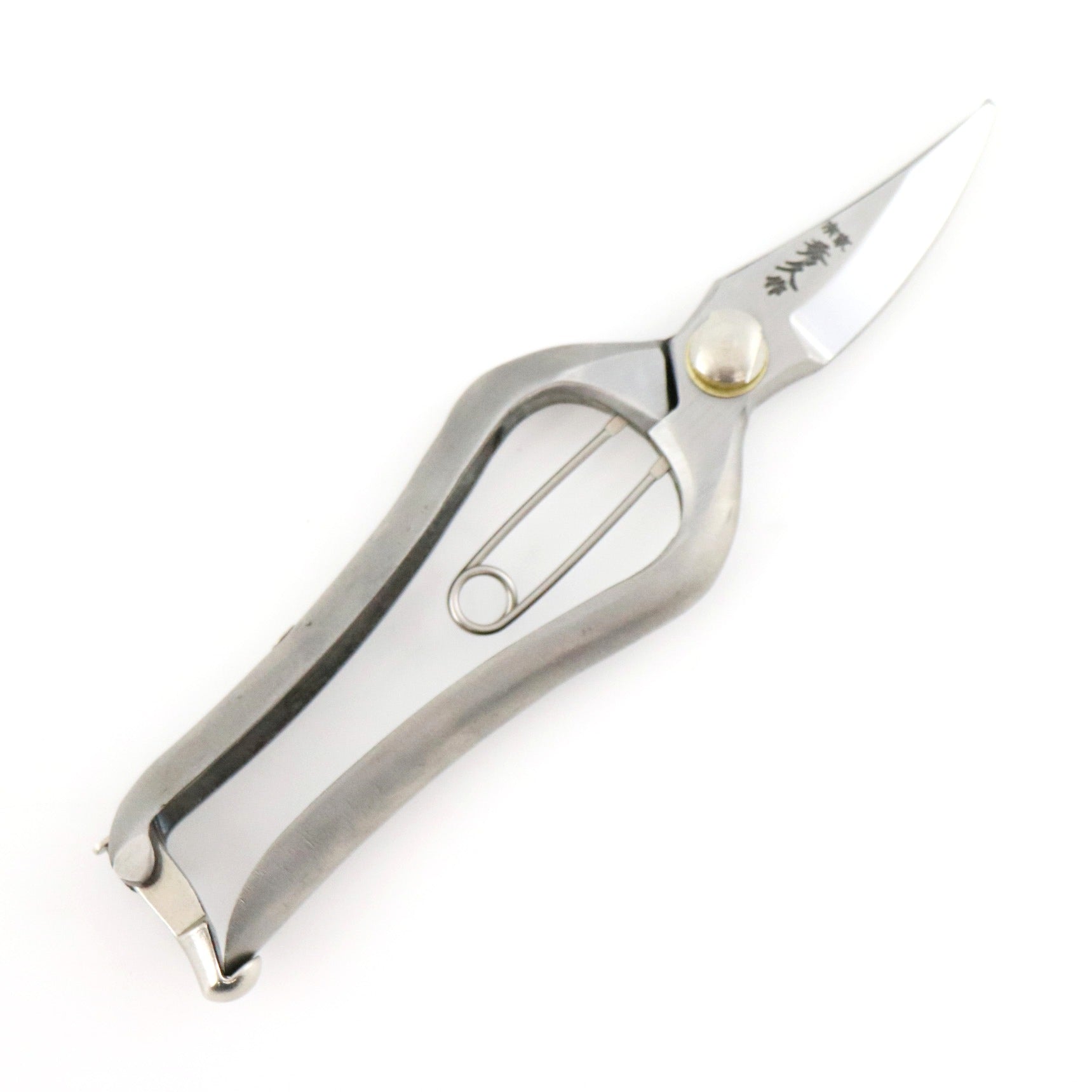
Photo: Asymmetrical Ergonomic Grip models: T13, T25, T30
Releasing the first models did not mean the work was over. Once the shears reached users, we learned things we could not have learned inside the factory.
Many users commented on the unfamiliar shape. More importantly, we began to hear — and still hear — that the tools were comfortable to hold and that force was easy to apply. The 200 mm models, including the T13 (YP200) and T21 (BB200Y), found strong support.
Size, however, became an issue. For some users, particularly those with smaller hands, a 200 mm pruning shear was simply too large.
So the range kept developing. We introduced 180 mm and 165 mm sizes, which made the same thinking available to a wider range of users, including many women and older gardeners. The symmetrical ergonomic family also moved into smaller sizes, which were well received by users with smaller hands. We later added stainless steel versions for regions and applications where corrosion resistance mattered most, and carried the same thinking into our snips.
Ergonomics did not give us one finished shape. It gave us a way of continuing to listen.
Recognition followed from outside our industry. In 2004, the YP200 (T13) received an IDS award and a Good Design Award. In 2006, the BB200Y (T21) received a jury award in the IDS Design Competition and a Good Design Award. Hidehisa had decided we should enter, following discussions with local government about what a company like ours could do to raise the value of what it made.
We did not design these shears in order to win anything. What the recognition confirmed was the order of things: we had pursued function, and the form was the result.
More Than Twenty Years Later

These grips did not stay in Sanjo. In 2007, we began exhibiting abroad, taking the YP200 (T13) and BB200Y (T21) to the international trade fair in Frankfurt. In 2010, we exhibited at the Chelsea Flower Show in the United Kingdom.
Over the years that followed, Toyama Hamono continued to exhibit internationally and to receive recognition for its products and its design work. In 2015, the BB200Y — now the T21 — was selected for The Wonder 500, a project by Japan's Ministry of Economy, Trade and Industry highlighting outstanding regional products. In 2018, our SYU pruning shears received an Excellence Award at DESIGN TOKYO. In 2023, Toyama Hamono received the Sustainable Garden Product of the Show award at the Melbourne International Flower & Garden Show, and Toyama Hamono shears were displayed as part of Japan's official indoor exhibit at Expo 2023 Doha Qatar.
In 2026, we exhibited in Singapore.
Different countries, different climates, different plants, different hands.
At the Singapore exhibition, one model that drew particular attention was the T26. Visitors picked it up, and what stood out in their feedback was the way it felt in the hand.
The thinking behind these grips began more than twenty years earlier in a workshop in Sanjo — through conversations with professional users and repeated experimentation with hot steel. Today, the people picking up those tools may live thousands of kilometers from that workshop.
But the first conversation between a person and a pair of shears still happens in the same place.
The grip.
We began this project by asking whether the next improvement in cutting performance might come from somewhere other than the blade.
The answer led us back to the hand.
And the shape is still being refined today.
Explore Current Pruning Shears by Grip Type
- Asymmetrical Ergonomic Grip
- Symmetrical Ergonomic Grip
- Compare all three grip styles → How to Choose Pruning Shears by Grip



Share:
Japanese Garden Shear Types: Okubo, Type A & Type B
How to Adjust the Pivot on Japanese Garden Shears